Omar Abdullah Backs India–Pakistan Dialogue as BJP Stands Firm on Terror; Kashmir’s Political Debate Intensifies
By: News Desk | 03 July 2026
The debate over whether India should reopen dialogue with Pakistan has once again become a major political issue, with Jammu and Kashmir Chief Minister Omar Abdullah openly supporting renewed engagement while the BJP has reiterated that no meaningful talks are possible unless Pakistan first ends cross-border terrorism.
The discussion has gained momentum after a joint appeal signed by 117 eminent citizens from India and Pakistan urged Prime Minister Narendra Modi and Pakistani Prime Minister Shehbaz Sharif to restore diplomatic dialogue and normalize bilateral relations. The appeal has drawn support from political leaders across ideological lines, while the BJP has strongly opposed the initiative, arguing that dialogue without an end to terrorism would send the wrong message.
The latest exchange reflects the continuing divide in India’s Pakistan policy—between those advocating sustained diplomatic engagement and those insisting that security concerns must be addressed before any negotiations resume.
Omar Abdullah: Dialogue Is the Only Sustainable Way Forward
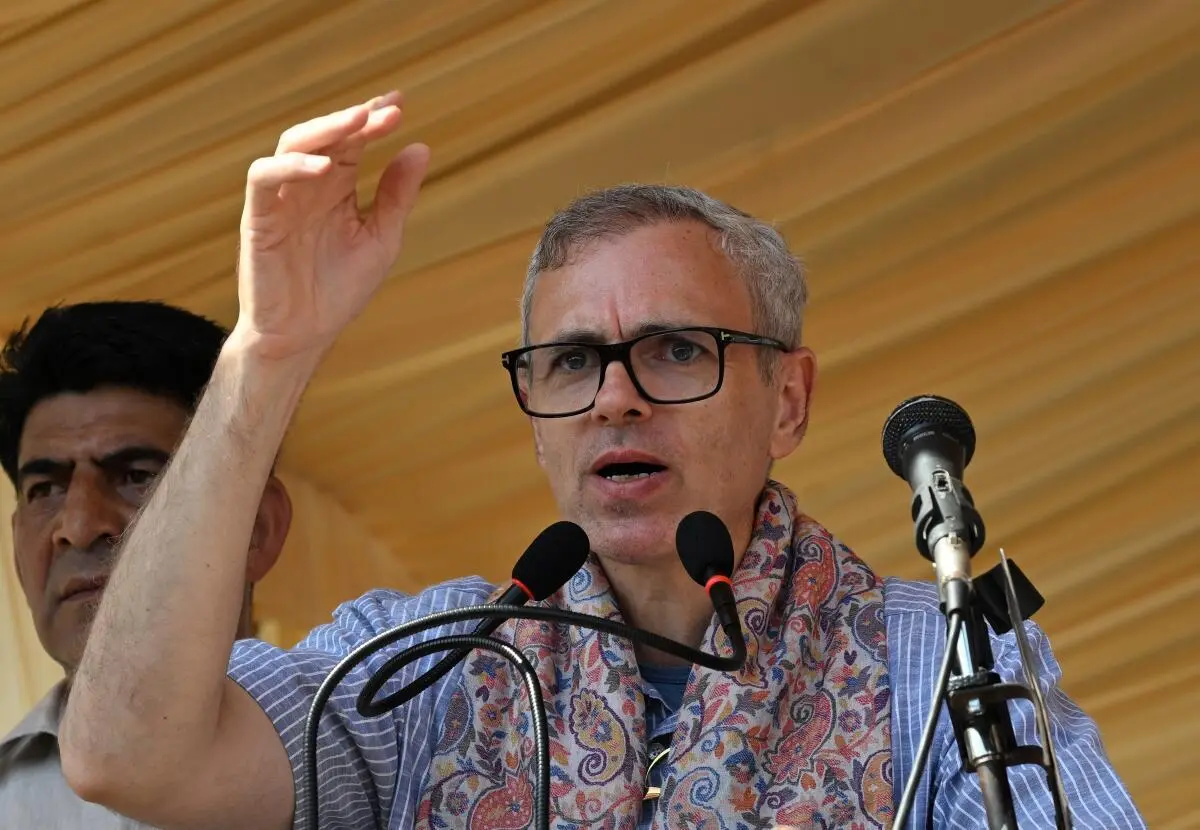
Speaking to reporters in Shopian, Omar Abdullah defended efforts aimed at reducing tensions between India and Pakistan, saying that “no one should have any objection” to attempts at improving relations between two neighbouring countries.
The Chief Minister invoked former Prime Minister Atal Bihari Vajpayee and his well-known foreign policy philosophy:
“Friends can be changed, but neighbours cannot.”
According to Omar Abdullah, the decades-long hostility between New Delhi and Islamabad has repeatedly harmed ordinary people, particularly in Jammu and Kashmir, making dialogue an unavoidable necessity for lasting peace.
He also questioned what he described as a double standard in national political discourse, pointing out that calls for dialogue from leaders in Jammu and Kashmir often attract criticism, whereas similar remarks by senior RSS leaders have not generated comparable political backlash.
Farooq Abdullah Among 117 Eminent Signatories Seeking Peace
National Conference president Farooq Abdullah is among the 117 prominent Indians and Pakistanis who signed an open letter calling for restoration of diplomatic engagement between the two countries.
The appeal urges both governments to:
- Resume comprehensive bilateral dialogue.
- Restore full diplomatic representation.
- Reinstate High Commissioners.
- Resume normal visa services.
- Encourage trade and people-to-people exchanges.
- Reopen cross-border connectivity initiatives such as the Srinagar–Muzaffarabad route.
The signatories argue that decades of hostility have imposed heavy economic, diplomatic and humanitarian costs on both countries and that sustained dialogue remains the only viable long-term solution despite continuing disagreements.
Mehbooba Mufti Reiterates Kashmir’s Role as a “Bridge of Peace”
Former Chief Minister Mehbooba Mufti has also endorsed the peace initiative.
Consistent with her long-held political position, Mufti said Jammu and Kashmir should serve as a bridge connecting India and Pakistan rather than becoming a permanent theatre of confrontation.
She has repeatedly argued that lasting stability in the region requires political engagement alongside security measures, maintaining that dialogue and reconciliation are essential for protecting the interests of the people of Jammu and Kashmir.
Mirwaiz Umar Farooq Calls for Revival of Political Engagement
Hurriyat chairman Mirwaiz Umar Farooq has similarly supported renewed engagement, urging both countries to revive what he described as the “spirit of dialogue.”
The Mirwaiz has consistently maintained that political issues cannot be resolved solely through security measures and has advocated peaceful negotiations as the preferred path toward regional stability.
Civil Society Pushes for a Fresh Peace Initiative
Beyond mainstream political parties, the appeal has received support from several distinguished public figures from both countries.
Among the notable Indian signatories are former RAW chief A. S. Dulat and former Union Minister Mani Shankar Aiyar.
From Pakistan, former Foreign Minister Khurshid Mahmud Kasuri and former diplomat Ashraf Jehangir Qazi have also joined the initiative.
The letter emphasizes that restoring diplomatic communication should not be interpreted as ignoring security concerns but as creating structured channels to manage differences peacefully.
RSS Leadership Has Also Favoured Keeping Communication Open
An important dimension of the debate is the position taken by senior leaders of the Rashtriya Swayamsevak Sangh.
RSS chief Mohan Bhagwat and General Secretary Dattatreya Hosabale have recently argued that India should keep the doors for dialogue open even while maintaining a firm stance against terrorism.
Political observers note that this reflects a continuation of Vajpayee-era thinking within sections of the Sangh, where engagement and national security are viewed as complementary rather than mutually exclusive.
BJP: Terror and Talks Cannot Go Together
The BJP has rejected the latest calls for dialogue, maintaining that Pakistan must first demonstrate credible action against terrorism before any diplomatic engagement can resume.
The party reiterated its long-standing position that repeated terrorist attacks originating from Pakistani soil have undermined previous peace initiatives and eroded public trust.
Senior BJP leaders argue that reopening talks without concrete action against terror infrastructure would weaken India’s security posture and send an inappropriate diplomatic signal.
Ravinder Raina Questions Opposition Leaders
Senior BJP leader Ravinder Raina sharply criticized the National Conference and the PDP for supporting dialogue.
Raina argued that leaders calling for engagement should first demand accountability from Pakistan over incidents such as the Pahalgam terror attack and alleged human rights violations in Pakistan-occupied Jammu and Kashmir.
According to the BJP, meaningful diplomatic engagement cannot proceed unless Pakistan dismantles terror networks operating against India.
Security Establishment Remains Cautious
While not all security officials publicly comment on diplomatic policy, analysts note that sections of India’s defence and intelligence establishment remain cautious about restarting comprehensive talks.
Their reservations stem from the history of bilateral negotiations that have repeatedly been interrupted by major terror attacks, including incidents that fundamentally altered the diplomatic environment.
This institutional caution continues to influence New Delhi’s broader Pakistan policy, where national security considerations remain central to any discussion on future engagement.
Comparative Snapshot
| Stakeholder | Position | Core Argument |
|---|---|---|
| National Conference (Omar & Farooq Abdullah) | Supports dialogue | Peace requires sustained engagement based on Vajpayee’s vision |
| PDP | Supports dialogue | Jammu & Kashmir should become a bridge of peace |
| Mirwaiz Umar Farooq | Supports dialogue | Political engagement remains necessary |
| 117 Eminent Citizens | Supports dialogue | Restore diplomacy, trade and people-to-people ties |
| RSS Leadership | Supports keeping dialogue channels open | Dialogue and national security can coexist |
| BJP | Opposes talks at present | Terror infrastructure must end before negotiations resume |
Political Significance Beyond India–Pakistan Relations
The renewed debate arrives at a politically significant moment for Jammu and Kashmir.
The Union Territory has recently witnessed intense discussions around statehood restoration, employment, governance reforms and regional political representation. The renewed focus on India–Pakistan relations now adds another major dimension to the political narrative.
For the National Conference and the PDP, advocating dialogue aligns with their long-standing political messaging that peace and political engagement are necessary for regional stability.
For the BJP, however, the emphasis remains firmly on national security, with the party arguing that diplomatic engagement without verifiable action against terrorism risks repeating the failures of previous peace initiatives.
Outlook
The latest controversy illustrates two sharply contrasting approaches to India–Pakistan relations.
The pro-dialogue camp—comprising the National Conference, the PDP, Mirwaiz Umar Farooq, many civil society leaders and several prominent public figures—argues that diplomacy remains the only sustainable route to reducing tensions and ensuring long-term peace in South Asia. Their arguments frequently invoke the legacy of Atal Bihari Vajpayee and the need to keep communication channels open even during periods of strained relations.
The BJP, meanwhile, continues to anchor its position in the principle that terrorism and dialogue cannot proceed simultaneously. According to the party, Pakistan must first take credible and irreversible action against cross-border terrorism before any meaningful political engagement can begin.
As Jammu and Kashmir moves through an evolving political landscape marked by debates over statehood, governance and employment, the question of India–Pakistan engagement is once again emerging as a defining issue—one that is likely to shape political discourse in the region in the months ahead.