Jharkhand Exam Protest Turns Violent in Ranchi as Job Aspirants Clash With Police
By: News Desk | 11 Aug 2026
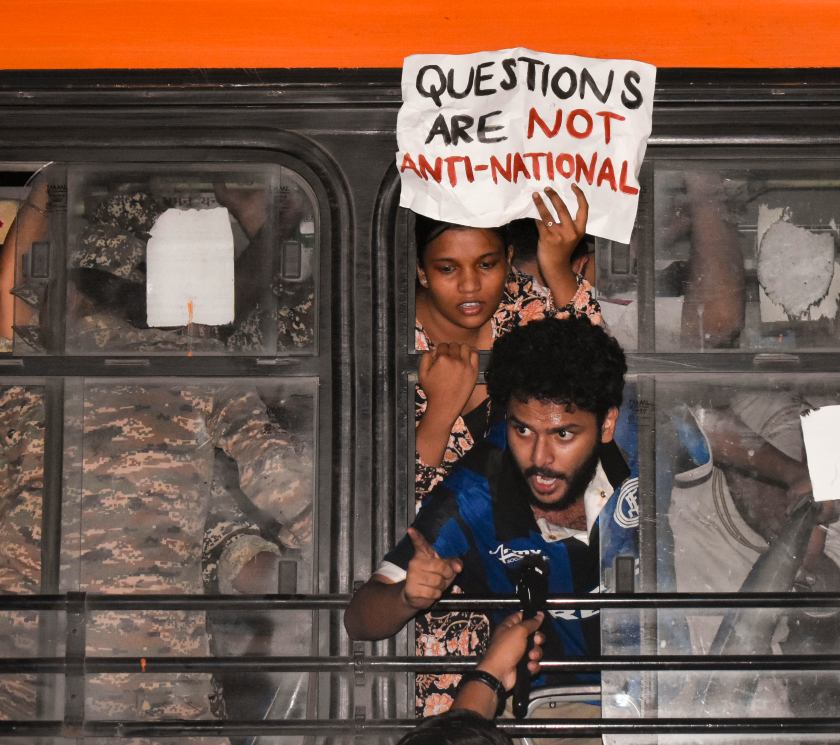
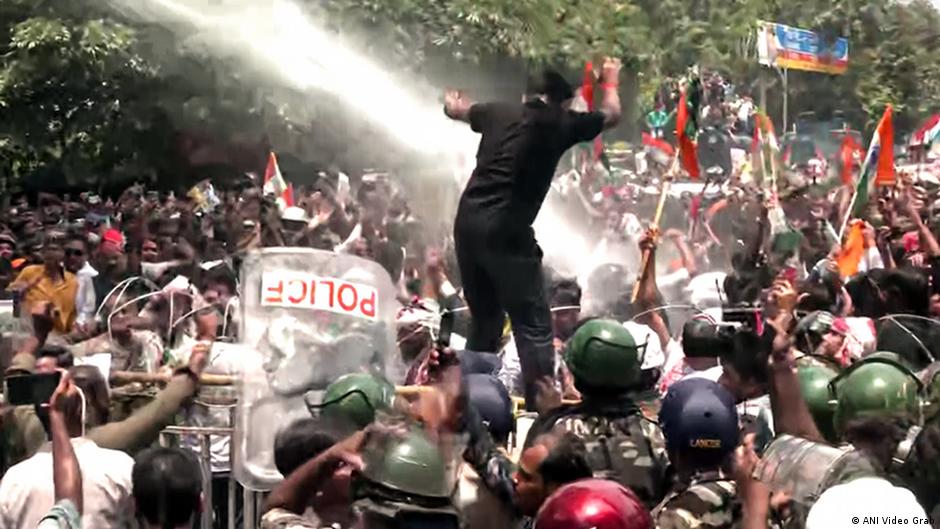
Ranchi: A prolonged student agitation over alleged irregularities in Jharkhand’s recruitment examinations reached a dramatic flashpoint this week when thousands of job aspirants marched towards the state Assembly in Ranchi and police used water cannons, tear gas and baton action to stop them from crossing security barricades.
The confrontation on August 10 came as the agitation entered its 17th day, turning what began as a recruitment-exam dispute into a major political and governance challenge for the Hemant Soren government.
The timing added another layer of political symbolism: the march coincided with Chief Minister Hemant Soren’s 51st birthday. Reports said protesters had gathered at Jaipal Singh Munda Stadium before beginning their march towards the Assembly.
But the protest did not end with the confrontation.
Within a day, the government announced a major concession: the 14th JPSC Civil Services Examination and two other JPSC backlog examinations would be cancelled, while the government also said all examinations conducted through the controversial private agency TDPL would be investigated.
Yet the students’ principal demand for a CBI investigation remained a major point of disagreement.
That is why the Jharkhand exam controversy is no longer simply about one examination.
It has become a test of whether the state’s recruitment system can regain the trust of thousands of young people who have invested years preparing for government jobs.
What Happened During the Ranchi Assembly March?
The latest confrontation followed more than two weeks of continuous student mobilisation.
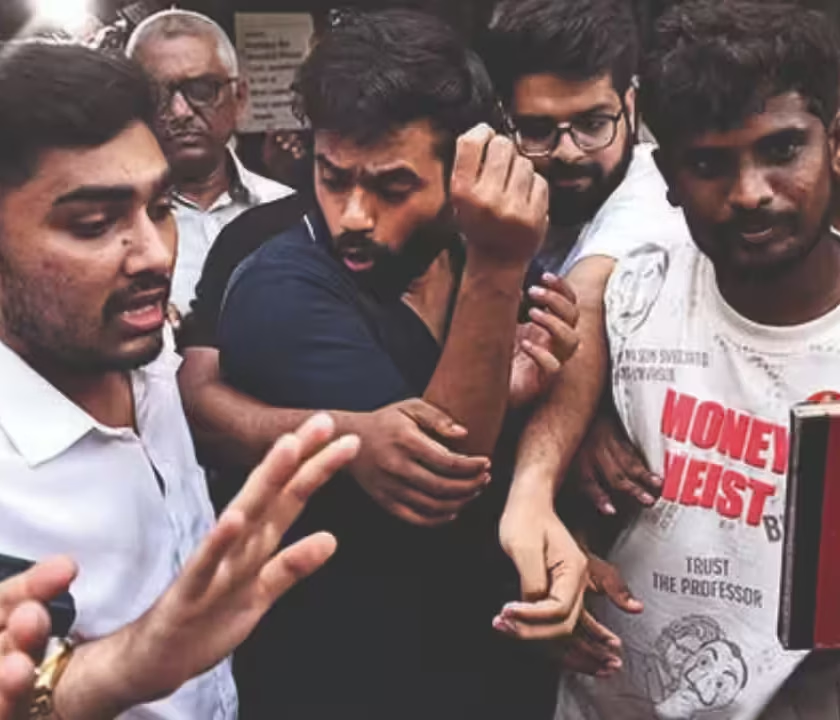
The protesters had been camping at Jaipal Singh Munda Stadium, which had become the centre of the agitation. Student leader Devendra Nath Mahto, who began an indefinite hunger strike on August 2, emerged as one of the prominent faces of the movement.
On August 10, students organised a march towards the Jharkhand Assembly.
The march began from the area around the old Assembly building at approximately 10:30 am, according to reports.
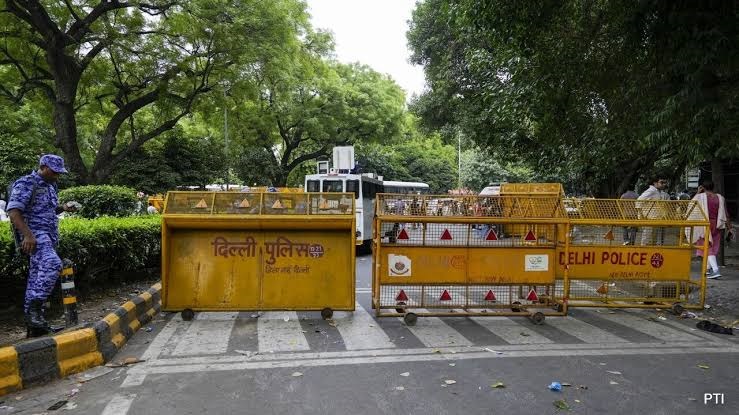
Security forces had erected multiple barricades to prevent protesters from approaching the Assembly complex.
When sections of the crowd attempted to move beyond the final barricade, police responded with crowd-control measures.
Police used multiple crowd-control measures
Reports from the scene said police:
- used water cannons against protesters;
- fired tear-gas shells;
- used lathis/batons to push back demonstrators;
- maintained multiple layers of barricading around the Assembly route.
Several protesters claimed they were injured during the police action.
The confrontation transformed a largely political and administrative dispute into a visible street clash between job aspirants and the state security apparatus.
Why Were Students Marching to the Assembly?
The students’ central grievance is the credibility of Jharkhand’s recruitment examination system.
The immediate controversy centres on the 14th Jharkhand Public Service Commission (JPSC) Civil Services Preliminary Examination, but the agitation has expanded to concerns about other recruitment examinations conducted by JPSC and the Jharkhand Staff Selection Commission (JSSC).
Students have alleged irregularities involving examination management, results, OMR records, transparency and the use of private examination agencies.
Importantly, these are allegations that are being investigated. They should not be treated as proven findings until investigations and, where applicable, judicial proceedings establish responsibility.
Still, the scale of the response demonstrates how seriously candidates view the issue.
For many aspirants, government recruitment examinations are not ordinary tests.
They represent years of preparation, coaching expenses, family sacrifices and the possibility of securing one of the few stable career opportunities available in the state.
If candidates believe the selection process itself is compromised, the damage goes far beyond one result.
It damages confidence in the entire system.
The 14th JPSC Exam Became the Flashpoint
The 14th JPSC Civil Services Preliminary Examination became controversial after candidates raised questions about the manner in which its results were published.
Among the complaints were the absence of publicly disclosed category-wise cut-offs and questions over signatures on the merit list. BJP spokesperson Pratul Nath Shahdeo raised these concerns in July while demanding cancellation of the preliminary results and a CBI investigation.
The controversy intensified when the state CID began investigating the matter.
CID and Ranchi Police teams searched locations connected with the examination process, including the JPSC premises, and examined digital evidence and examination-related records.
The JPSC subsequently postponed its Civil Services Main Examination, which had been scheduled for July 25–27.
The commission also suspended examinations listed in its 2026 calendar.
That was a major signal that the controversy was no longer being treated as a routine complaint by candidates.
The TDPL Question: Why Did a Private Agency Become So Important?
One of the most contentious aspects of the controversy concerns TSR Data Processing Pvt Ltd (TDPL), a private examination services company.
Students and political opponents have questioned why the agency was involved in the JPSC examination process despite earlier scrutiny surrounding its work with the JSSC.
Reports have said TDPL had been blacklisted by JSSC in 2025, while the circumstances surrounding its subsequent involvement with JPSC became a focus of political criticism and investigation.
This has created a straightforward question for investigators:
How was the agency selected, what responsibilities did it receive, and were all procurement and security procedures properly followed?
The question is particularly important because examination agencies handle sensitive information, including candidate databases, question-paper processes, OMR records and results.
Any failure in that chain can undermine confidence even if no actual manipulation is ultimately established.
CID Probe Expands as Arrests and Resignations Follow
The controversy took a more serious turn after law-enforcement agencies began making arrests.
A CID case was registered over alleged irregularities, with accused persons booked under provisions of the Bharatiya Nyaya Sanhita and the Jharkhand law dealing with prevention and remedy of unfair means in recruitment examinations.
The investigation has involved JPSC personnel and individuals linked to the examination process.
Former JPSC chairman L. Khiangte was also arrested by the Jharkhand CID in connection with the investigation, according to reports published on August 10.
Several JPSC members also resigned during the unfolding controversy.
But an important journalistic distinction is necessary:
An arrest, resignation or investigation is not itself proof of guilt.
The allegations must be established through due process.
What the developments do demonstrate is that the recruitment controversy has reached a level where multiple state institutions are now under scrutiny.
The Government Says It Has Accepted Most Demands
One reason the agitation continued despite negotiations was a disagreement over how much progress had actually been made.
The Jharkhand government said it had accepted approximately 98% of the students’ demands.
Student representatives disputed that assessment.
Their position was that the most important unresolved issue remained the demand for an independent CBI probe.
That disagreement is at the heart of the current stalemate.
The government points to the ongoing CID investigation and other proposed mechanisms.
The students argue that because the allegations concern the functioning of state institutions, an investigation by a central agency would provide greater independence and public confidence.
So the dispute has evolved from:
“Were the exams conducted fairly?”
to an even larger question:
“Who should investigate the system when candidates no longer trust the institutions responsible for it?”
Then Came the Major Government Decision
The political situation changed significantly after the Assembly confrontation.
Chief Minister Hemant Soren announced the cancellation of the 14th JPSC Civil Services Examination, along with two other JPSC examinations linked to backlog vacancies.
The government also announced that examinations conducted through TDPL would be investigated.
This was a significant development because cancellation of a major civil-services examination is not a routine administrative step.
It means thousands of candidates may have to prepare again for a fresh recruitment process.
For students who have already spent months or years preparing, that creates another layer of uncertainty.
The government therefore faces a difficult task:
restore confidence without creating another cycle of delay.
Why Cancellation Alone May Not End the Student Anger
Cancelling an examination can address one immediate concern.
It does not automatically answer the larger questions.
Students still want to know:
- What went wrong?
- Who was responsible?
- How did the irregularities allegedly occur?
- How were private agencies selected?
- Were examination records compromised?
- Will officials be held accountable?
- How will the next examination be protected?
- Will candidates lose another year because of the re-examination?
- Will the investigation report be made public?
These questions explain why the movement has become bigger than the cancellation of one test.
For the protesters, the central issue is institutional trust.
The Human Cost of a Recruitment Exam Crisis
Government recruitment examinations often look like numbers on an official notification.
For candidates, they represent something much more personal.
A typical aspirant may spend several years preparing for competitive examinations.
There are coaching fees, books, accommodation costs, travel expenses and the opportunity cost of postponing other career options.
Many candidates also face age limits.
A delayed or cancelled examination can therefore have consequences that cannot be completely repaired by simply announcing another test.
For a 22-year-old candidate, losing one year may be frustrating.
For someone approaching the upper age limit, it can mean losing the opportunity altogether.
This is why transparency is not merely an administrative virtue.
It is a career-security issue.
Jharkhand’s Youth Employment Problem Adds to the Anger
The recruitment controversy comes against a wider backdrop of concern over government jobs and employment opportunities for young people.
Jharkhand’s public-service examinations are particularly important because government employment remains a sought-after career path for many candidates.
A recruitment system must therefore offer three things:
Predictability
Candidates should know when examinations will be conducted.
Transparency
They should understand how results and cut-offs are determined.
Accountability
When irregularities are detected, responsibility must be established.
When any of these pillars fail, frustration can quickly become a movement.
When all three appear uncertain, the issue becomes political.
Why the Protest Has Become a Political Flashpoint
The agitation has created an uncomfortable situation for the Hemant Soren-led government.
The ruling establishment faces pressure from students who are demanding accountability, while opposition parties have used the controversy to attack the government’s handling of recruitment.
The BJP has demanded a CBI investigation into disputed examinations and criticised the government’s response.
Opposition leaders have also attempted to associate themselves with the student movement.
But the protest cannot be reduced to a conventional party-versus-party confrontation.
The most important constituency here is the student community itself.
The protesters’ anger is rooted in a concern that transcends party politics:
If recruitment examinations are not trusted, what happens to the credibility of government recruitment itself?
Hemant Soren’s Birthday Added Political Optics to the Protest
The August 10 march coincided with Chief Minister Hemant Soren’s 51st birthday.
That timing gave the demonstration additional political symbolism.
While the birthday itself had no direct connection to the examination controversy, the juxtaposition was striking.
On one side were celebrations around the Chief Minister.
On the other were young job aspirants marching towards the Assembly demanding answers over recruitment examinations.
For opposition parties, the optics were difficult to ignore.
For the government, however, the more important issue was maintaining order around a high-security state institution.
The confrontation therefore became both a security-management issue and a political image problem.
Devendra Nath Mahto and the Face of the Student Movement
Student leader Devendra Nath Mahto has emerged as one of the most visible figures in the agitation.
According to reports, Mahto began an indefinite hunger strike on August 2 and continued the protest despite deteriorating health.
His role has helped give the movement a recognisable leadership structure.
But the scale of the agitation suggests that the anger extends well beyond one leader.
Thousands of candidates have participated in demonstrations, and the protest has developed into a broader campaign over recruitment transparency.
The Assembly march demonstrated that the movement had reached a new stage.
It was no longer confined to a protest site.
It had moved directly into the political heart of the state.
What the Students Are Demanding
The demands have evolved as the controversy has developed, but several themes remain consistent.
1. Cancellation of disputed examinations
Students demanded that examinations believed to have been compromised should be cancelled and conducted afresh.
The government has now agreed to cancel three JPSC examinations.
2. CBI investigation
Students want the controversy investigated by the Central Bureau of Investigation rather than relying solely on the state CID.
3. Accountability
They want responsibility fixed for officials, agencies or individuals found to have violated examination rules.
4. Examination-agency scrutiny
Students want the government’s use of private examination agencies to be reviewed.
5. Transparent recruitment
They want clear cut-offs, properly authenticated merit lists, secure examination systems and timely disclosure of relevant information.
6. Protection against future manipulation
The larger demand is for structural reform so that another examination does not collapse into controversy.
Why the CBI Demand Has Become the Biggest Sticking Point
The demand for a CBI investigation deserves particular attention.
Students are not simply asking for another investigation.
They are asking for an investigation they perceive as independent of the state machinery.
The government, meanwhile, already has an active CID investigation.
This creates a fundamental trust dispute.
If the CID investigation eventually establishes wrongdoing and identifies those responsible, the government can argue that the existing mechanism worked.
If students believe the system itself requires independent scrutiny, however, they may continue demanding a CBI probe regardless of the CID’s progress.
The credibility of the final investigation may therefore depend not only on its findings but also on whether the affected candidates believe the process was sufficiently independent.
The Bigger Problem: Examination Governance
The Jharkhand controversy reveals a broader problem in modern recruitment systems.
As governments increasingly outsource technical components of examination management, the chain of responsibility becomes more complicated.
A public commission may design the examination.
A private company may manage registration.
Another system may process applications.
Digital infrastructure may handle candidate databases.
A separate team may process OMR sheets and results.
The more fragmented the process becomes, the more important oversight becomes.
A single weak link can create questions about the entire examination.
That is why the TDPL controversy is significant beyond one company.
It raises a broader policy question:
How should public recruitment agencies supervise private contractors handling high-stakes examinations?
What Needs to Change After the Crisis?
The cancellation of examinations should ideally be followed by structural reforms.
Stronger vendor due diligence
Before an examination agency receives a contract, its previous record should be independently reviewed.
Real-time audit trails
Digital examination systems should maintain tamper-evident records of every major action.
Secure OMR management
OMR sheets and other examination records should have robust chain-of-custody procedures.
Transparent result publication
Candidates should have access to clearly defined cut-offs, merit criteria and authenticated results.
Independent grievance mechanism
Candidates should have a formal channel for raising complaints without waiting for political pressure.
Time-bound investigations
Investigations should not continue indefinitely while candidates lose academic and career years.
Candidate compensation or protection
Where an examination is cancelled because of proven administrative failure, policymakers may need to consider mechanisms to protect candidates from avoidable age or financial disadvantages.
From Paper-Leak Allegations to a Crisis of Trust
The most important lesson from Jharkhand may not be about one paper or one examination.
It is about trust.
A recruitment examination works only when both sides accept the legitimacy of the process.
Candidates accept that some will pass and others will fail.
But they must believe that everyone competed under the same rules.
Once that belief disappears, even a technically correct result can face public resistance.
That is what appears to have happened in Jharkhand.
The controversy has created a situation in which candidates are demanding not merely jobs, but confidence that the path to those jobs is fair.
What Happens Next?
The cancellation of three JPSC examinations provides the government with an opportunity to reset the recruitment process.
But the next steps will be crucial.
Authorities will need to explain how the replacement examinations will be conducted, what safeguards will be introduced and how the investigation findings will be handled.
The students, meanwhile, will have to decide whether the government’s latest concessions are sufficient or whether the demand for a CBI probe remains non-negotiable.
The political temperature may therefore remain high even after the cancellation announcement.
The immediate confrontation may have ended.
The trust deficit has not.
Jharkhand Exam Row: 7 Key Takeaways
1. The protest entered its 17th day
The student agitation had been continuing for more than two weeks before the August 10 Assembly march.
2. Police used force to stop the Assembly march
Water cannons, tear gas and baton action were reported after protesters attempted to cross barricades.
3. The 14th JPSC exam became the central controversy
Candidates raised questions over results, transparency and examination management, leading to a CID investigation.
4. TDPL became a major focus
Questions were raised over the selection and role of the private examination agency, including its previous blacklisting by JSSC.
5. Arrests and institutional action followed
The CID investigation has resulted in arrests, while senior JPSC officials and members have faced major scrutiny.
6. The government cancelled three JPSC examinations
Chief Minister Hemant Soren announced cancellation of the 14th JPSC examination and two backlog examinations, while also announcing an investigation into TDPL-conducted examinations.
7. The CBI demand remains central
Students continue to argue that cancellation alone is insufficient and that an independent investigation is necessary to restore confidence.
Conclusion: Jharkhand’s Recruitment Crisis Is Now a Test of Trust
The scenes outside the Jharkhand Assembly were about much more than water cannons, barricades and tear gas.
They represented a growing collision between young people’s expectations and their confidence in the institutions responsible for their future.
For the government, cancelling three examinations and investigating the disputed recruitment processes is a significant response.
For the students, however, the question goes deeper.
They want to know whether the system that selects future government employees can be trusted.
They want to know who will be held accountable if wrongdoing is established.
And they want assurances that preparing for another examination will not simply lead to another cycle of controversy, cancellation and lost time.
That is why the Jharkhand exam row has become one of the state’s most important youth and governance issues.
A government recruitment examination is ultimately a promise: that every candidate will get the same opportunity under the same rules. When that promise is questioned, cancelling an exam may solve the immediate problem — but only transparency, accountability and credible reform can rebuild the trust that has been lost.