Parents Still Waiting: Private School Fees, Textbook Costs and Weak Regulation in J&K
By: News Desk | 18 November 2026
Srinagar: The question of winter vacations has once again brought Jammu and Kashmir’s school education system into the spotlight. With temperatures falling across the Valley and many schools lacking adequate heating arrangements, Education Minister Shamima Firdous has said the government will announce the winter break after assessing weather conditions and the difficulties faced by students.
Her concern about children studying in cold classrooms is justified. But the winter vacation debate also raises a larger question: Is the government addressing the problems that continue to trouble parents long after the winter break ends?
For thousands of families, the pressure of schooling is not limited to cold classrooms, early morning travel or the timing of holidays. It extends to rising tuition fees, annual charges, transport costs, expensive textbook packages, compulsory supplementary books, uniforms, stationery and uncertainty over the curriculum followed by private schools.
These issues have repeatedly surfaced in public complaints and government reviews. Yet parents continue to question whether official directions are being enforced consistently, or whether the system has become accustomed to responding to complaints only after another academic session begins.
The minister’s latest remarks on winter vacations deserve attention. But they should not become the only measure by which the government’s performance in school education is judged.
Winter vacations: A decision based on weather, but what about school preparedness?
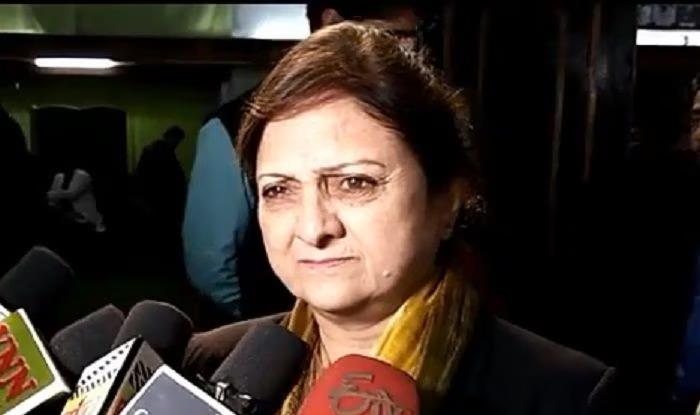
Speaking to reporters in Srinagar on November 18, Firdous said the government would not hesitate to announce holidays when weather conditions warranted such a decision.
“As long as the weather gives us an alarm, there is no problem in announcing holidays. It is a question of children,” she said.
The minister also acknowledged that several schools lack adequate heating facilities, making classroom attendance difficult during severe winter conditions.
This admission points to a problem that cannot be solved simply by announcing holidays. If schools repeatedly face the same heating difficulties every winter, the issue is no longer an unexpected seasonal challenge. It is an infrastructure and preparedness question.
The department needs to establish how many schools have functional heating systems, how many have adequate electricity or alternative heating arrangements, and how many continue to operate without basic winter facilities. Parents and teachers should not have to wait for a severe weather warning before discovering whether classrooms are fit for children.
A transparent winter-readiness assessment, district-wise disclosure of heating arrangements and a clear mechanism for reporting unsafe classroom conditions would make the government’s response more credible.
The minister’s position that student welfare will guide the vacation decision is important. The next step should be to demonstrate how that principle is being applied before temperatures become extreme.
The bigger issue: Parents are paying more, but who is protecting them?
The winter announcement comes against the background of continuing complaints about private-school expenditure.
For many families, the academic year begins with a long list of payments. Tuition fees are only one part of the bill. Annual charges, admission-related payments, transport fees, activity charges, uniforms, notebooks and prescribed textbooks can substantially increase the cost of education.
The concern is not that private schools should operate without reasonable charges. Institutions have legitimate expenses, including staff salaries, infrastructure, maintenance and educational resources. The issue is whether every charge is transparent, justified, approved where required and communicated to parents in advance.
Parents have repeatedly complained about sudden fee revisions, unclear fee heads and additional charges that are difficult to challenge. The regulatory framework already exists, but its effectiveness depends on a functioning authority capable of examining complaints and taking timely decisions.
That is where the Fee Fixation and Regulation Committee (FFRC) becomes central to the debate.
FFRC’s prolonged vacancy has weakened the regulatory response
The Jammu and Kashmir School Education Act, 2002, provides for a committee to regulate and determine fees charged by private schools. The Private Schools (Fixation, Determination and Regulation of Fee) Rules, 2022, further establish the framework for examining school fee structures and regulating permissible charges.
However, the committee’s functioning has been seriously affected by the vacancy in its chairperson’s position.
A report published by Greater Kashmir on October 12 said the FFRC had remained without a chairperson since April 30, 2026, when the extended tenure of Justice (Retd) Sunil Hali ended. The report, quoting an official associated with the committee, said hundreds of fee proposals and complaints from parents had remained pending and that the committee was unable to approve fee structures or take effective action without a chairperson.
The same report said more than 5,500 private schools across Jammu and Kashmir fall within the committee’s regulatory ambit.
This is not a minor administrative vacancy. It affects the institution responsible for examining whether private schools are charging fees in accordance with the law.
The government had reportedly indicated earlier that a panel would be constituted to facilitate the appointment of a successor. Yet, as of the latest public reporting reviewed for this article, the vacancy remained unresolved.
The question is straightforward: if the government expects parents to comply with school rules, why should schools and the administration not be held to equally strict standards of regulatory accountability?
The official record shows that violations were already a concern
The FFRC’s own records provide another indication of the scale of the problem.
In a notice dated March 5, 2026, the committee said 660 private schools in Kashmir Division had failed to submit the required documents for regulation and determination of their fee structures.
The notice referred to Section 20-C(3) of the J&K School Education Act, 2002, and Rule 8(2) of the 2022 Fee Rules. It warned that schools failing to comply within the stipulated period could be restrained from collecting fees, including tuition, annual and transport charges, until further orders.
The notice also referred to possible fines and suspension of recognition for continued violations.
It is important to distinguish between a warning and its enforcement. The notice establishes that the committee had identified a substantial number of schools as non-compliant with the documentation requirements. It does not, by itself, establish how many schools subsequently submitted their files, how many were restrained from collecting fees or how many were penalised.
That is precisely the information parents need.
The School Education Department and FFRC should publish an updated compliance position: how many schools have approved fee structures, how many remain pending, how many have been directed to stop collecting particular charges and what action has been taken against repeat defaulters.
Without such disclosure, parents are left to navigate a complicated system without knowing whether the school they are paying has complied with the regulatory requirements.
Expensive textbooks: A recurring complaint that refuses to disappear
The textbook issue has become one of the most visible sources of frustration among parents.
On October 30, Greater Kashmir reported complaints from parents who alleged that some private schools were prescribing additional books from private publishers and restricting their availability to selected bookshops.
The report cited parents who said a complete set of JKBOSE-prescribed primary textbooks could cost around Rs 700, while a single additional book prescribed by some schools could cost Rs 500 to Rs 600. Some parents also reported that textbook packages associated with certain curricula could cost between Rs 7,000 and Rs 8,000.
These are reported parental estimates, not an independently audited price survey. Nevertheless, the complaints raise a serious question about affordability and transparency.
Parents also alleged that textbook editions and prescribed lists were changed frequently, making it difficult to reuse books for younger siblings. Some questioned why books were available only through particular outlets when the same titles could, in principle, be sold through the wider market.
Allegations of commissions or financial arrangements between schools, publishers and booksellers have also surfaced in parental complaints. Such claims require investigation and documentary evidence. They should not be treated as established wrongdoing by every school or bookseller.
But the administration cannot dismiss the issue merely because individual allegations require verification. It should examine prescribed book lists, procurement arrangements, retail prices and any evidence of compulsory purchases or vendor restrictions.
The government has responded on books, but enforcement is the real test
There has been a fresh government response to the textbook controversy.
On November 9, Firdous acknowledged that some textbook sets were costing parents between Rs 6,000 and Rs 10,000 and said the government would convene a meeting with education officials to examine the issue.
A separate review meeting chaired by the minister on November 17 brought together senior officials, representatives of private-school associations, parents’ groups and members of civil society. According to the official account reported by PTI and published by NDTV, the meeting discussed textbook prices, supplementary books, uniforms and other educational supplies.
The government reiterated that private schools affiliated with JKBOSE must follow the Board’s curriculum and prescribe JKBOSE textbooks containing content aligned with the NCERT syllabus. The minister also said students should not be burdened with unnecessary supplementary books.
Where additional learning resources are genuinely required, schools were advised to use libraries, book banks, e-books and digital resources instead of compelling parents to purchase multiple books.
The minister further stressed that parents must be free to buy books, uniforms, notebooks and stationery from vendors of their choice. Schools should not restrict purchases to particular shops or vendors operating within school premises.
These directions address several complaints raised by parents. They should be recognised as a step in the right direction.
But a government meeting and a public assurance do not automatically change practices at school level. The administration must now explain how these directions will be monitored, how parents can report violations and what action will follow when a school ignores them.
The most important question is whether the department will conduct inspections before the next academic session, rather than waiting for complaints after parents have already spent thousands of rupees.
The High Court has already settled an important part of the textbook question
The issue of textbooks is not entirely new, nor is it without a legal framework.
In its judgment dated June 6, 2026, in J&K Private Schools United Front v. Union Territory of J&K, the High Court of Jammu and Kashmir and Ladakh dismissed an appeal challenging the Board’s directions on prescribed textbooks for affiliated private schools.
The dispute arose from JKBOSE notifications directing private schools to adopt Board-published textbooks for Classes VI to VIII. The schools’ association argued that the Board could prescribe courses and textbooks but could not compel schools to use only Board-published books.
The Division Bench rejected that argument. It held that once an institution voluntarily obtains affiliation with JKBOSE, it is bound by the conditions of that affiliation, including the curriculum, syllabus and textbooks prescribed by the Board.
The judgment affirmed the earlier decision of the Single Judge and upheld the Board’s authority to prescribe textbooks for affiliated schools.
This legal position matters because it gives the administration a clear basis for enforcement. A JKBOSE-affiliated school cannot simply disregard the Board’s prescribed curriculum and textbook requirements.
However, the judgment should not be misrepresented as a blanket ruling on every private school in Jammu and Kashmir, regardless of its affiliation or curriculum. The applicable regulatory requirements must be examined according to the institution’s actual affiliation and legal status.
The department must also clarify how the November 17 directions will be implemented across different categories of schools.
Curriculum confusion and the demand for transparency
Parents are not concerned only about the price of books. They also want to know what their children are being taught, why particular books are prescribed and whether the academic programme follows the rules applicable to the school’s affiliation.
The term “international curriculum” is sometimes used in the private-school market as a marker of quality or premium education. But parents need more than a label. They need clear information about the curriculum followed, the examining or affiliating authority, the academic standards and the complete list of prescribed learning material.
For JKBOSE-affiliated schools, the High Court judgment and Board directions provide an important regulatory reference. For institutions following other recognised boards or curricula, the department must make the applicable requirements equally clear.
A school should not be allowed to use curriculum branding as a reason to leave parents uninformed about costs, academic requirements or the status of the programme it offers.
A practical solution would be to require every school to publish its curriculum details, affiliation information, annual textbook list, publisher details and estimated book costs well before the beginning of the academic session.
That would give parents time to compare prices, reuse books where possible and seek clarification before making purchases.
Annual charges and transport fees need the same scrutiny
While textbook prices attract public attention, annual and other school charges deserve equal examination.
The FFRC’s official circular record shows that it has issued directions on several fee-related matters, including advance fee collection, transport charges, late fees, fee receipts and the clarification of fee charging for the 2026-27 academic session.
Its circular list also includes directions on transport fees during winter vacations and the constitution of parents’ associations.
These records demonstrate that the regulatory framework is not limited to tuition fees. It covers a wider range of charges and practices.
Parents need clear answers to practical questions:
- What exactly is included in the annual fee?
- Can a school collect a charge that has not been approved by the competent authority?
- What are the rules governing advance fee collection?
- How should transport fees be calculated when schools remain closed for winter vacations?
- Are schools required to provide itemised receipts showing each fee head?
- What action can parents take when a school imposes an unexplained or unapproved charge?
The government should publish a simple, consolidated guide explaining the rules in language parents can understand. The information should be available on the School Education Department and FFRC websites and circulated through schools before fee collection begins.
Regulation is meaningful only when the people it is designed to protect can understand and use it.
Parents’ associations cannot become symbolic bodies
The FFRC’s official website lists an April 17, 2026 circular concerning the creation of parents’ associations in private schools. Such associations can provide a formal channel for communication between parents and school managements.
But their effectiveness will depend on whether they are genuinely independent, representative and allowed to raise uncomfortable questions.
A parents’ association should not exist merely to endorse decisions already taken by school managements. It should be able to discuss fee revisions, textbook lists, transport arrangements, uniform costs, safety standards and academic concerns.
Parents who complain should not face intimidation, discrimination or the threat of adverse treatment towards their children. A credible grievance mechanism must protect the identity and interests of complainants wherever necessary.
The government should also clarify how parents’ associations will be monitored and what role they will have in reporting violations to the department and FFRC.
The 25 per cent RTE quota: Another important promise awaiting implementation
The November 17 review meeting also included a significant announcement on the Right of Children to Free and Compulsory Education Act.
According to the official account reported by PTI, the government is preparing to implement Section 12(1)(c) of the RTE Act, which provides for 25 per cent reservation of entry-level seats in private schools for eligible children from economically weaker sections and disadvantaged groups.
The minister said the rules were in the final stage of notification. The government also indicated that eligible schools would be reimbursed for admissible expenditure in accordance with the applicable rules.
If implemented effectively, this provision could widen access to private schooling for children who otherwise cannot afford it.
But the announcement is not the same as implementation. Parents need to know the eligibility criteria, admission procedure, school coverage, reimbursement mechanism, timelines and grievance process.
The government must ensure that the rules are notified, schools are informed and eligible families are not left struggling with unclear procedures.
A streamlined academic session is not enough
The government has also emphasised timely distribution of textbooks. Firdous said JKBOSE books had started reaching schools from November 15 and that officials had been directed to ensure students did not face difficulty accessing them.
Timely textbook distribution is essential, particularly when the academic calendar is being streamlined. But a properly organised academic session should mean more than opening schools on time, distributing books and completing examinations according to schedule.
It should also mean that parents know the actual cost of education before the session begins, schools follow the applicable curriculum, fee structures are approved, textbook lists are transparent and complaints are resolved without unnecessary delay.
A streamlined calendar cannot compensate for weak regulation. Nor can it be considered a complete reform if parents continue to face unpredictable expenses and limited avenues for redress.
The administration must avoid treating the academic session as an exercise in scheduling alone. The quality and fairness of the education system are equally important.
What the government needs to do now
The latest announcements provide an opportunity to move from repeated assurances to measurable action. The School Education Department should consider a time-bound public action plan covering the following priorities:
1. Appoint a full-time FFRC chairperson: Restore the committee’s ability to examine fee proposals, hear complaints and take decisions without further delay.
2. Publish school-wise fee approval status: Parents should be able to check whether their child’s school has an approved fee structure and which fee heads are authorised.
3. Audit annual and additional charges: Examine tuition, annual, admission-related, transport and other charges to identify collections that do not comply with the applicable rules.
4. Enforce textbook and curriculum directions: Conduct inspections of JKBOSE-affiliated schools and verify whether prescribed books and curricula are being followed.
5. End compulsory vendor arrangements: Ensure parents can purchase books, uniforms and stationery from sellers of their choice.
6. Make textbook lists public in advance: Require schools to publish complete lists, publishers, editions and indicative costs before the academic session begins.
7. Establish a time-bound grievance system: Parents should receive acknowledgement of complaints, a clear tracking mechanism and a reasoned decision within a specified period.
8. Publish a winter-readiness report: Disclose heating arrangements, infrastructure gaps and safety measures in government schools, district-wise.
9. Notify and implement RTE rules: Translate the proposed 25 per cent entry-level reservation into a clear admission process for eligible children.
These are not extraordinary demands. They are basic requirements of a transparent and accountable school education system.
The question parents are still asking
The winter vacation decision is important because children should not be forced to sit in freezing classrooms simply to maintain an academic calendar. The minister’s acknowledgement of heating gaps is welcome, and the government’s separate discussion on expensive textbooks and parental choice should not be overlooked.
But the larger concerns remain.
Parents are not asking the government to ignore private schools or undermine institutions that provide quality education. They are asking for a fair system in which schools can function, teachers can be paid, students can learn and families are not subjected to unexplained or excessive financial demands.
If a school charges an annual fee, parents should know what it covers. If it prescribes additional books, it should explain why they are necessary. If it claims to follow a particular curriculum, it should disclose the relevant affiliation and academic framework. If it collects transport charges, those charges should follow the applicable rules. And if parents file complaints, there should be a functioning authority to hear them.
The government has spoken about winter holidays, heating arrangements, textbook prices, vendor freedom and curriculum compliance. The next question is whether these commitments will be backed by inspections, published records and penalties for violations.
Children’s welfare cannot be protected only by announcing winter vacations. It must also be protected throughout the academic year, including when parents are asked to pay the bills.
Until the government restores the full functioning of the fee regulator and demonstrates that its directions are being enforced in schools, parents will have reason to ask whether education reform is reaching the classroom and the family budget, or remaining largely in official statements.
Frequently Asked Questions
When will winter vacations be announced in Kashmir schools for 2026?
Education Minister Shamima Firdous said on November 18 that the government would decide after assessing weather conditions and the difficulties faced by students. No final vacation schedule was announced in the statement covered here.
What did the Education Minister say about heating facilities?
She acknowledged that several schools lack adequate heating arrangements and said the government would consider students’ difficulties while deciding on winter vacations.
Can JKBOSE-affiliated private schools prescribe textbooks from private publishers?
The Jammu and Kashmir High Court, in its June 6, 2026 judgment, upheld JKBOSE’s authority to prescribe curriculum and textbooks for affiliated schools. The applicable Board directions and affiliation conditions must be followed.
Can private schools force parents to purchase books or uniforms from a particular shop?
The Education Minister has reiterated that parents should be free to purchase books, uniforms and stationery from vendors of their choice. The government has said schools should not impose restrictions directing parents to particular outlets.
What is the role of FFRC in private-school fee regulation?
The Fee Fixation and Regulation Committee is responsible for regulating and determining fees charged by private schools under the J&K School Education Act and the 2022 Fee Rules. Its functioning is essential for examining fee proposals and addressing complaints.
What is the 25 per cent RTE reservation announced by the government?
Section 12(1)(c) of the RTE Act provides for 25 per cent of entry-level seats in private schools to be reserved for eligible children from economically weaker sections and disadvantaged groups. The J&K government said the rules for implementation were in the final stage of notification as of November 18, 2026.