Centre-Ladakh talks could become a decisive test of trust as LAB and KDA seek statehood, constitutional safeguards, an elected legislature and justice over last year’s violence
By: News Desk | 04 September 2026
Ladakh’s September 9 Moment: Talks With Delhi Could Decide What Comes Next
For Ladakh’s political leadership, September 9 is no longer just another date on the negotiation calendar.
It is becoming a test of whether years of dialogue with New Delhi can produce something tangible.
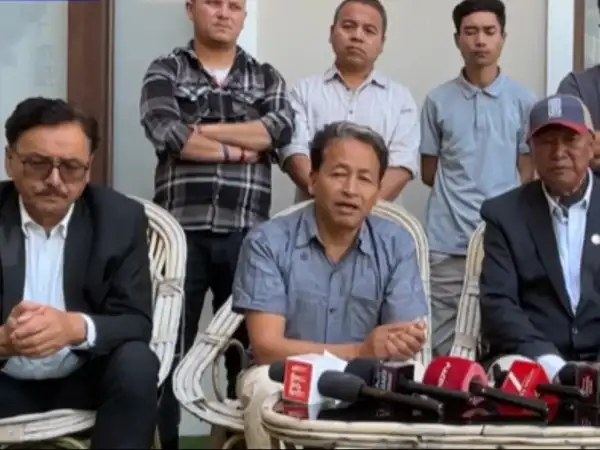
The Leh Apex Body (LAB), one of the principal civil society platforms representing Leh, has warned that it could intensify its agitation if the next round of talks with the Union Ministry of Home Affairs fails to produce “concrete” progress.
But there is an important signal of restraint alongside that warning.
The planned Kargil-Leh foot march has been deferred to give the Centre’s September 9 meeting a chance to succeed.
That combination—talks first, agitation if talks fail—captures the present mood in Ladakh.
The region’s leadership is not closing the door on negotiations. It is, however, making clear that patience has limits.
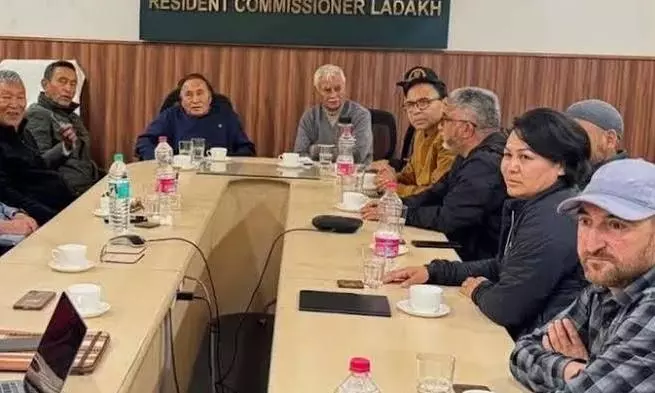
The September 9 meeting of the MHA’s sub-committee is expected to bring representatives of the Centre, the Ladakh administration, LAB and the Kargil Democratic Alliance (KDA) together in New Delhi. Ladakh Chief Secretary Ashish Kundra confirmed the meeting, describing it as part of the continuing dialogue aimed at deepening democratic processes in the Union Territory.
What happens inside that room could determine whether Ladakh’s political movement enters another phase of negotiation—or returns to the streets.
Why the September 9 MHA talks matter
The Centre and Ladakh’s civil society leadership have already held several rounds of discussions.
The dialogue was created after the region was separated from the former state of Jammu and Kashmir in 2019 and made a Union Territory without a legislature.
Since then, LAB and KDA have pushed for a set of constitutional and political safeguards designed to give local communities greater control over land, employment, culture, natural resources and governance.
The September 9 meeting is therefore not taking place in a political vacuum.
It follows earlier rounds of talks and comes at a particularly sensitive moment, with Ladakh’s leadership demanding that the Centre move from broad assurances to a clearly defined roadmap.
Recent reporting indicates that meetings were held at sub-committee level in July and August, while the broader dialogue has involved representatives of both LAB and KDA.
The question now is whether the next meeting produces a document, timeline or framework that the Ladakh leadership can take back to its supporters.
That is likely to be the real measure of success.
LAB’s warning: ‘Concrete’ progress or a bigger agitation
LAB’s latest position is essentially a political ultimatum wrapped in an opportunity for dialogue.
The organisation has said that if the September 9 talks fail to produce satisfactory results, its agitation for constitutional safeguards and other demands will be intensified.
That does not necessarily mean an immediate shutdown or mass protest.
Instead, it leaves open a broader mobilisation later in September.
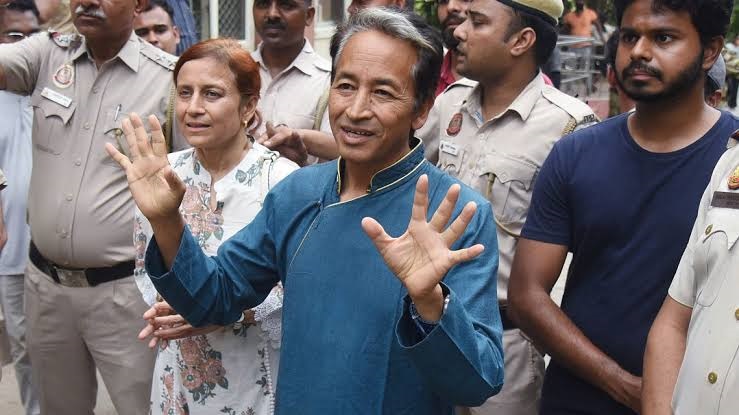
The proposed Kargil-Leh padyatra has already been deferred because of the talks. Sonam Wangchuk said the decision was taken because the Centre’s invitation offered an opportunity for meaningful and result-oriented negotiations.
This is significant.
The decision to postpone the march suggests LAB does not want to appear responsible for closing the negotiating channel before the Centre has had another opportunity to respond.
But the postponement also creates pressure on the government.
If the September 9 meeting fails, LAB and KDA can point to the talks as another example of dialogue without sufficient results.
In other words, the Centre has been given an opening.
What it does with that opening could determine the next stage of the movement.
The demand is bigger than the Sixth Schedule
The Ladakh movement is often described in the media through one phrase: Sixth Schedule status.
That is certainly one of its most important demands.
But the current negotiations are broader.
LAB and KDA have sought political, administrative and constitutional protections covering several areas.
Among the key demands are:
- Statehood for Ladakh
- Sixth Schedule or comparable constitutional safeguards
- An elected legislature for the Union Territory
- Protection of land and local employment
- Greater political representation
- Protection of Ladakh’s tribal and cultural identity
- Safeguards for the region’s fragile ecology
- Withdrawal of cases linked to the September 24, 2025 violence
- Compensation for families of those killed and assistance for those injured
The September 9 meeting therefore has a considerably wider agenda than simply deciding whether Ladakh should be placed under the Sixth Schedule.
Recent reporting indicates LAB is also looking for a detailed draft or roadmap concerning the proposed structure and powers of a legislature for Ladakh.
That could become one of the most consequential parts of the negotiations.
Why an elected legislature has become so important
The absence of a legislature is at the heart of Ladakh’s governance debate.
When Ladakh became a Union Territory in 2019, it was created without an elected legislative assembly.
For local political groups, this created a democratic deficit.
The existing Hill Councils in Leh and Kargil have local responsibilities, but their powers are not equivalent to those of a full-fledged territorial legislature.
That difference has increasingly become central to the movement.
The demand now is not merely for administrative decentralisation.
It is for greater democratic control over decisions affecting everyday life.
Land regulation, recruitment, development projects, tourism, environmental protection and infrastructure are particularly sensitive in a region where local communities worry about the consequences of rapid outside investment and large-scale development.
For LAB and KDA, political representation is therefore closely connected with cultural and economic security.
Sixth Schedule: Why Ladakh wants constitutional protection
The Sixth Schedule of the Constitution provides special arrangements for the administration of tribal areas in parts of Assam, Meghalaya, Tripura and Mizoram.
It creates autonomous district and regional councils with specified legislative, judicial and administrative powers.
Ladakh’s civil society leadership has long argued that some form of comparable constitutional protection is necessary because of the region’s distinctive tribal composition and ecological vulnerability.
The demand has gained particular force because Ladakh’s population is relatively small while its geographical area is enormous and its environment extremely fragile.
Local leaders fear that without stronger safeguards, decisions concerning land ownership, tourism, infrastructure and resource use could gradually reduce local control.
The Centre, however, has not accepted the full statehood-plus-Sixth-Schedule package sought by the movement.
Instead, it has pursued alternative safeguards through negotiations.
This is where the dispute becomes complicated.
Both sides agree that Ladakh is different.
They disagree over how much constitutional and political autonomy is necessary to protect that difference.
The Centre says progress has already been made
New Delhi’s position cannot be ignored in assessing the dispute.
The Union government has argued that the dialogue process has already produced several concrete measures.
In a September 2025 statement, the Ministry of Home Affairs said the government had been engaging LAB and KDA through formal and informal mechanisms.
It pointed to measures including an increase in reservation for Ladakh’s Scheduled Tribes from 45% to 84%, one-third reservation for women in the Hill Councils and recognition of Bhoti and Purgi as official languages.
The government also said recruitment for 1,800 posts had been initiated.
These measures form an important part of the government’s argument.
Its position, broadly, is that the dialogue has not been empty and that constitutional and administrative concerns can be addressed without necessarily granting every demand immediately.
LAB and KDA, however, continue to argue that fundamental political questions remain unresolved.
This is the central disagreement.
The government points to incremental reforms. Ladakh’s leadership wants a larger political settlement.
The September 24, 2025 violence still hangs over the talks
There is another issue that could make the September 9 discussions particularly difficult.
The political dispute is no longer only about constitutional arrangements.
It is also about what happened during the protests in Leh on September 24, 2025.
The violence left four people dead, injured more than 80 and led to a large number of arrests, according to reporting on the anniversary-related developments.
LAB and KDA have demanded withdrawal of cases against those arrested in connection with the violence.
They have also sought compensation for families of those killed and support for people who were injured.
For Ladakh’s leadership, this has become a question of justice.
For the government, however, the issue involves an episode in which protests turned violent and public order was seriously disrupted.
That difference in interpretation could complicate negotiations.
The constitutional question may be negotiable through drafts and administrative mechanisms.
The question of accountability for deaths and arrests is much more emotionally charged.
Sonam Wangchuk and the politics of protest
Sonam Wangchuk has become one of the most recognisable public faces of Ladakh’s movement.
His 2025 hunger strike brought national attention to demands for statehood and Sixth Schedule safeguards.
The Centre’s own account of the period acknowledges that Wangchuk began a hunger strike on September 10, 2025, over those demands.
His role is important because the movement has attempted to maintain a distinction between protest and negotiations.
That distinction is visible again now.
Rather than immediately proceeding with the proposed march, Ladakh’s leadership has deferred it following the Centre’s invitation for talks.
This gives the September 9 meeting an unusual political importance.
If there is progress, Wangchuk and other leaders can claim that sustained pressure produced negotiations.
If there is no meaningful progress, they can argue that the Centre was given yet another opportunity.
Either way, the talks become part of the movement’s next political narrative.
Kargil and Leh: A common agenda, but not identical politics
Ladakh’s political movement is often described as if Leh and Kargil speak with one voice.
They broadly share several demands, particularly statehood and stronger constitutional safeguards.
But their political histories and demographic compositions are different.
LAB represents the Leh side, while KDA is the principal political-civil society platform from Kargil.
The fact that both are participating in the dialogue is therefore significant.
A durable political settlement would likely have to command credibility in both regions.
This is particularly important because the demand for statehood is not simply a Leh-centric issue.
Kargil’s political leadership has repeatedly backed a broader democratic and constitutional framework for the Union Territory.
The proposed Kargil-Leh march was itself designed to symbolise this shared platform.
Its postponement therefore represents a temporary pause in joint mobilisation rather than an abandonment of the larger agenda.
Why land and jobs are so politically sensitive
Beneath the constitutional debate lies a much more immediate anxiety: economic security.
Ladakh has experienced rapid growth in tourism and infrastructure in recent years.
For local residents, development can bring employment and investment.
But it can also raise concerns over land prices, outside ownership, competition for government jobs and pressure on limited natural resources.
In a high-altitude region with severe ecological constraints, the consequences of poorly planned development can be particularly serious.
That is why the demands for job reservations and land protections are often discussed alongside the Sixth Schedule.
They are not separate concerns.
They are different parts of the same argument:
Ladakh’s people want development, but they want a greater say in determining who benefits from it and what limits should govern it.
The ecological argument is becoming harder to ignore
Ladakh’s fragile ecology gives the political dispute another dimension.
The region’s cold desert environment has limited water availability, sensitive mountain ecosystems and a growing dependence on tourism.
Climate change is already increasing concerns about water stress, extreme weather and glacial changes across the Himalayas.
At the same time, roads, tourism infrastructure, construction and urban expansion are changing the physical landscape.
For Ladakh’s civil society organisations, constitutional safeguards are therefore also environmental safeguards.
Their argument is that decisions about large infrastructure or tourism development should not be made without meaningful local participation.
The Centre, meanwhile, has to balance those concerns against strategic and developmental requirements in a region bordering China and Pakistan.
That makes Ladakh unlike an ordinary administrative dispute.
Its geography gives every infrastructure decision a national-security dimension.
Why Delhi cannot afford another breakdown in talks
The strategic importance of Ladakh makes prolonged political instability undesirable for both sides.
The Union Territory shares sensitive borders with China and Pakistan.
Infrastructure development, border connectivity and military logistics remain national priorities.
But strategic importance does not eliminate local political aspirations.
If anything, it makes stable relations between New Delhi and Ladakh more important.
A movement that feels ignored can become more confrontational.
A government that feels pressured through disruptive protests may become more cautious about conceding political demands.
That can create a cycle:
demand → negotiation → limited progress → frustration → protest → confrontation → renewed negotiation.
Breaking that cycle requires more than another meeting.
It requires a credible mechanism through which both sides can see how today’s negotiations translate into tomorrow’s institutions.
Three possible outcomes from September 9
The upcoming meeting could broadly lead in three directions.
1. A substantive breakthrough
The Centre could present a detailed framework addressing legislative powers, representation, constitutional safeguards and pending issues from the 2025 protests.
Such a move could significantly reduce tensions and give LAB and KDA a reason to hold back further agitation.
2. Partial progress
This may be the most politically complicated outcome.
The government could offer movement on some demands while leaving statehood and the Sixth Schedule unresolved.
That might be enough to keep negotiations alive but not enough to satisfy the more hardline sections of the movement.
3. Talks fail to produce a roadmap
If the meeting ends with broad assurances but no timeline, draft or concrete commitments, LAB’s warning could become reality.
The deferred march could return to the calendar.
Other forms of mobilisation could follow.
And the political temperature in Leh and Kargil could rise again.
What would count as ‘concrete progress’?
This may be the single most important question for September 9.
The phrase “concrete progress” can mean very different things to the two sides.
For the government, another round of structured negotiations may itself constitute progress.
For LAB and KDA, however, progress increasingly appears to mean something more tangible:
- a written proposal;
- a clear timeline;
- defined legislative powers;
- greater democratic representation;
- a mechanism for constitutional safeguards;
- clarity on statehood;
- resolution of cases arising from the September 2025 protests;
- compensation for affected families.
Without such markers, the word “dialogue” risks losing political credibility.
The real test is trust
At its core, Ladakh’s current crisis is not simply a disagreement over constitutional provisions.
It is a crisis of trust.
Local leaders believe repeated assurances have not produced the political changes they seek.
The Centre, on the other hand, can point to reservations, language recognition, recruitment and other measures as evidence that the dialogue process has delivered results.
Both narratives contain part of the story.
The problem is that neither has yet produced a settlement acceptable to the other side.
The September 9 meeting therefore has significance beyond its formal agenda.
It will test whether the two sides still believe negotiation can deliver what street mobilisation has not.
Conclusion: September 9 is an opportunity—but also a deadline of sorts
Ladakh’s political movement is at another crossroads.
The decision to defer the Kargil-Leh march demonstrates that the door to dialogue remains open.
But LAB’s warning of intensified agitation shows that the patience behind that dialogue is wearing thin.
For the Centre, the challenge is to demonstrate that the negotiations are capable of producing more than incremental administrative concessions.
For LAB and KDA, the challenge is equally serious: to convert public pressure into a realistic, constitutionally workable settlement that accommodates the different aspirations of Leh and Kargil.
The most important outcome of September 9 may therefore not be whether every demand is accepted.
It may be whether both sides leave the room with a credible roadmap.
Ladakh’s political movement has already demonstrated that it can mobilise public sentiment.
The Centre has demonstrated that it is willing to negotiate.
The missing ingredient has been a settlement that both sides can call meaningful.
If September 9 delivers that, the postponed march could become a symbol of dialogue succeeding.
If it does not, the warning from Leh may become the beginning of another phase of agitation.
And this time, the question will not simply be whether Ladakh wants change.
It will be whether New Delhi is ready to define exactly what that change should look like.