Ladakhi representatives say the Centre’s proposal falls short of demands for constitutional safeguards and meaningful elected governance; distribution of legislative, executive and financial powers remains the central sticking point
By: News Desk | 15 October 2026
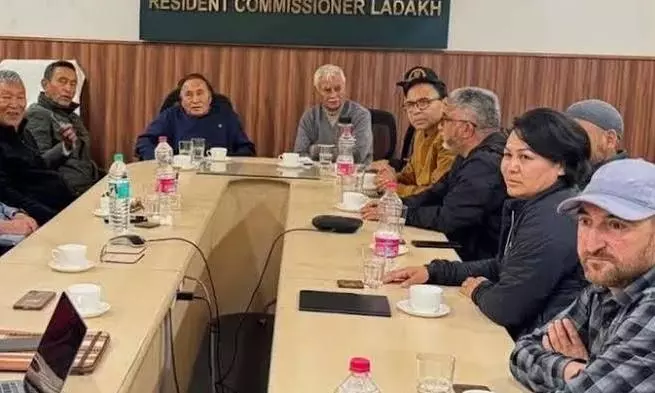
Leh: Talks between representatives of Ladakh’s leading civil society organisations and the Union Ministry of Home Affairs (MHA) ended without a breakthrough on Thursday, with the Leh Apex Body (LAB) and Kargil Democratic Alliance (KDA) expressing dissatisfaction with the Centre’s draft proposal on constitutional safeguards and governance for the Union Territory.
The two sides have agreed to meet again in New Delhi on October 22, keeping open negotiations over a proposed constitutional framework and an elected governing institution for Ladakh. The latest meeting in Leh saw the MHA present its draft while the LAB and KDA submitted their own proposal, but substantial differences remained between the two positions. (The Tribune, The Economic Times)
The disagreement goes to the heart of a political movement that has gathered momentum since Ladakh became a separate Union Territory in 2019: whether the region can secure constitutional protections and meaningful democratic authority over its land, resources, administration and development without receiving full statehood or a conventional Union Territory legislature.
LAB chairman Chering Dorjay Lakruk described the gap between the two drafts as substantial, while KDA co-chairman Asgar Ali Karbalai said the Centre’s proposal did not adequately reflect the aspirations of Ladakh’s people.
For the representatives, the challenge is not merely to establish an elected institution. It is to ensure that the proposed body has sufficient authority to make decisions rather than remain dependent on the existing administrative structure.
A Draft Proposal, but No Agreement
Thursday’s meeting was part of continuing negotiations between the MHA and the two representative bodies, which have been seeking constitutional safeguards and a more democratic governance arrangement for Ladakh.
According to reports, the Home Ministry presented a detailed draft proposal, accompanied by a presentation, while the LAB and KDA placed their own draft before the government.
Lakruk said the two proposals differed significantly and that the representatives would formally respond to the Centre’s draft. He reiterated that constitutional safeguards and a legislature for Ladakh remained among their principal demands. (The Tribune)
The outcome indicates that the negotiations have moved beyond broad discussions about whether Ladakh needs a different governance arrangement. The sides are now confronting more specific questions about the structure of a proposed institution, the legal protections supporting it and the powers it would exercise.
However, the full text of the competing drafts has not been publicly established in the reporting cited here. It is therefore not possible to independently compare every provision or determine the complete extent of the differences.
What is clear is that the latest meeting did not produce an agreed framework.
Why the Proposed Article 371(K) Matters
One of the central issues in the negotiations is a proposed constitutional provision tentatively referred to as Article 371(K).
The provision has been discussed as a possible route to providing Ladakh-specific constitutional safeguards. It is a proposal under consideration, not an existing constitutional article currently granting special protections to Ladakh.
The idea emerged during earlier rounds of negotiations, when the Centre reportedly indicated its willingness to explore a special constitutional arrangement drawing on the broader concept of protections available to certain other states.
Articles 371A, 371F and 371G, for example, provide particular constitutional protections for Nagaland, Sikkim and Mizoram respectively. Their provisions differ according to the historical and political circumstances of each state.
But adapting that general approach to Ladakh raises difficult questions.
What subjects would receive constitutional protection? Would the safeguards cover land ownership, employment, cultural identity, language, natural resources and local decision-making? How would those protections be enforced? And what authority would the proposed elected institution exercise?
The negotiations have yet to resolve these questions.
The key issue is whether a new constitutional provision would deliver enforceable safeguards and meaningful local authority or primarily establish a framework whose practical powers would remain limited.
The Bigger Dispute: Who Would Hold the Power?
The central disagreement concerns the proposed elected body’s authority.
The LAB and KDA want a governance structure with meaningful legislative, executive and financial powers. Their position is that elected representatives must be able to make decisions on matters affecting Ladakh rather than simply advise officials who retain final control.
KDA co-chairman Karbalai said the Centre’s draft was unsatisfactory and reiterated that the groups would not dilute their demands for democratic rights, constitutional guarantees and legislative, executive and financial authority. (The Economic Times)
These demands raise several practical questions:
- Legislative authority: Which subjects could the elected institution make laws or binding decisions on?
- Executive control: Would it oversee departments and implement its own policies, or would key administrative powers remain with the Union Territory administration?
- Financial authority: Could it prepare and control its budget, allocate expenditure and exercise meaningful control over public funds?
- Land and resources: What protections would prevent decisions affecting local land, livelihoods and natural resources from being taken without effective local representation?
- Relationship with existing councils: How would a new institution share responsibilities with the Ladakh Autonomous Hill Development Councils in Leh and Kargil?
These are not minor drafting details. Together, they would determine whether the proposed model meaningfully changes how Ladakh is governed.
The Centre’s draft and the LAB–KDA proposal need to be assessed against these questions before the extent of any future settlement can be understood.
The Centre’s Proposed Model: A Different Kind of Governance?
The negotiations have also involved discussion of a governance arrangement described as sui generis—a model designed specifically for Ladakh rather than one that simply reproduces an existing state or Union Territory structure.
According to reporting on the Centre’s proposal, the contemplated arrangement would not amount to full statehood or a conventional Union Territory with a legislature. Instead, it would involve a distinct elected governing body supported by a constitutional amendment requiring Parliament’s approval. (The Indian Express)
This is an important distinction.
An elected body does not automatically possess the same powers as a state legislature. Its authority depends on the constitutional and statutory framework establishing it, the subjects assigned to it and the extent to which it can make decisions independently.
For the Centre, a special model could offer a way to address Ladakh’s demands within a Union Territory framework.
For the LAB and KDA, however, the arrangement would be inadequate if it did not provide substantive authority over the issues that matter most to the region.
That difference in approach helps explain why the two sides have been unable to reach agreement despite continued negotiations.
Sonam Wangchuk and the Question of Public Expectations
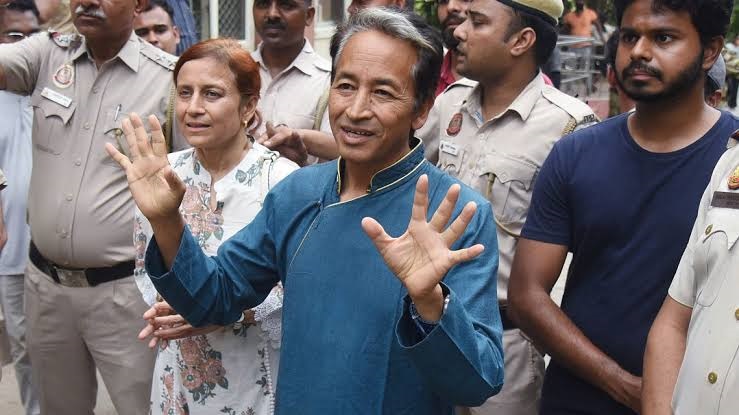
Climate activist Sonam Wangchuk, who has been associated with Ladakh’s campaign for constitutional safeguards, also expressed dissatisfaction with the outcome of the talks.
Reports quoted him as saying that a substantial gap remained between the Centre’s proposal and the demands of Ladakh’s representatives. He nevertheless indicated that the discussions should continue and that a revised draft could provide a basis for further engagement. (The Economic Times)
His response reflects the tension facing the negotiating groups.
They have to continue engaging with the government because the talks may offer a route to constitutional change. At the same time, they face pressure to demonstrate that participation in negotiations is producing substantive progress.
The LAB and KDA have repeatedly argued that constitutional safeguards and democratic authority must be secured in a form that can withstand future administrative or political changes.
The risk, from their perspective, is that an agreement based on broad assurances but lacking clear legal guarantees could leave the central concerns unresolved.
For the Centre, the challenge is to develop a proposal that can be implemented through the constitutional process and accepted by the groups representing different parts of Ladakh.
From the September 9 Meeting to the October 22 Deadline
The latest round follows discussions held in New Delhi on September 9, which Ladakh’s representative bodies described as a non-starter because they believed substantive progress had not been made.
The discussions have since become more focused on the proposed institutional structure, including its composition, powers and relationship with existing administrative bodies. The MHA has also sought input on how a new governance institution might function within the current Union Territory framework. (The Indian Express)
Before the October 15 meeting, LAB representatives had pressed the Centre to present a concrete draft, warning that continued delays could increase public frustration.
The government subsequently presented its proposal, but the document did not bridge the differences between the two sides.
The October 22 meeting therefore becomes the next important stage in the process.
The immediate task will be to examine the competing drafts, identify the provisions that remain disputed and determine whether the Centre is prepared to revise its proposal in response to the LAB and KDA’s objections.
The groups, for their part, will need to clarify which elements are essential to any settlement and where there may be room for negotiation.
The Background: Ladakh’s Governance Debate Since 2019
Ladakh’s present political demands are rooted in the changes introduced in August 2019, when the former state of Jammu and Kashmir was reorganised into two Union Territories: Jammu and Kashmir, and Ladakh.
Unlike Jammu and Kashmir, Ladakh was established as a Union Territory without a legislative assembly.
The change altered the region’s administrative structure and intensified debate over democratic representation, local employment, land protection, cultural identity and control over development.
The Leh Apex Body and Kargil Democratic Alliance emerged as important platforms for articulating demands from Leh and Kargil respectively. Although their constituencies and political perspectives are not identical in every respect, both have pressed the Centre for constitutional safeguards and a stronger democratic governance arrangement.
Their demands have included protections for land and local employment, recognition of Ladakh’s cultural and linguistic identity, and greater control over decisions affecting the region.
The debate has also included demands for statehood and inclusion under the Sixth Schedule of the Constitution, alongside proposals for an alternative governance arrangement.
These demands are related, but they are not interchangeable. A special constitutional provision, Sixth Schedule protections, statehood and an elected Union Territory-level institution would each have different legal and administrative implications.
The current negotiations are therefore significant because they may determine whether the Centre and Ladakh’s representative bodies can agree on a new framework—or remain divided over what an acceptable settlement should contain.
Constitutional Safeguards Must Be More Than Assurances
For Ladakh’s representatives, the question of constitutional safeguards is closely connected to concerns about the region’s future.
Land, public employment, cultural identity and natural resources are not merely administrative subjects. They affect the ability of local communities to retain influence over development and the distribution of economic opportunities.
A constitutional guarantee can potentially provide stronger protection than an ordinary administrative assurance. But its effectiveness depends on the wording of the provision, the authority responsible for implementing it and the remedies available if it is violated.
That is why the proposed Article 371(K) framework has become such an important part of the debate.
The LAB and KDA want clarity on what would be protected, which institution would exercise authority and whether those powers would be enforceable.
A provision that names protected subjects but leaves crucial decisions to authorities outside the elected institution may not satisfy the groups’ demands.
Equally, a proposed framework must be translated into legally workable provisions, with clear responsibilities and an institutional structure that can operate in practice.
The October 22 meeting will need to address these questions if the negotiations are to move beyond competing drafts.
Why Financial Powers Are Particularly Important
The debate over financial authority deserves particular attention because control over a budget often determines how much an elected institution can accomplish.
An elected body may be able to discuss local priorities, but without meaningful control over expenditure and development planning, its ability to implement those priorities could remain limited.
For Ladakh, where communities are concerned about infrastructure, employment, environmental pressures and development across a geographically challenging region, the relationship between political authority and financial control is central.
The LAB and KDA have sought meaningful powers over budgets, expenditure and public funds, rather than a merely consultative role. (The New Indian Express)
The exact scope of those powers remains a matter for negotiation.
A future settlement would need to establish how funds are allocated, who approves expenditure, what financial accountability mechanisms apply and how the elected body would interact with the existing administration.
Without clarity on these matters, the creation of an elected institution alone would not necessarily resolve the underlying concerns about local self-government.
The Political Stakes for the Centre and Ladakh
The inconclusive meeting places both sides under pressure to demonstrate that dialogue can deliver practical outcomes.
For the Centre, the negotiations offer an opportunity to develop a Ladakh-specific framework that addresses demands for constitutional protection and democratic representation while retaining the region’s current Union Territory status, if that remains the basis of its proposed model.
For the LAB and KDA, the challenge is to secure a settlement that reflects their core demands without accepting a framework they consider inadequate.
The political environment makes the outcome especially consequential. Frustration over the pace of negotiations has been accompanied by wider demands for accountability and a clearer response to the concerns that prompted the movement.
A settlement that lacks public confidence could leave the underlying dispute unresolved even if the government and representatives reach a formal agreement.
Conversely, a proposal that clearly defines constitutional protections, elected representation and the distribution of powers could provide a basis for a more durable political arrangement.
The central question is whether the parties can move from general assurances to a framework whose provisions are specific, enforceable and acceptable to the people they represent.
What to Watch Before October 22
Several issues will indicate whether the next round of negotiations can produce progress.
First, the revised draft. The extent to which the Centre responds to the LAB and KDA’s objections will be a key test of whether the discussions are moving towards a compromise.
Second, the powers of the proposed elected body. The draft will need to clarify its legislative or decision-making authority, executive responsibilities and control over finances.
Third, the scope of constitutional safeguards. The proposed framework must establish which aspects of land, employment, culture and natural resources would receive protection, and how those guarantees would operate.
Fourth, the relationship with existing institutions. The division of responsibilities between the proposed body, the Union Territory administration and the Ladakh Autonomous Hill Development Councils will need to be clearly defined.
Finally, the question of political acceptance. Even a technically detailed proposal may struggle to resolve the dispute if the LAB and KDA believe it falls short of their central demands.
The October 22 meeting may not settle every issue, but it should provide a clearer indication of whether the two sides can narrow the gap between their proposals.
A Difficult Negotiation, Not Yet a Final Breakdown
The absence of agreement on October 15 represents a setback for the immediate negotiations, but it does not mean the dialogue has ended.
Both sides have agreed to meet again, and the next round provides an opportunity to examine revisions and clarify the areas of disagreement.
The key question is whether the Centre’s next proposal will address the substance of the LAB and KDA’s demands, particularly the powers of an elected institution and the legal strength of the proposed constitutional safeguards.
For Ladakh’s representative bodies, the test will be whether the resulting framework provides meaningful democratic authority rather than a symbolic change in institutional structure.
For the Centre, the challenge is to turn the idea of a Ladakh-specific governance model into a legally workable arrangement capable of securing broader acceptance.
The October 22 talks will therefore be about more than the wording of a constitutional proposal. They will test whether Ladakh’s demand for stronger democratic control can be reconciled with the Centre’s proposed Union Territory governance framework.
Until the competing drafts are reconciled and their provisions made public, the distance between the two sides remains substantial—and the final shape of Ladakh’s future governance remains unsettled.