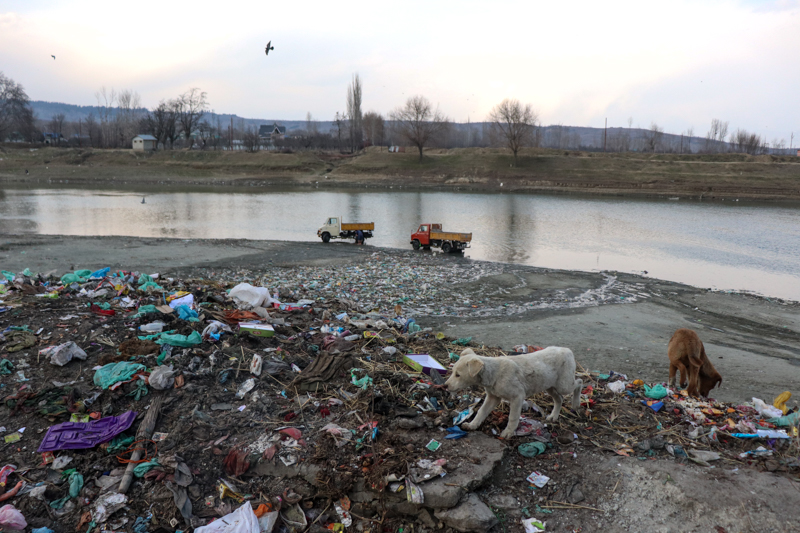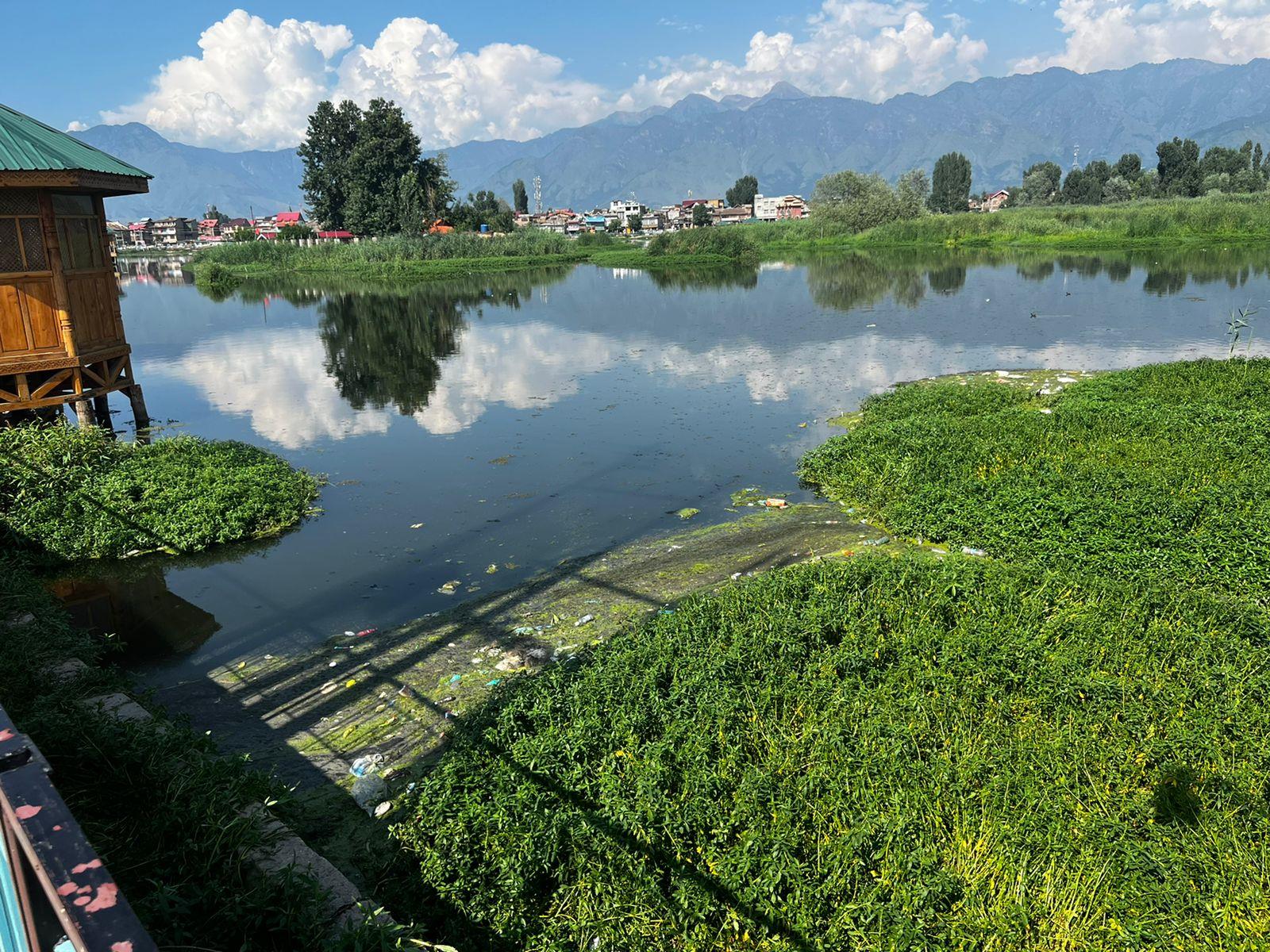
NGT warnings, pollution-control findings and fresh reports of incomplete landfilling removal raise serious questions about the future of one of Srinagar’s vital urban water bodies.
By: News Desk | 11 October 11 2026
Srinagar: Srinagar’s Brari Nambal lagoon is facing an environmental crisis that can no longer be explained away as a seasonal problem or a temporary failure of maintenance. Official records point to a combination of untreated sewage, deteriorating water quality, pressure on the water body’s boundaries and restoration work that has yet to resolve the underlying problems.
The lagoon, which connects with Dal Lake through the Nowpora Channel and helps regulate its surplus water flow towards the Jhelum through the Fateh Kadal outfall, occupies an important place in Srinagar’s urban drainage system. Its condition therefore matters far beyond the appearance of its shoreline.
A report submitted by the Jammu and Kashmir Pollution Control Committee (JKPCC) to the National Green Tribunal in August 2025 painted a troubling picture. Revenue records listed Brari Nambal’s area at 43 hectares, while geographic information system (GIS) mapping showed 41.71 hectares. Two drains in the Babdemb area were identified as major sources of pollution, while two nearby sewage treatment plants were found to be failing to meet prescribed discharge standards.
The findings prompted the NGT to direct the J&K Lake Conservation and Management Authority (LCMA) and Srinagar Municipal Corporation (SMC) to undertake remedial measures and report on the steps taken.
Yet the concerns have not disappeared. In September 2026, local reporting again highlighted landfilling along a portion of the lagoon, with removal described as incomplete and vehicles continuing to occupy part of the filled area.
The emerging picture is of a water body caught between official restoration commitments and persistent environmental pressures. The central question is no longer whether Brari Nambal needs protection. It is why the measures intended to protect it have not yet delivered a lasting solution.
Brari Nambal: A Small Lagoon With a Major Ecological Role
Brari Nambal may be modest in size compared with Dal Lake, but its importance cannot be judged by its surface area alone.
Situated in Srinagar’s historic urban landscape, the lagoon is hydrologically connected to Dal Lake through the Nowpora Channel. It helps regulate the movement of surplus water from Dal Lake towards the Jhelum through the Fateh Kadal area.
This connection gives the water body a practical role in the city’s drainage and water-management network. Changes in its depth, capacity, channels and surrounding land can affect how water moves through this interconnected system.
Urban water bodies also provide habitat for aquatic organisms, support local ecological processes and offer some capacity to retain water during periods of elevated flows. Their effectiveness depends on their physical condition, available storage, connections with other water bodies and the quality of the water entering them.
When a lagoon accumulates sediment, becomes obstructed by waste or loses water-holding space to landfilling, its ability to perform these functions may be reduced.
That is why the deterioration of Brari Nambal should not be treated simply as a local sanitation issue. It raises wider questions about Srinagar’s approach to wetland conservation, sewage management and flood resilience.
Official Records Reveal a Troubling Area Discrepancy
The JKPCC report placed Brari Nambal’s area at 43 hectares according to revenue records, compared with 41.71 hectares in GIS mapping.
The difference is 1.29 hectares, equivalent to approximately 12,900 square metres.
That is a substantial area in an urban setting, but the figures require careful interpretation. Revenue records and satellite-based mapping do not necessarily measure land and water boundaries in precisely the same way. Seasonal water levels, mapping dates, classification methods and changes in the physical shoreline can influence the comparison.
Consequently, the discrepancy should not automatically be presented as a definitive measurement of land illegally occupied around the lagoon.
What it does establish is the need for a transparent, parcel-level boundary assessment that can distinguish between natural changes, mapping differences, sediment accumulation, landfilling and unauthorised encroachment.
A joint exercise involving the revenue authorities, LCMA, JKPCC and relevant municipal agencies could establish the legally recognised boundary, map the present water spread and identify areas requiring restoration.
Without such a verified baseline, officials risk debating the extent of the problem without agreeing on precisely what must be recovered and protected.
Two Drains, Two Treatment Plants and a Persistent Sewage Problem
The most direct evidence of environmental deterioration concerns sewage.
In its report to the NGT, the JKPCC identified poor sewage management in the Babdemb area and reported that two drains were discharging directly into Brari Nambal.
These drains represent a continuing pollution pathway. Domestic wastewater can carry organic matter, detergents, nutrients, pathogens and other contaminants into the lagoon.
The committee also identified two sewage treatment plants in the area, with reported capacities of 16.1 million litres per day (MLD) and approximately 17.1 MLD.
One facility is managed by the LCMA, while the other is associated with the Urban Environmental Engineering Department (UEED).
Their existence might suggest that the sewage problem should already be under control. However, the JKPCC’s August 2025 assessment found that both facilities were not operating in accordance with the standards prescribed by the NGT.
The report also noted that inadequately treated sewage was entering the lagoon and contributing to deteriorating water quality.
This distinction matters. A sewage treatment plant’s installed capacity is not the same as the volume of wastewater it actually treats effectively. Nor does the presence of treatment infrastructure guarantee that the final discharge meets environmental standards.
The relevant questions include whether the plants receive the intended sewage flows, whether their treatment processes work consistently, whether equipment is maintained properly and whether the treated effluent is independently tested before discharge.
The performance of the collection network is equally important. If drains continue to bypass treatment facilities, the environmental benefits of those facilities will remain limited.
The problem, therefore, is not simply a shortage of treatment capacity. It is whether the entire sewage-management system is functioning as intended.
What the Water-Quality Tests Reveal
The JKPCC’s findings went beyond visual pollution.
Water samples collected at different monitoring locations did not meet the prescribed Class B water-quality criteria in relation to dissolved oxygen, biochemical oxygen demand and faecal coliform.
Each of these indicators reveals a different aspect of the lagoon’s condition.
Biochemical Oxygen Demand (BOD) measures the oxygen consumed by microorganisms as they break down biodegradable organic matter in water. High BOD commonly indicates a substantial organic pollution load.
Chemical Oxygen Demand (COD) measures the oxygen equivalent required to chemically oxidise substances in a water sample. Elevated COD can indicate the presence of organic and other oxidisable pollutants.
Dissolved oxygen (DO) is the oxygen available in water for aquatic organisms. When organic pollution increases, microbial activity can consume oxygen and leave less available for fish and other aquatic life.
Faecal coliform measurements help indicate contamination associated with faecal waste and the possible presence of disease-causing microorganisms. Such contamination can pose risks to people exposed to polluted water.
Nutrient enrichment can create additional problems. Excess nitrogen and phosphorus may encourage excessive aquatic plant and algal growth. When this material dies and decomposes, oxygen levels can fall further.
These processes can reinforce one another, making the ecological consequences more difficult to reverse.
The JKPCC findings do not mean that every part of the lagoon is equally polluted or that all aquatic life has disappeared. They do, however, establish that the water-quality criteria were not being met at the sampled locations.
That is a serious finding for an urban water body whose ecological functions depend on maintaining acceptable water quality.
Why the NGT Intervention Matters
The Brari Nambal issue entered the NGT’s proceedings after the tribunal took suo motu cognisance of an April 2025 news report highlighting pollution and encroachment concerns.
On April 29, 2025, the tribunal registered Original Application No. 190 of 2025 and sought responses from the relevant environmental and civic authorities.
The proceedings brought the Central Pollution Control Board, JKPCC, LCMA, SMC and Srinagar’s district administration into the matter.
Following the JKPCC’s subsequent report, the tribunal issued directions on September 1, 2025, requiring the LCMA and SMC to take remedial measures for the lagoon’s restoration and disclose the steps taken.
The significance of the proceedings lies in the shift from general conservation promises to documented environmental compliance.
The relevant agencies are expected to address identifiable problems, including sewage discharge and the condition of the lagoon, rather than rely solely on assurances that restoration is under way.
The tribunal’s intervention also creates a record against which subsequent action can be assessed.
However, a judicial direction is not itself a restoration outcome. The environmental benefit depends on whether the authorities implement the required measures, demonstrate compliance and maintain the improvements over time.
For residents and environmental observers, the critical issue is whether the proceedings lead to measurable improvements in water quality, restored water-holding space and effective control over future encroachments.
Landfilling: A Warning That the Boundary Problem Has Not Gone Away
The pressure on Brari Nambal is not limited to what flows into the water. What enters its physical boundaries matters just as much.
Reporting published in September 2026 said that landfilling along a portion of the lagoon had been removed only partially despite intervention by the LCMA. A subsequent site visit reportedly found filled material still present, with vehicles parked on part of the affected area.
The report raised questions about whether the removal operation had been completed, whether the remaining material would be cleared and whether measures were in place to prevent the area from being filled or used again.
These are important questions because removing recently deposited material is only one part of protecting a water body.
Authorities also need to determine the original extent of the filling, establish whether permission was granted, identify the responsible parties where possible and ensure that the site is restored to its legally and ecologically appropriate condition.
If filled land is simply cleared in part and then occupied again, enforcement becomes a recurring exercise rather than a lasting solution.
At the same time, the available reporting does not establish that every filled portion of Brari Nambal was illegal or that all remaining material had been formally declared unauthorised. Those determinations require records, boundary verification and findings by the competent authorities.
The immediate priority should be a documented site assessment followed by a clear restoration and compliance plan.
Why Earlier Restoration Efforts Have Struggled
Brari Nambal’s deterioration has continued despite the existence of conservation initiatives and sewage infrastructure.
The environmental proceedings and related reporting have highlighted persistent encroachment concerns, inadequate sewage management and weaknesses in coordination between the agencies responsible for the lagoon and its surrounding urban areas.
These problems are interconnected.
Desilting may increase water depth in selected locations, but it cannot solve pollution if untreated sewage continues to enter the lagoon.
A treatment plant may operate more efficiently, but its benefits will be undermined if wastewater collection remains incomplete and drains continue to discharge directly into the water.
Removing filled material may restore part of the water body’s footprint, but that gain will not last without effective boundary protection and enforcement.
Likewise, beautification cannot substitute for ecological restoration.
A clean-looking shoreline is not proof of a healthy lagoon. Durable restoration requires improvements in water quality, hydraulic connectivity, sediment management, habitat conditions and protection against further loss of water-holding space.
This is where administrative coordination becomes essential. The LCMA, municipal authorities, sewage-management agencies, pollution-control officials and revenue administration have different responsibilities, but the lagoon experiences the combined effect of their decisions.
If those responsibilities are handled separately without a shared plan, progress in one area may be cancelled out by continuing failures in another.
What a Scientific Restoration Plan Should Look Like
Restoring Brari Nambal requires a time-bound programme built around measurable environmental outcomes.
1. Establish the legally verified boundary
The authorities should reconcile revenue records, historical maps, current satellite imagery and field surveys to establish the lagoon’s recognised boundary and present condition.
Any suspected encroachment or landfilling should be documented parcel by parcel, with clear findings and appropriate legal action.
2. Repair the sewage collection and treatment system
The two drains identified by the JKPCC should be traced to determine their sources, the wastewater entering them and the practical measures needed to prevent untreated discharge.
Both treatment plants require transparent operational assessments, including actual inflow, treatment performance, equipment condition, maintenance arrangements and the quality of the final effluent.
Independent sampling should be conducted at regular intervals, with results made publicly accessible.
3. Restore the water body’s physical capacity
Desilting and removal of deposited material may be necessary in selected areas, but these operations should follow a scientific assessment.
Unplanned dredging can disturb sediments, damage aquatic habitats and redistribute contaminants. Authorities should therefore identify where sediment removal is justified, how excavated material will be handled and what measures are needed to avoid further ecological damage.
The objective should be to restore the lagoon’s legitimate water-holding capacity and hydraulic function, not merely to make it look deeper or cleaner.
4. Prevent further filling and dumping
Regular inspections, boundary markers, geospatial records and enforcement against unauthorised filling can help protect the restored areas.
Any removal operation should be followed by verification that the site has been cleared and remains protected.
5. Publish a public restoration dashboard
Residents should be able to track progress through basic, verifiable indicators.
These could include the number of direct sewage discharges eliminated, treatment-plant compliance, water-quality results, area restored, sediment removed where scientifically justified, and enforcement action taken against confirmed violations.
A public dashboard would make it easier to distinguish completed work from proposed work and routine inspections from actual environmental improvements.
The Flood-Management Dimension Cannot Be Ignored
Brari Nambal’s hydrological connection with Dal Lake gives the conservation issue another dimension.
The lagoon forms part of a wider system through which water moves between Dal Lake and the Jhelum. Any reduction in water-holding space or obstruction of connected channels deserves careful examination.
However, it would be premature to claim that the documented area discrepancy alone has caused a measurable increase in Srinagar’s flood risk. Establishing that relationship would require hydraulic modelling, reliable elevation data, channel measurements and information on how water levels respond under different rainfall and discharge conditions.
Such an assessment should be part of the restoration programme.
It would help establish whether sediment accumulation, landfilling or obstructions are affecting the movement of water and identify which interventions would deliver the greatest benefit.
In a city exposed to intense rainfall and urban drainage pressures, preserving functioning water bodies is an important part of broader environmental risk management.
Wetland conservation should therefore be integrated with drainage planning, flood preparedness and urban development decisions rather than treated as a separate beautification exercise.
A Restoration Effort Needs More Than Official Inspections
In July 2026, the LCMA’s vice-chairman inspected Brari Nambal and reviewed conservation and restoration measures. Officials were directed to ensure timely completion of works, maintain quality standards and prepare estimates for additional preservation measures.
Such inspections can help identify problems and maintain administrative oversight. But their effectiveness ultimately depends on what happens afterwards.
Were the required works completed? Did water quality improve? Were the direct drains intercepted? Did the sewage treatment plants meet discharge standards? Was the remaining filled material removed? Were the boundaries protected against fresh violations?
These are the indicators that matter.
A meaningful public progress report should distinguish between works proposed, works funded, works completed and outcomes independently verified.
That distinction is particularly important when a water body has been the subject of repeated restoration commitments.
Environmental recovery is not a single event. It requires continuing maintenance, reliable data and enforcement that does not weaken once public attention moves elsewhere.
The Human Cost of Losing an Urban Water Body
The consequences of environmental degradation are not confined to wildlife or the shoreline.
Polluted urban water bodies can undermine local amenity, create sanitation concerns and place additional pressure on the agencies responsible for drainage and wastewater management.
Where fishing or other water-dependent activities are present, declining ecological conditions can also affect livelihoods. However, the scale of any specific livelihood loss at Brari Nambal needs to be established through local evidence rather than assumed.
There is also a wider public cost.
When sewage treatment infrastructure fails to deliver compliant effluent, investment in that infrastructure produces fewer environmental benefits than intended. If the same water body repeatedly requires emergency clean-up, desilting or removal of deposited material, the public ultimately bears the cost of both deterioration and attempted recovery.
Preventing pollution at its source is generally more effective than trying to repair a damaged ecosystem after years of contamination.
That is why sewage management, land-use enforcement and restoration must proceed together.
The Questions Srinagar’s Authorities Must Answer
Brari Nambal’s future now depends on whether the documented problems can be translated into specific, verifiable action.
Several questions remain central:
- What is the verified present boundary of the lagoon, and how much of any difference from historical records is attributable to actual landfilling or encroachment?
- Have the two drains identified by the JKPCC been intercepted, and what do recent water-quality tests show?
- Are both sewage treatment plants now meeting the applicable discharge standards consistently?
- Has all unauthorised filling identified by the authorities been removed, and are the restored areas protected against renewed occupation?
- What restoration work has been completed under the NGT’s directions, and what remains outstanding?
- Is there a publicly available timetable for improving water quality and restoring the lagoon’s hydrological functions?
These are not merely administrative questions. They are the practical measures by which the success or failure of the restoration effort should be judged.
Brari Nambal’s Future Will Be Decided on the Ground
Brari Nambal has become a test of environmental governance in Srinagar because the problems are identifiable and the responsible institutions already exist.
The JKPCC has documented water-quality failures and sewage-related pollution. The NGT has directed remedial action. The LCMA has undertaken inspections and removal efforts. Yet subsequent reporting about incomplete landfilling removal shows why continuing verification is necessary.
The evidence does not establish that the lagoon is beyond recovery. Nor does it justify declaring that ecological extinction is inevitable.
It does establish that restoration cannot be judged by announcements, inspections or the mere presence of sewage treatment plants.
The real test is whether untreated sewage stops entering the lagoon, whether water quality improves, whether its boundaries are protected and whether its hydraulic role is preserved.
Srinagar’s historic water bodies are part of the city’s environmental infrastructure. Once their functions are compromised, restoring them can become more complicated and expensive than preventing the damage in the first place.
Brari Nambal still presents an opportunity to demonstrate that environmental conservation can move beyond official files and periodic reviews.
But that opportunity will narrow if the same problems continue unchecked.
The lagoon does not need another declaration of concern. It needs a transparent restoration programme, enforceable deadlines, independent monitoring and evidence that the water body is recovering.
The final measure of success will not be how many times Brari Nambal is inspected, but whether it is cleaner, better protected and functioning as a lagoon again.