Altaf Bukhari condemns attacks on civilian infrastructure, while Mirwaiz Umar Farooq urges dialogue and diplomacy. The rising death toll and repeated strikes on Saudi Arabia’s aviation facilities have intensified concerns over civilian safety and a wider regional escalation.
By: Javid Amin | 11 October 2026
Srinagar: Political and religious leaders in Kashmir have expressed deep concern over the deadly missile attack on King Khalid International Airport in Riyadh, Saudi Arabia, calling for restraint and diplomatic engagement as violence across the region continues to intensify.
Apni Party president Altaf Bukhari described the attack as “deeply alarming,” warning that repeated strikes on a major civilian aviation facility raised serious concerns about the safety of ordinary people and the protection of civilian infrastructure during armed conflict.
Kashmir’s chief cleric, Mirwaiz Umar Farooq, also voiced concern over the loss of lives, describing the attack as a dangerous escalation that could widen an already volatile regional crisis. He called on all sides to exercise restraint and pursue dialogue and diplomacy to prevent further civilian casualties.
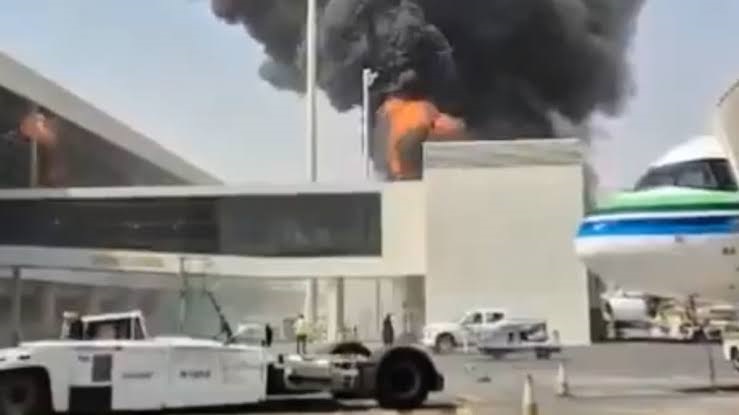
The reactions came after the October 10 attack on Riyadh’s King Khalid International Airport killed at least 12 people and injured 309, according to Saudi authorities. The death toll subsequently rose to 13 after an Indian national injured in the strike died on October 11, the Indian Embassy in Riyadh confirmed.
A further attack was reported at the airport on October 11, underscoring the continuing threat to civilian aviation facilities in Saudi Arabia. The repeated incidents have intensified international concern over the conflict and the possibility of further retaliation.
Altaf Bukhari Calls Attack Deeply Alarming
Altaf Bukhari, president of the Apni Party and a former minister in Jammu and Kashmir, condemned the attack on Riyadh’s international airport, highlighting the danger posed by repeated strikes on civilian infrastructure.
In his public reaction, Bukhari noted that the deadly incident was the third reported attack on the airport within a week, making the situation particularly concerning.
He said targeting civilians and civilian infrastructure constitutes a clear violation of international law and must be unequivocally condemned.
An international airport is more than a transport facility. It connects families, workers, pilgrims, tourists and businesses across national borders. An attack on such a location can have consequences far beyond the immediate destruction, disrupting travel, creating fear among passengers and exposing people of different nationalities to danger.
Bukhari’s response reflects concern over the humanitarian consequences of the escalating violence and the need to ensure that civilians are not caught in the crossfire of regional hostilities.
His statement also highlights the importance of protecting civilian facilities under international humanitarian law. The legal assessment of a specific attack depends on the available evidence and circumstances, but parties to an armed conflict are required to distinguish between civilian objects and legitimate military objectives and to take precautions to protect civilians.
Mirwaiz Umar Farooq Urges Dialogue and Diplomacy
Mirwaiz Umar Farooq, Kashmir’s chief cleric, expressed concern over the loss of life and the potential consequences of further escalation.
In his public statement, Mirwaiz described the attack on King Khalid International Airport as a dangerous development that adds to civilian suffering and risks widening the regional crisis.
He urged all parties to exercise restraint and engage in dialogue and diplomacy for a fair resolution of the conflict.
His appeal placed particular emphasis on preventing further loss of innocent lives. With repeated attacks reported against Saudi aviation facilities, the risk is not limited to one location or one incident. Continued exchanges of strikes could expose more civilians to harm and make a diplomatic settlement increasingly difficult.
The call for dialogue also reflects the wider humanitarian concern surrounding the conflict. While governments and armed groups may pursue competing strategic objectives, civilians often bear the heaviest cost through deaths, injuries, displacement and the disruption of essential services.
Mirwaiz’s statement adds a voice from Kashmir to the growing calls for de-escalation and a political approach to resolving regional disputes.
Death Toll Rises as Another Attack Is Reported
The initial attack on King Khalid International Airport took place on October 10. Saudi Arabia’s General Authority of Civil Aviation reported that 12 people were killed and 309 injured.
The fatalities initially included four Saudi citizens and eight foreign nationals from Bangladesh, the United States, Egypt, Jordan, Syria, Palestine and Sudan.
On October 11, the Indian Embassy in Riyadh confirmed that an Indian national who had been injured in the attack had succumbed to his injuries. The death raised the reported toll from the October 10 strike to 13.
The embassy said it was in contact with the victim’s family and was providing assistance, including arrangements for the repatriation of the mortal remains. Indian officials were also coordinating with local authorities and hospitals concerning injured Indian nationals.
A separate attack was reported at the airport on October 11. Saudi authorities confirmed that the latest incident caused injuries and said damage assessments and safety inspections were being carried out in coordination with the relevant agencies.
The subsequent attack reinforced concerns about the vulnerability of civilian aviation infrastructure amid the deteriorating security situation.
The incidents have also raised practical concerns for passengers and airlines, with airport operations disrupted and travel arrangements affected. In a region that serves as a major international transit hub, prolonged disruption can have consequences for business travel, tourism, migrant workers and religious pilgrims.
Houthis and Saudi Arabia: A Conflict With Wider Regional Consequences
Saudi Arabia has attributed the attacks to Yemen’s Houthi movement, an armed group that has been involved in a prolonged conflict with the Saudi-backed Yemeni government.
The Houthis claimed responsibility for the October 10 strike and other attacks reported against Saudi targets, according to international news reports. The repeated incidents have added another dangerous dimension to the conflict, bringing civilian aviation facilities into the centre of regional security concerns.
The conflict between the Houthis and Saudi Arabia is rooted in Yemen’s wider political and military crisis. Saudi Arabia intervened in the Yemeni conflict in 2015 as part of a coalition supporting the internationally recognised government against the Houthi movement, which controls significant territory, including the capital, Sanaa.
Although diplomatic efforts and periods of reduced hostilities have offered opportunities for de-escalation, tensions have persisted. Renewed attacks and retaliatory operations threaten to undermine those efforts and expand the geographical reach of the conflict.
The latest airport strikes have heightened concerns because aviation facilities are used by civilians from many countries. A prolonged campaign against airports could also disrupt regional connectivity and affect the movement of essential personnel and humanitarian assistance.
The Houthis’ relationship with Iran is another factor in the wider geopolitical debate. The group is widely described as Iran-aligned, but developments in Yemen also reflect local political and military dynamics. The broader conflict should not be reduced to a single regional rivalry, as its causes and consequences involve multiple actors and competing interests.
Why Civilian Airports Are Protected Under International Law
The attack has renewed attention on the legal and humanitarian protections afforded to civilian infrastructure during armed conflict.
International humanitarian law requires parties to distinguish between civilian objects and military objectives. Civilian objects must not be deliberately targeted unless, under the applicable legal criteria, they become military objectives. Even when a military objective is present, parties must observe rules governing proportionality and precautions to minimise civilian harm.
Airports are not automatically military targets simply because they are strategically important or located in a country involved in a conflict. Their legal status in a particular incident depends on their use, the circumstances of the attack and the evidence available.
The large number of casualties reported in Riyadh has made civilian protection a central issue in the international response. However, a definitive legal classification of a particular strike requires an assessment of the facts, including the target, the weapon used, the information available to the attacker and the precautions taken.
The wider principle remains clear: civilians and civilian infrastructure must be protected, and attacks that unlawfully target them can carry serious legal consequences.
For Kashmir’s political and religious leaders, the incident has reinforced the urgency of condemning violence that puts ordinary people at risk.
Why the Attack Matters to India and Kashmir
The attack has particular relevance for India because Saudi Arabia is home to a large Indian expatriate community. Indian nationals work across multiple sectors in the Kingdom, while the two countries maintain significant economic, commercial and people-to-people ties.
The death of an Indian national in the October 10 attack has brought the human cost closer to Indian families. The embassy’s response, including assistance to the bereaved family and coordination concerning injured citizens, has become an important part of the immediate aftermath.
For Jammu and Kashmir, Saudi Arabia also has a strong religious and social connection. Many people from the region travel to the Kingdom for Hajj and Umrah, while families maintain links with relatives working or residing there.
Any sustained disruption to Saudi aviation facilities can therefore create anxiety among families, travellers and people planning religious pilgrimages. The consequences may extend to flight schedules, connecting services, accommodation plans and the movement of passengers through regional airports.
These concerns make civilian safety in Saudi Arabia more than a distant international issue for many people in Kashmir. The region’s political and religious leaders have joined the wider debate because the consequences of escalating violence can reach families and communities far beyond the immediate conflict zone.
At the same time, there is no basis to assume that every planned journey has been cancelled or that all travel routes are affected equally. Passengers should rely on current airline notifications and official travel advisories before making decisions.
International Condemnation and the Risk of Further Escalation
The Riyadh airport attack has drawn international condemnation and renewed warnings about the dangers of targeting civilian infrastructure.
The immediate concern is the possibility of further strikes and retaliation. Saudi authorities and the Saudi-led coalition have indicated that they intend to respond to the attacks, while the Houthis have issued warnings relating to the use of Saudi airports.
Such exchanges create a risk of an escalating cycle in which each attack prompts retaliation, increasing the likelihood of further civilian casualties and widening the conflict.
The consequences could extend beyond Saudi Arabia and Yemen. The Gulf is a major centre for international aviation, energy production and trade. Sustained instability can disrupt transport networks, affect business confidence and place additional pressure on regional security arrangements.
There is also a humanitarian dimension. Every new round of attacks increases the risk of injury and displacement and can complicate the delivery of assistance to people affected by conflict.
Diplomatic engagement remains important because military responses alone may not resolve the political disputes sustaining the violence. Negotiations, communication channels and efforts to prevent attacks on civilians can help reduce the risk of further escalation, although progress depends on the decisions of the parties involved.
Kashmir’s Message: Restraint Must Prevail Over Retaliation
The statements from Altaf Bukhari and Mirwaiz Umar Farooq converge on two central concerns: the protection of civilians and the need to prevent the conflict from expanding further.
Bukhari’s condemnation emphasises the danger of attacks on civilians and civilian infrastructure. Mirwaiz’s appeal highlights dialogue and diplomacy as necessary means of preventing additional loss of life.
Their reactions come from different political and religious roles, but both place civilian suffering at the centre of the issue.
The significance of these statements lies not in their ability to alter the military situation directly, but in their contribution to the wider public demand for restraint and accountability. Political and religious leaders can help draw attention to humanitarian consequences and encourage the use of diplomatic channels rather than further escalation.
Whether such appeals translate into concrete progress will depend on decisions made by the governments and armed groups involved. Nevertheless, calls for the protection of civilians remain relevant as the crisis develops.
Conclusion: A Regional Crisis With Consequences Beyond the Gulf
The deadly attack on Riyadh’s King Khalid International Airport has triggered concern among political and religious leaders in Kashmir, with Altaf Bukhari condemning the targeting of civilian infrastructure and Mirwaiz Umar Farooq urging restraint, dialogue and diplomacy.
The reported death toll from the October 10 attack rose to 13 after an injured Indian national died, while another attack was reported at the airport on October 11. These developments have intensified concerns about aviation safety, civilian protection and the possibility of a wider regional confrontation.
For India, the death of an Indian national underscores the direct human consequences of the violence. For Kashmir, the Kingdom’s importance to expatriate families and religious travellers gives the unfolding crisis an added social dimension.
The immediate priority remains the protection of civilians, support for the injured and prevention of further attacks. The longer-term challenge is to stop the cycle of strikes and retaliation from widening into a conflict with still greater humanitarian and regional consequences.
The message emerging from Kashmir is clear: civilian lives must remain central to the international response, and sustained diplomatic engagement is essential to preventing further suffering.