CJP’s Anti-CEC Protest Triggers Wider Debate on Electoral Integrity, Civil Liberties and the Limits of State Power
Javid Amin | New Delhi | 11 October 2026
What began as a protest demanding the resignation of Chief Election Commissioner Gyanesh Kumar has developed into a much wider confrontation over India’s democratic freedoms, electoral credibility and the government’s response to political dissent.
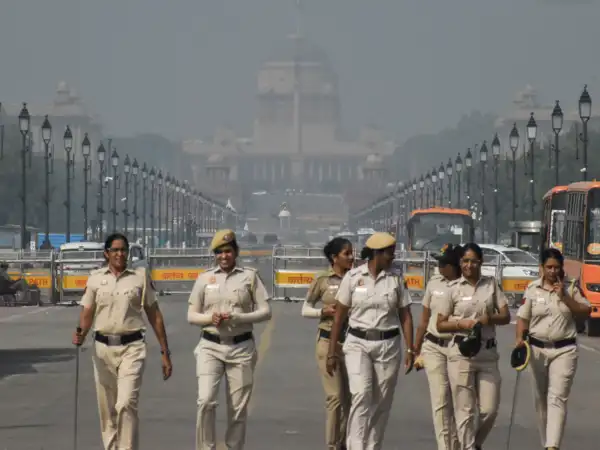
The Cockroach Janta Party (CJP), which mobilised supporters against alleged irregularities in the Special Intensive Revision (SIR) of electoral rolls, found its planned October 10 demonstration at Jantar Mantar blocked by an extensive security operation. Thousands of people were reportedly detained, senior organisers were taken into custody, internet services were restricted in parts of the capital, and public transport faced significant disruption.
By Sunday, the controversy had moved well beyond the original electoral dispute. The United Nations human rights office had expressed concern over reports of mass detentions, India had rejected the international criticism, and the Supreme Court had intervened over restrictions affecting Delhi’s public transport system.
The confrontation has exposed a difficult question for the world’s largest democracy: how can authorities maintain public order without placing disproportionate restrictions on the constitutional right to peaceful assembly?
The answer will depend not only on the government’s justification for its security measures but also on whether the restrictions were necessary, proportionate and subject to effective legal scrutiny.
From Electoral Roll Allegations to a National Political Confrontation
The immediate dispute centres on the Election Commission’s Special Intensive Revision of electoral rolls.
The exercise is intended to update voter lists by identifying eligible electors, correcting entries and removing names that no longer qualify under electoral rules. Such revisions are an established part of electoral administration. The controversy arises when political parties and voters question whether the process is being conducted transparently and whether eligible citizens risk losing their right to vote.
CJP and its supporters have accused the authorities of carrying out a revision process that could disproportionately affect opposition supporters and vulnerable communities. Opposition voices have also questioned the scale and consequences of reported voter deletions.
The figure of approximately 130 million names removed from electoral rolls has circulated in coverage of the dispute. However, that number must be treated cautiously. A reported deletion figure, by itself, does not establish that every affected entry belonged to an eligible voter or that the deletions were politically motivated. Establishing wrongdoing requires detailed, verifiable records showing the number of names removed, the reasons for removal, the number of eligible voters affected and the remedies available to them.
The Election Commission’s published voter-services portal provides facilities for checking electoral-roll entries and submitting relevant applications. Those mechanisms are important, but their existence does not settle questions about the transparency, accessibility or accuracy of the revision exercise.
For the electoral dispute to be resolved credibly, allegations must be tested against the underlying records rather than accepted or dismissed solely on political grounds.
The protest movement, meanwhile, has made the resignation of Chief Election Commissioner Gyanesh Kumar a central demand. Its supporters argue that confidence in the electoral process requires visible accountability. The government’s position has been that the electoral exercise and public-order measures must operate within the established legal framework.
The resulting confrontation has turned an administrative dispute into a wider test of public confidence in electoral institutions.
October 10: Delhi’s Security Operation Becomes the Main Story
The scale of the response to the planned demonstration quickly overshadowed the original demand.
Delhi Police had denied CJP permission to hold its October 10 gathering at Jantar Mantar, citing the short notice given by organisers, alleged non-compliance with conditions imposed during an earlier demonstration, and concerns over public safety, traffic and law and order.
According to reporting by The Indian Express, police developed a detailed deployment plan involving 37 blocking points and designated detention facilities across the capital’s 15 districts. Authorities also prepared to prevent groups of protesters from converging on central Delhi.
The Ministry of Home Affairs raised concerns about possible law-and-order problems and directed coordination between Delhi Police and state and Union Territory authorities.
Police officials maintained that the measures were intended to prevent an unauthorised gathering from disrupting essential services or creating a dangerous situation in the capital.
But the breadth of the operation raised a separate question: did preventing one demonstration require restrictions that affected people who had no connection with the protest?
Reuters reported on October 10 that more than 2,000 people were detained as authorities sought to prevent the rally from taking place. Reports also described mobile internet restrictions in parts of central Delhi, extensive barricading and disruptions to public transport.
The exact total of people detained varied across reports, and detention figures should not be treated as interchangeable with the number of people formally arrested or charged with an offence.
That distinction matters. Preventive detention, temporary custody for maintaining public order and arrest in connection with a criminal case have different legal implications.
Nevertheless, the operation’s scale made it impossible to view the episode as an isolated dispute between protest organisers and local police.
For commuters, lawyers, residents and businesses, the restrictions became an immediate civic issue. For civil-liberties advocates, they raised concerns about whether preventive policing had expanded beyond what was reasonably required to manage the demonstration.
UN Human Rights Office Raises Concern
International attention intensified when the Office of the United Nations High Commissioner for Human Rights expressed concern over reports of mass detentions during the Delhi protests.
In its statement on October 10, the UN human rights office referred to reports involving demonstrators, protest leaders, civil-society members, lawyers and journalists. It called on Indian authorities to respect the right to peaceful assembly and urged the release of people detained arbitrarily.
The intervention gave the controversy an international dimension. It also placed the government’s response under greater scrutiny from observers concerned with civil liberties and democratic accountability.
However, the UN statement should be understood accurately. It raised concern about reported detentions and the right to peaceful assembly. It did not establish that the allegations concerning voter-list manipulation were true, nor did it constitute a judicial finding that every detention was unlawful.
Those questions require separate examination of the facts, the legal grounds for individual detentions and the circumstances in which restrictions were imposed.
India responded sharply to the criticism.
According to reports published on October 11, the government described the UN human rights office’s remarks as misplaced and unwarranted interference in India’s internal affairs. New Delhi maintained that peaceful assembly is protected under the Constitution and that law-enforcement action must be assessed within India’s legal framework.
The disagreement reflects a familiar tension in international affairs. Governments frequently insist that domestic policing and public order fall within national jurisdiction, while international human-rights institutions maintain that states must honour their human-rights commitments when exercising those powers.
Both the sovereignty argument and the rights-based criticism can be stated clearly. The decisive issue is whether the actions taken in Delhi complied with applicable law and respected the constitutional protections available to citizens.
Supreme Court Steps In as Public Transport Restrictions Come Under Scrutiny
The controversy also reached the Supreme Court, where the immediate concern was not simply whether CJP should be allowed to protest, but how far authorities could go in restricting transport and public movement to prevent a possible law-and-order problem.
Ahead of the demonstration, the court questioned the broad restrictions affecting Delhi Metro services and incoming trains. It emphasised that public transport should not be brought to a halt merely because authorities anticipate a protest. Security arrangements, the court indicated, should respond to the actual situation while minimising unnecessary hardship to the public.
On October 11, the Supreme Court ordered the lifting of restrictions imposed at 45 of Delhi Metro’s 303 stations and sought the Centre’s response by Tuesday, according to The Indian Express.
The court’s intervention is significant because it moves the debate from competing political narratives to a concrete constitutional question: can preventive security measures be justified when their effects extend well beyond the people authorities are seeking to control?
Delhi is a national transport hub. Metro stations, railway connections and arterial roads serve millions of commuters, including office workers, patients, students, traders and visitors who have no involvement in political demonstrations.
Restrictions imposed across such a system can create substantial disruption even when the underlying security concern is genuine.
The legal issue is therefore not whether police can ever restrict movement. They can take lawful measures to prevent violence, protect public property and maintain order. The question is whether the restrictions imposed in a particular situation are justified by evidence and tailored to the actual risk.
The Supreme Court’s intervention does not, by itself, establish that every police measure was unlawful. It does, however, underline the need for proportionality and judicial scrutiny.
Preventive Detention and the Right to Protest
The detention of protest organisers has become another central element of the dispute.
CJP founder Abhijeet Dipke and co-convenors Saurav Das and Ashutosh Ranka were detained by police after arriving at Delhi’s Indira Gandhi International Airport on October 10. They had travelled to the capital for the proposed demonstration.
A Special Executive Magistrate ordered their release on October 11, subject to conditions reported to include a bond and an undertaking not to breach the peace for one year.
Their release was an important development, but it did not resolve the broader legal questions raised by the operation.
CJP’s legal team and other affected individuals have challenged aspects of the police action. Separate reporting described petitions seeking the production or release of detained organisers and the preservation of records relating to custody.
The legal issues include whether the grounds for preventive detention were properly communicated, whether the authorities followed the required procedures and whether the restrictions imposed on individuals were justified by the circumstances.
Article 19 of the Constitution protects freedom of speech and expression and the right to assemble peacefully without arms. These rights are fundamental to democratic participation, but they are not unlimited. The Constitution permits reasonable restrictions under specified conditions, including in the interests of public order.
The existence of a legal power to regulate protests does not automatically make every restriction reasonable. Nor does the fundamental right to assemble mean that any gathering can take place at any location, regardless of safety or the rights of other citizens.
A functioning democracy must reconcile both principles.
The police must be able to prevent violence and protect the public. Citizens must be able to challenge government decisions without facing restrictions that are arbitrary, excessive or unrelated to a demonstrable threat.
That balance is particularly important when a protest targets an institution responsible for overseeing elections.
The Government’s Argument: Public Safety Cannot Be Ignored
The criticism of the security operation should not obscure the concerns cited by the authorities.
Delhi Police said the protest application had been submitted on October 7, only three days before the proposed October 10 gathering. Police officials also cited previous alleged violations of protest conditions and concerns about traffic, crowd management and public safety.
Authorities argued that a large, unauthorised mobilisation in central Delhi could create serious disruption. The Ministry of Home Affairs also warned of possible law-and-order problems and called for preventive coordination.
These concerns cannot simply be dismissed. Delhi’s central administrative district contains sensitive government facilities, major roads and important public infrastructure. Large gatherings can require advance planning, particularly when organisers expect participants to travel from different parts of the country.
Police have a legitimate responsibility to manage crowds, prevent clashes and ensure that emergency services remain accessible.
However, the public-order argument must be supported by the circumstances of the particular case. A broad restriction affecting an entire area or transport network requires a stronger justification than a targeted measure around a specific gathering point.
Authorities must also consider whether less restrictive alternatives are available, such as limiting crowd numbers, imposing defined routes, increasing deployment at sensitive locations or permitting a demonstration at an alternative venue.
The relevant question is not whether the government should maintain public order. It is whether the methods used to do so were necessary and proportionate.
Electoral Integrity Remains the Unresolved Issue
Even as the police action dominates the headlines, the original electoral dispute remains unresolved.
The Special Intensive Revision process concerns the accuracy of voter lists, a foundational element of representative democracy. Electoral rolls must exclude ineligible entries, but they must also protect the participation of eligible citizens.
Both objectives matter.
An inaccurate roll can undermine confidence in elections if eligible voters find their names missing or if errors are not corrected in time. Conversely, retaining duplicate, outdated or otherwise ineligible entries can also compromise the accuracy of electoral records.
The challenge is to ensure that revisions are transparent, verifiable and accessible to the public.
A credible assessment of the current controversy would require publication and examination of relevant state-wise and constituency-wise figures, clear explanations for deletions, information about objections and appeals, and evidence showing how many eligible voters may have been affected.
It would also require the Election Commission to address specific allegations with documentary evidence rather than allowing the dispute to be decided entirely through competing political claims.
CJP’s demand for the Chief Election Commissioner’s resignation is a political demand, not proof of wrongdoing. Equally, the fact that the revision is being carried out under an established administrative process does not make every criticism invalid.
Electoral integrity depends on both accurate records and public confidence in the institutions responsible for maintaining them.
Why the Delhi Protests Matter Beyond One Political Movement
The events have implications beyond CJP and the immediate demand for Gyanesh Kumar’s resignation.
India’s political system depends on a network of institutions, including the Election Commission, courts, police, legislatures and civil society. Their legitimacy depends partly on whether citizens believe that disputes can be raised, investigated and resolved through credible procedures.
When electoral disagreements spill into street protests, the response can either help restore confidence or deepen mistrust.
A transparent investigation into credible complaints may help establish the facts. Clear communication about electoral-roll revisions can reduce uncertainty. Proportionate policing can protect public safety without unnecessarily restricting peaceful dissent.
Conversely, broad preventive measures that inconvenience large sections of the public can shift attention away from the original allegations and towards the state’s exercise of power.
The political consequences may extend into upcoming electoral contests, where opposition parties are likely to make electoral integrity and civil liberties part of their campaigns. The BJP has denied wrongdoing in relation to the allegations, while opposition figures have criticised the authorities’ handling of the protests.
The extent to which the controversy changes public opinion will depend on what emerges from the legal proceedings, the quality of the evidence about voter deletions and the authorities’ willingness to answer specific questions.
International scrutiny adds another dimension, but the ultimate assessment will depend on the facts and the functioning of India’s own institutions.
What the Episode Means for India’s Democratic Standing
International attention does not automatically establish that a government has violated democratic standards. Nor does a government’s rejection of external criticism resolve the concerns that prompted it.
The more useful test is how a state responds when its conduct is questioned.
Can authorities provide a clear legal basis for preventive detentions? Can people challenge those actions before independent courts? Can restrictions be reviewed and lifted when they are no longer necessary? Can electoral institutions demonstrate that eligible voters have not been unfairly excluded?
These questions are relevant to any democracy, regardless of its political leadership.
India has a constitutional framework that protects civil liberties while allowing reasonable restrictions in the interests of public order. The task is to ensure that both sides of that framework operate effectively.
The Supreme Court’s scrutiny of transport restrictions, the release of detained CJP leaders and the UN human rights office’s intervention have brought those questions into sharper focus.
The immediate confrontation may subside, but its implications are likely to persist until the underlying concerns receive credible answers.
The Road Ahead: Accountability Must Extend Beyond the Streets
As Delhi moves beyond the security operation of October 10, three issues require attention.
The first is the legal status of the detentions and restrictions. Courts must be able to examine whether the authorities acted within their powers and whether the safeguards required by law were followed.
The second is the electoral-roll dispute. The Election Commission must ensure that specific complaints can be verified, that eligible voters have accessible remedies and that the basis for contested deletions is adequately explained.
The third is the management of future demonstrations. Authorities and organisers alike must follow lawful procedures, while the government should consider whether practical arrangements can accommodate peaceful protest without imposing unnecessary burdens on the wider public.
These are separate responsibilities, and progress on one does not eliminate the need to address the others.
The CJP protest began with a demand for accountability from India’s chief election authority. It has since become a broader debate about how democratic institutions handle criticism, how the state exercises its coercive powers and how constitutional rights are protected during moments of political tension.
The international reaction has increased the scrutiny, but the most consequential judgments will come from the evidence, the courts and the institutions responsible for answering the questions raised.
For the government, the challenge is to demonstrate that public safety measures remain lawful and proportionate. For CJP and opposition parties, the challenge is to substantiate electoral allegations with verifiable evidence. For the Election Commission, the priority is to maintain accurate rolls and public confidence in the revision process.
Ultimately, the strength of a democracy is not measured by whether protests occur or whether authorities can prevent them. It is measured by whether disagreements can be resolved through transparent procedures, accountable institutions and respect for constitutional freedoms.
That is the larger question now hanging over Delhi, and one that will not disappear when the barricades come down.