The National Conference, PDP and other opposition groups joined protests over electoral-roll revisions, while Farooq Abdullah called for a more independent Election Commission. Omar Abdullah and Mehbooba Mufti separately compared security curbs in Delhi with Kashmir’s experience of restrictions.
Javid Amin | Srinagar | October 10, 2026
Jammu and Kashmir’s political debate over democratic representation has intersected with a growing national controversy over electoral-roll revisions, as regional parties joined protests against Chief Election Commissioner Gyanesh Kumar and opposition leaders questioned the handling of demonstrations in New Delhi.
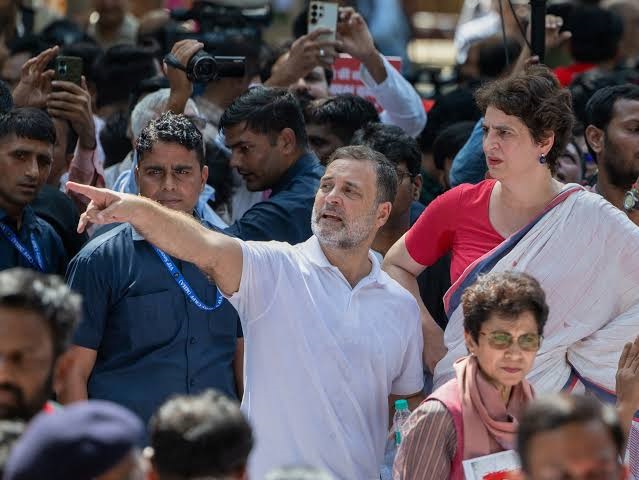
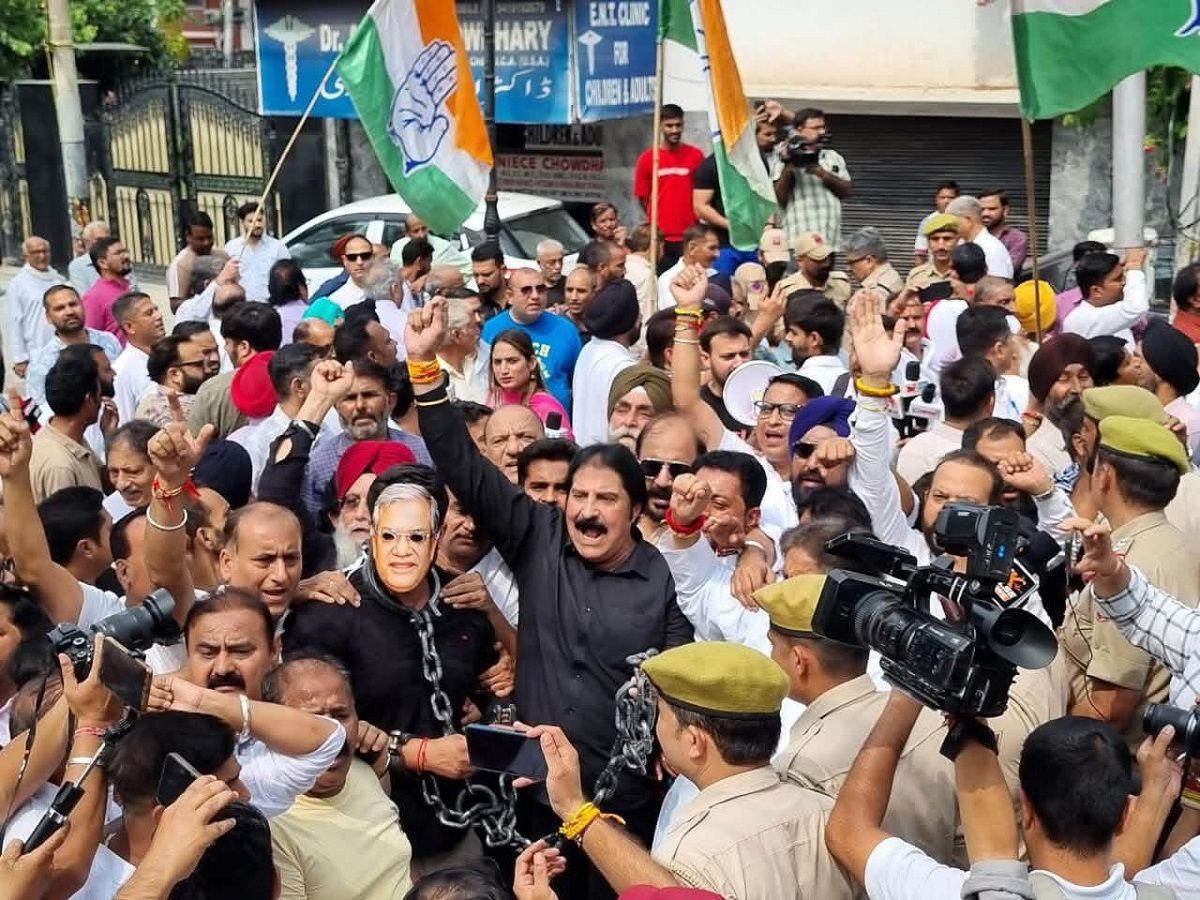
The National Conference (NC) and the Peoples Democratic Party (PDP), along with Congress and other opposition groups, participated in an INDIA bloc mobilisation in Kashmir on Saturday, October 10, demanding accountability over the Election Commission’s Special Intensive Revision (SIR) of electoral rolls.
The protests followed earlier demonstrations in Jammu and other parts of the country. They also came amid mounting controversy over security restrictions imposed in Delhi ahead of a planned Cockroach Janta Party (CJP) demonstration at Jantar Mantar.
Jammu and Kashmir Chief Minister Omar Abdullah criticised the temporary suspension of mobile internet services in parts of the capital, writing on X that the “Kashmir model” had been exported to Delhi. PDP president Mehbooba Mufti also drew a comparison with the restrictions imposed in Kashmir after the abrogation of Article 370 in August 2019.
Meanwhile, National Conference president Farooq Abdullah had used a Srinagar political conclave earlier in the week to question alleged voter deletions and call for greater independence for the Election Commission.
Together, the developments have placed electoral transparency, political representation and the management of public dissent at the centre of a wider political discussion.
Regional parties join the anti-CEC mobilisation in Kashmir
The October 10 mobilisation reflected the participation of Jammu and Kashmir’s regional political parties in a campaign that has expanded beyond Delhi and Mumbai.
The INDIA bloc’s protest centred on allegations that the SIR exercise could result in eligible voters being removed from electoral rolls and demands for Chief Election Commissioner Gyanesh Kumar to resign.
The National Conference, which leads the elected government in Jammu and Kashmir, and the PDP, led by Mehbooba Mufti, joined the wider opposition mobilisation. Congress and other opposition groups also participated in demonstrations in the region.
The protests were part of a national campaign questioning the Election Commission’s handling of electoral-roll revisions. Opposition parties have sought greater transparency over the verification process, the treatment of disputed entries and the safeguards available to voters who believe their names have been wrongly removed.
The Election Commission and the BJP have rejected allegations of electoral manipulation. The dispute therefore remains politically contested, and claims of wrongful exclusion need to be examined against official records and the procedures available to affected voters.
The participation of regional parties is significant because electoral representation has particular importance in Jammu and Kashmir, where political debates have long focused on constitutional changes, statehood, institutional authority and the relationship between elected representatives and the Union government.
Their participation in the anti-CEC campaign, however, does not mean that all regional parties have identical positions on every aspect of electoral reform or the wider political issues facing the region.
Farooq Abdullah: “Courage” is emerging, change will come
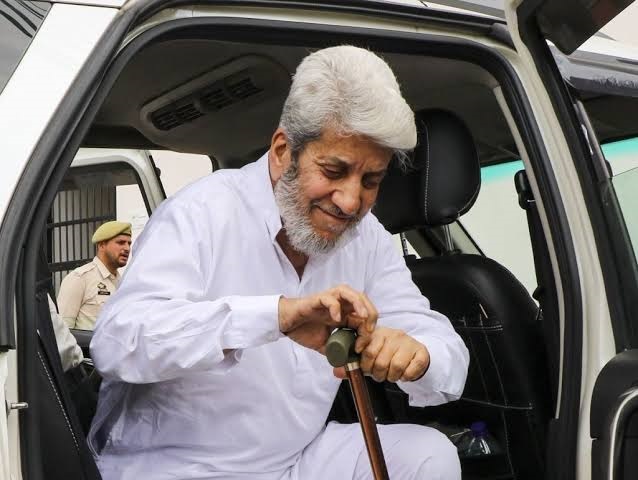
At the fifth Halla Bolle Conclave in Srinagar earlier in October, National Conference president Farooq Abdullah criticised the alleged removal of voters from electoral rolls and questioned the Election Commission’s handling of the SIR exercise.
The former Jammu and Kashmir chief minister argued that no authority should deprive an eligible Indian citizen of the right to vote. He also questioned the role of Chief Election Commissioner Gyanesh Kumar amid the growing protests.
“There is courage emerging among people, change will come,” Abdullah said, according to reports by The Tribune and other media outlets.
His remarks reflected his assessment that public resistance to the disputed electoral-roll revision was growing. He referred to demonstrations in Delhi and Mumbai as evidence that political groups and citizens were increasingly willing to challenge decisions they considered harmful to democratic rights.
Abdullah also called for a more autonomous Election Commission and questioned the mechanism through which Election Commissioners are appointed.
The appointment process has become an important part of the national debate over the independence of electoral institutions. Critics have questioned whether the existing framework provides sufficient safeguards against executive influence, while the government’s position and the applicable statutory framework must also be considered when assessing proposals for reform.
Abdullah’s comments were political arguments for greater accountability and institutional independence, rather than findings that the Election Commission had unlawfully removed eligible voters.
His intervention nevertheless placed the SIR controversy within a broader discussion about public confidence in the institutions responsible for conducting elections.
Omar Abdullah’s “Kashmir model” remark over Delhi restrictions
The controversy took on a separate dimension after mobile internet services were suspended in a defined area of central Delhi ahead of the CJP protest scheduled for October 10.
Responding to the restrictions, Omar Abdullah wrote on X:
“Kashmir model has been exported to Delhi. Welcome to the New Delhi, modelled on New Jammu & Kashmir.”
The chief minister was drawing a comparison with the repeated communication restrictions that have formed part of Jammu and Kashmir’s security landscape over the years.
The Delhi suspension was scheduled to run from 10 pm on October 9 until 10 pm on October 10 within a four-kilometre radius of the Janpath–Kartavya Path crossing. It was a time-bound restriction in a defined area, rather than a citywide internet shutdown.
The order came amid extensive security preparations around the CJP demonstration. Delhi Police had denied permission for the protest, citing procedural and law-and-order concerns, while authorities introduced transport restrictions, barricades and other preventive measures.
Abdullah’s remark connected the Delhi developments to Kashmir’s experience of restrictions on communication and movement. It also raised a broader political question: how should governments balance public safety with the ability of citizens to communicate, obtain information and participate in peaceful demonstrations?
The comparison is a political interpretation of the Delhi measures, and the circumstances in the two regions are not necessarily identical. The duration, geographical scope, legal grounds and practical effects of restrictions must be assessed individually.
Nevertheless, Abdullah’s comments brought Kashmir’s history of shutdowns into a national debate about protest management and the proportionality of security measures.
Mehbooba Mufti compares Delhi with Kashmir after Article 370
PDP president Mehbooba Mufti also criticised the restrictions imposed in Delhi and drew a direct parallel with Kashmir after the abrogation of Article 370 in August 2019.
In a post on X, she described the situation in the capital as a “chilling reminder” of the restrictions experienced in Kashmir following the constitutional changes.
Mufti argued that the combination of internet restrictions, halted or disrupted transport and sealed roads around the planned demonstration raised concerns about the ability of citizens to express dissent.
Her criticism focused on the potential gap between the absence of visible protest and the existence of public support or opposition. In her view, preventing people from gathering cannot itself demonstrate that they have no objections to the government or the issue being protested.
These were Mufti’s political claims about the meaning and consequences of the restrictions. The specific measures imposed in Delhi and the restrictions experienced in Kashmir after 2019 differed in scope and context, and should not automatically be treated as equivalent.
Her remarks nevertheless underline the importance of distinguishing between the prevention of a demonstration and the resolution of the concerns that prompted it.
The controversy has also revived questions about how authorities communicate the reasons for restrictions, what alternatives they offer to peaceful demonstrators and how they minimise the impact on residents and commuters.
Why the SIR exercise has become a national political flashpoint
At the heart of the protests is the Election Commission’s Special Intensive Revision of electoral rolls.
Electoral rolls must be maintained so that eligible citizens can vote and ineligible entries can be corrected. A revision exercise can therefore be a legitimate part of election administration. The dispute arises when political parties or voters question whether the process has been conducted transparently and whether safeguards are adequate to prevent eligible voters from being excluded.
Opposition groups have alleged that the SIR process has led to the removal of eligible voters and demanded greater scrutiny of the revisions. They have also questioned the Election Commission’s accountability and called for Kumar’s resignation.
The Election Commission and the BJP have rejected allegations of manipulation, maintaining that the revision process falls within the Commission’s responsibilities.
Reports about large numbers of names being removed from electoral rolls need careful interpretation. A deletion total alone does not establish that every person removed was eligible to vote, that every deletion was unlawful or that the process was directed to benefit a particular political party. Equally, the scale of a revision makes transparent explanations, accessible correction procedures and independent scrutiny important.
The key questions are whether eligible voters have been wrongly excluded, whether the reasons for changes can be verified and whether affected citizens have practical opportunities to restore their names before elections.
For regional parties in Jammu and Kashmir, the dispute also touches on the wider question of public trust in electoral institutions. Their participation in the protests reflects a demand for accountability, but the underlying allegations must still be tested through evidence and established procedures.
National protests bring the Election Commission under pressure
The anti-CEC agitation has extended across several cities, including Delhi and Mumbai, with political groups, student organisations and activists demanding accountability over the electoral-roll revision process.
In Mumbai, thousands of people reportedly gathered near Shivaji Park under the CJP banner, calling for Kumar’s resignation and an independent review of SIR. The campaign attracted public figures and activists, while demonstrations in Delhi faced extensive security restrictions.
The CJP, which emerged from online satire and later became involved in youth-led protests, has sought to mobilise people around electoral transparency and institutional accountability.
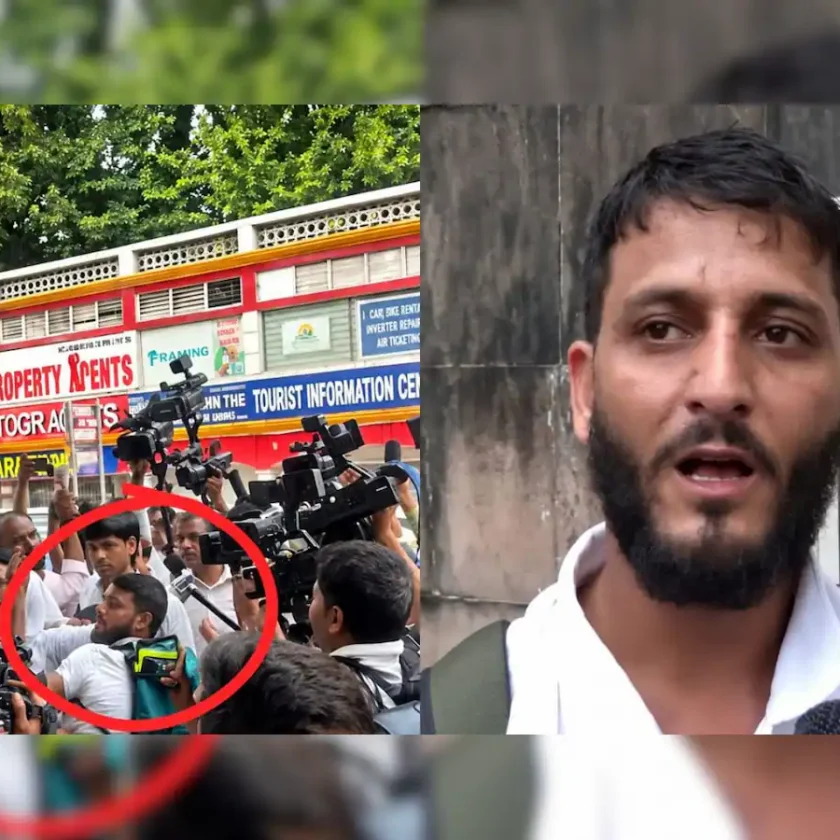
The protests have also brought confrontation between demonstrators and police into the public debate. Reports from Delhi described preventive detentions, barricading and other restrictions, while authorities cited security and public-order concerns.
The Supreme Court separately questioned a complete shutdown of Metro and railway services ahead of the Delhi demonstration, urging authorities to maintain regulated services to avoid unnecessary inconvenience to commuters. Those observations concerned transport restrictions; they were not a final ruling on the merits of the allegations against the Election Commission or the legality of every police action.
The wider campaign has therefore developed along two tracks: the original dispute over voter-list revisions and the separate debate over how authorities respond to protests against those revisions.
Jammu and Kashmir’s political unity—and its limits
The participation of the NC and PDP in the anti-CEC campaign comes against the backdrop of continuing political differences between the region’s major parties.
Both have raised concerns about electoral processes and the broader functioning of democratic institutions, but they differ on important questions concerning Jammu and Kashmir’s political future, constitutional status and engagement with the Centre.
Mehbooba Mufti has recently called for political parties in Jammu and Kashmir to overcome their differences and create a common platform to raise the region’s political, social and economic concerns with the Union government. She has pointed to Ladakh’s collective mobilisation over its demands as an example of the potential value of coordinated political action.
That appeal reflects a wider challenge for the region’s parties: shared concerns do not automatically produce agreement on every demand or a permanent political alliance.
The October protests provide an example of cooperation around a specific issue—electoral transparency and the Election Commission—even as differences remain over other matters.
It would therefore be premature to interpret joint participation in one campaign as evidence that the NC and PDP have resolved their broader political disagreements. Their cooperation is better understood in the context of a particular demand and the national campaign surrounding it.
What the controversy means for democratic institutions
The developments in Kashmir and Delhi have placed three related questions in the spotlight.
First, electoral institutions must maintain accurate voter lists while protecting the rights of eligible citizens. Transparent procedures, clear explanations for deletions and accessible appeal mechanisms are central to public confidence.
Second, governments and police authorities must manage public-order risks without imposing unnecessary restrictions on people who are not participating in a demonstration. The legal basis, duration and geographical scope of any restriction are important to assessing its proportionality.
Third, political criticism and public protest are not substitutes for evidence. Allegations of voter deletion or electoral manipulation must be examined through records and appropriate legal processes, while the right to raise concerns about election administration remains an important part of democratic debate.
The Election Commission’s credibility depends not only on conducting electoral exercises but also on providing explanations that voters and political parties can scrutinise. Similarly, the credibility of public-order measures depends on clear legal grounds, proportionality and accountability.
These principles apply across regions, even when the security circumstances and political disputes differ.
Conclusion: Electoral transparency and the right to dissent converge
The participation of Jammu and Kashmir’s regional parties in the anti-CEC protests has connected the region’s political debate with a nationwide dispute over electoral-roll revisions.
Farooq Abdullah has called for greater independence for the Election Commission and questioned alleged voter deletions. Omar Abdullah and Mehbooba Mufti have criticised the restrictions imposed in Delhi ahead of the CJP protest, drawing comparisons with Kashmir’s experience of communication and movement curbs.
The allegations surrounding SIR remain contested, and the Election Commission and BJP have denied claims of manipulation. The legal and factual questions must be assessed through official records, transparent procedures and appropriate scrutiny.
At the same time, the protests have brought renewed attention to how authorities balance public order with peaceful political participation.
For Jammu and Kashmir, the issue is not limited to one demonstration or one institution. It touches on representation, public confidence and the ability of citizens to question decisions affecting their democratic rights. Whether the current mobilisation produces changes in electoral procedures or institutional safeguards will depend on the evidence, the response of the authorities and the course of the legal and political debate.