J&K Chief Minister Says ‘Money Power’ Is Being Used to Destabilize the National Conference
By: Javid Amin | 11 July 2026
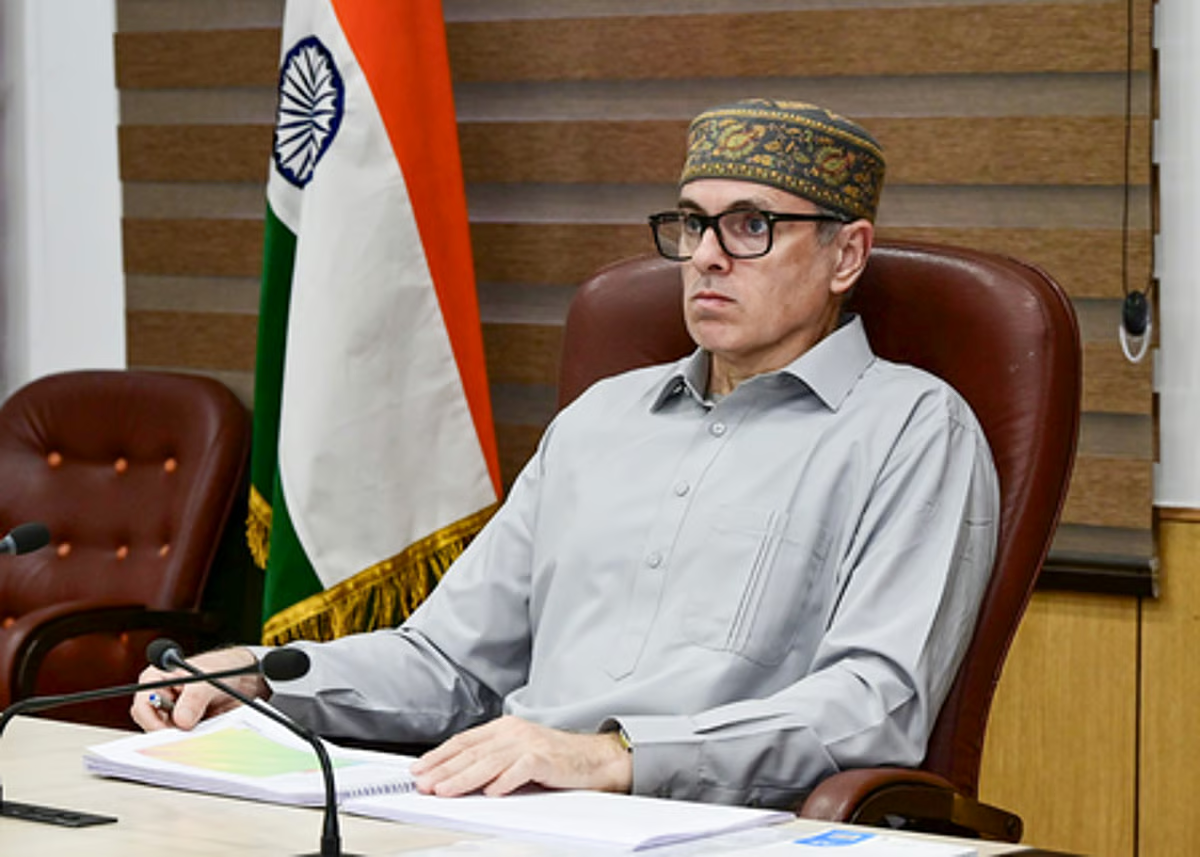
Jammu and Kashmir Chief Minister Omar Abdullah has levelled serious allegations of political horse-trading, claiming that attempts are being made to split the ruling National Conference (NC) by offering enormous sums of money to its legislators.
According to Omar Abdullah, one of the National Conference MLAs was allegedly offered between ₹20 crore and ₹30 crore to switch political allegiance. The Chief Minister did not publicly identify the legislator or present documentary evidence to support the allegation, but his remarks have intensified the political atmosphere in Jammu and Kashmir, where debates over governance, statehood restoration and party alignments continue to dominate public discourse.
The allegation has once again brought the issue of defections and the role of money in Indian politics into the spotlight, with political observers closely watching whether the claims trigger fresh confrontation between the ruling alliance and opposition parties.
What Omar Abdullah Claimed
Speaking on the issue, Omar Abdullah alleged that forces opposed to the National Conference are attempting to weaken the party from within instead of challenging it politically.
According to him, the alleged offer of ₹20–30 crore was made to persuade an NC legislator to leave the party. He portrayed the episode as part of a broader effort to destabilize the elected government and undermine the mandate received by the National Conference-led alliance.
Although the Chief Minister did not name any individual or political party behind the alleged offer, his comments have fuelled speculation across Jammu and Kashmir’s political landscape.
At the time of writing, no independent evidence has been publicly produced to substantiate the allegation, and no investigating agency has announced any inquiry into the claim.
A Familiar Debate in Indian Politics
Allegations of political poaching are not new in Indian politics.
Over the past decade, several state governments across the country have accused rival parties of attempting to lure legislators through financial inducements or promises of ministerial positions. Such accusations have frequently surfaced during periods of political instability, coalition negotiations and confidence votes.
In Jammu and Kashmir, however, the political context carries additional significance because the Union Territory continues to experience an evolving democratic landscape following the reorganization of the former state in 2019.
Against this backdrop, any suggestion of attempts to engineer defections naturally attracts considerable political attention.
Why the Allegation Matters
Questions Over Political Stability
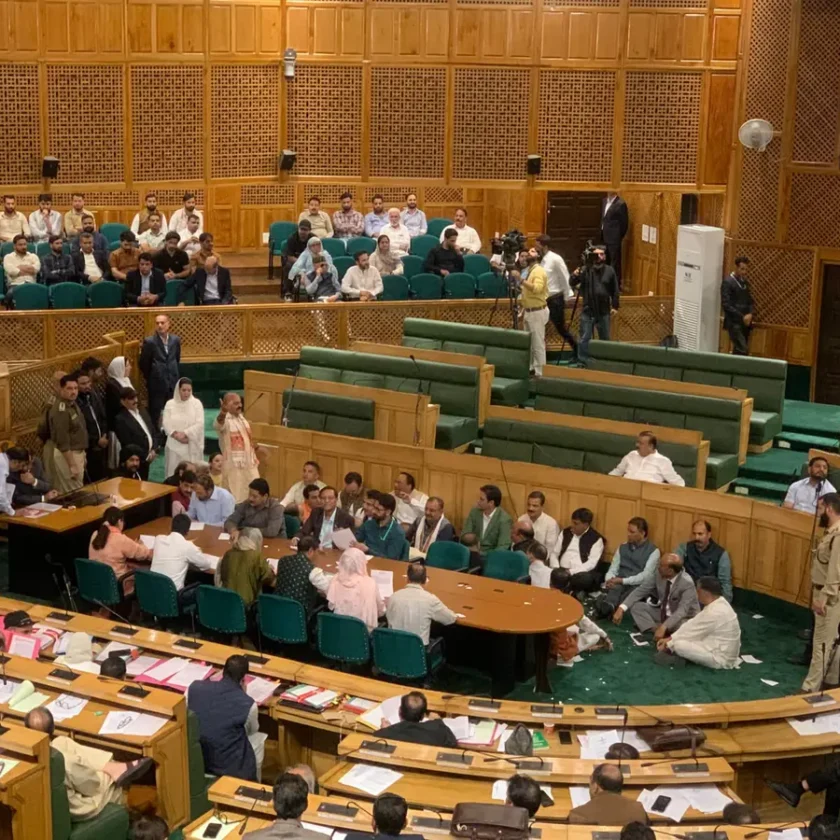
The National Conference currently leads the elected government in Jammu and Kashmir. Any successful attempt to weaken its legislative strength could have implications for governance, legislative functioning and political stability.
Even if no defection occurs, repeated allegations of political poaching create uncertainty within the political system and often dominate public debate.
Message to Party Workers
Political analysts believe Omar Abdullah’s remarks may also serve an internal purpose.
By publicly highlighting alleged attempts to buy legislators, the Chief Minister appears to be sending a message to party workers that the leadership remains alert against possible efforts to divide the organization.
Such statements often help strengthen internal discipline while reassuring party cadres that the leadership is prepared to resist political pressure.
Public Perception
For many voters, the allegations revive concerns about whether elected representatives remain accountable to the people who voted for them or become vulnerable to financial inducements.
The issue of political morality has repeatedly emerged as a major concern whenever allegations of horse-trading surface in Indian politics.
Whether Omar Abdullah’s claims influence public opinion will largely depend on whether additional evidence or corroborating information emerges in the coming days.
Political Context Behind the Statement
The allegation comes at a politically sensitive time in Jammu and Kashmir.
The National Conference has been aggressively pursuing several political issues, including:
- Restoration of full statehood.
- Greater administrative powers for the elected government.
- Protection of democratic institutions.
- Development and governance reforms.
- Continued engagement with the Centre on constitutional and political matters.
Simultaneously, opposition parties have intensified their criticism of the government over governance, development, employment, infrastructure and public services.
Against this backdrop, political rhetoric has become increasingly sharp.
Likely Response From Opposition
Although no party has officially accepted Omar Abdullah’s allegation, opposition leaders are expected to challenge the claim.
Potential responses may include:
- Demanding proof of the alleged bribery attempt.
- Describing the statement as political rhetoric.
- Accusing the National Conference of diverting attention from governance issues.
- Rejecting allegations of political poaching as baseless.
Without verifiable evidence, political observers say the issue is likely to remain part of the larger war of narratives between the ruling party and its rivals.
Challenges Facing the National Conference
Maintaining Internal Unity
Even rumours of defections can affect party morale.
Leadership will likely focus on maintaining communication with legislators and ensuring organizational unity to prevent speculation from growing.
Managing Public Confidence
The government must balance political messaging with governance.
If discussions remain focused solely on allegations of horse-trading, attention could shift away from pressing public issues such as employment, infrastructure, tourism, education and economic development.
Evidence Will Be Crucial
The credibility of the allegation ultimately depends on whether supporting evidence emerges.
Political experts note that extraordinary claims involving large financial inducements generally require credible documentation, testimony or investigative findings before they significantly alter public opinion.
Until such evidence becomes available, the allegation remains part of the ongoing political contest rather than an established fact.
Broader Questions Raised
The controversy raises several important questions beyond party politics.
- How can democratic institutions better discourage political defections?
- Should anti-defection laws be strengthened further?
- What safeguards exist against alleged financial inducements?
- How can public confidence in elected representatives be protected?
These questions continue to shape debates not only in Jammu and Kashmir but across India whenever allegations of political horse-trading emerge.
Political Analysis: A Battle of Narratives
From a political standpoint, Omar Abdullah’s statement appears to serve multiple objectives.
First, it projects the National Conference as a party resisting what it describes as the influence of money in politics. Second, it reinforces the leadership’s message of unity at a time when political competition is intensifying. Third, it places pressure on opposition parties to respond publicly to the allegation.
Conversely, rival parties are likely to argue that the Chief Minister’s remarks are intended to consolidate support within the NC and shift attention from governance-related criticism.
As with many political controversies, the narrative that ultimately prevails will depend on whether fresh evidence, official investigations or public statements from the alleged MLA emerge.
What Happens Next?
The coming days could determine whether the controversy develops into a larger political issue.
Key developments to watch include:
- Whether Omar Abdullah discloses further details or evidence.
- Possible responses from the National Conference legislators.
- Reactions from opposition parties, including the BJP and PDP.
- Any demand for an investigation by constitutional or law-enforcement authorities.
- Whether the controversy impacts legislative proceedings or government functioning.
For now, the allegation has added another layer of political tension to Jammu and Kashmir’s evolving political landscape.
Conclusion
Chief Minister Omar Abdullah’s allegation that an NC MLA was offered ₹20–30 crore to defect has sparked fresh debate over political ethics and the possibility of horse-trading in Jammu and Kashmir. While the claim has generated significant political attention, it remains unverified in the absence of publicly available evidence or an official investigation.
As the political confrontation unfolds, the focus will remain on whether further proof emerges, how opposition parties respond, and whether the controversy has any tangible impact on the stability of the National Conference-led government. Until then, the episode reflects the increasingly competitive and high-stakes nature of politics in Jammu and Kashmir, where narratives of governance, party unity and democratic accountability continue to shape the public conversation.