The Battle Over Memory Continues in Jammu & Kashmir
By: News Desk | 11 July 2026
Every year, July 13 evokes strong emotions across Jammu and Kashmir. For many, it is not merely another date on the calendar but a reminder of one of the most defining moments in Kashmir’s modern political history.
This year, attention has once again turned towards Naqshband Sahib in Srinagar, where the graves of those killed during the July 13, 1931 uprising are located. Political leaders from multiple parties are awaiting official permission to visit the Martyrs’ Graveyard and pay floral tributes.
The annual observance, once an official state function, has in recent years become both a political and symbolic event, reflecting the evolving relationship between history, governance and democratic expression in post-2019 Jammu and Kashmir.
Why July 13 Holds Such Importance in Kashmir
The Events of July 13, 1931
The significance of July 13 dates back nearly a century.
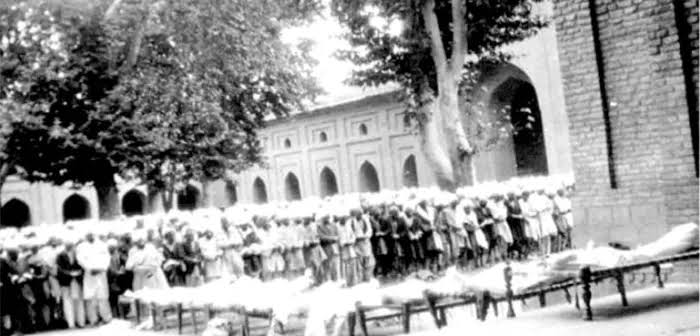
On July 13, 1931, thousands gathered outside the Srinagar Central Jail, where the trial of Abdul Qadeer Khan was taking place. Public anger had been growing against the administration of the erstwhile princely state under Maharaja Hari Singh, with widespread demands for political reforms, civil rights and greater public representation.
As crowds assembled outside the jail, tensions escalated.
According to widely documented historical accounts, state forces opened fire on demonstrators, killing 22 protesters. The deaths quickly transformed into a defining political moment, becoming a symbol of resistance against autocratic rule and a rallying point for the emerging political movement in Kashmir.
The victims were later buried at Naqshband Sahib, where their graves have since become an important site of remembrance.
From Historical Event to Political Symbol
Over the decades, July 13 evolved into one of the most politically significant commemorative days in Jammu and Kashmir.
After Independence, the day was officially observed as Martyrs’ Day by the erstwhile State Government. Senior political leaders, government officials and citizens would gather annually at the Martyrs’ Graveyard to offer tributes.
The event represented more than remembrance.
For many Kashmiris, it symbolized:
- The struggle for political representation
- Resistance against perceived injustice
- Democratic aspirations
- Collective identity and historical memory
Different political parties often interpreted the legacy differently, but the date remained firmly embedded in Jammu and Kashmir’s political calendar for decades.
A Turning Point After 2019
The constitutional changes of August 5, 2019, which revoked Jammu and Kashmir’s special status under Article 370 and reorganized the former state into two Union Territories, also altered the official recognition of several historic observances.
Among those changes was the removal of July 13 from the list of official public holidays.
Since then:
- No official state function has been organised on the day.
- Public access around the Martyrs’ Graveyard has often been regulated.
- Political visits have required administrative approval.
- Security arrangements have become significantly tighter.
As a result, what was once a routine annual ceremony has increasingly become a subject of political debate.
Leaders Await Official Permission Again
This year, leaders belonging to the National Conference (NC), People’s Democratic Party (PDP) and several other political organisations have sought permission to visit the Martyrs’ Graveyard.
The proposed visits are intended to pay homage to those who lost their lives in 1931.
However, as in previous years, the administration is yet to indicate whether unrestricted access will be allowed.
Officials traditionally review such requests by considering:
- Security assessments
- Intelligence inputs
- Crowd management
- Overall law-and-order concerns
Political observers note that the decision carries symbolic significance beyond the event itself.
Security Preparations Around Srinagar
As July 13 approaches, security agencies are expected to intensify preventive measures across parts of Srinagar, particularly around:
- Naqshband Sahib
- Downtown Srinagar
- Sensitive intersections
- Key political locations
In previous years, authorities have implemented restrictions under preventive policing measures, including regulating movement in certain areas to avoid any potential law-and-order issues.
The administration maintains that such arrangements are aimed at ensuring public safety rather than limiting democratic activity.
Political parties, however, often argue that peaceful commemorative visits should be facilitated.
Why the Issue Extends Beyond a Cemetery
The Politics of Public Memory
The debate surrounding July 13 is no longer limited to the historical events of 1931.
It increasingly reflects larger questions about:
How history should be remembered
Different political groups interpret the events of 1931 through varying historical and ideological lenses.
Who controls public remembrance
Whether official institutions recognise historical anniversaries often influences public perceptions about identity and collective memory.
Democratic space in Jammu and Kashmir
For regional political parties, permission to hold peaceful commemorations has become closely linked to discussions around democratic participation and political expression.
Public Sentiment Remains Deeply Emotional
For many families and communities across Kashmir, July 13 continues to carry emotional importance irrespective of political affiliations.
The day serves as an occasion to remember those who lost their lives during a turbulent period in the region’s history.
Many citizens view the observance as:
- A tribute to sacrifice
- A reminder of Kashmir’s political journey
- A moment for reflection rather than confrontation
- An opportunity to preserve historical memory
At the same time, opinions remain diverse, with different communities and political groups attaching different meanings to the legacy of 1931.
Political Parties Use the Occasion to Reaffirm Their Position
Regional political parties frequently use July 13 to reiterate their commitment to constitutional rights, democratic participation and the political aspirations of the people.
Statements issued around the anniversary often focus on:
- Protecting democratic values
- Preserving historical memory
- Upholding civil liberties
- Respecting peaceful political expression
National political discourse, however, often presents contrasting interpretations of the historical event and its contemporary relevance.
Government Faces a Delicate Balancing Act
The administration finds itself navigating two competing priorities.
On one hand, it seeks to maintain peace and prevent any disruption to public order.
On the other, it must address expectations surrounding democratic freedoms and peaceful remembrance.
The eventual decision regarding access to the Martyrs’ Graveyard is therefore likely to be closely watched by political parties, civil society and observers alike.
Why National Attention Is Focused on July 13
The developments surrounding July 13 resonate beyond Jammu and Kashmir.
National media, political analysts and constitutional observers often view the anniversary as a reflection of broader issues concerning:
- Democratic participation
- Civil liberties
- Historical recognition
- Political engagement in post-Article 370 Jammu and Kashmir
As a result, administrative decisions taken on the day often receive significant national attention.
What Could Happen Next?
The coming hours are expected to determine the nature of this year’s observance.
Several possibilities remain:
| Scenario | Possible Outcome |
|---|---|
| Permission granted | Political leaders pay tributes peacefully, reinforcing a message of collective remembrance. |
| Restricted access | Limited participation with controlled movement and enhanced security arrangements. |
| Permission denied | Political criticism may intensify, with renewed debate over democratic space and the recognition of historical events. |
Regardless of the administrative decision, July 13 is likely to remain a focal point of political discussion in Jammu and Kashmir.
A Date That Continues to Shape Kashmir’s Political Narrative
Nearly a century after the events of 1931, July 13 continues to occupy a unique place in Jammu and Kashmir’s political consciousness.
For some, it represents the struggle for rights and political representation. For others, it is part of a contested historical narrative that should be viewed in the broader context of the region’s complex past.
What remains undisputed is that the anniversary continues to evoke powerful emotions and sustained public interest. As political leaders await the administration’s decision on visiting the Martyrs’ Graveyard, the day once again underscores how history, memory and contemporary politics remain deeply intertwined in Jammu and Kashmir.