Sergio Gor Kashmir Visit: Why the US Ambassador Is in J&K and What It Means for India-US Ties
By: Javid Amin | 19 Aug 2026
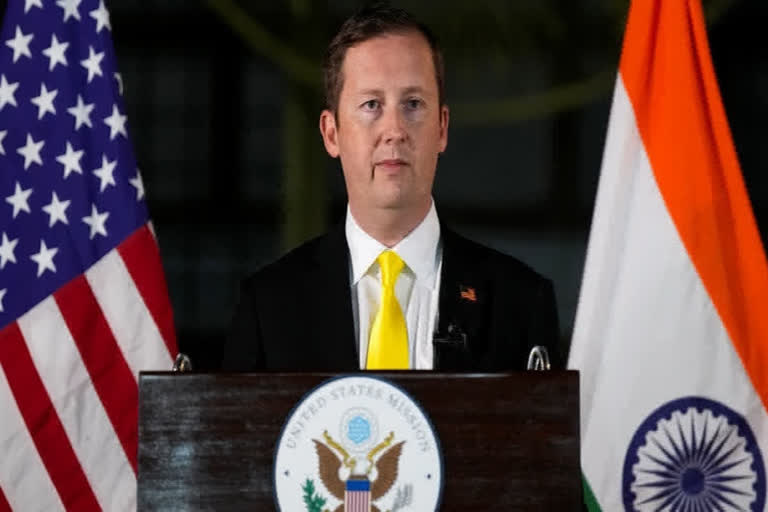
There is a temptation to read US Ambassador Sergio Gor’s first visit to Jammu and Kashmir as either a routine diplomatic tour or a coded American intervention in the Kashmir question.
Neither interpretation fully captures what is happening.
The timing, the itinerary and Gor’s position make the visit significant. But the available evidence also points to something more practical: Washington is expanding its engagement with India’s regions while keeping Kashmir firmly within the broader India-US strategic relationship, rather than reopening the sovereignty dispute.
That distinction is particularly important.
Gor arrived in Jammu and Kashmir on August 19, 2026, beginning a first-ever visit to the Union Territories of J&K and Ladakh since taking office. His programme includes Srinagar engagements and is expected to extend to Ladakh.
The visit comes immediately after a high-profile business engagement in Mumbai, where Gor appeared as chief guest at the Indo-American Chamber of Commerce’s National Convention on August 18. The convention focused on trade, investment, technology, critical minerals, resilient supply chains and strategic economic cooperation.
That sequence is revealing.
Mumbai was about the economic relationship. Kashmir is about seeing how that relationship intersects with security, governance and regional realities.
And there is another important development: before meeting the American envoy, Chief Minister Omar Abdullah publicly made clear that he does not intend to take J&K’s political grievances to a foreign government.
That statement may ultimately be one of the most important messages surrounding the visit.
Why Is Sergio Gor Visiting Kashmir Now?
The first question is timing.
Gor became the US ambassador to India in January 2026, and his portfolio is unusually broad. He is not simply Washington’s representative in New Delhi; he has also been serving as the US special envoy for South and Central Asian affairs.
His Kashmir visit therefore needs to be understood within a larger regional strategy.
Over the past several months, Gor has been travelling beyond New Delhi, meeting political leaders and participating in state-level events.
He was in Assam for Chief Minister Himanta Biswa Sarma’s swearing-in ceremony in May.
He has also been involved in engagement with Indian political and economic leadership on issues ranging from security and counter-terrorism to trade and technology.
In June, Union Home Minister Amit Shah met Gor, with the two sides discussing counter-terrorism, counter-narcotics, border security and law-enforcement cooperation.
That background matters enormously when interpreting the Kashmir visit.
It suggests that Washington’s engagement is not limited to Delhi-to-Delhi diplomacy.
The US is increasingly interested in India’s states and Union Territories as economic, technological and security partners.
Kashmir is therefore part of a broader pattern — but it is obviously the most politically sensitive destination in that pattern.
Kashmir Is Different From Kerala, Karnataka or Assam
This is where the visit acquires its geopolitical weight.
A US ambassador visiting Bengaluru to discuss technology is straightforward.
A US ambassador visiting Mumbai to discuss investment is straightforward.
A US ambassador visiting Assam for a political ceremony is largely conventional diplomatic outreach.
Kashmir is different.
The region has been at the centre of India-Pakistan tensions for decades and remains a subject of international diplomatic attention.
India’s position is unequivocal: Jammu and Kashmir is an integral part of India, and New Delhi rejects external mediation on the issue.
Pakistan continues to present Kashmir as an international dispute and regularly invokes UN resolutions.
Therefore, whenever a major Western diplomat visits Srinagar, the political symbolism inevitably becomes larger than the stated itinerary.
But symbolism should not be confused with policy.
There is currently no credible evidence that Gor’s visit represents a US decision to reopen the Kashmir dispute as a mediation issue.
In fact, the public messaging coming from the Indian side points in the opposite direction.
Omar Abdullah Sends a Carefully Worded Message Before the Meeting
Chief Minister Omar Abdullah’s comments on Wednesday are particularly revealing.
Ahead of his meeting with Gor, Abdullah said he does not have a habit of taking complaints to ambassadors of other countries and stressed that Jammu and Kashmir’s problems have to be resolved by New Delhi, not Washington.
That was not an accidental remark.
It serves several purposes simultaneously.
First, it reinforces Indian sovereignty.
Omar Abdullah is making clear that an American diplomat visiting Srinagar does not turn the meeting into an international mediation exercise.
Second, it protects his political position.
The National Conference government has consistently demanded restoration of Jammu and Kashmir’s statehood.
It also has a complicated political relationship with New Delhi over the post-2019 constitutional order.
But raising those issues with the US ambassador could create the impression that the elected J&K government is seeking foreign intervention.
Abdullah clearly wants to avoid that.
Third, it sets the boundaries for the meeting.
The message is essentially:
We can discuss Kashmir with Washington as an American partner, but Kashmir’s constitutional and political questions are India’s to resolve.
That is an important distinction.
The Pahalgam Attack Is Another Piece of the Background
There is also a security context that cannot be ignored.
The April 2025 Pahalgam terror attack remains one of the defining events in Kashmir’s recent security and tourism environment.
Twenty-six people, mostly tourists, were killed in the attack.
On its first anniversary in April 2026, Gor publicly expressed solidarity with the victims and said the United States stood with the people of India in the fight against terrorism.
That is significant because Washington’s Kashmir-related messaging under Gor has not been framed around political mediation.
It has been heavily connected to counter-terrorism and India’s security concerns.
The June meeting between Gor and Amit Shah reinforced this pattern, with counter-terrorism and border security explicitly discussed.
So when Gor arrives in Srinagar, the security dimension is not speculative.
It is already part of his broader India portfolio.
What Could Gor Discuss With Manoj Sinha?
The meeting with Lieutenant Governor Manoj Sinha is likely to be particularly important because the LG represents the Union government’s institutional authority in J&K.
Several areas naturally fall within the discussion.
Security
The obvious issue is the security environment.
The Pahalgam attack fundamentally changed the conversation around tourism, intelligence, counter-terrorism and tourist safety.
Gor’s discussions could therefore include:
- counter-terrorism cooperation;
- border security;
- intelligence-sharing;
- protection of tourists;
- radicalisation;
- narcotics trafficking;
- and the broader security environment.
The US and India already cooperate extensively on counter-terrorism.
Kashmir provides a highly localised context for that wider relationship.
Tourism Is Another Major Talking Point
Tourism may appear less geopolitical than terrorism, but economically it could be one of the most important subjects.
Jammu and Kashmir has spent much of the past year trying to restore tourist confidence after the Pahalgam attack.
Authorities subsequently began reopening tourist destinations after security reviews.
In February 2026, the J&K administration announced the reopening of 14 additional tourist destinations, including Yousmarg, Doodhpathri, Peer Ki Gali, Tulip Garden, Thajwas Glacier and Wullar/Watlab.
That tells us something about the current government priority:
normalisation of tourism is not merely an economic objective; it is also a security-confidence objective.
If international diplomats, foreign investors and multinational companies perceive Kashmir as increasingly stable, that can have an important psychological effect.
Gor’s own presence therefore carries economic symbolism.
But it would be premature to claim that his hotel stay constitutes an official American security endorsement of Kashmir.
There is a difference between normal diplomatic travel and an explicit US government declaration that the region is completely secure.
The former is evident.
The latter has not been established.
What About the Taj Hotel Stay?
The overnight stay in Srinagar’s Taj property has attracted attention because of its symbolism.
A senior American diplomat spending the night in Srinagar is certainly more meaningful than a short airport-to-airport visit.
It indicates that the itinerary was designed as a substantive engagement rather than a brief stop.
But we should be careful with the interpretation.
It should not automatically be described as a formal US endorsement of Kashmir’s security situation.
Diplomats regularly stay in established international-standard hotels for practical security and logistical reasons.
The more meaningful signal is the overall decision to include Srinagar — and potentially Ladakh — in the ambassador’s itinerary.
That shows Washington considers direct engagement in the region worthwhile.
Why Ladakh Matters Too
The Kashmir narrative changes somewhat when Ladakh is added to the itinerary.
If Gor were visiting only Srinagar, analysts could more easily interpret the trip through the lens of Kashmir politics.
But a combined J&K-Ladakh visit broadens the strategic picture.
Ladakh has enormous importance because of India’s wider security environment along the Line of Actual Control with China.
It also sits at the intersection of:
- India-China tensions;
- Himalayan connectivity;
- border infrastructure;
- strategic logistics;
- tourism;
- climate and water issues;
- and Central Asian geopolitics.
Gor’s dual role as ambassador to India and US special envoy for South and Central Asian affairs makes this particularly relevant.
The visit can therefore be viewed as a Himalayan regional outreach exercise, not simply a Kashmir political mission.
The China Factor Should Not Be Ignored
This is one of the deeper geopolitical layers.
The United States and India have increasingly aligned on Indo-Pacific security and concerns over China’s growing regional influence.
Kashmir and Ladakh sit close to India’s contested borders with China.
Washington does not need to make Kashmir the subject of public diplomatic statements to understand the strategic importance of the region.
The Ladakh component of Gor’s trip potentially gives the United States an opportunity to better understand:
- India’s border infrastructure;
- regional connectivity;
- China’s military posture;
- India’s northern security priorities;
- and the broader Himalayan strategic environment.
But again, this does not mean the United States is taking sides on the India-China territorial dispute.
It means Washington has a growing interest in India’s strategic geography.
The Economic Timing Is Impossible to Ignore
Gor’s Kashmir trip comes immediately after his appearance at the Indo-American Chamber of Commerce National Convention in Mumbai on August 18.
The convention’s agenda included:
- India-US trade;
- investment;
- technology;
- AI;
- cyber defence;
- critical minerals;
- semiconductor supply chains;
- digital infrastructure;
- biotechnology;
- manufacturing;
- and healthcare.
This gives us an important clue.
The Kashmir trip should not be viewed exclusively through a military or diplomatic lens.
Washington is also looking at India’s regional economic potential.
And Kashmir has several sectors that fit naturally into the wider India-US economic conversation.
Could Kashmir Attract US Investment?
Potentially — but this needs to be kept realistic.
The obvious areas include:
Tourism
Hospitality, adventure tourism, destination management and tourism technology.
Handicrafts
Kashmir’s carpet, shawl, woodcraft and other traditional products already have international markets.
US buyers and diaspora networks could help expand premium export opportunities.
Technology
Digital services, remote work, IT-enabled services and startup ecosystems could become more important.
Renewable energy
J&K has substantial hydropower potential, although investment in this sector involves regulatory, environmental and infrastructure complexities.
Agriculture and horticulture
Kashmir’s apple industry and other high-value agricultural products could benefit from improved cold chains, food processing and export systems.
But one should not overstate this visit.
There is no evidence yet of a major US investment package for Kashmir being negotiated during Gor’s visit.
The more defensible interpretation is that the visit creates an opportunity for conversations about the investment environment.
Why Washington Is Interested in India’s Regions
There is a larger transformation underway in diplomacy.
Modern economic diplomacy is no longer conducted only between national capitals.
American companies want to know:
- Where are India’s manufacturing clusters?
- Where are semiconductor projects located?
- Which states offer incentives?
- Where is renewable energy available?
- Which regions have skilled labour?
- Where are technology ecosystems developing?
That means the US embassy increasingly has reasons to engage state governments directly.
Gor’s visits around India fit this model.
The Kashmir trip therefore represents a logical extension of a broader subnational diplomacy strategy.
But because Kashmir has an international dispute attached to it, the same activity carries much greater political sensitivity.
What Does Washington Actually Gain From the Visit?
Quite a lot.
1. First-hand understanding
Diplomatic reporting from New Delhi can only tell Washington so much.
Being physically present in Srinagar gives the ambassador direct exposure to local officials, businesses and institutions.
2. Security assessment
Kashmir is strategically important to India’s counter-terrorism and border-security architecture.
3. Economic intelligence
The US can better understand where American companies might realistically operate.
4. Political understanding
Meeting both the LG and elected government gives Washington two different perspectives on governance.
5. Regional diplomacy
The Ladakh component potentially adds a China-facing strategic dimension.
What Does India Gain?
New Delhi also has reasons to welcome the visit.
The biggest is simple:
It normalises foreign diplomatic engagement with J&K on India’s terms.
If American diplomats can visit Srinagar, meet the LG and elected government, travel onward to Ladakh and discuss tourism, security and economic cooperation without reopening the sovereignty question, India can present that as evidence of normalisation.
It also gives India an opportunity to showcase:
- infrastructure;
- tourism;
- security improvements;
- democratic institutions;
- investment opportunities;
- and post-2019 administrative changes.
In diplomatic terms, that is useful.
What Does Omar Abdullah Gain?
The Chief Minister has an equally delicate balancing act.
He needs to maintain his government’s relationship with New Delhi.
At the same time, he wants Washington and other international actors to understand the political realities inside J&K.
His pre-meeting comments therefore make sense.
He can meet Gor.
He can discuss development.
He can discuss security.
He can explain the concerns of the elected government.
But he does not want the encounter portrayed as asking America to solve Kashmir’s political problems.
That would undermine his own position.
Could Omar Raise Statehood?
Possibly.
But there is an important difference between raising an issue and seeking foreign intervention.
Statehood restoration is a central political demand of Omar Abdullah and the National Conference government.
It would not be surprising if the subject came up in a private conversation.
But there is no evidence, at the time of writing, that Gor has been given a formal request to intervene with New Delhi.
And Omar’s own public comments suggest he understands the boundary.
That is why the meeting could be politically interesting without becoming an internationalisation of the Kashmir dispute.
Pakistan Will Be Watching This Very Closely
Islamabad is unlikely to view the visit as an ordinary diplomatic tour.
Pakistan has consistently attempted to keep Kashmir on the international agenda and has historically paid close attention to American statements on the issue.
A US ambassador physically visiting Srinagar can therefore generate competing interpretations in Pakistan.
One possibility is that Islamabad could portray the visit as evidence of continued international interest.
Another is that Pakistan could criticise Washington for engaging Indian authorities without addressing what it considers the unresolved Kashmir dispute.
But the key point is this:
Washington does not appear to be using Gor’s visit to revive its old role as a potential mediator between India and Pakistan.
That would be a major departure from New Delhi’s expectations and would likely trigger an immediate diplomatic backlash.
There is currently no evidence of such a shift.
Why This Is Not the Same as US Mediation on Kashmir
This distinction deserves emphasis.
There are three very different things:
Diplomatic engagement
A foreign ambassador visits Srinagar and speaks to local authorities.
Political observation
The ambassador seeks information about governance, security and economic conditions.
Mediation
The United States actively attempts to negotiate the India-Pakistan dispute.
The first is happening.
The second is likely part of the visit.
There is no credible evidence that the third is happening.
This is why headlines suggesting that “America has returned to Kashmir diplomacy” would go beyond the available evidence.
The Security Dimension May Actually Be Stronger Than the Political One
This is an underappreciated aspect.
The US has repeatedly expressed solidarity with India after the Pahalgam attack.
Gor’s own statements have emphasised counter-terrorism.
And his June meeting with Amit Shah specifically covered terrorism, narcotics and border security.
Therefore, if one wants to understand the likely substance of his Kashmir discussions, security cooperation is a stronger evidence-based assumption than constitutional mediation.
Possible areas include:
- terrorist financing;
- cross-border terrorism;
- narcotics trafficking;
- intelligence cooperation;
- cyber threats;
- border monitoring;
- and protection of international tourists.
The Bigger India-US Relationship Is Also Changing
Gor’s visit comes at a complicated moment in India-US relations.
The relationship is strategically strong but economically complicated.
Trade negotiations remain important.
Technology cooperation is expanding.
Critical minerals and supply-chain resilience are increasingly central.
Defence cooperation continues.
Counter-terrorism remains a shared concern.
And both countries are trying to manage the China question.
Gor’s recent public engagements have repeatedly emphasised security, trade and critical technologies.
So Kashmir should be understood as one piece of a much larger strategic puzzle.
The Most Interesting Signal May Be What Gor Does Not Say
For India, the most reassuring outcome would not necessarily be a dramatic statement.
It would be the absence of one.
If Gor talks about:
- investment;
- tourism;
- economic development;
- security;
- counter-terrorism;
- regional connectivity;
- and people-to-people ties,
without making comments about mediation or the territorial status of Kashmir, New Delhi will likely regard the visit as diplomatically well managed.
If he makes a public statement explicitly invoking India-Pakistan negotiations or third-party mediation, the political temperature would change immediately.
So watch the language.
In Kashmir diplomacy, what is left unsaid can sometimes be as important as what is said.
What Should Kashmir Expect From the Visit?
It would be unrealistic to expect a major American investment announcement or a dramatic political breakthrough from a single ambassadorial visit.
The immediate value is more incremental.
For government
A chance to explain J&K’s governance and security environment directly.
For business
A chance to present investment opportunities.
For tourism
A chance to reinforce the message that international visitors can return.
For security agencies
An opportunity to deepen counter-terrorism dialogue.
For Washington
A chance to understand Kashmir beyond reports coming from Delhi.
That last point may ultimately be the most valuable.
The Real Test Begins After Gor Leaves Srinagar
Diplomatic visits create headlines.
Follow-up creates policy.
The real questions will be:
- Does American business interest in J&K increase?
- Do US companies explore tourism or technology projects?
- Does counter-terrorism cooperation deepen?
- Does Washington increase engagement with J&K institutions?
- Does Gor return to Kashmir?
- Does the US embassy establish stronger economic outreach?
- Does the Ladakh visit produce additional strategic engagement?
- And, crucially, does Washington continue avoiding the role of mediator on Kashmir?
Those developments will tell us more than the optics of an overnight stay.
So, Why This Visit — Really?
After separating symbolism from evidence, the picture becomes clearer.
Gor’s Kashmir visit appears to have four overlapping objectives.
1. Regional diplomatic outreach
Washington is expanding engagement beyond India’s national government to its regions.
2. Security understanding
Kashmir is central to India’s counter-terrorism and northern security environment.
3. Economic diplomacy
The visit follows a major India-US business convention where trade, investment, technology and supply chains were central themes.
4. Strategic familiarisation
The simultaneous J&K-Ladakh itinerary gives Washington a closer look at India’s Himalayan strategic geography.
And there is a fifth element:
Symbolism.
An American ambassador spending time in Srinagar inevitably sends a message that Washington considers Kashmir important enough to engage with directly.
But that message should not be exaggerated into a policy shift that the evidence does not yet support.
Bottom Line: A Significant Visit, But Not a Kashmir Mediation Mission
Sergio Gor’s first Kashmir visit is important precisely because Kashmir is no longer being treated only as a question of India-Pakistan diplomacy.
For Washington, the region increasingly intersects with:
counter-terrorism + tourism + economic diplomacy + China + border security + India-US strategic cooperation.
That is a much broader agenda.
Omar Abdullah’s comments before meeting Gor provide perhaps the clearest framework for understanding the visit: J&K can engage Washington, but its political disputes remain for India to resolve.
That appears to be the diplomatic line both New Delhi and Srinagar have strong incentives to maintain.
The most consequential part of Gor’s visit, therefore, may not be whether he says something dramatic about Kashmir.
It may be whether he leaves with a more detailed understanding of Kashmir as an economic and strategic region inside India — and whether that understanding translates into deeper US engagement in tourism, technology, security and investment.
For a region that has spent decades being discussed primarily through the language of conflict, that would represent a subtle but potentially important shift.
Kashmir is still politically sensitive. But Washington’s interest in it is increasingly multidimensional.
And that is what makes Sergio Gor’s visit worth watching.