Kashmir’s Chinar Trees at the Crossroads: Mehbooba Mufti Challenges Omar Abdullah Over Ganderbal Road-Widening Plan
By: Javid Amin | 19 October 2026
Srinagar: A road may be widened in months. A tree that has stood through generations of Kashmir’s history cannot be replaced in the same time.
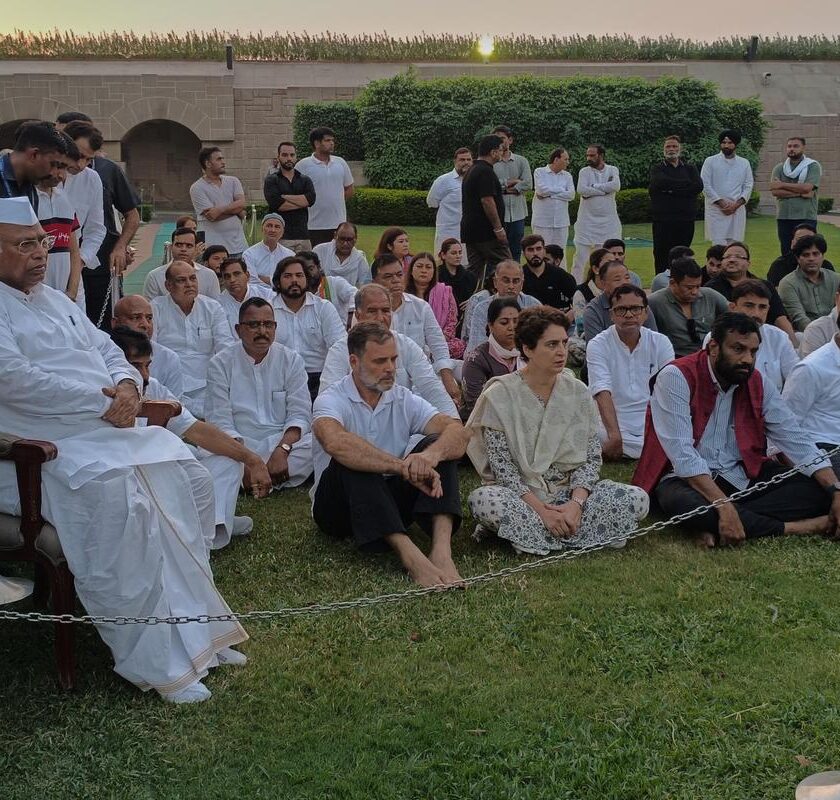
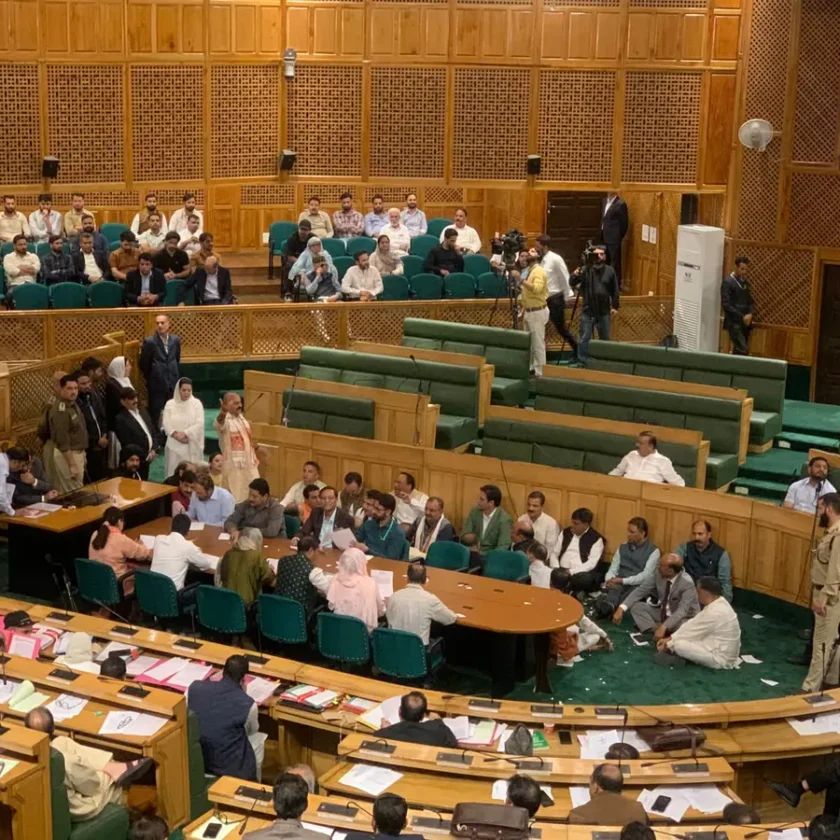
That is the question at the heart of a growing controversy in Jammu and Kashmir, where Chief Minister Omar Abdullah’s remarks about removing mature Chinar trees along road corridors in Ganderbal have drawn sharp criticism from Peoples Democratic Party (PDP) president Mehbooba Mufti.
The disagreement has brought two competing priorities into focus: the need for better roads in a region facing mounting traffic pressure, and the responsibility to protect a natural landmark deeply woven into Kashmir’s cultural identity.
The immediate dispute concerns the Beehama-Kheer Bhawani road and other stretches in Ganderbal, where Abdullah has argued that mature Chinar trees are obstructing road-widening work. He has suggested removing some trees and planting eight to 10 Chinars at alternative locations.
Mufti, in a social media post on October 19, challenged the idea that new plantations could compensate for the loss of trees that have taken generations to reach their present size.
“A Chinar takes generations to reach its glory yet Omar Abdullah thinks saplings can compensate for felling these centuries old icons of Kashmir. You cannot replace centuries of heritage with a plantation drive!” she wrote.
Her intervention has transformed a local infrastructure question into a wider political and environmental debate. But beyond the sharp exchanges between the two leaders lies a more practical question: has the government adequately explored alternatives that could improve traffic movement without sacrificing mature trees?
That question matters because the Chinar is not simply another roadside tree. In Kashmir, it is a living part of the landscape, the memory of old neighbourhoods and gardens, and a symbol of continuity in a rapidly changing region.
What Omar Abdullah Said About the Ganderbal Road Project
The controversy gathered momentum after Abdullah spoke about the difficulty of carrying out road-widening work where mature Chinars stand close to the carriageway.
According to a report published by Kashmir Life on October 15, the chief minister said the trees were coming in the way of road expansion and would have to be removed and replanted elsewhere to allow the work to proceed.
He also criticised protests against tree cutting, arguing that some people raising objections were unfamiliar with the area.
The chief minister’s position reflects a familiar challenge in infrastructure planning. Roads designed for an earlier period must accommodate more vehicles, changing settlement patterns and growing travel demand. Where buildings, utilities and mature trees line narrow roads, widening can become technically and politically difficult.
The Beehama-Kheer Bhawani corridor is particularly significant because it serves local communities and people travelling towards the Kheer Bhawani temple at Tulmulla. Congestion on such routes can affect residents, commuters, visitors and emergency movement.
Abdullah has argued that development and environmental protection must proceed together. His suggestion that eight to 10 Chinars could be planted at alternative sites indicates an attempt to address the loss through replacement planting.
However, an important distinction remains: the reported proposal does not, by itself, establish how many trees would ultimately be removed, whether final permissions have been granted, or whether every possible alternative has been examined.
Those details are essential to understanding the scale of the project and its environmental consequences.
The government’s case would be considerably stronger if it published the proposed road alignment, the number and condition of affected trees, the reasons each tree cannot be retained, and the alternatives considered before removal was proposed.
Reporting basis: Kashmir Life’s October 15 report and its October 19 report on Mufti’s response.
Why Mehbooba Mufti Says Saplings Cannot Replace Mature Chinars
For Mufti, the issue is about much more than the number of trees planted after construction.
Her objection rests on a basic difference between planting a tree and preserving one that has survived for decades, or potentially centuries. A sapling may eventually grow into a large Chinar, but it cannot immediately reproduce the shade, canopy, ecological functions and historical associations of a mature tree.
The PDP president also connected the controversy to the earlier debate surrounding Kashmiri Toosh shawls. She alleged that Abdullah had been associated with restrictions affecting the traditional shawl during his tenure as Union Commerce Minister.
“First a blow to Kashmir’s woven heritage now a threat to its living heritage,” was the argument she advanced.
The comparison gives her criticism a broader cultural dimension. One concern relates to a traditional craft; the other concerns a tree associated with Kashmir’s public spaces, gardens and collective memory.
There is, however, an important distinction between political criticism and historical attribution. Shahtoosh, sometimes referred to as Toosh, is associated with the wool of the Tibetan antelope, a protected wild animal. International restrictions on the trade in shahtoosh are linked to wildlife conservation and the protection of the species, rather than simply to a dispute over Kashmiri craftsmanship. The Convention on International Trade in Endangered Species of Wild Fauna and Flora (CITES) has prohibited international commercial trade in the species since 1975.
Mufti’s political allegation about Abdullah’s association with the earlier restrictions should therefore be distinguished from the documented international wildlife-protection framework. The two issues cannot be treated as identical policy decisions merely because both have consequences for a traditional Kashmiri product or symbol.
Her wider point, nevertheless, remains politically significant: Kashmir’s cultural identity is shaped by both the things its people make and the landscape in which they live.
The Chinar: Kashmir’s Living Heritage
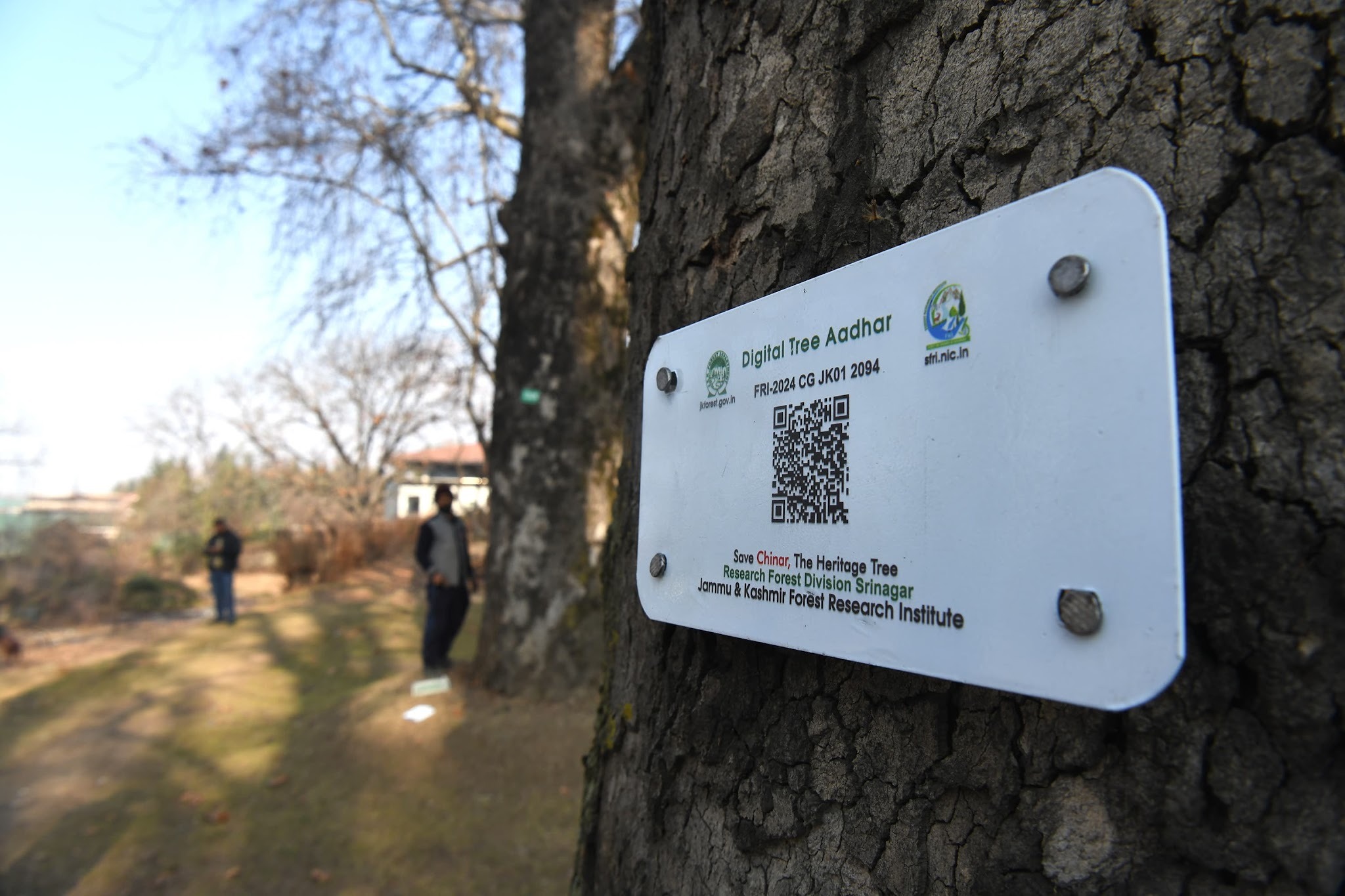
Scientifically known as Platanus orientalis, the Chinar is one of the most recognisable trees in the Kashmir Valley.
Its broad crown, spreading branches and striking autumn colours have made it a defining feature of historic gardens, village squares, religious sites and roadsides. In Kashmiri culture, the tree is commonly known as Bouin and carries associations with shade, community life and the changing seasons.
For generations, Chinars have stood in spaces where people gather, rest, talk and celebrate. Their significance cannot be measured solely by timber value or the number of trees recorded in a plantation register.
A mature tree is also a product of its particular location. Its surrounding soil, root network, water conditions, exposure to sunlight and relationship with nearby vegetation have developed over time. Removing it and planting a sapling elsewhere does not recreate that entire setting.
This is why conservation specialists generally distinguish between compensatory plantation and the protection of existing mature trees. New planting can expand future tree cover, but it is not an immediate substitute for the ecological functions of established trees.
The distinction is particularly relevant in Kashmir, where urban expansion and infrastructure construction have placed increasing pressure on the natural landscape.
A 2018 study published in the Journal of Himalayan Ecology, Sustainability and Development, examining Chinars in Pulwama district, documented concerns about degradation and loss. The researchers recorded 4,358 trees in their study area, including 1,952 classified as old or senile. They also highlighted pressures associated with urban growth and construction.
A separate 2021 study of Shopian district reported 1,808 Chinars in its survey, of which 160 were recorded as degraded. These figures refer to different districts and studies, not to the entire Valley, and should not be combined into a single regional total.
Their broader significance is clear: protecting the Chinar requires more than occasional plantation drives. It calls for consistent monitoring, reliable inventories, attention to tree health and stronger safeguards against avoidable damage.
What Science Says About Losing a Mature Tree
The environmental argument against unnecessary tree felling is not based on sentiment alone.
Mature trees provide a combination of benefits that young saplings cannot deliver immediately. Their canopies offer shade, influence the local microclimate, provide habitat and help moderate the movement of rainwater through the landscape. Their roots interact with soil and can contribute to its stability, while their leaves and branches support a wider ecological system.
Trees also store carbon in their trunks, branches, roots and surrounding soil. How much carbon an individual tree stores depends on its size, species, age, health and growing conditions.
A 2025 study published in Current Science, examining the carbon-storage potential of Chinar, estimated that trees in the largest diameter class studied could hold substantial quantities of carbon in their above-ground and below-ground biomass. The estimates underline the ecological importance of large trees, although they should not be treated as measurements of the specific trees facing removal in Ganderbal.
No such tree-specific carbon assessment has been established in the reporting reviewed for this article.
The practical lesson is that the loss of a large tree can create an immediate ecological deficit, even if replacement planting is carried out successfully. A young sapling needs time to develop a comparable canopy and biomass, and not every newly planted tree will survive.
This is also why the number of replacement saplings is an incomplete measure of environmental compensation.
Planting ten saplings for every tree removed might appear generous on paper. Yet the outcome would depend on where the saplings are planted, whether the sites are suitable, how they are maintained, how many survive and how long they are allowed to mature.
A credible replacement plan must therefore measure results, not merely count planting activity.
The Legal Question: Can Chinars Be Felled for Road Widening?
The dispute also raises a question of law.
Jammu and Kashmir has the Preservation of Specified Trees Act, 1969, which provides a framework for regulating the felling of specified tree species. The legislation includes provisions dealing with restrictions on felling, applications for permits, decisions on permission and penalties.
The existence of the law does not automatically establish that every Chinar is subject to precisely the same restrictions in every circumstance. The applicable provisions, the tree’s status, the location and the nature of the proposed work must be assessed in the relevant case.
The district administration in Srinagar, for example, publishes a procedure for permission to lop Chinar or walnut trees. Its stated requirements include an application, a report from field staff, recommendations from the concerned tehsildar and technical input from the relevant horticulture or floriculture authorities. The published procedure assigns Chinar permission to the Deputy Commissioner after the required formalities.
That administrative procedure illustrates the importance of scrutiny, although the precise permissions applicable to a road project in Ganderbal must be verified with the competent authorities there.
For a project involving mature Chinars, the public deserves clear answers to several questions:
- Has a formal inventory of the affected trees been prepared?
- What permissions are required, and have they been granted?
- Have the trees been assessed for age, health and ecological significance?
- Has the engineering team considered narrower carriageways, changes in alignment or other ways to avoid removal?
- What replacement and long-term maintenance plan would apply if felling is authorised?
These are not merely procedural details. They determine whether the decision represents a carefully assessed public necessity or an avoidable environmental loss.
The relevant legislation can be consulted through the India Code entry for the Jammu and Kashmir Preservation of Specified Trees Act, 1969.
As of the reporting reviewed for this article, the exact number of trees proposed for removal, the final permission status and a published assessment comparing alternative road designs have not been established. Those points require confirmation from the project authorities and the district administration.
Could Road Widening Be Designed Around the Trees?
The central question need not be framed as a choice between keeping every tree and improving every road.
Modern road planning offers several approaches that can be assessed before mature trees are removed. Their feasibility depends on the road’s width, traffic volume, available land, drainage, pedestrian movement and safety requirements.
One option is to examine whether the alignment can be adjusted around particularly significant trees. Even a small design change may make a difference where the road passes through a cluster of mature trees.
Another is to identify the actual cause of congestion. If traffic bottlenecks are driven partly by roadside parking, poorly designed junctions, roadside loading or pedestrian conflicts, targeted improvements may deliver benefits without requiring the same amount of widening throughout a corridor.
Engineers could also assess whether selected pinch points need expansion while other stretches can retain their existing dimensions. This would require traffic counts, road-safety assessments and a clear explanation of the limits of each alternative.
None of these approaches should be assumed to be technically possible without examining the actual site. A tree’s location may create a genuine safety or engineering constraint. But that conclusion should follow a documented assessment rather than precede it.
For the Ganderbal project, a public comparison of the available options would help residents understand why a particular course of action was selected.
The government could publish a short environmental and engineering note showing the existing road width, projected traffic requirements, affected trees, alternative alignments considered and the estimated costs of each option.
Such disclosure would allow the public to assess the trade-offs using evidence rather than political claims.
If Trees Must Be Removed, What Should Compensation Look Like?
There may be circumstances in which removing a tree is justified by a compelling public need. Even then, compensation should not end with the planting of replacement saplings.
A responsible plan would begin by recording each affected tree, including its location, approximate size, health and condition. The project authorities could then identify which trees can be retained, which require additional protection during construction and which, if any, cannot reasonably be saved.
Replacement planting should use suitable locations and species, with the number of saplings determined through a transparent plan rather than a headline figure alone.
The plan should also provide for watering, protection against damage, monitoring and replacement of saplings that fail to survive. Without these measures, a plantation drive risks becoming a one-time event whose actual environmental value remains unknown.
Where practical, the government could publish survival rates after one, three and five years. It could also identify the agency responsible for maintenance and the budget allocated to the work.
Such measures would make environmental compensation verifiable.
More importantly, they would acknowledge a basic fact: the loss of a mature Chinar cannot be reversed simply by putting another plant in the ground. Replacement planting can help restore future tree cover, but it cannot immediately reproduce the original tree’s size, established habitat or historical associations.
The Political Battle Behind the Environmental Dispute
The exchange has also exposed the political rivalry between the National Conference and the PDP.
Mufti has used the proposal to question the government’s commitment to Kashmir’s heritage, presenting the Chinar as part of a broader concern about the treatment of the region’s cultural and natural assets.
Abdullah, meanwhile, has defended the need to address infrastructure constraints and has criticised objections that he believes do not sufficiently account for conditions on the ground.
Both positions speak to issues that matter to the public. Residents need roads that are safe and functional. They also have a legitimate interest in protecting the landscape that gives their communities a distinct character.
The political danger lies in allowing the dispute to become a contest of accusations rather than a discussion of evidence.
Mufti’s criticism raises an important conservation question, but the strongest assessment of the government’s proposal will depend on the actual project documents, the applicable permissions and the alternatives available.
Similarly, the government cannot establish that tree removal is necessary simply by invoking development. It must explain why the proposed intervention is proportionate to the problem and what steps have been taken to reduce environmental damage.
Political disagreement is unavoidable. What should not be optional is transparent decision-making.
Why This Debate Matters Beyond Ganderbal
The Ganderbal controversy reflects a wider challenge across Kashmir, where roads, buildings and other infrastructure increasingly compete for space with established trees and older landscapes.
The problem is not unique to the Valley. Across India, infrastructure projects frequently face questions about tree removal, compensation and the difference between plantation targets and genuine ecological restoration.
Kashmir, however, carries an additional cultural dimension. Chinars are not interchangeable elements of urban landscaping. They are among the most recognisable features of the region’s historical environment.
Their protection also has a practical value. Established trees contribute shade, habitat and carbon storage, while the wider landscape influences the quality of life in the communities around them.
That does not mean infrastructure should stop. Roads are essential for access to education, healthcare, employment, tourism and local commerce. Poorly designed roads can create their own social and environmental costs.
The challenge is to plan development in a way that recognises those needs without treating environmental losses as an afterthought.
For policymakers, this means integrating tree inventories, ecological assessments and public consultation into infrastructure planning from the beginning. For residents, it means demanding transparent evidence and realistic alternatives. For political leaders, it means recognising that protecting heritage and improving public services are not necessarily opposing goals.
The quality of a development project should be measured not only by how quickly it is completed, but also by whether avoidable damage has been prevented.
The Questions the Government Still Needs to Answer
The immediate political exchange has drawn attention to the Chinar, but several practical questions remain unresolved.
How many mature trees are actually affected by the proposed road-widening work? What is their condition? Which stretches require expansion, and what traffic or safety data supports the proposed dimensions? Have the relevant authorities completed the necessary permissions? Were alternative designs considered, and if they were rejected, why?
The answers would establish whether the proposed removals are unavoidable or whether some of the loss could be prevented through different engineering choices.
They would also give residents a basis for judging the government’s commitment to environmental protection.
A transparent process could include an independent assessment of the affected trees, a published comparison of engineering alternatives, a clear explanation of the legal approvals and a long-term plan for any compensatory plantation.
These steps would not eliminate every disagreement. They would, however, shift the discussion from political rhetoric to evidence.
Conclusion: A Road to Development Should Not Become a Road to Irreplaceable Loss
The dispute over Chinar trees in Ganderbal is ultimately a test of how Jammu and Kashmir defines development.
Better roads can improve daily life, support economic activity and ease travel. But infrastructure planning must also account for the environmental and cultural assets that give a place its character.
Mehbooba Mufti’s warning that saplings cannot replace centuries-old trees captures the central issue. A young Chinar may become a landmark in the future, but it cannot instantly take the place of a mature tree that has shaped its surroundings for generations.
At the same time, the government’s case must be judged against the practical realities of the road project, not assumptions about what engineering can or cannot achieve.
The most credible way forward is to establish the facts, examine alternatives, comply with the law and make the final decision transparent. If particular trees genuinely cannot be saved, the reasons should be documented and the environmental costs addressed through a serious, measurable plan.
Kashmir does not have to choose between development and heritage as if one must always destroy the other. The more difficult, but more responsible, task is to find out how much of both can be protected.
The answer should emerge from engineering evidence, environmental assessment and public accountability, not political slogans alone.
A road can be rebuilt. A plantation can grow. But the history embodied in a mature Chinar cannot be recreated on a government timetable.
Follow Us on WhatsApp
Get Breaking News, Exclusive Updates & In-Depth Analysis from Kashmir and beyond, delivered straight to your phone.
Join our WhatsApp Channel: Follow Now