JKSSB Recruitment Row: NC Hits Back at Iltija Mufti, Revives 2022 Recruitment Scandals
As the JKSSB Finance Accounts Assistant examination controversy intensifies, the ruling party questions the PDP leader’s silence on recruitment failures during Lieutenant Governor’s rule. But with police investigating an alleged cheating network and possible official involvement, the credibility of the recruitment system remains the bigger concern.
By: Javid Amin | 20 November 2026 | Srinagar – Kashmir
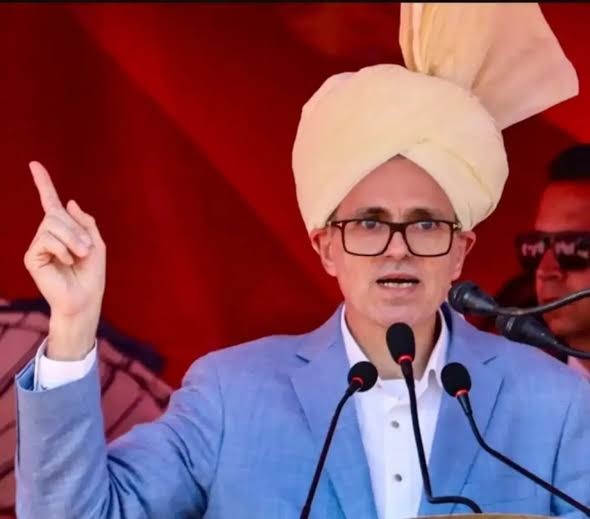
The political battle over recruitment irregularities in Jammu and Kashmir has intensified, with the ruling National Conference accusing PDP leader Iltija Mufti of displaying “selective outrage” by targeting the Omar Abdullah government while remaining silent on controversies that surfaced during the period of Lieutenant Governor’s administration.
The NC’s response, issued through its Additional State Spokesperson Sara Hayat Shah on November 20, came after Iltija questioned the credibility of the Jammu and Kashmir Services Selection Board (JKSSB), alleged that an organised recruitment network was operating with the assistance of government employees and demanded an impartial investigation into the Finance Accounts Assistant (FAA) examination controversy.
The party argued that Iltija herself had referred to recruitment irregularities dating back to 2019 and incidents from 2022, yet directed her criticism primarily at the elected government formed in October 2024.
The NC’s counterargument is politically significant because several major recruitment controversies in Jammu and Kashmir did emerge during the Lieutenant Governor’s administration. The cancellation of the 2022 Police Sub-Inspector, Finance Accounts Assistant and Junior Engineer recruitment processes remains a major example.
But the latest controversy presents a separate challenge. Police have arrested suspects in an alleged cheating operation linked to the November 15 FAA examination, seized electronic equipment and constituted a Special Investigation Team. Subsequent reporting has also raised questions about possible assistance from officials connected with the recruitment system.
The question, therefore, is no longer simply which political party is responsible for past failures. It is whether the authorities can establish the full extent of the latest alleged racket, identify anyone who facilitated it and restore the confidence of thousands of candidates.
What triggered the NC’s counterattack?
Iltija Mufti’s criticism followed the police action against an alleged cheating network during the JKSSB Finance Accounts Assistant examination.
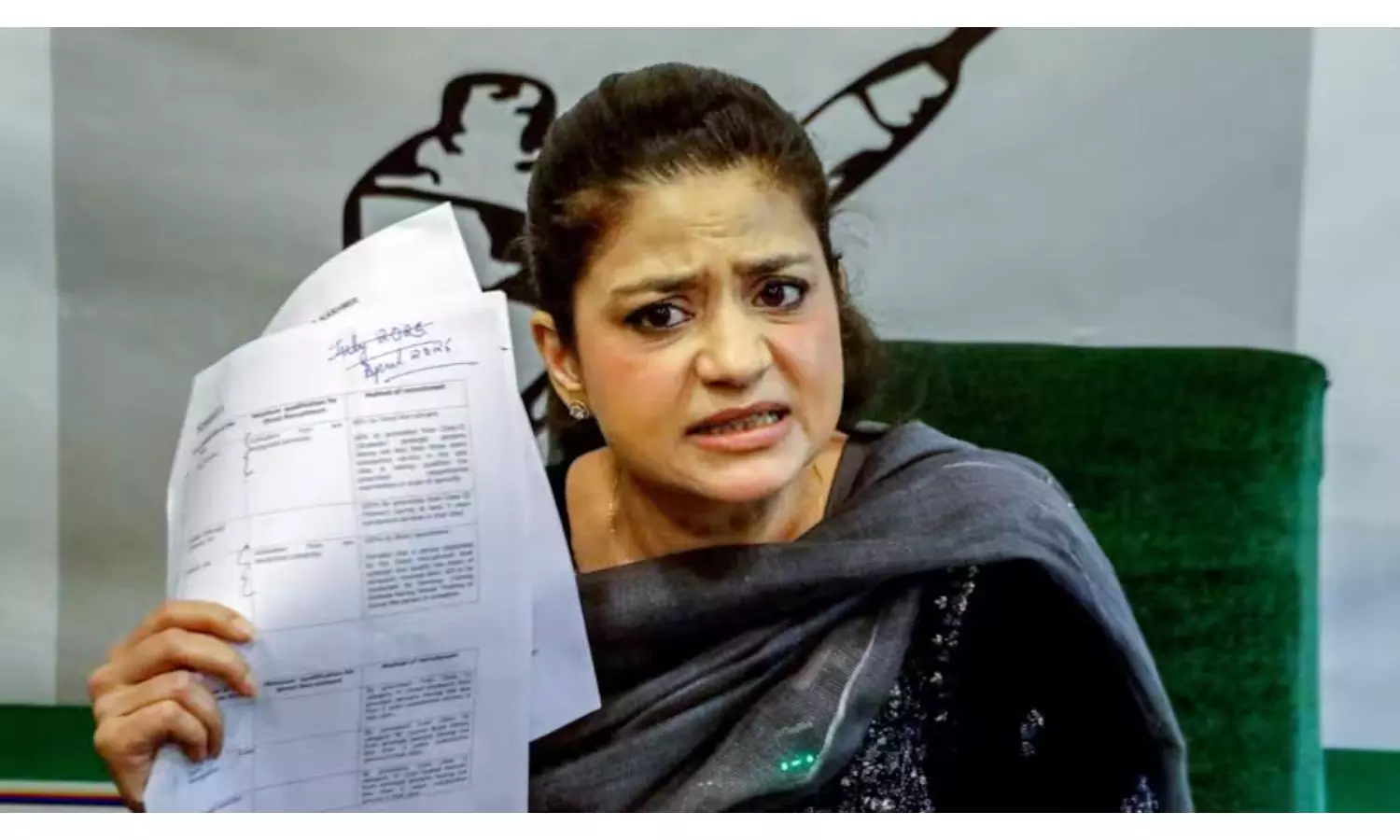
Addressing a press conference on November 20, she rejected the suggestion that the incident was an isolated attempt by a few individuals to manipulate the examination.
She argued that recruitment controversies had repeatedly surfaced since 2019, referring to the Police Sub-Inspector, Jal Shakti, Finance Accounts Assistant and Fire and Emergency Services examinations.
She also questioned the credibility of JKSSB’s recruitment process, alleging that an organised network involving people inside the government system was facilitating malpractice.
Her criticism extended to Chief Minister Omar Abdullah. She questioned his position that JKSSB was not directly under his control, referring to a review meeting he had reportedly held with officials in May to examine the Board’s functioning.
Her argument was straightforward: if the Chief Minister could review the Board’s performance and address recruitment bottlenecks, he should also be answerable when serious questions arise about the integrity of its examinations.
Iltija demanded an impartial investigation and called for the postponement of upcoming JKSSB examinations until those allegedly facilitating cheating, including any officials within the system, were identified.
She also called for the November 29 Jammu and Kashmir Police Sub-Inspector examination to be postponed.
The NC’s response came from Sara Hayat Shah, who accused Iltija of applying different standards to the elected government and the administrative establishment that exercised authority during the preceding years.
Shah argued that if the PDP leader believed recruitment irregularities had existed since 2019, she should also question the Lieutenant Governor’s administration rather than concentrating her criticism on the present elected government.
The NC’s central contention was that accountability must cover the entire administrative period, not just the government currently facing political criticism.
The November 15 FAA examination: What actually happened?
The immediate controversy concerns the Finance Accounts Assistant examination conducted by JKSSB on November 15, 2026.
The scale of the recruitment drive explains why the incident has generated such widespread concern.
| Examination detail | Reported figure |
|---|---|
| Advertised vacancies | 600 |
| Candidates scheduled | 1,61,946 |
| Examination centres | 493 |
| Districts covered | 20 |
| Initial arrests reported | 14 |
| Wireless sets seized | 8 |
| Mobile phones seized | 22 |
| Vehicles seized | 5 |
According to Jammu Police, intelligence inputs indicated that a group was preparing to help selected candidates cheat through electronic communication devices.
The alleged arrangement involved two groups: candidates inside examination centres and facilitators positioned outside. Questions were reportedly to be transmitted to the outside group, which would arrange answers and communicate them back to selected candidates.
Police teams were deployed around identified examination centres. The initial operation resulted in 14 arrests, three FIRs and the constitution of an SIT headed by the SDPO, Domana.
The investigation subsequently widened.
On November 17, the SIT reportedly arrested two more people, including a Forest Guard, taking the number of arrests to 16. Investigators suspected that the Forest Guard had been assigned to obtain a copy of the question paper after its distribution and pass it to accomplices outside the examination centre.
The alleged involvement of a serving government employee, if established, would make the case considerably more serious than an ordinary attempt by candidates to use unfair means.
A November 19 JKSSB statement, however, maintained that the examination had been conducted successfully and that the attempted use of unfair means had not compromised the process.
The Board said all 1,61,946 candidates were scheduled to appear across 493 centres in the Union Territory. It credited police intervention and the security arrangements put in place by the administration for preventing the suspected network from undermining the examination.
JKSSB also announced additional safeguards, including stricter access controls, updated standard operating procedures and increased technical surveillance for forthcoming examinations.
This creates an important distinction in the current debate: the police have reported foiling an alleged cheating operation, while JKSSB says the examination’s integrity was preserved. Neither position removes the need to investigate whether any candidates received an unfair advantage or whether the suspected network had links inside the recruitment system.
Why the NC brought up the Lieutenant Governor’s administration
The strongest part of the NC’s argument lies in the recruitment controversies of 2022.
At that time, Jammu and Kashmir was under Lieutenant Governor’s administration, without an elected Assembly government.
Three major JKSSB recruitment exercises came under serious scrutiny:
-
Police Sub-Inspector recruitment
-
Finance Accounts Assistant recruitment
-
Junior Engineer (Civil), Jal Shakti Department recruitment
The controversies were not minor administrative complaints. They resulted in cancellations and investigations, affecting thousands of candidates who had invested time, money and years of preparation.
The 2022 Police Sub-Inspector recruitment controversy
The JKSSB conducted the Police Sub-Inspector written examination on March 27, 2022, for 1,200 posts. The results were announced on June 4, but allegations of irregularities emerged soon afterwards.
Unsuccessful candidates raised questions about the selection process, prompting the administration to constitute an inquiry committee.
On July 8, 2022, the Lieutenant Governor’s administration cancelled the recruitment process and recommended a CBI investigation.
The decision affected more than 97,000 candidates who had appeared for the examination.
The subsequent investigation uncovered serious allegations involving the leakage of question papers and a network of intermediaries and beneficiaries.
The Enforcement Directorate’s June 2024 press release, referring to the CBI case, described an alleged paper-leak operation involving monetary payments to secure access to the examination paper. It said candidates were allegedly asked to pay between ₹15 lakh and ₹30 lakh.
These were findings and allegations recorded in the investigating agency’s proceedings, not a reason to presume that every selected candidate was involved.
Finance Accounts Assistant and Junior Engineer recruitment
The controversy did not end with the Police Sub-Inspector examination.
On August 28, 2022, the administration cancelled the Finance Accounts Assistant and Junior Engineer (Civil) recruitment processes and recommended a CBI investigation.
The recruitment exercises involved 972 Finance Accounts Assistant posts and 163 Junior Engineer posts.
The decision followed allegations of irregularities in the examinations conducted earlier that year.
These cases are particularly relevant to the present dispute because the latest controversy also involves the Finance Accounts Assistant examination.
The recurrence of concerns around the same recruitment category, even years later, raises an uncomfortable question: why has the system struggled to establish lasting public confidence in its examination procedures?
Fire and Emergency Services recruitment
Another major controversy emerged over the recruitment of Fireman and Fireman Driver posts in the Fire and Emergency Services Department.
The government constituted a high-level inquiry committee in December 2022 after receiving complaints alleging large-scale irregularities and manipulation.
A subsequent inquiry report, submitted in February 2024, reportedly identified serious irregularities and illegalities in the recruitment process. These details were recorded in proceedings before the Central Administrative Tribunal in 2026.
Taken together, these cases provide substantial historical context for the NC’s criticism of Iltija.
The recruitment system faced serious problems during the period when the Lieutenant Governor’s administration was exercising executive authority. It is therefore reasonable to ask why the PDP leader’s criticism does not give equal attention to those administrative decisions and the officials responsible for them.
But the existence of earlier failures does not answer the questions surrounding the latest examination. Past accountability cannot replace present accountability.
Is the NC’s argument about LG control constitutionally correct?
This is where the political exchange requires a more careful examination.
Jammu and Kashmir’s governance structure changed substantially after the Jammu and Kashmir Reorganisation Act, 2019, came into effect on October 31, 2019.
The Union Territory has an elected Legislative Assembly and Council of Ministers, but the Lieutenant Governor retains important responsibilities, particularly in areas such as police and public order. The administrative framework also provides specific roles for the Lieutenant Governor in matters concerning All India Services officers and certain other administrative subjects.
The Transaction of Business Rules, 2019, set out how executive business is allocated and processed between the Lieutenant Governor and the Council of Ministers.
The NC’s argument that the elected government does not exercise unrestricted control over every administrative institution is therefore grounded in the special constitutional framework of the Union Territory.
However, it would be an overstatement to suggest that every recruitment decision or every JKSSB function automatically falls exclusively under the Lieutenant Governor.
Recruitment involves several layers of responsibility:
-
The government department identifies vacancies and sends requisitions.
-
JKSSB conducts the selection process in accordance with its statutory framework and notified procedures.
-
The administrative department and relevant authorities oversee aspects of the recruitment process.
-
Police investigate criminal allegations involving cheating, paper leaks or collusion.
-
The government and the Board are answerable for institutional safeguards and the overall credibility of recruitment.
The precise responsibility in a particular case depends on the department, the applicable rules, the nature of the decision and the officials involved.
This means neither political side can escape scrutiny simply by pointing towards the other.
The NC is justified in asking the PDP to examine the record of recruitment failures during Lieutenant Governor’s rule. The PDP is equally entitled to demand answers from the present government when an alleged cheating network is uncovered during its tenure.
Omar Abdullah’s position on JKSSB: The question Iltija is raising
One of Iltija’s sharper criticisms concerns Omar Abdullah’s reported position that JKSSB is not directly under his control.
She referred to his May review of the Board’s functioning, arguing that the government cannot claim an inability to intervene while also holding meetings to review recruitment delays and administrative bottlenecks.
This raises a genuine governance question.
There is a difference between reviewing an institution’s performance and exercising direct statutory control over its decisions. A Chief Minister may review recruitment progress, discuss vacancies, seek reports from departments and press for timely selections without having the authority to dictate every operational decision of an independent recruitment board.
The May review, therefore, does not by itself prove that Omar Abdullah has unrestricted control over JKSSB.
But it does establish why candidates expect the elected government to take political responsibility for the broader recruitment environment.
If the Chief Minister can review the Board’s functioning, candidates will reasonably ask what corrective action followed the latest allegations.
The government needs to explain what it can direct, what it can only recommend and which authorities must act independently.
That would be more useful than a continuing exchange over who technically controls the institution.
The real political test: Selective criticism or selective accountability?
The NC’s accusation of selective outrage is politically effective, but it also creates a responsibility for the ruling party.
If the party wants recruitment accountability to cover the entire period since 2019, it must be prepared to support a comprehensive examination of decisions taken during the previous administration as well as those made after October 2024.
That means investigating not only the alleged cheating network in the latest FAA examination but also the administrative failures that allowed previous recruitment scandals to emerge.
It also means identifying whether the current recruitment process has sufficient safeguards to prevent examination material from being accessed or transmitted illegally.
The PDP, meanwhile, needs to distinguish between allegations of irregularities and established cases of wrongdoing. Its demand for an impartial investigation is reasonable, but sweeping claims that every recruitment examination since 2019 was rigged require evidence and cannot be treated as proven fact.
The latest controversy has already shown that an attempted cheating operation can be intercepted through police intelligence and coordinated action. The next question is whether the investigation can establish the full network and whether any examination outcome was actually compromised.
The cost of recruitment controversies for J&K’s unemployed youth
Behind the political statements is a much larger public concern.
For many young people in Jammu and Kashmir, government employment remains one of the most sought-after routes to financial security. Candidates spend years preparing for competitive examinations, often while facing limited employment opportunities and intense competition.
The November 15 examination illustrates the scale of that pressure. More than 1.61 lakh candidates were scheduled to compete for just 600 posts.
That is approximately 270 candidates for every advertised vacancy.
For each aspirant, the examination represents more than a test paper. It can mean years of preparation, family expectations, financial investment and the hope of securing a stable future.
When allegations of cheating emerge, the damage extends beyond those directly involved.
Honest candidates begin questioning whether merit is enough. Families lose confidence in recruitment institutions. Young people may become reluctant to invest further time and money in examinations whose outcomes they fear could be manipulated.
Repeated cancellations and controversies also create administrative costs and delay the filling of vacancies that government departments need.
The result is a vicious cycle: vacancies remain unfilled, candidates lose confidence, political parties trade accusations and the recruitment institution faces another credibility crisis.
That is why the current FAA controversy deserves a response stronger than political statements.
What should happen now?
The immediate requirement is a transparent, time-bound investigation into the November 15 examination.
The SIT should establish:
-
The exact role of each arrested person and whether any candidates received answers through electronic devices.
-
Whether any serving government or JKSSB employee assisted the alleged network.
-
How the question paper or questions were allegedly obtained and transmitted.
-
Whether any candidates received an unfair advantage and whether their examination records can be identified.
-
Whether the alleged network was confined to particular examination centres or had a wider reach.
JKSSB should also publish a clear account of the safeguards used during the examination and explain why the alleged cheating attempt was possible despite those arrangements.
The Board’s November 19 statement says that additional measures have been introduced, including stricter access controls and technical surveillance. Those steps are welcome, but their effectiveness will be judged by implementation and independent scrutiny, not by assurances alone.
The government should also clarify the status and schedule of forthcoming examinations, particularly the JK Police Sub-Inspector examination that Iltija has asked to postpone. Any decision should be based on a credible assessment of security and examination integrity, while avoiding unnecessary disruption to candidates.
Most importantly, the authorities must ensure that genuine candidates are not punished for the alleged misconduct of a suspected network.
The bigger question facing NC and PDP
The NC and PDP are now competing to establish which party has the stronger claim to defend unemployed youth and recruitment transparency.
The NC wants the debate widened to include the record of the Lieutenant Governor’s administration. The PDP wants the present government held accountable for the latest controversy and its election promises.
Both positions contain questions that deserve answers.
The NC cannot use the failures of 2022 to dismiss concerns about the 2026 examination. The PDP cannot describe years of recruitment controversies as proof of wrongdoing in every examination without producing evidence.
And the government cannot rely solely on the fact that police intercepted an alleged cheating operation to claim that the recruitment system is beyond criticism.
The strongest response would be a comprehensive review of JKSSB’s functioning since 2019, covering recruitment cancellations, examination agencies, security arrangements, departmental oversight, complaints and the outcomes of investigations.
Such a review would also test the NC’s own argument. If accountability is genuinely meant to be uniform, it must apply to officials and decisions across successive administrations, not just political opponents.
Jammu and Kashmir’s unemployed youth do not need another political contest over who failed them first. They need a recruitment system in which merit is protected, wrongdoing is punished and no candidate has to wonder whether the examination was fair.