Kashmir’s Missing Women and Girls: 4,271 Remain Untraced, Raising Questions About Safety, Police Accountability and Public Silence
By: Javid Amin | 29 November 2026
The public conversation in Jammu and Kashmir is dominated by unemployment, drug abuse, inflation, political uncertainty, tourism, security and development. These are serious issues affecting thousands of households. But another crisis, one that touches families in a deeply personal way, deserves far greater attention.
Since 2019, 16,397 women and girls have been reported missing in Jammu and Kashmir. Of them, 4,271 remain untraced, according to figures obtained through an RTI application filed with the J&K Home Department and reported by The Tribune.
The figures include 3,255 adult women and 1,016 minor girls who remain unaccounted for in the reported data. In total, authorities have traced 12,126 of the reported missing women and girls, leaving more than one-quarter of the cases unresolved.
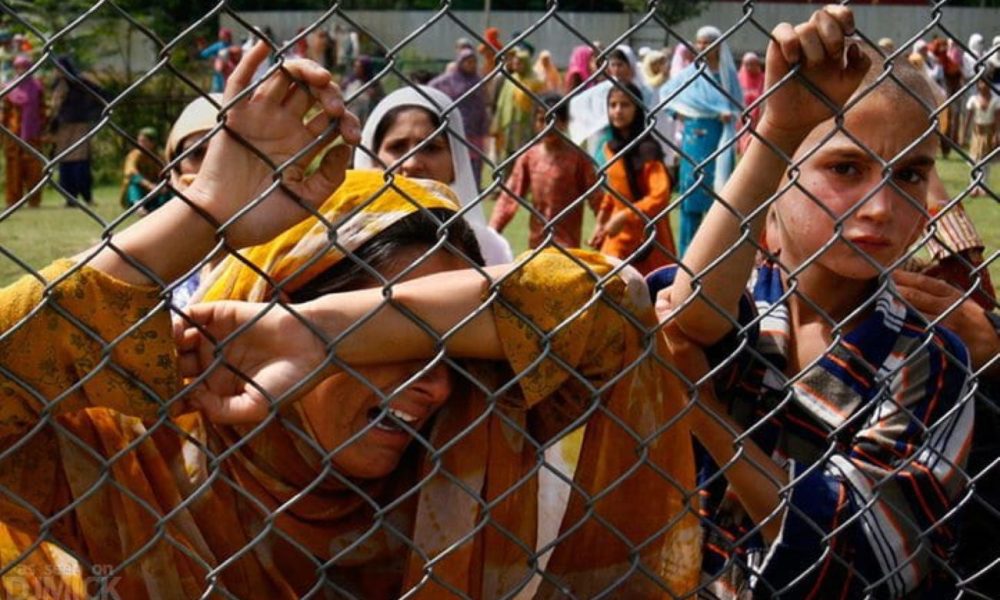
These are not merely statistics in a government spreadsheet. Behind every unresolved case is a family waiting for news, a mother searching for her daughter, a child whose whereabouts remain unknown, or relatives struggling to understand what happened and where the investigation stands.
The numbers raise difficult questions about public safety, the effectiveness of investigations, the availability of information and the institutional responsibility to keep searching long after the initial headlines disappear.
16,397 missing cases: What the official figures actually show
The data, accessed through an RTI application and reported by The Tribune on October 26, 2026, covers missing adult women from 2019 to June 2026 and missing minor girls from 2019 to August 2026.
The difference in reporting cut-off dates is important. The combined figure of 16,397 does not cover exactly the same period for both categories.
The breakdown is particularly concerning:
Category Reported missing Traced Still untraced
Adult women 14,593 11,338 3,255
Minor girls 1,804 788 1,016
Total 16,397 12,126 4,271
Approximately one in four reported cases
The breakdown is particularly concerning:
| Category | Reported missing | Traced | Still untraced |
|---|---|---|---|
| Adult women | 14,593 | 11,338 | 3,255 |
| Minor girls | 1,804 | 788 | 1,016 |
| Total | 16,397 | 12,126 | 4,271 |
The figures show that more than half of the reported missing minor girls remain untraced, a proportion considerably higher than the unresolved share among adult women.
The absence of district-wise figures in the response reported by The Tribune is another major gap. Without a district-level breakdown, the public cannot adequately examine where cases are concentrated, whether certain areas are experiencing recurring patterns, or how investigative performance differs between districts.
Source: RTI data obtained by The Tribune from the J&K Home Department. Adult-women data through June 2026; minor-girl data through August 2026.
2025 stands out: A worrying rise in missing women
The annual numbers provide another reason for concern. The data shows that 2025 recorded the highest number of missing adult women in the period covered, with 2,595 reported cases.
Of these, 2,102 were traced, while 493 remained untraced, according to the reported RTI figures.
The number of missing adult women had already increased significantly in the preceding years.
| Year | Adult women reported missing |
|---|---|
| 2019 | 1,388 |
| 2020 | 1,398 |
| 2021 | 1,854 |
| 2022 | 1,766 |
| 2023 | 2,242 |
| 2024 | Data not listed in the published summary |
| 2025 | 2,595 |
The reported number climbed from 1,388 in 2019 to 2,595 in 2025, an increase of nearly 87 per cent.
The data for minor girls also shows a troubling trend. After fluctuations in the earlier years, 2025 recorded 289 missing minor girls, the highest annual figure listed in the report. Of these, 166 remained untraced.
In 2026, 286 minor girls had been reported missing by August alone. As many as 158 were still untraced at the time covered by the data.
These figures should not be interpreted as proof that disappearances are increasing because of any single cause. Population changes, reporting practices, case registration and investigation outcomes can all influence the numbers. But the scale and persistence of unresolved cases are reason enough for an urgent, transparent review.
More than half of missing minor girls remain untraced
The most disturbing part of the figures concerns children.
Between 2019 and August 2026, 1,804 minor girls were reported missing. Authorities traced 788, but 1,016 remained untraced.
That means approximately 56 per cent of reported missing minor-girl cases in the dataset remain unresolved.
A missing child is not an ordinary police case. Every passing hour can matter. The possibility of exploitation, abuse, trafficking, coercion, unlawful confinement or other harm makes prompt investigation and coordination essential.
However, an important distinction must be maintained: a missing-person report does not automatically mean the person has been trafficked, abducted or subjected to a crime.
Some individuals may leave home voluntarily, some cases may involve family disputes or relationship-related circumstances, and others may involve criminal activity or vulnerability. The figures alone do not tell us which circumstances apply to each case.
That uncertainty is precisely why more transparency and case-level investigation are needed. Authorities must establish what happened to each person, not allow public speculation to substitute for evidence.
Missing does not mean trafficked, but the possibility cannot be ignored
The scale of missing-person cases inevitably raises concerns about trafficking, forced marriage, sexual exploitation, grooming, blackmail, coercion and organised crime.
These concerns are legitimate avenues for investigation, not conclusions that can be drawn from the missing-person figures alone.
Separate NCRB data cited in the reporting shows that Jammu and Kashmir recorded 1,202 cases in 2024 under the category of kidnapping, abducting or inducing women to compel them to marry, covered by Section 87 of the Bharatiya Nyaya Sanhita (BNS).
That number is serious in its own right. But it should not be added to the missing-person figures or treated as evidence that the 4,271 untraced women and girls are victims of forced marriage. These are separate categories of crime and reporting, and their relationship, if any, would need to be established through investigation.
The public deserves an evidence-based picture of what is happening, including whether investigators have identified patterns involving online contacts, deception, exploitation, interstate movement, trafficking networks or repeat offenders.
If such patterns exist, they must be exposed. If they do not, authorities should say so clearly.
The danger is not just that people may disappear. It is that a lack of reliable information can allow fear, rumours and misinformation to grow around those disappearances.
The question of accountability: Who is tracking the unresolved cases?
A missing-person investigation cannot be judged only by whether an FIR was registered or a file opened. The real question is whether investigators continue working on the case, whether leads are followed, whether information is shared across jurisdictions, and whether families are kept informed.
For the 4,271 cases still untraced, the public needs answers to several basic questions:
-
How many cases have active investigations underway?
-
How many have been transferred to specialised units?
-
How many have involved interstate coordination?
-
How many cases have generated credible leads that are still being followed?
-
How often are families informed about the progress of investigations?
-
How many unresolved cases have been reviewed by senior officers?
-
How many cases involve suspected criminal activity, and how many remain without a clear investigative direction?
These are not unreasonable demands. They are fundamental questions about public safety and the functioning of law enforcement.
The Home Department’s reported failure to provide district-wise data also leaves an accountability gap. Without district-level information, it becomes difficult for legislators, journalists, civil society organisations and citizens to identify patterns or assess whether police resources are being directed toward the areas and cases that need them most.
The purpose of publishing such data should not be to shame districts or expose families. It should be to identify gaps, improve investigations and make the system more responsive.
Existing child-tracking systems need to work on the ground
India already has mechanisms intended to help trace missing children.
The Ministry of Women and Child Development’s integrated Mission Vatsalya Portal incorporates the TrackChild missing/found children system and the Khoya-Paya module. The platform is connected with the Crime and Criminal Tracking Network and Systems (CCTNS), enabling information-sharing and matching of missing-child FIR records.
The government has also stated that states and Union Territories have designated nodal officers for missing children, while guidelines and advisories seek timely updating of information and better coordination between agencies.
These systems can help, but a portal is only as effective as the information entered, the quality of investigation, the speed of coordination and the follow-up carried out by officers.
The existence of a database does not automatically mean a child has been located. A digital entry is not an investigation. Technology cannot replace field work, intelligence gathering, checking leads, interviewing witnesses, verifying information and maintaining contact with families.
The government’s own Standard Operating Procedure for missing children outlines a process involving police control rooms, investigating officers, neighbouring police stations, hospitals, railway stations, child-care institutions, shelter homes, Child Welfare Committees and other relevant agencies.
The question for Jammu and Kashmir is whether these procedures are being followed consistently, and whether unresolved cases are receiving sustained attention.
Official references: Ministry of Women and Child Development and Ministry of Home Affairs guidance on missing children and tracking systems.
Families need more than an FIR number
For families of missing persons, the disappearance is only the beginning of a long and painful ordeal.
The first days can bring frantic searches, visits to police stations, calls to relatives, inquiries at hospitals and appeals across social media. As time passes, the urgency outside the home may fade, but the uncertainty inside it often becomes permanent.
Families may be left wondering whether the person is alive, whether they are safe, whether they need help, or whether a missed lead could have changed the outcome.
There is also the emotional and financial burden of continuing the search. Travel, legal consultations, printing photographs, contacting authorities and pursuing leads can consume savings and time. For families with limited resources, maintaining a search for months or years can become overwhelming.
This is why a responsive missing-person system must also support families. They need a designated contact, regular updates, information about the next investigative steps and access to appropriate counselling or legal assistance where necessary.
Silence from authorities can deepen the distress. Even when investigators have no breakthrough to report, families deserve to know that the case has not simply disappeared into paperwork.
What Jammu and Kashmir must do now
The numbers demand a response that is measurable, transparent and sustained. Public statements expressing concern are not enough. The authorities need a structured plan to revisit every unresolved case.
1. Publish district-wise missing-person data
The Home Department should publish district-wise numbers of women and girls reported missing, traced and untraced, with clearly stated reporting cut-off dates.
The information should be updated periodically and presented in a way that protects the identity and privacy of victims, families and minors.
2. Conduct a review of all long-pending cases
Every unresolved case should undergo a fresh review. Older cases must not be considered less important simply because they have been pending for years.
New investigative leads, technological tools, records and information from other districts or states may offer opportunities to revisit cases.
3. Give families a designated point of contact
Families should not have to repeatedly visit police stations just to learn whether anything has changed.
A designated officer or case contact should provide periodic updates, explain investigative progress where disclosure is appropriate, and inform families about any assistance available.
4. Strengthen specialised investigation and interstate coordination
Where evidence suggests trafficking, abduction, exploitation or organised crime, cases should be coordinated with specialised units and relevant authorities outside J&K.
Missing-person investigations should not stop at district boundaries. Movement between states, digital communication, financial records and other lawful investigative leads may require coordination beyond the local police station.
5. Improve data transparency without compromising privacy
Authorities should provide information on the number of cases resolved, pending investigations, age groups, broad case categories and investigative progress.
But the names, photographs, personal details and circumstances of vulnerable individuals must not be disclosed recklessly. Transparency and privacy are not opposing goals. Responsible reporting can achieve both.
6. Make this an issue of sustained legislative oversight
Members of the Legislative Assembly, parliamentary representatives and relevant committees should seek periodic updates from the Home Department and police leadership.
The issue deserves more than one question during a session or a brief public statement after a tragedy. It requires follow-up, review and documented action.
7. Mobilise civil society responsibly
Local community organisations, religious institutions, women’s groups, media outlets and digital creators can help share verified information, promote awareness and support families.
But the sharing of missing-person details should be coordinated with families and investigators. Unverified claims, sensational posts, victim-blaming and rumours can put vulnerable people at further risk.
Why this cannot remain a one-week public conversation
Jammu and Kashmir is no stranger to public mobilisation.
Political developments can dominate news cycles for days. Major incidents can bring public statements from across the political spectrum. Social media can amplify a controversy within hours. Issues affecting livelihoods, education, roads, electricity and public services rightly attract attention.
Yet the disappearance of thousands of women and girls should not be reduced to a headline that trends briefly and then vanishes.
The public debate must move beyond asking how many people went missing. It must ask how many remain untraced today, what investigators know, what obstacles they face, whether institutional failures have been identified and what steps are being taken to improve the chances of finding those still missing.
The Opposition has a responsibility to demand answers. The government has a responsibility to provide them. Police leadership has a responsibility to investigate. The media has a responsibility to keep the issue alive. Civil society has a responsibility to respond with care and urgency.
None of these responsibilities should depend on political convenience.
A crisis measured in numbers, but lived by families
The figures are difficult to read. But their real meaning lies beyond the numbers.
4,271 women and girls remain untraced in the reported dataset. More than 1,000 of them are minors. The published data does not tell us where they are, what happened to them, or how many families have received meaningful updates about their cases.
Those unanswered questions should be at the centre of Jammu and Kashmir’s public conversation.
This is not about creating panic. It is about demanding urgency without speculation, accountability without political theatre, and compassion without allowing the issue to fade.
A missing person is not a closed chapter simply because the news cycle has moved on. For families, the search continues.
Find them. Trace them. Reopen the leads. Explain the failures. Fix the system.
And until every possible effort is made to locate those still missing, Jammu and Kashmir cannot afford to look away.