Delimitation Vote: Can Congress Stop the Bill, or Is INDIA Bloc Unity Breaking Under Pressure?
By: Javid Amin | 29 November 2026 | Political mega-feature | Parliament | Constitutional amendment | INDIA bloc | Delimitation
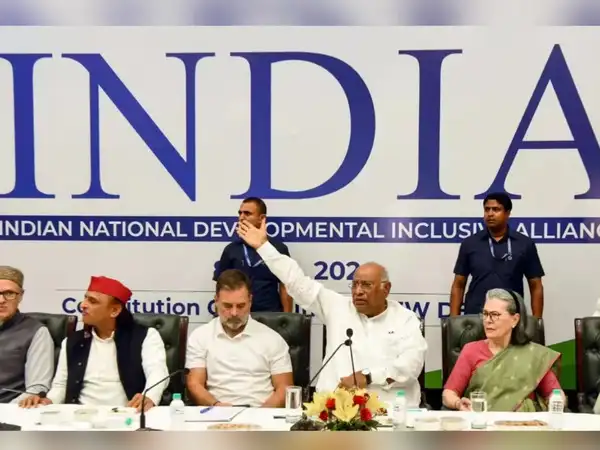
The battle over delimitation is heading into Parliament, but the most consequential political drama is unfolding outside the House, inside the opposition’s own camp.
Congress is scrambling to prevent a split in the INDIA bloc over the Centre’s revised delimitation proposal, reaching out to DMK chief MK Stalin and NCP (Sharadchandra Pawar) leader Sharad Pawar even as both parties have indicated support for the government’s latest formula. The Samajwadi Party, meanwhile, has directed its MPs to oppose the legislation, while Congress and several other opposition parties remain firmly against it.
The timing could hardly be more sensitive. Parliament’s special sitting begins on November 30, and the proposed constitutional package links a major expansion of legislative seats with the implementation of 33 per cent women’s reservation. The government is attempting to secure support for a revised framework after an earlier constitutional amendment failed to obtain the required majority.
For Congress, this is no longer only a fight over the government’s delimitation design. It is also a test of whether the party can maintain a common opposition position when regional allies see their own political and state interests differently.
For the BJP-led government, support from parties outside the NDA could strengthen its parliamentary numbers and help it project the proposal as a wider political consensus rather than a government-versus-opposition confrontation.
But the numbers alone do not tell the entire story. Delimitation could reshape the balance of parliamentary representation for decades, affect how states negotiate their political weight and determine the future architecture of women’s reservation. That is why this vote is much bigger than a routine legislative contest.
The central question now is simple: Can Congress persuade its regional allies to oppose the Bill, or will state-specific political interests prove stronger than alliance unity?
What has changed in the revised delimitation proposal?
The political shift began after the government revised its earlier delimitation framework following the failure of the previous constitutional amendment in April.
The revised package seeks to increase Lok Sabha representation by 50 per cent for every state and Union Territory while retaining the existing relative distribution of seats among states for the next 25 years, up to 2051. The government says this uniform increase is intended to expand representation without penalising states that have maintained lower population growth.
The official statement of reasons for the revised legislation says the earlier proposal could not secure the constitutionally required special majority in the Lok Sabha on April 17, 2026. The government subsequently decided to introduce a fresh constitutional amendment and a new Delimitation Bill incorporating changes to address concerns raised during the earlier debate.
The revised framework is politically important because it attempts to address the concerns of southern states, which have long argued that a delimitation exercise based primarily on population growth could reduce their relative influence in Parliament.
The proposed uniform increase changes the political calculation. Instead of redistribution that could reduce a state’s relative share, the new formula promises to expand seats across states while protecting their existing relative proportions.
That assurance has become the key reason DMK has moved towards supporting the revised proposal.
Why MK Stalin changed course
For MK Stalin and the DMK, the central issue has been Tamil Nadu’s share of parliamentary representation.
The party had opposed the earlier delimitation proposal, arguing that states which successfully controlled population growth should not lose political weight in Parliament. Its concerns were rooted in a wider southern-state argument that population-based redistribution could reward states with higher population growth while weakening states that invested in social development, education, healthcare and family planning.
The revised proposal appears to have addressed two of the DMK’s major demands:
-
Tamil Nadu’s existing proportion of Lok Sabha representation should not be reduced.
-
The relative distribution of seats among states should remain protected for another 25 years.
Under the revised formula, Tamil Nadu’s Lok Sabha seats are expected to increase from 39 to 51, while its national share reportedly moves marginally from 7.18 per cent to around 7.21 per cent.
Stalin has described the revised proposal as a victory for the party’s sustained campaign, arguing that the DMK did not oppose delimitation itself, but opposed any exercise that could diminish Tamil Nadu’s political representation. Senior leader A Raja has also said the party’s demands were incorporated in writing, although concerns remain about the proposed delimitation commission and constituency boundary exercise.
For the DMK, supporting the revised bill is therefore being presented as a state-interest decision, not necessarily an ideological alignment with the BJP.
That distinction matters politically. Stalin can argue that he negotiated safeguards for Tamil Nadu and secured a better arrangement, even if his decision complicates Congress’s effort to maintain a unified opposition vote.
Sharad Pawar’s support: A tactical decision, not an alliance exit
Sharad Pawar’s position is equally significant, although it requires careful distinction between supporting legislation and changing political alliances.
The NCP (Sharadchandra Pawar) has indicated support for the revised delimitation proposal, with party spokesperson and MLA Jitendra Awhad saying the party would back a uniform 50 per cent increase in Lok Sabha seats across states. The position is consistent with the condition previously articulated by Supriya Sule: the increase should apply equally rather than disproportionately benefit some states.
The party’s reported support comes despite its membership in the INDIA bloc, which is attempting to build a collective opposition position against the government’s bills.
This has triggered questions about whether Pawar is moving closer to the NDA or distancing himself from Congress. But supporting a specific constitutional proposal does not, by itself, mean leaving an opposition alliance.
Regional parties routinely take independent positions on legislation when they believe a particular policy affects their state, political constituency or long-term interests. The NCP (SP) has not, on the basis of the reported bill support alone, announced that it is leaving the INDIA bloc.
The more immediate problem for Congress is parliamentary coordination. Even if Pawar remains an opposition ally, a vote in favour of the bill would weaken the bloc’s ability to present a united front on a major constitutional question.
The Samajwadi Party draws a clear line
While DMK and NCP (SP) have indicated support for the revised proposal, the Samajwadi Party has reportedly issued a whip directing its Lok Sabha MPs to oppose the legislation.
This places the SP on the same side as Congress in the immediate parliamentary contest, despite the differences among opposition parties over the bill’s design and political implications.
The SP’s opposition also underlines that INDIA bloc divisions are not simply a case of regional parties supporting the government. The alliance’s position is more complicated: some partners are opposed, others are supportive under conditions, and several are attempting to negotiate the final contours of the proposal.
That makes the coming vote a test of whether the opposition can coordinate on a common strategy even when its constituents disagree over the policy itself.
The arithmetic behind the constitutional battle
The revised delimitation package is not an ordinary bill that can be passed through a simple majority vote. The constitutional amendment requires a special majority in Parliament, making attendance, voting patterns and alliance decisions particularly important.
Under Article 368, a constitutional amendment must secure:
-
A majority of the total membership of each House.
-
At least a two-thirds majority of members present and voting in each House.
The constitutional package also requires ratification by at least half of the state legislatures, as reported in coverage of the proposed amendment. That means the legislative journey does not end with the Lok Sabha and Rajya Sabha votes.
The earlier constitutional amendment failed in the Lok Sabha on April 17, 2026. The official statement of reasons confirms that it did not secure the required special majority, and the consequential delimitation legislation was not proceeded with.
This history explains why the government has placed such importance on securing additional support from outside its own alliance.
The revised proposal may have changed the political equation, but the constitutional threshold remains demanding. No party can assume the outcome simply by counting supportive announcements. The final numbers will depend on the actual strength of the House, attendance, abstentions and voting behaviour when the legislation is put to a vote.
Can 30 MPs change the outcome?
The reported strength of the two parties
22 – DMK
Lok Sabha MPs
8 – NCP (SP)
Lok Sabha MPs
Combined strength: 30 Lok Sabha MPs
The DMK and NCP (SP) together have 30 Lok Sabha MPs, and their support could be significant in a constitutional vote where the government needs to build a broad majority.
However, those 30 votes should not be treated as an automatic guarantee that the legislation will pass. The government’s final position depends on the full parliamentary arithmetic, including NDA allies, other supporting parties, opposition turnout and whether all MPs vote as expected.
The earlier defeat is an important reminder that a government can have substantial support and still fall short of the special-majority threshold.
The numbers make DMK and NCP (SP) politically valuable, but the final result is determined inside Parliament, not by the announcements made before it.
Why Congress is opposing the proposal
Congress’s opposition is based on two broad concerns: the political consequences of the proposed delimitation formula and the argument that women’s reservation should not be made dependent on a major expansion of Parliament.
1. Concern over long-term political advantage
Congress and other opponents fear that delimitation could alter India’s political balance over the long term, particularly if future seat allocation or constituency boundaries favour certain states or parties.
The revised proposal’s uniform 50 per cent increase is designed to protect the relative representation of states, but critics remain concerned about how the delimitation commission will redraw individual constituency boundaries and how the exercise will affect political competition within states.
The opposition has also questioned whether the government’s broader constitutional package is primarily about implementing women’s reservation or whether it creates a political opportunity to reshape electoral representation ahead of future elections.
These are political arguments and concerns, not proof that constituency boundaries will be manipulated. The actual delimitation process, the commission’s independence, its criteria and its published decisions will determine how credible those concerns prove to be.
2. Women’s reservation versus expansion of Parliament
The 33 per cent reservation for women is the most popular and politically difficult component to oppose directly. The debate is instead about how it should be implemented.
Congress and several opposition parties have argued that women’s reservation should be implemented within the existing strength of the Lok Sabha rather than tied to a seat expansion and delimitation exercise.
This position creates a political dilemma for the government: it can frame its proposal as a pathway to implementing women’s reservation, while the opposition can argue that the reservation should not be delayed or linked to other changes in the composition of Parliament.
The disagreement is therefore not simply about whether women should receive greater representation. It is about the mechanism, timing and constitutional structure through which that representation is achieved.
Delimitation is about more than the number of MPs
Delimitation is the process of redrawing electoral boundaries and adjusting representation. It can determine how many constituencies a state has, how large those constituencies are, and how electoral representation is organised.
The proposed legislation is politically sensitive because it touches the federal balance between states, population, political representation and the future of parliamentary democracy.
India’s southern states have historically expressed concern that a purely population-driven redistribution could reduce their relative influence compared with states experiencing faster population growth. They argue that states should not be politically penalised for policies that helped improve health, education and family planning outcomes.
The revised proposal attempts to address that concern by providing for a uniform 50 per cent increase in seats while preserving the relative distribution among states for 25 years. Constituency boundaries, however, would still be redrawn using the census data specified in the proposed framework. That distinction between preserving state-level seat shares and redrawing constituencies within states will be central to the eventual delimitation process.
This is why delimitation is not merely an administrative exercise. It is a redistribution of political representation, and the rules governing it can influence electoral politics for years.
The government argues that a uniform increase protects states while expanding representation and enabling women’s reservation. Critics question whether the commission’s powers, the process of redrawing boundaries and the constitutional package provide sufficient safeguards.
The legitimacy of the exercise will depend not only on the law passed by Parliament but also on how transparently the delimitation commission conducts its work.
What happens if Congress fails to persuade Stalin and Pawar?
If DMK and NCP (SP) remain supportive, Congress will face a difficult political outcome even if it succeeds in maintaining opposition among several other parties.
The immediate consequences could be:
-
A visible split within INDIA: Parties voting differently on a major constitutional amendment would weaken the alliance’s claim to coordinated opposition.
-
Reduced Congress leverage: Congress may find it harder to negotiate a common position on future national legislation if regional allies increasingly act independently.
-
A government narrative of consensus: BJP could point to support from parties outside the NDA as evidence that the revised proposal has broader acceptance.
-
Greater bargaining power for regional parties: DMK and NCP (SP) could demonstrate that negotiating specific safeguards for their states or political concerns can yield results.
-
A complicated opposition campaign: Congress may have to oppose the legislation while avoiding a public confrontation with allies it still needs for electoral cooperation.
But even a divided vote would not necessarily mean the INDIA bloc is finished.
The alliance is a coalition of parties with different regional priorities, ideologies, political histories and electoral strategies. Disagreement on delimitation could expose its weaknesses, but the future of the alliance would depend on whether these parties continue to cooperate on elections, other legislation and shared political objectives.
A constitutional disagreement is not the same as a formal alliance breakup.
Who is gaining politically: BJP, Congress or regional parties?
The BJP-led NDA
The government gains political momentum if parties outside the NDA support its proposal. It can argue that the revised formula addresses earlier objections and that the constitutional package has support beyond the ruling coalition.
But passage of the amendment would still require the constitutionally mandated majorities and state ratification. Political support announced in advance is not the same as legislative victory.
Congress
Congress risks losing the appearance of opposition unity if major allies vote differently. However, its opposition also gives it an opportunity to frame the debate around federalism, the constitutional process, women’s reservation and the need for safeguards against arbitrary delimitation.
Whether that argument gains traction will depend on its ability to explain the consequences of the proposal clearly rather than allowing the government to dominate the narrative.
DMK and NCP (SP)
The regional parties may emerge with their own political gains. DMK can claim that its pressure helped secure protection for Tamil Nadu’s representation. NCP (SP) can argue that it supported the revised framework because the uniform increase addresses its stated concerns.
Their decisions demonstrate the growing influence of regional parties in national constitutional debates, particularly when their support can become important to a government’s parliamentary arithmetic.
The bigger takeaway: A constitutional vote, an alliance stress test
The delimitation showdown is exposing an uncomfortable reality for the INDIA bloc: opposition unity is easier to maintain when parties agree on the political target than when they must choose between alliance discipline and regional interests.
Congress wants to prevent the government from securing a major constitutional victory and wants opposition parties to present a common challenge. DMK believes its demands have been incorporated into the revised formula. NCP (SP) has indicated support based on uniform seat expansion. The Samajwadi Party is preparing to oppose the legislation.
These positions are not necessarily contradictory from each party’s perspective. They reflect different political priorities, but they make collective opposition strategy far harder.
The BJP, meanwhile, has an opportunity to turn the division into a political advantage. Yet the real test for the government will not simply be whether it can secure votes. It will be whether the new delimitation framework can withstand scrutiny over fairness, federal balance, transparency and the independence of the commission tasked with implementing it.
If the Bill passes, the political headline may focus on the government’s victory and the INDIA bloc’s divisions.
But the more consequential story will be the rules India adopts for representation, how those rules protect the interests of states, and whether women’s reservation is implemented through a process that commands public confidence.
Parliament may decide the numbers in the coming days. The political consequences of those numbers could last much longer.