Kashmir Hailstorm Wreaks Havoc on Apple Orchards; Lightning Kills Youth in Lolab as Fresh Snowfall Returns to Higher Reaches
By: Javid Amin | 24 May 2026
Severe Weather Strikes Kashmir at a Critical Time for Farmers
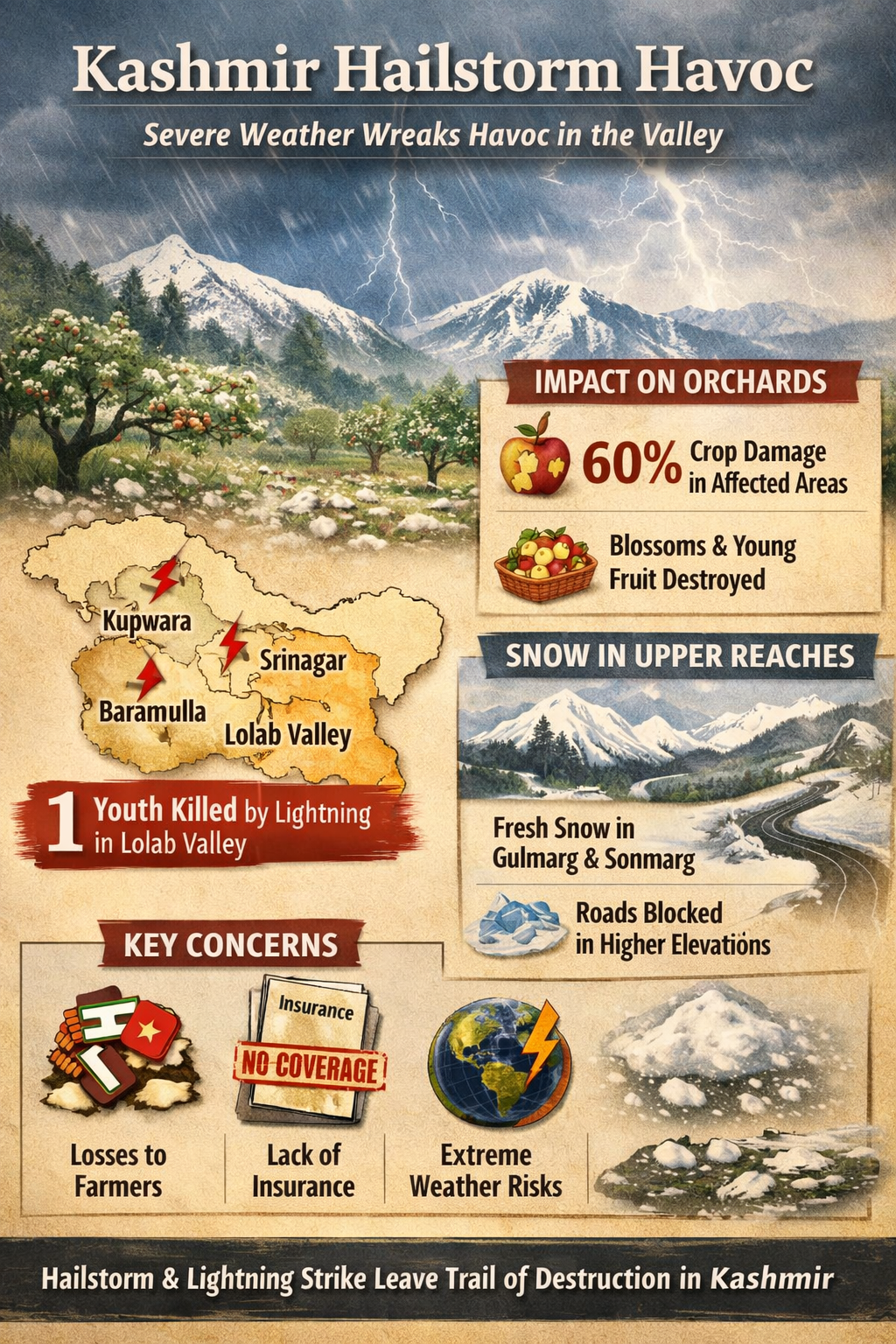
Kashmir’s fragile weather pattern took a dramatic turn over the weekend as a powerful hailstorm, accompanied by lightning, thunderstorms, gusty winds and fresh snowfall in higher altitudes, battered large parts of the Valley. The extreme weather event has left apple growers counting losses, disrupted normal life in several areas, and claimed the life of a young man in north Kashmir’s Lolab Valley.
From Kupwara and Baramulla to parts of Srinagar, hailstones pounded orchards at one of the most crucial stages of the apple-growing season. Meanwhile, upper reaches including Razdan Pass, Tulail Valley and other mountainous regions witnessed fresh snowfall, leading to a sharp drop in temperatures and renewed concerns about weather instability.
The latest spell has once again highlighted the growing vulnerability of Kashmir’s agriculture and horticulture sectors to extreme weather events that are becoming increasingly frequent across the Himalayan region.
Lightning Strike Claims Young Life in Lolab Valley
Amid the severe weather conditions, tragedy struck Chandigam village in Lolab Valley of Kupwara district when lightning hit two young men during heavy rain and thunderstorms.
Officials confirmed that 23-year-old Abid Rahim Ganie lost his life after being struck by lightning. Another youth, Faizan Rahman Dar, sustained injuries and was shifted for advanced medical treatment. The incident occurred as intense thunderstorms swept through the region.
The fatality has sent shockwaves through the local community and serves as a reminder of the dangers posed by increasingly volatile weather conditions in Kashmir.
Experts note that lightning-related incidents have become a growing concern across several Himalayan regions, where sudden thunderstorms are becoming more common during transitional seasons.
Apple Orchards Bear the Brunt of the Storm
The worst economic impact of the weather event has been felt in Kashmir’s apple belt.
Large hailstones shredded delicate apple blossoms and damaged newly formed fruit across several districts, including Kupwara, Baramulla, Bandipora and adjoining areas. Farmers reported that the hailstorm struck with little warning, leaving orchards damaged within minutes.
For apple growers, the timing could hardly have been worse.
May is considered one of the most sensitive phases in the apple production cycle. During this period, blossoms develop into young fruit, making orchards particularly vulnerable to hail damage. Even brief exposure to large hailstones can reduce fruit quality, lower market value and affect overall yield.
Growers from north Kashmir described the destruction as devastating.
Many orchardists said years of investment in fertilizers, labour, irrigation and pest management were undone in a single weather event. Similar hailstorms earlier this month had already weakened confidence among farmers, and repeated storms are now raising fears about the overall apple harvest of 2026.
Farmers Fear Massive Financial Losses
While exact assessments are still underway, field reports indicate substantial losses across affected horticultural zones.
Government officials had earlier estimated orchard damage ranging between 15 and 30 percent in several areas of north Kashmir after previous hailstorm events. However, local growers in the latest affected pockets claim losses are significantly higher in some orchards.
The situation is particularly worrying because horticulture forms the backbone of Kashmir’s rural economy.
The apple industry supports hundreds of thousands of families directly and indirectly through farming, transportation, packaging, storage, trading and exports. Any significant decline in production has a ripple effect throughout the regional economy.
Growers’ associations have already described 2026 as one of the most difficult years in recent memory, citing repeated hailstorms and unseasonal weather as major reasons behind widespread crop damage. According to industry representatives, nearly 30 percent of the Valley’s horticulture and agriculture sector has suffered damage from multiple hail events this year.
Fresh Snowfall Returns to Kashmir’s Higher Reaches
Even as the plains grappled with hail and thunderstorms, Kashmir’s upper reaches witnessed fresh snowfall.
Areas including Razdan Pass and Tulail Valley received a new layer of snow, creating wintry conditions despite the late spring season. The snowfall contributed to a notable decline in temperatures across the region and affected movement along some mountain routes.
Weather officials said the snowfall was linked to an active western disturbance moving across north India.
While fresh snow in the mountains is not entirely unusual during late spring, its occurrence alongside severe hailstorms in the plains illustrates the complexity and intensity of the current weather pattern affecting Kashmir.
The sudden change also raised concerns among local communities dependent on mountain roads and seasonal tourism activities.
What Caused the Sudden Weather Turn?
Meteorologists attribute the latest weather disturbance to a strong western disturbance interacting with moisture-laden local atmospheric conditions.
Western disturbances are eastward-moving weather systems that originate over the Mediterranean region and frequently influence weather across north India and the western Himalayas.
When these systems encounter local moisture and unstable atmospheric conditions, they can trigger:
- Intense thunderstorms
- Heavy rainfall
- Hailstorms
- Lightning activity
- Fresh snowfall in higher elevations
Weather experts say the combination of these factors often produces highly localized but destructive events, making forecasting and preparedness more challenging.
Climate Change Concerns Grow Across Kashmir
Beyond the immediate losses, the latest weather disaster has reignited discussions about climate variability and changing weather patterns in Kashmir.
Over the past decade, farmers have increasingly reported erratic rainfall, unseasonal snowfall, prolonged dry spells and frequent hailstorms. Many growers believe traditional agricultural calendars are becoming less reliable.
Agricultural experts have repeatedly warned that extreme weather events can have long-term consequences for fruit quality, productivity and orchard health. Repeated hail damage not only affects current harvests but can also weaken trees, increase disease risks and reduce future output.
Climate researchers point to broader warming trends across the Himalayan region, where rising temperatures are altering precipitation patterns and increasing weather volatility.
For Kashmir’s apple industry, adapting to these changes may become one of the biggest challenges of the coming decade.
Crop Insurance Gap Deepens Farmers’ Worries
One of the recurring concerns among orchardists remains inadequate crop insurance coverage.
Many growers affected by recent weather disasters say they either lack insurance protection or have limited access to compensation mechanisms. As losses mount, farming communities are demanding stronger financial safeguards and faster relief measures.
In response to growing concerns, the Jammu and Kashmir government recently announced plans to introduce a weather-based crop insurance scheme aimed at protecting farmers against climate-related risks. Officials indicated that the framework is in advanced stages of preparation.
Farmers, however, stress that timely implementation will be crucial given the increasing frequency of weather shocks.
A Warning Sign for Kashmir’s Future
The latest hailstorm, lightning tragedy and fresh snowfall are more than isolated weather incidents. Together, they reflect a larger story unfolding across Kashmir’s landscape—one where climate uncertainty is increasingly shaping livelihoods, agriculture and rural economies.
For apple growers already battling rising costs and unpredictable markets, repeated weather disasters are becoming a major threat to sustainability.
As authorities assess the damage and affected families begin recovery efforts, the event serves as another reminder that climate resilience, crop protection and disaster preparedness are no longer optional for Kashmir’s agricultural future—they are becoming urgent necessities.
Fact Check & Verification Notes
- Lightning death in Chandigam, Lolab Valley verified through multiple local news reports.
- Apple orchard damage across Kupwara, Baramulla and other Kashmir districts confirmed by multiple ground reports.
- Fresh snowfall in upper reaches and active western disturbance confirmed by weather reporting.
- Claims of “up to 60% losses” remain localized farmer estimates and could not be independently verified through official assessments at the time of publication. Current official preliminary assessments from previous affected areas indicate losses ranging from 15% to 30%, with detailed surveys ongoing.