Ladakh Deal Triggers Political Storm in Kashmir, Revives Debate on Autonomy and Article 370
By: Javid Amin | 24 May 2026
Centre’s Assurances to Ladakh Trigger Sharp Reactions in Kashmir Valley
A fresh political debate has erupted across Jammu and Kashmir after reports emerged of a major understanding between the Centre and Ladakh-based groups over demands related to land rights, jobs, cultural protection, and administrative safeguards.
The reported “Ladakh deal,” which follows months of protests and negotiations involving civil society groups from Leh and Kargil, is being viewed in Kashmir not merely as a regional administrative arrangement, but as a politically significant signal from New Delhi regarding its post-2019 governance strategy.
Mainstream political parties in Kashmir, including the National Conference (NC), Peoples Democratic Party (PDP), and Apni Party, have reacted strongly to the developments, arguing that the Centre’s willingness to negotiate safeguards for Ladakh exposes inconsistencies in its approach toward Jammu and Kashmir after the abrogation of Article 370.
Meanwhile, BJP leaders have defended the reported agreement as evidence that democratic engagement and peaceful dialogue can produce results without confrontation or separatist politics.
The emerging debate has once again brought questions of autonomy, regional identity, domicile protections, and political representation to the centre of discourse in Kashmir.
What Is the ‘Ladakh Deal’?
Although the Centre has not yet publicly disclosed a final constitutional framework, the broad contours of the reported understanding suggest enhanced safeguards for Ladakh in matters related to:
- Land ownership protections
- Government jobs for locals
- Cultural and tribal identity preservation
- Administrative empowerment
- Greater local representation in governance
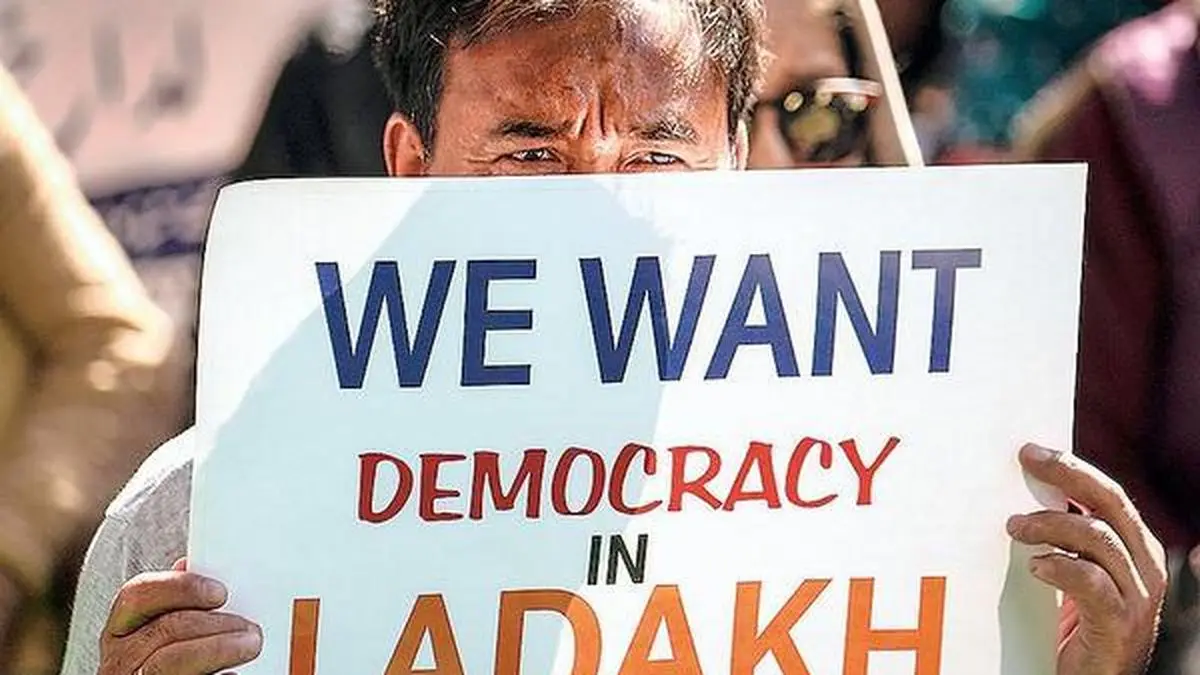
The agreement reportedly emerged after sustained pressure from influential organisations in Leh and Kargil, including apex bodies and religious-political groups that had demanded constitutional protections following Ladakh’s separation from Jammu and Kashmir in August 2019.
Since becoming a Union Territory without a legislature after the abrogation of Article 370, many residents in Ladakh had expressed fears regarding demographic changes, land ownership, and weakening local control over resources.
Protest movements in Ladakh gained national attention over the past two years, especially after climate activist and education reformer Sonam Wangchuk launched high-profile campaigns seeking constitutional safeguards under the Sixth Schedule of the Constitution.
While the exact nature of the new assurances remains under discussion, political observers say the Centre appears to be moving toward a “Statehood-like administrative model” aimed at balancing strategic governance with local aspirations.
Kashmir Parties See ‘Selective Federalism’
Political reactions in Kashmir were swift and pointed.
Leaders from the National Conference and PDP questioned why safeguards related to land, jobs, and identity are being considered for Ladakh while similar protections remain absent or weakened in Jammu and Kashmir after 2019.
For many Valley-based politicians, the development reinforces a long-standing argument that the post-Article 370 order created political asymmetry within the broader region.
National Conference’s Position
The National Conference has argued that if Ladakh’s cultural and demographic identity deserves constitutional safeguards, then the same logic must apply to the people of Jammu and Kashmir.
Party leaders have linked the issue to restoration of statehood and constitutional protections that existed prior to the August 5, 2019 reorganisation.
The NC views the Ladakh negotiations as indirect acknowledgement by the Centre that regional identity concerns cannot simply be managed through bureaucratic governance alone.
PDP’s Response
The PDP has framed the issue more politically, accusing New Delhi of pursuing what it calls “selective accommodation.”
Party leaders argue that the Centre removed protections from Jammu and Kashmir in the name of integration and development, but is now negotiating fresh protections elsewhere due to sustained regional pressure.
The party claims this reflects contradictions within the Centre’s Kashmir policy.
Apni Party’s Stand
The Apni Party, which has often maintained a relatively conciliatory approach toward New Delhi, also expressed concern about parity and representation.
Its leaders stressed that protections for land and employment should not become region-specific privileges while residents of Jammu and Kashmir continue to seek clarity on domicile rights, recruitment safeguards, and political empowerment.
BJP Calls Ladakh Model a Victory for Democratic Engagement
The BJP has strongly defended the emerging Ladakh arrangement and rejected criticism from Kashmir-based parties.
Party leaders describe the dialogue process as a successful example of peaceful democratic negotiation within the constitutional framework of India.
According to BJP representatives, the Ladakh talks demonstrate that issues related to regional aspirations can be addressed through consultation, without the politics of separatism or street unrest that defined earlier decades in Kashmir.
The party also maintains that the post-2019 changes brought stability, direct governance, and development opportunities to the region, while negotiations with Ladakh reflect administrative flexibility rather than political inconsistency.
Some BJP leaders have even projected the Ladakh framework as a possible governance model for balancing local identity concerns with national integration in sensitive border regions.
Civil Society in Srinagar Sees a New Political Precedent
Beyond mainstream politics, the reported Ladakh deal has generated serious discussion within academic, legal, and civil society circles in Srinagar.
Many scholars and analysts see the development as a precedent-setting moment in Centre–region relations.
A Shift in Delhi’s Strategy?
Several Kashmir-based commentators believe the Centre may be gradually recognising that identity-based anxieties in Himalayan regions cannot be ignored indefinitely.
The Ladakh negotiations suggest that regional bargaining and constitutional accommodation remain politically relevant even after the abrogation of Article 370.
For some observers, this marks a subtle but important shift from a purely security-centric approach toward a more calibrated political engagement model.
Debate on Regional Equity
The discourse has also revived longstanding concerns about equitable treatment between regions.
Questions increasingly being asked in political discussions include:
- Why are land protections being reconsidered in Ladakh but not in Jammu and Kashmir?
- Could similar demands emerge more strongly in Kashmir and Jammu?
- Will future governance models include differentiated regional safeguards?
These questions are likely to remain central to political debate in coming months.
Identity, Representation, and the Return of Constitutional Politics
The Ladakh developments have also reopened broader debates around identity politics in the region.
Since 2019, constitutional discourse in Jammu and Kashmir has largely revolved around:
- Restoration of statehood
- Domicile laws
- Electoral representation
- Delimitation
- Land ownership rights
- Administrative autonomy
The reported deal adds another dimension by demonstrating that negotiations around constitutional safeguards continue to shape political realities in the region.
Analysts say the Centre’s engagement with Ladakh groups reflects an evolving strategy aimed at balancing three competing priorities:
- National security
- Regional development
- Identity-based political aspirations
Managing all three simultaneously remains one of the most complex challenges in the Himalayan border region.
Diverging Paths Since Article 370 Abrogation
The political trajectories of Ladakh and Jammu & Kashmir have significantly diverged since August 2019.
Ladakh’s Path
Ladakh initially celebrated Union Territory status, particularly in Leh, where many viewed separation from Kashmir-centric politics as a long-awaited demand. However, concerns later emerged over lack of legislative powers, employment protections, and demographic safeguards.
Jammu & Kashmir’s Path
In contrast, Jammu and Kashmir witnessed deep political disruption following the abrogation of Article 370, including detentions of political leaders, administrative restructuring, and prolonged uncertainty over restoration of full statehood.
The new Ladakh negotiations therefore carry symbolic importance because they highlight how different regions are now engaging with Delhi through distinct political frameworks.
Strategic Implications for the Future
The political significance of the Ladakh deal extends beyond immediate administrative arrangements.
Experts believe the development could influence future policy debates in several ways:
1. Template for Regional Negotiations
If successful, the Ladakh model may encourage other regions to seek tailored constitutional or administrative safeguards through sustained political mobilisation.
2. Pressure on J&K Political Process
Kashmir-based parties may intensify demands for restoration of statehood, land protections, and political autonomy by citing Ladakh as precedent.
3. Centre’s Adaptive Governance Strategy
The development indicates that New Delhi may increasingly prefer flexible region-specific governance arrangements instead of uniform political formulas.
4. Renewed Constitutional Discourse
The deal has revived constitutional politics in a region where debates over autonomy and identity have remained emotionally and politically charged for decades.
A Political Signal Beyond Ladakh
The reported Ladakh understanding is no longer being viewed as a standalone administrative arrangement. Across Kashmir, it is increasingly being interpreted as a broader political signal about how the Centre intends to negotiate identity, governance, and regional aspirations in post-2019 Jammu and Kashmir.
Whether the deal ultimately satisfies Ladakh’s aspirations remains to be seen. But its immediate impact is already visible: it has reopened unresolved political questions across Kashmir regarding autonomy, parity, constitutional safeguards, and the future structure of Centre–region relations.
For many in the Valley, the message is clear — constitutional politics in the region is far from over.
Fact Check & Ground Verification Notes
- Ladakh-based organisations, including Leh Apex Body and Kargil Democratic Alliance, have consistently demanded constitutional safeguards, including Sixth Schedule protections, since 2020.
- Sonam Wangchuk’s campaigns and fasts brought national focus to Ladakh’s demands regarding land, jobs, ecology, and identity protections.
- Jammu and Kashmir mainstream parties have repeatedly linked post-2019 governance issues to restoration of statehood and constitutional safeguards.
- No final constitutional amendment or formal Sixth Schedule inclusion has officially been announced so far, but negotiations and assurances between Ladakh groups and the Centre have been widely discussed in political circles and media reports.