Houthi Missile Strikes Kill Civilians, Disrupt Saudi Aviation and Raise Fears of a Wider US-Iran Confrontation
By: Javid Amin | 11 October 2026
The Middle East’s expanding conflict has entered a dangerous new phase after deadly attacks on Saudi Arabia’s King Khalid International Airport exposed the vulnerability of civilian infrastructure and raised the prospect of deeper American military involvement against Yemen’s Houthi movement.
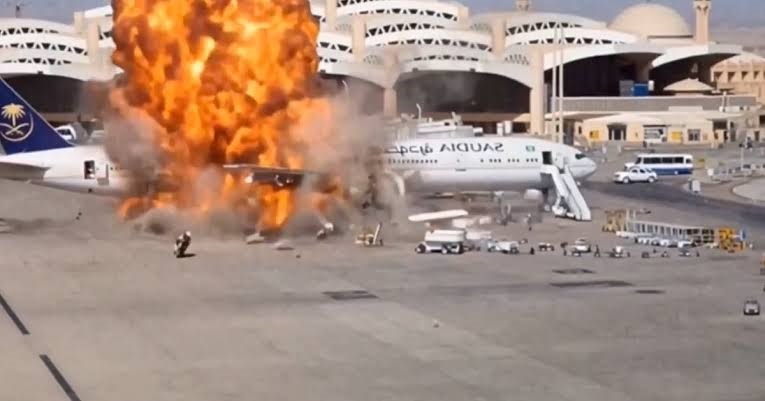
The October 10 strike killed at least 12 people and injured more than 300, according to Saudi authorities cited by Reuters and the Associated Press. A further attack was reported on October 11, when an unidentified projectile targeted the airport and caused a fire. Reuters subsequently reported one additional death and 11 injuries in the latest incident. The precise circumstances and attribution of the follow-up attack remained unclear in initial reporting. (Reuters; AP; Reuters, October 11)
The Houthis, who control significant territory in Yemen and are aligned with Iran, claimed responsibility for the October 10 attack, according to international reporting. Their subsequent warnings to airlines, airport workers and travellers to avoid Saudi airports have raised concerns that commercial aviation could remain exposed to further attacks.
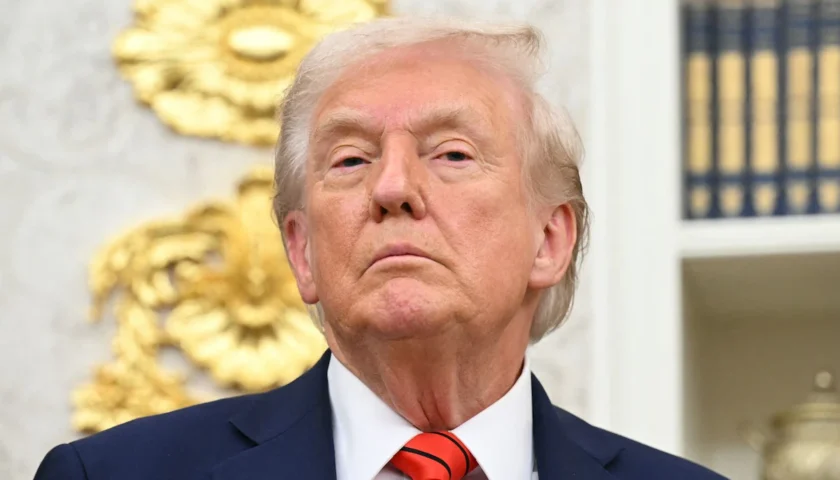
US President Donald Trump has indicated that Washington is considering joining Saudi military strikes against the Houthis. If that option is pursued, an already volatile regional conflict could widen further, bringing American forces into more direct confrontation with the movement and increasing the risk of retaliation elsewhere in the Gulf.
The immediate crisis is centred on Saudi Arabia and Yemen. Its wider implications, however, reach into the US-Iran confrontation, maritime security, international energy markets and the safety of millions of people living and working across the Gulf.
Riyadh Airport Attack: What Happened on October 10?
The October 10 attack was the third reported strike on Riyadh’s international airport within a week, according to Reuters.
The Saudi civil aviation authority said the attack killed at least 12 people, including four Saudi nationals and two Bangladeshis. Other victims included nationals of the United States, Jordan, Palestine, Syria, Sudan and Egypt. The reported injury toll reached 309, with some victims in critical condition.
The scale of the casualties made the strike one of the deadliest attacks on Saudi territory in more than a decade.
The airport’s operations were suspended while authorities assessed damage and security risks. Flights were cancelled or diverted, while airlines reviewed whether it was safe to continue services to the Saudi capital.
The attack also raised questions about Saudi Arabia’s air-defence capabilities. Reuters reported that the strike occurred without warning from the kingdom’s threat-warning system, despite two earlier attacks on the airport that week.
That detail is significant because an airport is a complex security environment. Aircraft, terminals, fuel facilities, ground staff and passengers are concentrated in a relatively limited area, making the consequences of a successful strike potentially severe.
However, the attack alone does not establish that Saudi Arabia’s air-defence systems have broadly failed. Determining how the weapon reached its target, whether interception was attempted and where security procedures broke down will require technical investigation.
What is already clear is that the attacks have disrupted a major international transport hub and created immediate concerns about civilian safety.
A Second Attack Raises the Stakes
The crisis did not end with the October 10 strike.
On October 11, the Saudi-led coalition fighting the Houthis in Yemen reported that an unidentified projectile had targeted Riyadh’s international airport, causing a fire. The coalition also said Saudi air defences intercepted a cruise missile near King Khalid International Airport.
Reuters later reported that the new attack caused one death and 11 injuries, although early accounts did not immediately provide full details about the weapon involved or its origin. (Reuters)
The distinction between the two incidents matters. The Houthis claimed responsibility for the October 10 strike, while the follow-up attack was initially attributed to an unidentified projectile. The available reporting does not justify automatically assigning responsibility for every subsequent incident to the same actor.
Nevertheless, the sequence has intensified concerns about the ability of Saudi Arabia to protect its airports from repeated attacks.
The Houthis also issued warnings against using Saudi airports, increasing pressure on airlines to reconsider operations even where flights had not been directly struck.
Such warnings can have consequences beyond physical damage. They can deter passengers, increase insurance costs, disrupt cargo movements and undermine confidence in the reliability of regional aviation.
For Saudi Arabia, which has invested heavily in tourism, business travel and international events, prolonged disruption could carry both economic and reputational costs.
Why the Houthis Are Targeting Saudi Arabia
The airport attacks are part of a wider escalation in Yemen’s conflict.
The Houthis, also known as Ansar Allah, emerged as a powerful political and military movement during Yemen’s prolonged civil war. They control the capital, Sanaa, and substantial areas of the country’s north and west, while Yemen’s internationally recognised government and allied forces retain control over other parts of the country.
Saudi Arabia intervened militarily in Yemen in 2015 at the head of a coalition supporting the internationally recognised government against the Houthi advance.
The conflict subsequently became entangled with the broader rivalry between Saudi Arabia and Iran. Tehran has provided support to the Houthis, including assistance linked to their missile and drone capabilities. Iran’s role is an important part of the regional security picture, although the extent of its operational control over individual Houthi decisions remains a separate question.
The renewed fighting in 2026 has brought the confrontation back into focus after the breakdown of earlier de-escalation arrangements.
Reuters reported on October 7 that Saudi Arabia had re-entered the Yemen conflict as fighting intensified along several fronts. Houthi advances and the growing threat to shipping through the Red Sea have added another dimension to the confrontation. (Reuters)
The attacks on Riyadh therefore appear within a wider military campaign, rather than as an isolated incident.
Airports are strategically significant targets because attacks can disrupt travel, expose weaknesses in defensive systems and generate pressure on political leaders. Repeated strikes can also force a government to divert resources towards domestic protection while conducting military operations elsewhere.
But the precise strategic calculation behind the Riyadh attacks remains a matter of analysis. It should not be presented as an established fact that the Houthis are targeting airports for one particular reason.
Iran’s Role: Support Is Established, Direct Responsibility Is a Different Question
Iran sits at the centre of the regional dispute, but the distinction between support for the Houthis and direct responsibility for a specific attack is essential.
Saudi Arabia and its partners have long accused Tehran of providing the Houthis with military assistance that has strengthened their ability to launch missiles and drones. Western governments have also described the movement as part of Iran’s wider regional network of aligned armed groups.
That support has strategic consequences. It allows the Houthis to threaten targets well beyond the territory they control and complicates the security calculations of neighbouring states.
However, the Houthis retain their own leadership, political objectives and military decision-making structures. Their relationship with Iran should not be reduced to the assumption that every attack is ordered directly by Tehran.
This distinction becomes especially important when Washington considers retaliation.
A strike against Houthi launch sites, command facilities or weapons infrastructure would be a military action against the movement in Yemen. A direct American attack on Iranian territory would represent a different level of escalation, with much broader consequences.
The airport attack could increase pressure on Iran by intensifying demands that it use its influence to restrain the Houthis. It could also strengthen arguments among Saudi and American officials for further military action.
Whether either outcome follows will depend on the evidence available to governments, the objectives of any proposed operation and the diplomatic response from Tehran.
Trump Weighs Joining Saudi Strikes
The most consequential political development is Washington’s consideration of direct participation in Saudi military operations against the Houthis.
Trump has indicated that the United States is considering joining Saudi strikes following the airport attack. The statement suggests a possible expansion of American involvement at a moment when Washington is already deeply engaged in the wider confrontation with Iran.
For Saudi Arabia, US participation could provide additional intelligence, surveillance, targeting capabilities and military resources. It could also signal that attacks on major civilian infrastructure will carry a substantial international response.
For the Houthis, direct US involvement would raise the cost of continuing the campaign and potentially expose more of their military infrastructure to attack.
But the consequences would not necessarily be confined to Yemen.
The Houthis have demonstrated an ability to threaten shipping and targets across the region. If they respond to American strikes by attacking additional Saudi facilities, commercial vessels or other regional interests, the conflict could widen.
Iran’s response would be another uncertainty. Tehran could condemn American operations, increase diplomatic pressure or take measures through its own military capabilities and regional relationships. None of those responses is inevitable, but each would have to be considered in any decision about expanding the war.
As of October 12, Trump’s comments indicate that US participation is under consideration. They should not be treated as confirmation that a new American campaign against the Houthis has already begun.
Yemen’s War Is Becoming a Wider Regional Security Crisis
The attacks on Riyadh cannot be understood without examining the situation inside Yemen.
The country’s conflict has devastated communities, weakened state institutions and produced a prolonged humanitarian emergency. Competing political authorities, local armed groups and external military involvement have made a comprehensive settlement difficult to achieve.
Saudi Arabia’s intervention was originally framed as an effort to reverse the Houthi advance and support Yemen’s internationally recognised government. Over time, the conflict became a central arena in the Saudi-Iran rivalry.
Periods of de-escalation reduced some of the immediate cross-border threats, but they did not resolve the underlying political dispute.
The renewed fighting has brought those unresolved issues back to the surface. Reuters reported that hundreds of combatants had been killed in fighting on several Yemeni fronts and that more than 145,000 people had been displaced, citing United Nations figures.
The human consequences are significant. A wider campaign of air strikes could damage Houthi military capabilities, but it could also increase civilian casualties and displacement, particularly if operations occur near populated areas.
A military response would therefore need to distinguish between military objectives and civilian infrastructure, while complying with international humanitarian law.
The airport attack itself raises serious concerns because airports are civilian infrastructure. Civilian objects are protected under the laws of armed conflict unless and for such time as they qualify as military objectives. Even when a military objective is present, attacks remain subject to the rules of distinction, proportionality and precautions.
The wider conflict cannot be assessed solely by the military balance between Saudi Arabia and the Houthis. The safety of civilians and the prospects for a political settlement remain central.
Two Maritime Chokepoints Are Under Pressure
The regional crisis also threatens two major maritime passages: the Strait of Hormuz and the Bab al-Mandeb Strait.
The Strait of Hormuz connects the Persian Gulf with the Gulf of Oman and the Arabian Sea. It is one of the world’s most important routes for oil and gas shipments, making any disruption a concern for energy-importing countries.
Bab al-Mandeb lies between Yemen and the Horn of Africa, connecting the Red Sea with the Gulf of Aden. It is a critical link for commercial traffic moving between the Indian Ocean and the Suez Canal.
The two waterways are geographically distinct, but their strategic importance overlaps. A serious disruption at either route can increase shipping costs and force vessels to take longer journeys. Simultaneous insecurity in both could create much greater pressure on international trade.
The Houthis have threatened maritime traffic in the Red Sea during previous phases of the Yemen conflict. Their growing ability to launch missiles and drones has made shipping companies more cautious about operating near Yemen’s coastline.
The renewed campaign has added a further concern: whether attacks against Saudi targets and regional shipping will become mutually reinforcing elements of a wider conflict.
If maritime risks rise, the consequences could include higher insurance premiums, longer transit times and additional costs for fuel, freight and consumer goods.
For energy markets, the main concern is not simply whether a single shipment is delayed. It is whether traders begin to anticipate sustained disruption across several important routes.
Oil Markets and the Global Economic Impact
The attacks have come at a time when the wider Middle East conflict is already influencing oil prices and investor confidence.
Reuters reported on October 11 that Gulf stock markets largely declined following the Riyadh airport strike, reflecting concern about the security situation and the possibility of further escalation. The report also noted that disruption in Hormuz and attacks affecting maritime traffic were contributing to uncertainty. (Reuters)
Oil prices are affected by several factors, including supply availability, shipping costs, inventories, production decisions and expectations about future demand.
A strike on an airport does not automatically mean oil exports will stop. The more immediate economic risk comes from the possibility that the conflict spreads to oil infrastructure, export terminals, tankers or the maritime routes used to transport energy.
Saudi Arabia is a major oil producer, so any threat to its production or export facilities would be closely watched by markets. The same is true of attacks that interfere with shipping through Hormuz or Bab al-Mandeb.
The effects could extend beyond crude prices. Higher energy costs can feed into transport, manufacturing, food distribution and inflation, particularly in countries heavily dependent on imported fuel.
However, the extent of any economic impact will depend on whether the attacks remain limited, whether energy infrastructure is affected and how quickly shipping and aviation operations can return to normal.
International Condemnation and the Question of Civilian Protection
The airport strike has drawn international condemnation.
United Nations Secretary-General António Guterres condemned the Houthi missile attack, citing the reported deaths of 12 people and injuries to hundreds of civilians. He called for the attacks to cease immediately and said attacks on civilians and civilian infrastructure violate international law. (United Nations, October 11)
The statement places civilian protection at the centre of the international response.
Saudi Arabia and its partners have characterised the attack as a grave violation and warned of retaliation. The Houthis, meanwhile, have defended their campaign as a response to Saudi military action and have warned airlines and travellers against using Saudi airports.
Those competing explanations do not remove the need to examine the legality of individual attacks.
Under international humanitarian law, parties to an armed conflict must distinguish between civilians and combatants and between civilian objects and military objectives. Deliberate attacks on civilians are prohibited. Civilian infrastructure is protected unless it meets the legal criteria for a military objective, and attacks remain subject to proportionality and precaution requirements.
The airport’s civilian character and the scale of the reported casualties make the incident especially serious. A proper investigation would need to establish the weapons used, the intended target, the circumstances of the strike and the relevant operational decisions.
International condemnation can reinforce diplomatic pressure, but preventing further attacks will require more than statements. It will depend on whether regional governments can reduce the immediate threat while avoiding retaliatory measures that widen the conflict.
Why India Is Watching Closely
For India, the crisis has direct economic, diplomatic and human consequences.
Millions of Indian nationals live and work across the Gulf, while Saudi Arabia is an important partner in trade, energy and regional diplomacy. Indian airlines also maintain extensive connections with Gulf destinations, making airport closures and security warnings a practical concern for passengers.
The reported airport attack has already affected aviation planning. Reuters reported that authorities suspended airport operations while damage and safety assessments were conducted. Airlines have cancelled or reviewed services, while international aviation authorities have issued warnings about operating in the affected airspace.
The US Federal Aviation Administration advised American airlines to exercise caution when flying to or over Saudi Arabia because of military activity and possible interference with navigation systems. The advisory underscored that risks may affect aircraft during take-off, landing and overflight. (Reuters)
India also faces the energy dimension. A prolonged disruption in the Gulf could increase crude prices and shipping costs, putting pressure on the import bill and potentially feeding into domestic inflation.
The safety of Indian nationals is an immediate concern as well. Indian media reported that one Indian national was among those killed in the October 10 attack. (The Indian Express)
New Delhi must therefore balance several priorities: protecting its citizens, maintaining reliable energy supplies, sustaining economic ties with Gulf partners and supporting de-escalation.
A wider US-Iran confrontation would complicate those priorities further, especially if it disrupted the maritime routes on which regional trade depends.
What Could Happen Next?
Three broad developments could shape the next phase, although none can be treated as a settled prediction.
1. Saudi Arabia Intensifies Its Campaign in Yemen
Riyadh could increase strikes against Houthi military infrastructure while attempting to prevent the conflict from spreading to additional countries.
The effectiveness of such a strategy would depend on the accuracy of targeting, the Houthis’ ability to retaliate and whether the military pressure produces a change in behaviour. Continued attacks on civilian infrastructure could instead deepen the confrontation.
2. The United States Joins Saudi Operations
If Washington proceeds with the option described by Trump, the campaign would acquire greater military resources and a more direct American role.
That could place additional pressure on the Houthis, but it would also increase the risk of retaliation against US interests and regional partners. The scope of any intervention would be decisive: a limited operation against specified targets would carry different implications from a sustained campaign.
3. The Conflict Spreads Across the Region
A wider escalation could involve further attacks on Saudi infrastructure, threats to commercial shipping and additional military activity linked to the US-Iran confrontation.
The greatest danger would be a cycle in which each attack prompts retaliation, each retaliation produces further attacks, and diplomatic channels become progressively harder to use.
That outcome is not inevitable. But the combination of repeated airport attacks, threats to shipping and the possibility of direct American involvement makes de-escalation increasingly important.
The Real Danger Is a Cycle of Retaliation
The Riyadh airport attacks have exposed a dangerous gap between the scale of the regional conflict and the limited ability of diplomacy to contain it.
Saudi Arabia has a legitimate responsibility to protect its population and civilian infrastructure. The United States must consider the consequences of any military response, including the possibility that a campaign intended to deter further attacks could trigger a wider confrontation. The Houthis, for their part, face international condemnation over attacks that have killed civilians and disrupted a major civilian airport.
Iran’s role will remain a central issue, but direct responsibility for particular operations must be established through evidence rather than assumed from political alignment alone.
The economic stakes are equally serious. Aviation disruption can affect passengers and businesses immediately, while maritime insecurity can raise costs across global energy and trade networks.
For India and other countries dependent on Gulf stability, the priority is to protect citizens, preserve essential trade and support measures that reduce the risk of further escalation.
The next phase will depend on decisions made in Riyadh, Washington, Tehran and Yemen. Whether the conflict remains contained or expands will turn on the targets chosen, the scale of any retaliation and the willingness of the parties to leave room for diplomacy.
The airport attacks have demonstrated how quickly a regional conflict can threaten civilian life and international commerce. The challenge now is to prevent those attacks from becoming the trigger for a much wider war.