CJP Agitation Expands Beyond Jantar Mantar as Journalist Detentions and Legal Questions Take Centre Stage
By: Javid Amin | 11 October 2026
New Delhi:: Delhi’s confrontation over the Special Intensive Revision (SIR) of electoral rolls entered a new phase after the Cockroach Janta Party (CJP) and opposition groups continued their mobilisation despite a sweeping police crackdown that disrupted movement across parts of the capital. The release of three senior CJP leaders failed to bring an immediate end to the dispute, as fresh demonstrations, further detentions and judicial scrutiny kept the issue in the spotlight.
The agitation, which demands the resignation of Chief Election Commissioner Gyanesh Kumar over alleged irregularities in voter-list revision, has expanded beyond its original electoral focus. Questions over preventive detention, access to public spaces, the treatment of journalists and the right to peaceful assembly are now central to the unfolding controversy.
CJP leaders Abhijeet Dipke, Saurav Das and Ashutosh Ranka were released by an executive magistrate on Sunday, October 11, subject to a condition requiring them to maintain peace for one year. The organisation subsequently signalled that its campaign would continue.
Meanwhile, police maintained restrictions around key areas of central Delhi and detained people during fresh protest activity. The Supreme Court also issued directions addressing civil liberties and the functioning of essential services amid the unrest.
The developments have transformed the confrontation into a wider political and legal dispute, with the next phase likely to depend on CJP’s future action plan, the authorities’ response and the implementation of the Court’s directions.
CJP Leaders Released, but Campaign Continues
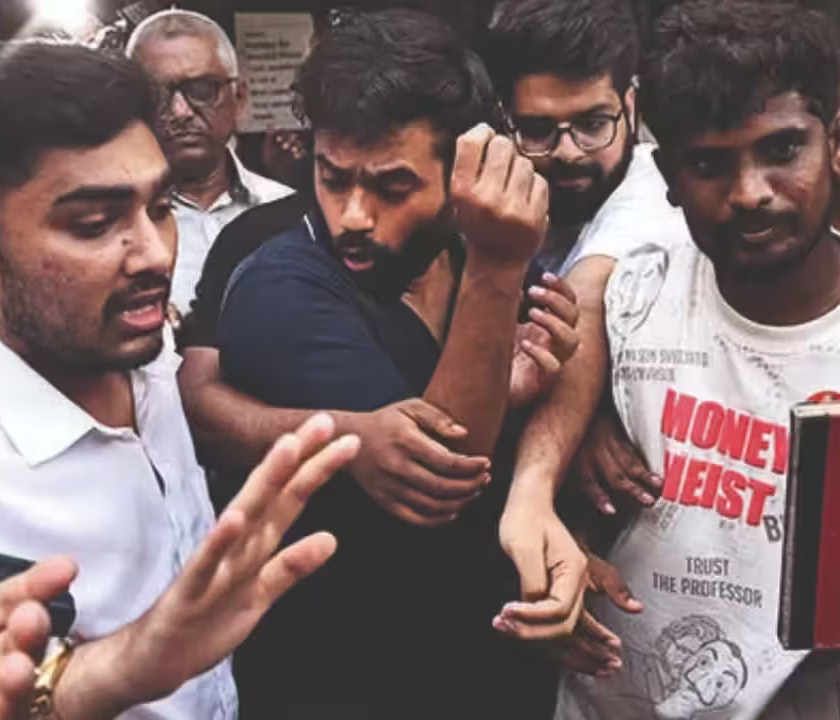
The release of Dipke, Das and Ranka was an important development after their detention ahead of the planned October 10 demonstration at Jantar Mantar.
The three leaders had travelled to Delhi to participate in the agitation demanding Gyanesh Kumar’s resignation. Their detention became a major flashpoint after CJP supporters and opposition figures questioned the circumstances in which they were held.
The executive magistrate subsequently ordered their release with a condition relating to maintaining peace for one year. The precise legal implications of that condition depend on the wording of the order and the circumstances in which it is applied. It should not automatically be interpreted as a blanket prohibition on peaceful political activity.
The release, however, did not resolve the wider dispute. CJP continued to signal that it intended to pursue its campaign, while its supporters were urged to remain prepared for further action.
The organisation’s challenge now extends beyond bringing its leaders out of detention. It must decide how to maintain public pressure on the Election Commission, communicate its concerns about SIR and pursue its demands within the applicable legal framework.
Whether its next phase relies on another large gathering, smaller demonstrations, legal proceedings or broader public outreach will be important in determining how the movement develops.
Security Grid Tightens Across Central Delhi
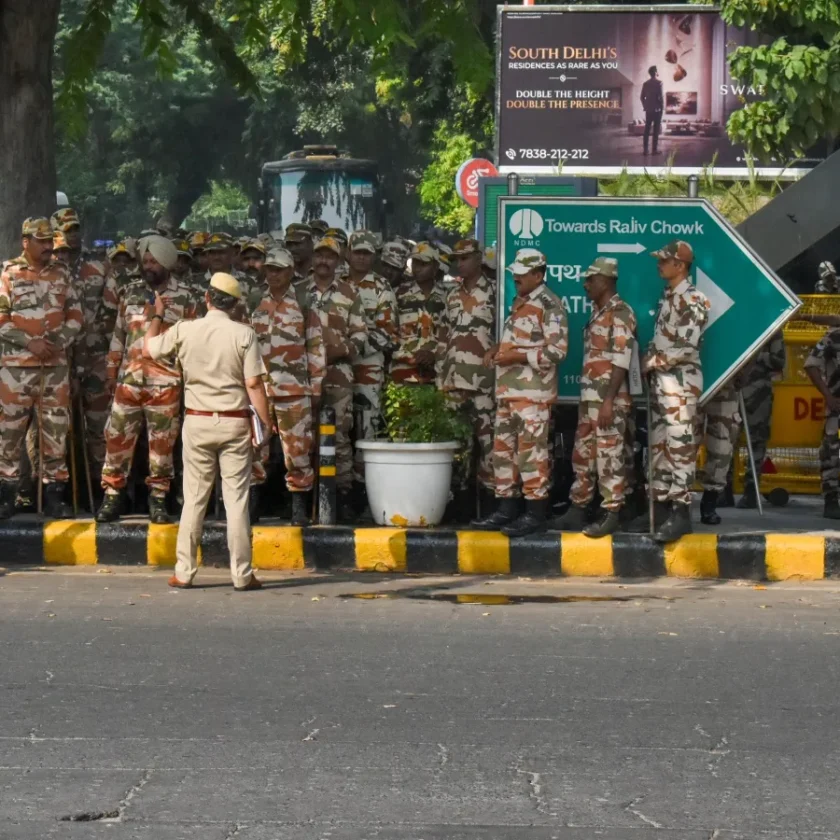
Delhi remained under heightened security on Sunday as police sought to prevent further large-scale gatherings in areas considered sensitive because of the ongoing agitation.
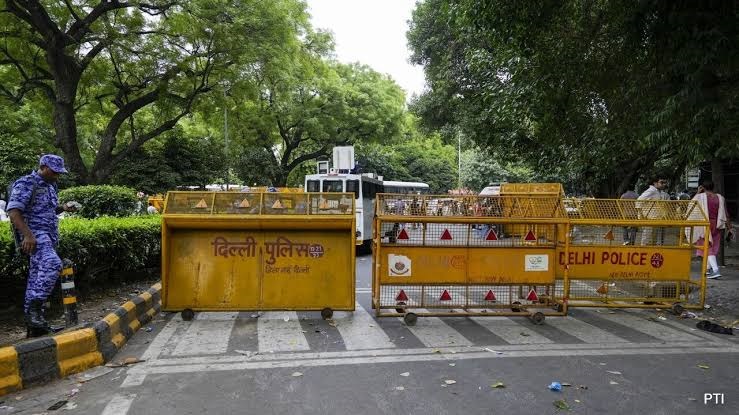
Jantar Mantar, Connaught Place and surrounding parts of central Delhi became focal points for enforcement and protest activity. Barricades, police deployments and traffic management measures affected movement in parts of the capital, while officials continued monitoring the possibility of fresh gatherings.
According to reporting by The Indian Express, Delhi Police indicated that groups of five or more assembling in the New Delhi district could face detention under the restrictions then being enforced. The measures reflected the authorities’ determination to prevent another large, organised demonstration from taking place in the area.
Police have cited public-order concerns and the need to prevent disruption. Protesters and civil-liberties advocates, however, have raised questions about whether the enforcement measures were applied too broadly and whether individuals who were not participating in unlawful activity were also affected.
The distinction is important. Authorities have a responsibility to maintain public order, but restrictions and detentions must comply with the law and be assessed against the circumstances of each case.
The security situation also has practical consequences for commuters, businesses, visitors and people working in central Delhi. Any continued restrictions therefore need to be communicated clearly, particularly where they affect public transport, road access or access to essential services.
From an Electoral Dispute to a Wider Debate on Civil Liberties
The original CJP campaign centred on alleged irregularities in the Special Intensive Revision of electoral rolls and the demand for the Chief Election Commissioner’s resignation.
SIR is intended to review and update electoral records. Such exercises can be important for maintaining accurate voter lists, but they can also generate controversy over documentation, deletions, inclusion procedures and the availability of remedies for people who believe their names have been wrongly removed.
CJP and its supporters have alleged that the revision process raises serious questions about electoral fairness. The Election Commission and the government’s position must also be considered when assessing those allegations, and claims of unlawful exclusion require evidence rather than relying solely on the total number of names removed or altered.
The police response has added another dimension to the dispute.
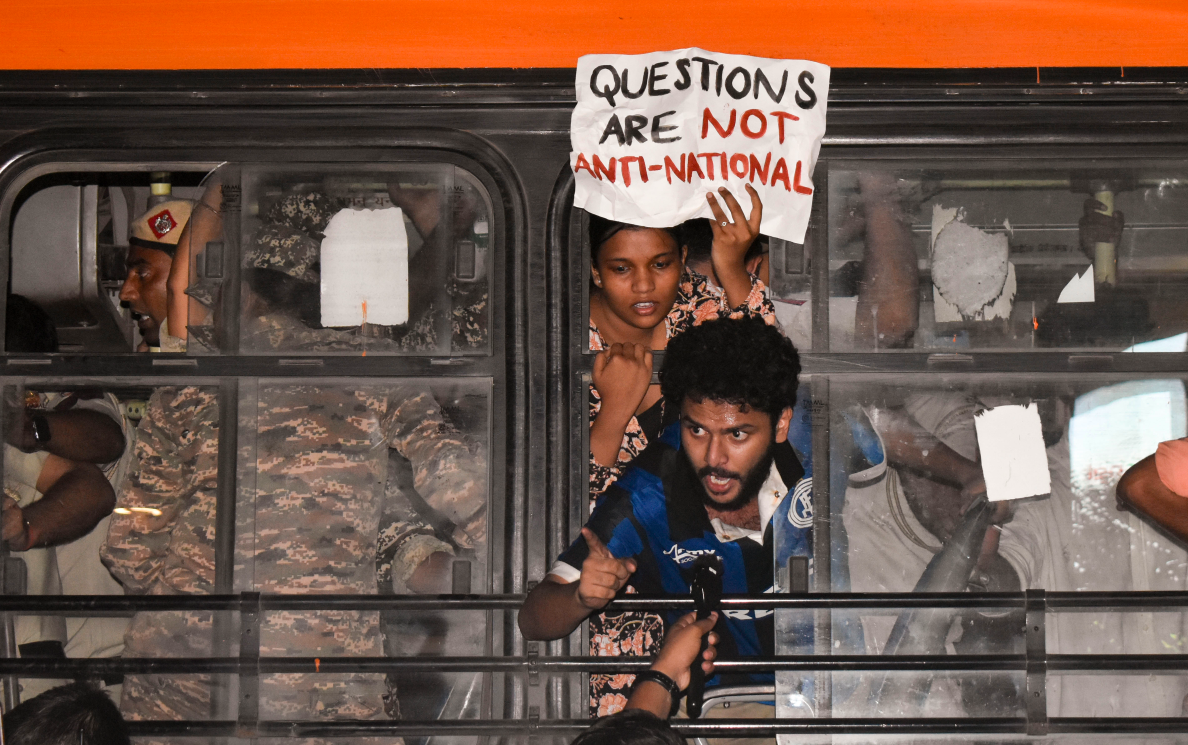
With large numbers of people reportedly detained during the October 10 operation, followed by further detentions on October 11, the focus has broadened to include the handling of demonstrations and the treatment of people present near protest locations.
Opposition parties, student groups and civil-rights advocates have criticised aspects of the crackdown. Authorities, meanwhile, have maintained that their actions were intended to enforce restrictions and prevent disorder.
The result is a debate involving two distinct but connected questions: whether the concerns raised about electoral-roll revision are supported by evidence, and whether the response to the protests complied with legal safeguards governing detention and peaceful assembly.
Both questions require scrutiny on their own facts.
Journalists’ Detentions Trigger Press-Freedom Concerns
The detention of journalists covering the protests became one of the most contentious aspects of the police operation.
Media reports said journalists were detained at multiple locations in central Delhi while covering the unfolding events. Some journalists said they had displayed press credentials and were nevertheless taken into custody or prevented from carrying out their work.
The Indian Express reported that three of its Hindi journalists were detained by police in Connaught Place on Sunday while covering the second day of protests. They were later released at Chhatrasal Stadium, some distance from where they had been detained.
Other reports also described journalists and camera personnel being taken away during the police operations.
Press organisations condemned the detentions and called for explanations, arguing that journalists reporting on public events must be able to perform their professional duties without unjustified obstruction.
Police actions must be assessed on the evidence in each case, including the reasons given for a detention and whether the individual was engaged in reporting or participating in an unlawful act. A press card does not automatically exempt anyone from a lawful police order, but journalists should not be treated as protesters merely because they are present at a demonstration.
The issue is especially significant during periods of public unrest, when independent reporting enables the public to understand what is happening, how authorities are responding and whether competing accounts are supported by evidence.
The detentions have therefore widened the controversy beyond the original dispute over SIR and raised fresh questions about access to information during public demonstrations.
Supreme Court Directions Add a Legal Dimension
The Supreme Court’s intervention has brought greater attention to the legal safeguards applicable during the continuing protests.
Reports on Sunday said the Court issued directions addressing unlawful detention, public movement, the functioning of Metro and railway services, internet restrictions and the ability of lawyers and journalists to perform their duties. It also emphasised that peaceful protest must remain within the bounds of the law.
The directions placed renewed focus on the need for authorities to distinguish between legitimate public-order measures and action that could unlawfully restrict fundamental rights.
The right to peaceful assembly is constitutionally protected, although it is subject to reasonable restrictions under the law. Police can take lawful steps to prevent violence and serious disruption, but the legality of an individual detention or restriction depends on the applicable provisions, the facts and the procedures followed.
The Court’s intervention does not, by itself, establish that every police action during the protests was unlawful. Nor does it remove the authorities’ responsibility to maintain public order.
Instead, it reinforces the importance of legal safeguards and judicial scrutiny when restrictions affect large numbers of people.
Further proceedings and the implementation of the Court’s directions will be important in determining how the dispute develops. Any claims about the precise scope of the order should be checked against the actual directions issued by the Court.
Opposition Parties Seek to Broaden the Political Debate
The protests have also become a test of how opposition parties respond to a movement that began outside the conventional party structure.
Opposition figures and groups have criticised the police response and expressed concerns about civil liberties and the handling of electoral-roll revision. Their reactions have helped bring the issue into a wider political debate.
However, public support for the right to protest does not necessarily mean that all opposition parties have agreed on a common strategy, joined the same mobilisation or endorsed every demand made by CJP.
The distinction matters because the movement combines several issues: the demand for Gyanesh Kumar’s resignation, allegations concerning SIR, the legality of preventive detentions and the broader question of how public demonstrations are handled.
Political parties may agree on some of these concerns while differing on tactics, priorities or the remedies they want.
For CJP, building wider support could increase public attention and put pressure on the authorities to respond to its allegations. But any coordinated programme with opposition parties would need to be confirmed through actual joint announcements or participation rather than inferred from statements of solidarity.
The coming days may reveal whether the campaign remains primarily CJP-led or develops into a more formal political and civil-society initiative.
What Could CJP Do Next?
The next phase of the agitation will depend on decisions by CJP’s leadership and the legal and security environment in which it operates.
Several possible paths remain open, although none should be treated as confirmed until announced by the organisation.
1. Renewed demonstrations
CJP could seek to organise another demonstration or a series of public gatherings. Any such move would bring questions of venue, permission, security arrangements and compliance with applicable restrictions back into focus.
The organisation may also need to clarify how it intends to protect peaceful participants and avoid confusion between protest organisers, bystanders and journalists.
2. Legal action over detentions and restrictions
The organisation or affected individuals could pursue legal remedies concerning specific detentions, restrictions or alleged procedural violations.
Such proceedings could seek clarification of the legal grounds for police action or review of the treatment of people detained during the demonstrations. The merits of any case would depend on the evidence, the relevant legal provisions and the orders already issued.
3. A sustained campaign on SIR
CJP could focus on documenting alleged electoral-roll irregularities, identifying specific cases requiring review and pressing the relevant authorities for explanations.
A campaign supported by verifiable records and clearly defined demands could help distinguish individual cases of alleged wrongful exclusion from broader political claims about the revision process.
4. Wider public and political outreach
The organisation could seek support from civil-society groups, student organisations, opposition parties and affected voters. Public meetings, press briefings and outreach campaigns could keep the issue in the public domain without relying exclusively on large gatherings in central Delhi.
Whether CJP chooses one of these routes or combines several remains to be seen. Its next formal announcement will be the clearest indication of the strategy it intends to pursue.
The Immediate Challenge for Delhi Police
For Delhi Police, the challenge is to manage the continuing agitation while ensuring that restrictions are applied lawfully and proportionately.
Authorities must respond to credible risks of violence or serious disruption, but broad preventive measures can also affect people who are not involved in unlawful conduct. The detention of journalists and reports of bystanders being caught up in the operation have made that balance particularly important.
Clear communication about restricted areas, permitted gatherings, traffic diversions and the legal basis for police action can reduce confusion. Individual detentions should be supported by lawful grounds, and people must have access to the safeguards available under the law.
The Supreme Court’s directions add to the need for careful implementation. Maintaining public order and respecting fundamental rights are not mutually exclusive responsibilities; both must be addressed through lawful and accountable policing.
The handling of any further protests will therefore be closely watched by political groups, journalists, civil-liberties organisations and the public.
The Larger Question: Electoral Accountability and the Right to Dissent
The CJP agitation has brought two significant democratic questions into the same public debate.
The first concerns the integrity of electoral rolls. Voter lists must be accurate, and people who are eligible to vote need effective ways to verify their status and correct errors. Where allegations of wrongful deletion or procedural irregularities arise, they should be investigated through transparent processes and supported by verifiable evidence.
The second concerns the right to peaceful dissent. Citizens and organisations must be able to raise concerns about public institutions, while authorities retain the power to enforce lawful restrictions and prevent violence. The legitimacy of a particular police action depends on its legal basis, necessity and implementation.
The two issues should not be conflated. A concern about electoral administration does not automatically prove misconduct by an election official, and a police restriction does not, by itself, establish that the underlying protest demand is either right or wrong.
What matters is whether the allegations can be substantiated, whether public institutions provide credible explanations and whether the response to dissent respects the law.
Conclusion: Delhi Standoff Moves Into a Political and Legal Phase
The release of three senior CJP leaders has not brought the Delhi protest controversy to a close. Fresh demonstrations, further detentions, concerns over journalists’ access and Supreme Court directions have widened the dispute beyond the original demand for the Chief Election Commissioner’s resignation.
CJP now faces decisions about how to sustain its campaign, while opposition groups must determine the extent of their involvement. Delhi Police must manage any further mobilisation within the framework of the law, and the courts will remain an important forum for examining disputes over detention and restrictions.
The next stage will depend on concrete developments: any formally announced protest plan, further legal proceedings, the authorities’ response and the evidence presented concerning SIR.
For now, the central issue is no longer only whether a demonstration can take place at Jantar Mantar. It is also how electoral concerns are investigated, how public order is maintained and how the right to peaceful assembly is protected during a contentious political dispute.