J&K Notifies New Parking Rules to Tackle Traffic Congestion; Digital Payments and Higher Fines Introduced
By: News Desk | 09 July 2026
In a major step towards improving urban traffic management, the Jammu and Kashmir administration has notified a new set of parking regulations aimed at reducing congestion, improving road discipline and modernising parking management across the Union Territory.
The new framework introduces designated parking zones, digital fee collection, stricter penalties for illegal parking and time-bound parking in busy commercial areas. The initiative is part of the administration’s broader effort to improve urban mobility and support the development of smarter, more efficient cities.
With traffic congestion becoming a daily challenge in Srinagar, Jammu and several district headquarters, officials believe the revised rules will help optimise road space, improve vehicle movement and create a more organised parking system.
Why Were the New Parking Rules Introduced?
Rapid urbanisation, increasing vehicle ownership and limited parking infrastructure have significantly increased pressure on roads across Jammu and Kashmir.
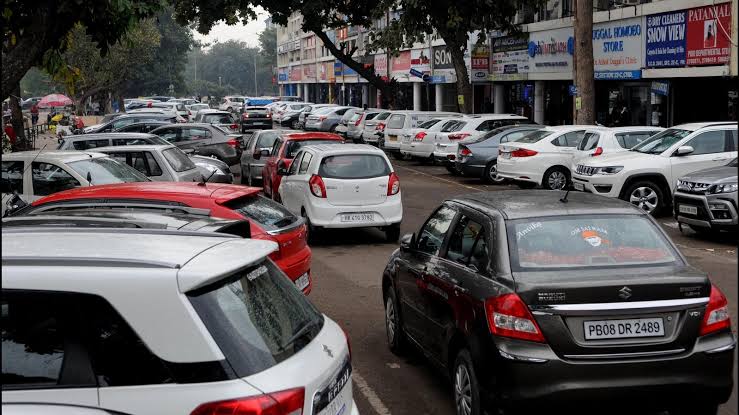
Cities such as Srinagar and Jammu frequently witness traffic bottlenecks caused by roadside parking, double parking and vehicles occupying public spaces for extended periods.
The new regulations aim to address these challenges by creating a structured parking system that encourages compliance while discouraging violations through stronger enforcement.
Officials say the policy is designed to improve:
- Traffic flow in congested urban areas
- Accessibility to markets and commercial centres
- Road safety for motorists and pedestrians
- Transparency in parking fee collection
- Efficient utilisation of limited parking spaces
Major Features of the New Parking Rules
Designated Parking Zones Made Mandatory
Under the new regulations, motorists will be permitted to park only in officially notified parking areas.
Vehicles parked outside authorised zones may attract penalties and enforcement action.
Authorities believe this measure will significantly reduce roadside encroachments and improve traffic movement on major roads.
Expected Benefits
- Reduced traffic congestion
- Improved road safety
- Better utilisation of public parking facilities
- Fewer traffic bottlenecks in commercial districts
QR-Based Digital Parking Fee Collection
One of the most significant reforms is the introduction of digital payment systems for parking charges.
Parking operators will increasingly adopt QR code-based payment methods, allowing motorists to pay electronically instead of using cash.
The administration expects digital payments to:
- Improve transparency
- Reduce revenue leakages
- Simplify payment procedures
- Provide digital transaction records
- Enhance convenience for commuters
The move also aligns with India’s broader push towards digital governance and cashless public services.
Time-Bound Parking in Commercial Areas
To improve vehicle turnover, the administration has introduced time restrictions in busy shopping and business districts.
Vehicles may be allowed to park only for specified durations, generally ranging between 30 and 60 minutes, depending on the location and local traffic requirements.
The objective is to prevent long-term occupation of limited parking spaces.
Impact on Markets
Time-bound parking is expected to:
- Increase parking availability
- Improve customer access to shops
- Reduce unnecessary vehicle accumulation
- Support local businesses through higher visitor turnover
For commercial establishments, this could result in better customer convenience, particularly during peak business hours.
Higher Penalties for Illegal Parking
The revised rules also strengthen enforcement against traffic violations related to parking.
Motorists violating parking regulations may face increased fines and other enforcement measures.
Illegal parking remains one of the primary causes of congestion in many urban areas of Jammu and Kashmir, particularly near hospitals, schools, markets and government offices.
Officials hope stricter penalties will encourage greater compliance with traffic regulations.
CCTV Surveillance and Enhanced Monitoring
The administration plans to strengthen monitoring through CCTV surveillance, traffic police patrols and other technology-based enforcement systems.
Digital monitoring is expected to improve:
- Detection of parking violations
- Evidence-based enforcement
- Faster action against repeat offenders
- Overall compliance with traffic rules
Technology-enabled monitoring is increasingly becoming an essential component of smart traffic management across Indian cities.
How the New Rules Could Impact Different Stakeholders
For Commuters
The new regulations promise more organised parking facilities and smoother traffic flow.
However, motorists will need to:
- Park only in designated areas
- Follow prescribed time limits
- Use digital payment systems where applicable
- Avoid violations that could attract higher penalties
Drivers who adapt quickly are likely to benefit from easier parking availability and reduced travel delays.
For Businesses
Retail markets and commercial centres may witness improved customer movement as parking spaces become available more frequently.
Faster vehicle rotation could encourage greater footfall, especially in busy shopping areas where parking shortages often discourage visitors.
Business associations, however, may also seek adequate parking infrastructure to support the successful implementation of the policy.
For Local Authorities
The new rules provide local administrations with better tools for managing urban traffic.
Potential administrative benefits include:
- Improved traffic discipline
- More efficient parking management
- Increased transparency in fee collection
- Better utilisation of public infrastructure
- Enhanced municipal revenue through regulated parking
Successful implementation will depend on consistent enforcement and public awareness.
Challenges That Could Affect Implementation
While the policy has the potential to improve urban mobility, several practical challenges remain.
Adequate Parking Infrastructure
Designated parking zones must be sufficient to meet growing demand.
Without adequate parking facilities, stricter enforcement alone may inconvenience commuters.
Public Awareness
Motorists need clear information about:
- Authorised parking locations
- Parking charges
- Digital payment methods
- Time restrictions
- Penalty provisions
Effective awareness campaigns will be essential for smooth implementation.
Consistent Enforcement
Traffic regulations achieve results only when enforcement is fair and uniform.
Authorities will need to ensure that rules are applied consistently across cities and towns.
Supporting Smart City and Urban Mobility Goals
The notification complements broader urban development initiatives underway in Jammu and Kashmir, particularly under Smart City projects in Srinagar and Jammu.
Modern parking management has become an important component of smart mobility strategies adopted by cities across India.
Digital parking systems, intelligent traffic management and technology-driven enforcement are increasingly viewed as essential tools for reducing congestion and improving urban transport efficiency.
If integrated effectively with public transport planning and road infrastructure improvements, the new parking regulations could contribute significantly to creating safer, cleaner and more commuter-friendly cities.
Outlook: A Step Towards Better Traffic Discipline
The notification of new parking rules marks another attempt by the Jammu and Kashmir administration to address growing urban traffic challenges through technology, regulation and stronger enforcement.
If implemented effectively—with adequate parking infrastructure, public awareness and consistent monitoring—the policy could help reduce roadside congestion, improve access to commercial areas and strengthen overall traffic discipline in Srinagar, Jammu and other urban centres.
For commuters, businesses and city planners alike, the success of the initiative will ultimately depend not only on stricter rules but also on efficient execution and sustained public cooperation.