Supreme Court hearing on pleas over protest restrictions deferred to October 15; CJP alleges police seized phones and initially denied detained leaders access to lawyers after activists entered Jantar Mantar
By: Javid Amin | 13 October 2026
New Delhi:: The confrontation between the Cockroach Janta Party (CJP) and Delhi Police intensified on Tuesday after party leaders Saurav Das and Ashutosh Ranka were detained again following a dramatic entry into Jantar Mantar, while CJP founder Abhijeet Dipke questioned Chief Justice of India (CJI) Surya Kant over the Supreme Court’s response to the ongoing protest restrictions.
The fresh detentions came a day after Delhi Police announced that Jantar Mantar would no longer remain a designated protest venue. Videos circulated by the party showed activists climbing over barricades and entering the premises carrying the Tricolour, in an attempt to challenge the new restrictions and continue their campaign demanding the resignation of Chief Election Commissioner Gyanesh Kumar.
The dispute has now expanded beyond the original protest over the Special Intensive Revision (SIR) of electoral rolls. It has become a wider confrontation involving preventive detention, access to legal counsel, the regulation of public demonstrations and the judiciary’s role in examining allegations of police excesses.
The Supreme Court is expected to take up the relevant pleas on October 15 after the hearing was deferred, according to reports. Meanwhile, CJP has alleged that detained activists were denied access to lawyers and had their mobile phones taken away.
CJP Leaders Detained Again After Entering Jantar Mantar
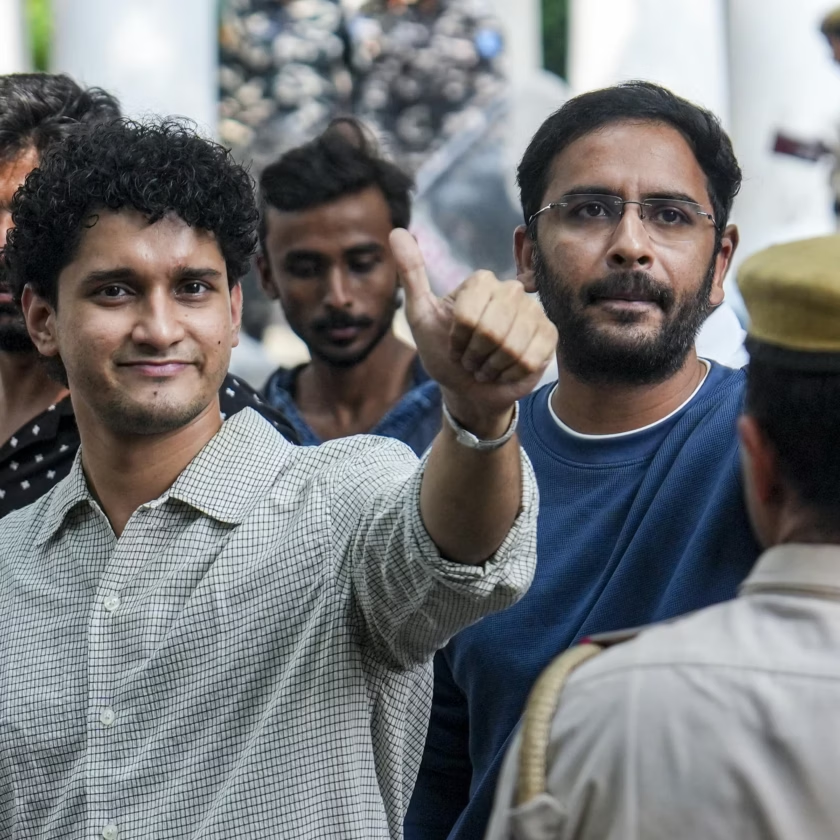
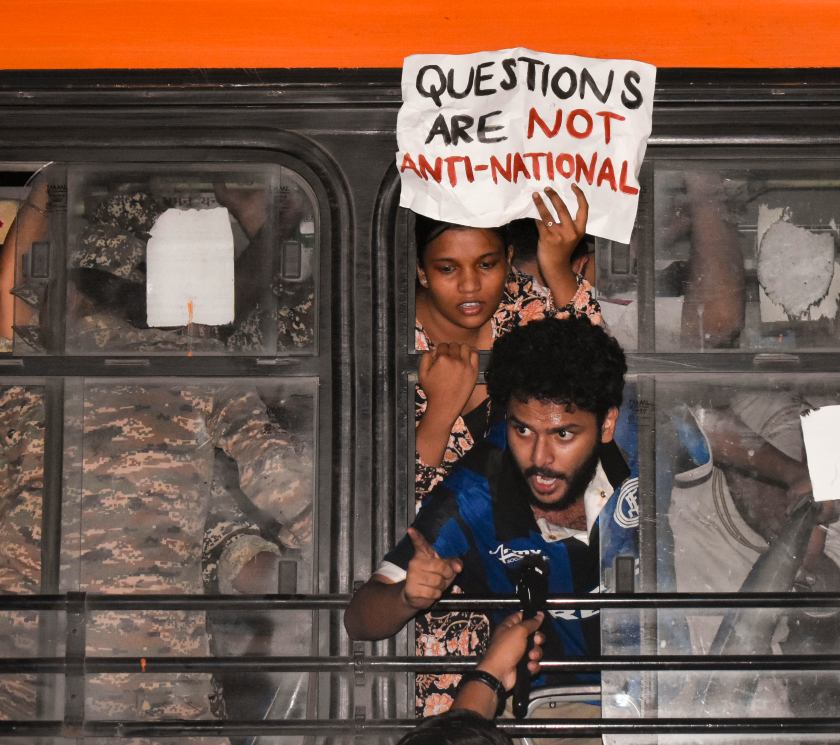
Saurav Das, Ashutosh Ranka and Ajinkya Shinde, along with other CJP supporters, were detained on Tuesday after entering the Jantar Mantar premises by climbing over gates and barricades.
The activists carried the national flag and raised slogans as they entered the site, which has historically been associated with political campaigns, public-interest demonstrations and protests against government decisions.
The action followed the Delhi Police decision to remove Jantar Mantar from the list of designated protest locations and identify alternative venues for demonstrations. CJP has opposed the move, arguing that removing the site’s official designation will not extinguish the campaign or prevent people from raising concerns about electoral transparency.
The party framed the entry as a symbolic assertion of its right to protest. Its supporters described the action as an attempt to reclaim a location they regard as an important public platform for dissent.
For Delhi Police, however, the immediate issue was enforcement of the revised arrangements governing public gatherings at the site. Officers detained the activists after they crossed the barricades, according to media reports.
The incident marks another escalation in a series of confrontations between the party and the authorities. CJP leaders had previously been detained at Delhi airport on October 10, shortly after arriving from Mumbai to participate in the planned demonstration.
Those earlier detentions ended on October 11, when an executive magistrate ordered the release of Abhijeet Dipke, Saurav Das and Ashutosh Ranka after they furnished bonds relating to the maintenance of peace and good behaviour. Their detention following Tuesday’s Jantar Mantar entry was a separate development.
‘Phones Taken, Lawyer Not Allowed’: CJP Alleges Denial of Legal Access
The latest detentions have prompted fresh allegations from CJP about the treatment of its leaders in custody.
The party’s legal head, Ratna Singh, alleged that Das, Ranka and other detained activists were being held at Jaffarpur Kalan police station and had not been allowed to meet their legal representatives.
Singh also claimed that their mobile phones had been taken away. She questioned the legal basis for denying access to lawyers and demanded an explanation from the police.
The allegations raise important questions about the safeguards applicable when individuals are detained. Access to legal advice, communication with family and the communication of the grounds for detention are significant elements of due process, subject to the specific legal circumstances and applicable restrictions.
CJP’s claims have not, by themselves, established that police officials violated the law. The circumstances of the detention, the authority under which the activists were held, any seizure documentation and the response of the police are necessary to assess the allegations fully.
Nevertheless, the issue is significant because the Supreme Court has already considered petitions concerning the wider crackdown on protesters in Delhi. The latest allegations may add to the questions before the courts about how preventive powers are being exercised during the continuing demonstrations.
For now, the key distinction is between what the party alleges and what an independent inquiry or judicial finding may establish.
Supreme Court Hearing Deferred to October 15
The Supreme Court has emerged as a central forum in the dispute over the Delhi protests.
Several pleas have raised concerns about preventive detentions, restrictions on public movement, the closure or disruption of transport services and the ability of people to assemble peacefully. The proceedings also concern the implementation of restrictions imposed ahead of CJP’s planned mobilisation.
The hearing on the relevant pleas has been deferred to October 15, according to reports. The proceedings are expected to bring renewed attention to the legal basis of the restrictions and the safeguards that must be observed when police prevent or disperse public gatherings.
During earlier proceedings, the Supreme Court directed authorities to ensure that peaceful and unarmed people were not illegally detained outside areas where applicable prohibitory orders operated. The court also addressed concerns about normal public transport and internet services, subject to lawful public-order restrictions.
Those directions are important because the dispute involves more than the question of whether a particular protest has permission to proceed. It also concerns the extent to which restrictions affect people who are not participating in demonstrations, including commuters, lawyers, journalists and businesses.
The next hearing may provide an opportunity for the court to examine the government’s and police’s explanations, consider the allegations raised by petitioners and clarify the application of existing legal safeguards.
However, the deferral of a hearing should not be interpreted as a ruling on the merits of every allegation. The specific relief, if any, will depend on the proceedings and the court’s orders.
‘Will You Tell Modi the Same Thing?’: Dipke Questions the CJI
CJP founder Abhijeet Dipke has also questioned the Supreme Court’s response to the protest controversy.
Reacting to remarks attributed to CJI Surya Kant that law-and-order matters were outside his domain, Dipke asked: “Will you tell Modi the same thing?”
The remark reflects CJP’s frustration with what it describes as insufficient judicial intervention in the wider dispute over electoral-roll revisions and the restrictions imposed on protesters.
Dipke has criticised what he regards as an imbalance between the action taken against demonstrators and the scrutiny applied to the institutions they are protesting against. His comments have added a direct political edge to the debate over the judiciary’s role.
The context is important, however. Courts do not ordinarily take over day-to-day policing or replace the executive authorities responsible for maintaining public order. Their role is to examine whether state action complies with the Constitution and the law, adjudicate disputes and grant appropriate relief where legal violations are established.
In cases involving alleged illegal detention or restrictions on fundamental rights, judicial scrutiny can become particularly significant. But the existence and scope of that scrutiny depend on the specific petitions, the evidence placed before the court and the relief sought.
Dipke’s question is therefore best understood as a political challenge to the perceived limits of the court’s intervention, rather than a judicial determination that the authorities have acted unlawfully.
The Supreme Court’s upcoming hearing may help clarify how the legal questions raised by the protests will be addressed.
The SIR Controversy Behind the Protests
At the heart of the CJP mobilisation is the Special Intensive Revision of electoral rolls, an exercise that has triggered a broader political dispute over voter-list changes and electoral transparency.
CJP has demanded the resignation of Chief Election Commissioner Gyanesh Kumar, alleging irregularities in the revision process and raising concerns about the possible exclusion of eligible voters.
Electoral-roll revision is intended to maintain accurate voter lists by accounting for deaths, changes of residence, duplicate entries and other legitimate reasons for updating records. The process is essential to election administration, but it must also provide safeguards against the wrongful removal of eligible electors.
When large numbers of entries are altered or deleted, transparency becomes particularly important. Voters need to know how to verify their registration, understand why a record has changed and challenge an error through accessible procedures.
CJP and other critics have called for greater accountability and scrutiny of the Election Commission’s decisions. These claims remain subject to verification, and allegations of wrongful deletion should be assessed against official records, procedural safeguards and the evidence available.
The Election Commission and its supporters have disputed the broader accusations of bias. The disagreement has consequently moved beyond technical questions about voter registration and into a larger political argument about the credibility of electoral institutions.
For protesters, the demand for the CEC’s resignation is a way to press for accountability. For the authorities, the challenge is to explain the revision process clearly and demonstrate that eligible voters have effective remedies.
Jantar Mantar’s Removal Adds a New Flashpoint
The decision to remove Jantar Mantar from the list of designated protest sites has become a second major source of confrontation.
The venue has long been a prominent location for demonstrations in the capital. Its central location has helped campaigners draw media attention and communicate their demands to political institutions and the wider public.
Delhi Police has identified alternative locations, including Ramlila Ground, Burari Ground and CBD Ground, for demonstrations under the revised arrangements.
Authorities can regulate public gatherings to address traffic, security and public-order concerns. But the practical effectiveness of alternative venues is also relevant to the debate: a protest location must be accessible enough for people to assemble and communicate their demands meaningfully.
CJP has argued that the removal of Jantar Mantar’s designated status will not end the movement. Tuesday’s entry was intended to make that point visibly.
The action also creates a separate legal question: how the revised order applies to unauthorised entry and protest activity at the site, and whether police responses remain consistent with the law and relevant judicial directions.
Those questions will depend on the precise wording of the order, the circumstances of the incident and any subsequent legal proceedings.
A Test of Public Order, Due Process and Democratic Dissent
The CJP confrontation highlights the difficult balance between the state’s responsibility to maintain public order and citizens’ rights to express political opposition and assemble peacefully.
Police authorities are empowered to take lawful steps to prevent violence, manage crowds and enforce valid restrictions. At the same time, those powers are not unlimited. Detentions must have a legal basis, and procedural safeguards must be respected.
For protesters, entering a venue after restrictions have been imposed can carry legal consequences. For the authorities, enforcing those restrictions does not remove the obligation to act proportionately and follow due process.
The allegations concerning phone seizures and access to lawyers add another layer to the controversy because they concern what happens after people are taken into custody. Any assessment must consider the applicable law, police records and the accounts of both sides.
The judicial proceedings will be important in determining whether the measures challenged by the petitioners complied with legal requirements. Until the court makes relevant findings, allegations of misconduct should remain clearly attributed rather than treated as proven facts.
The dispute also has consequences beyond the immediate parties. Extended restrictions, roadblocks and uncertainty surrounding protest permissions can affect commuters, businesses and people who have no direct involvement in the demonstrations.
A transparent and consistent framework for public gatherings could help reduce confrontation while preserving the ability of citizens to raise grievances.
What to Watch on October 15
The next scheduled hearing is likely to be a key moment in the continuing dispute over protest restrictions and detentions.
Among the issues to watch are the government’s and Delhi Police’s responses to the petitions, the status and legal basis of the latest detentions, and whether the court issues further directions on access to legal counsel, peaceful assembly or the operation of public services.
The immediate status of Das, Ranka, Shinde and the other detained activists also remains important. CJP’s allegations about access to lawyers and the seizure of phones require a response from the authorities and, if disputed, may need to be examined through appropriate legal processes.
The wider SIR controversy is likely to continue alongside the litigation. The central questions remain whether electoral-roll changes have been carried out transparently, whether eligible voters have effective avenues to correct errors and whether the Election Commission can adequately address public concerns.
The confrontation at Jantar Mantar has transformed a protest over electoral administration into a wider debate about democratic space and institutional accountability. The outcome will depend not on slogans or political accusations alone, but on the evidence, the applicable law and the decisions taken by the relevant institutions.