NC’s Dachigam Retreat: Omar Abdullah Reviews Governance as Cabinet Expansion Pressure Brews Within
By: Javid Amin | 03 June 2026
Behind the Secluded Legislature Party Meeting, National Conference Faces Growing Questions on Governance, Representation and Political Direction
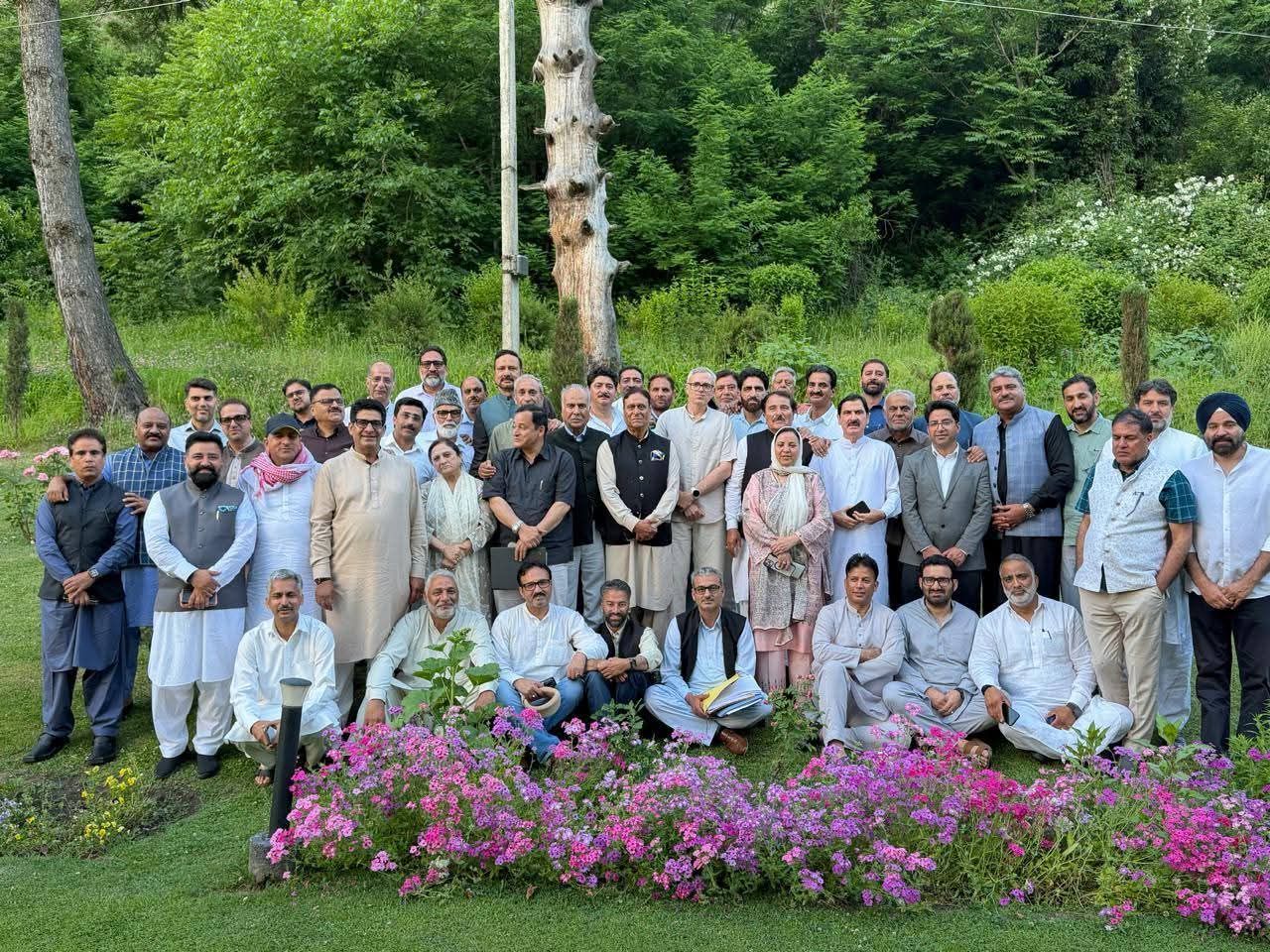
The National Conference Legislature Party meeting held on June 3 in Srinagar was expected to produce a major political announcement. Instead, it concluded without any resolution, cabinet reshuffle, or policy declaration.
Yet dismissing the gathering as routine would be a mistake.
The real significance of the meeting lies not in what was announced publicly but in what it revealed about the challenges facing Chief Minister Omar Abdullah nearly twenty months into his tenure.
Held away from media glare at Dachigam National Park after legislators initially assembled at the Chief Minister’s Gupkar residence, the retreat served as an internal stock-taking exercise for a government increasingly under pressure from both political opponents and its own legislators.
Behind the carefully managed optics of unity, discussions reportedly centered on governance performance, ministerial accountability, constituency-level concerns, and the growing demand to fill three vacant cabinet berths.
For many within the party, the retreat was not about celebrating achievements. It was about confronting emerging political realities.
Why Dachigam? The Venue That Sparked Speculation
The decision to move the meeting to Dachigam immediately triggered political curiosity.
Opposition parties and political observers questioned why a legislature party meeting required a secluded venue away from the public eye.
Chief Minister Omar Abdullah later clarified that the off-site format had been planned in advance and was not a last-minute shift. According to the Chief Minister, the objective was to create a distraction-free environment where legislators could openly discuss governance and political challenges.
Nevertheless, the symbolism proved difficult to ignore.
In a political environment already charged by opposition allegations of excessive focus on optics and political management, the retreat’s location inevitably generated speculation about internal tensions and strategic recalibration.
Whether intentional or not, Dachigam became a metaphor for a government seeking space for introspection while facing increasing public scrutiny.
The Real Agenda: Reviewing 19 Months of Governance
While public attention focused on the venue, the substantive discussions reportedly revolved around governance.
Sources familiar with the deliberations indicate that MLAs were encouraged to provide honest feedback from their constituencies regarding the government’s performance.
Among the issues discussed were:
- Delays in developmental projects
- Public service delivery
- Administrative responsiveness
- Employment generation
- Rural infrastructure
- Tourism development
- Public grievances
- Departmental coordination
Several legislators are understood to have conveyed concerns about growing public expectations and the need for faster implementation of development initiatives.
This reflects a broader reality confronting the Omar Abdullah government.
The honeymoon period of governance has ended.
Voters are increasingly evaluating the administration not on promises or political positioning but on tangible outcomes.
For many legislators preparing to return to their constituencies, the question is no longer what the government intends to do but what it has already delivered.
Cabinet Expansion Emerges as the Biggest Internal Issue
If there was one issue that dominated political conversations before, during, and after the retreat, it was cabinet expansion.
Three ministerial berths remain vacant despite the government being in office for nearly twenty months.
What initially appeared to be a temporary arrangement has evolved into a significant political issue.
Several legislators reportedly raised concerns about the continued delay in filling these positions.
The demand reflects more than personal ambition.
Within Jammu and Kashmir’s political landscape, ministerial appointments often serve multiple functions:
Regional Balancing
Different regions expect representation within the government structure.
Political Inclusion
Ministerial positions help accommodate influential legislators and strengthen party cohesion.
Governance Efficiency
Additional ministers can improve administrative oversight across departments.
The prolonged vacancies have therefore become a source of speculation and frustration within sections of the ruling party.
While no decision was announced, the issue appears to have emerged as one of the most significant outcomes of the retreat.
Why Some Legislators Left Early
Perhaps the most discussed aspect of the meeting after its conclusion was reports that a few participants departed before the retreat formally ended.
At present, there is no verified evidence of a walkout, boycott, or organized protest.
However, political circles have advanced several theories.
Some legislators may have left due to prior commitments or official engagements.
Others may have participated only in specific sessions relevant to their responsibilities.
More politically charged interpretations suggest that frustration over cabinet expansion or dissatisfaction with certain discussions may have influenced some departures.
Importantly, none of these claims have been officially confirmed.
What can be said with certainty is that the early exits became a talking point because they occurred against the backdrop of broader speculation regarding internal dissatisfaction.
Omar Abdullah’s Biggest Challenge: Managing Expectations
The retreat underscored the increasingly complex challenge facing Omar Abdullah.
The Chief Minister must simultaneously manage four competing pressures:
Governance Delivery
Citizens expect visible improvements in infrastructure, employment, public services, and development.
Internal Party Management
Legislators want greater participation in decision-making and clarity regarding political appointments.
Opposition Pressure
Both the BJP and PDP have intensified criticism of the government’s performance and political direction.
Public Perception
The government must convince voters that it remains focused on governance rather than political optics.
Balancing these pressures will define the next phase of Omar Abdullah’s leadership.
The Opposition Narrative Is Growing Stronger
The retreat occurred at a time when opposition parties are becoming increasingly aggressive.
Leader of Opposition Sunil Sharma has accused the government of prioritizing “loyalty parades” over governance.
Meanwhile, PDP president Mehbooba Mufti has sought to shift attention toward a broader debate on political unity and engagement with the Centre.
Both narratives pose challenges for the National Conference.
The BJP is attempting to frame the government as ineffective.
The PDP is attempting to position itself as the initiator of a larger political conversation.
As a result, the National Conference finds itself defending its governance record while simultaneously managing internal expectations.
What Happens Next?
The most important question after the Dachigam retreat is whether it leads to action.
Several developments now appear increasingly likely.
Cabinet Expansion Could Move Closer
The sustained pressure from legislators makes continued delay politically costly.
Greater Performance Monitoring
The government may intensify reviews of departmental performance and ministerial accountability.
Sharper Political Messaging
The National Conference is likely to adopt a more coordinated communication strategy to counter opposition criticism.
Increased Constituency Engagement
Legislators may receive greater support in addressing local issues ahead of future political contests.
The Bottom Line
The Dachigam retreat was neither a crisis meeting nor a celebration of success.
It was a reality check.
For nearly twenty months, the Omar Abdullah government has focused on establishing administrative direction and political stability. The June 3 meeting suggests the leadership now recognizes that the next phase will require stronger governance delivery, better internal management, and clearer political messaging.
No major announcement emerged from Dachigam.
Yet the retreat revealed something arguably more important: a ruling party increasingly aware that expectations are rising faster than achievements.
Whether that realization translates into cabinet expansion, administrative reforms, or a renewed governance push will determine how this meeting is ultimately remembered.
For now, Dachigam stands as a moment of introspection for a government entering a more demanding chapter of its tenure.