Fake & Substandard Medicines in Kashmir 2026: CDSCO Flags 6 Failed Drug Samples — What You Must Know
By: Javid Amin | 28 June 2026
The Pill That Cannot Heal: Kashmir’s Quiet Drug Crisis
Imagine swallowing a painkiller for days without relief. Your blood pressure medication simply isn’t working. Your antibiotic seems useless against an infection that should have cleared up by now. You blame your body. You blame the illness. The thought that never crosses your mind — that the medicine itself might be the problem — may, in fact, be exactly right.
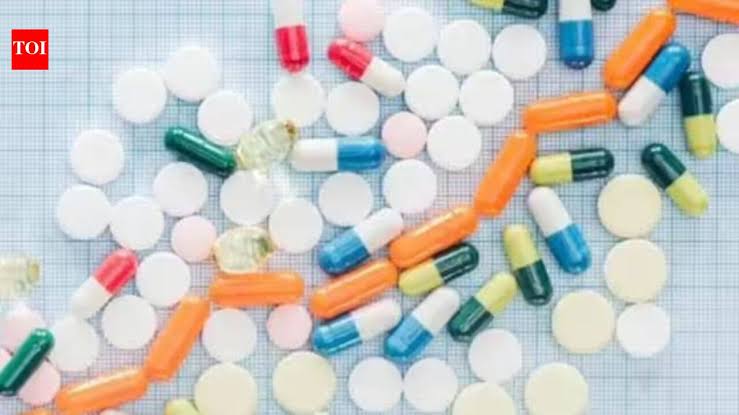
This is not a hypothetical. In May 2026, six drug samples lifted from pharmacies and distribution points across Kashmir were officially declared “Not of Standard Quality” (NSQ) by India’s apex drug regulator, the Central Drugs Standard Control Organisation (CDSCO). These medicines — including widely prescribed combinations of aceclofenac and telmisartan-based formulations — had failed mandatory laboratory quality tests and were found to be either ineffective, unsafe, or both.
The medicines found NSQ were all tested at the Drug Testing Laboratory (DTL) Dalgate and include aceclofenac combinations, telmisartan-based formulations, and other widely prescribed drugs.
Six samples. Six medicines that patients may have paid for, trusted, and consumed — with no idea they were getting chalk, starch, or diluted compounds instead of the drugs their doctors prescribed.
And this is just what has been detected.
Understanding the Scale: Kashmir’s 6 Failures Within a National Crisis
To understand how serious the situation is, you first need to zoom out and look at the bigger picture.
For the month of May 2026, Central Drugs Laboratories identified 46 drug samples as “Not of Standard Quality” and State Drugs Testing Laboratories identified 113 drug samples as NSQ, according to a health ministry statement.
That is nearly 160 failed drug samples across India in a single month. CDSCO’s May 2026 drug alert flagged 111 drug, cosmetic, and medical device samples as NSQ, misbranded, spurious, or otherwise non-compliant, based on test reports submitted by State Drug Testing Laboratories — covering antibiotics, antidiabetics, antihypertensives, analgesics, cardiovascular drugs, vitamin supplements, injections, medical devices, and cosmetic products.
In May 2026, one drug sample from Assam was also identified as spurious — meaning it was manufactured by an unauthorised manufacturer using a brand name owned by another company, and the matter is under investigation.
Kashmir’s six failed samples are part of this national crisis. But what makes the Valley’s situation distinctly worrying is not just the numbers — it is the dangerous silence from its own drug regulator.
The Regulator Has Gone Quiet — And That Is the Real Problem
Here is what makes the Kashmir situation more than just another routine drug-quality alert.
A review of the official Drugs and Food Control Organisation (DFCO) website shows that the last publicly accessible drug testing and sampling updates are from March 2026. Since then, no monthly reports, sample-testing data, enforcement actions, or surveillance summaries have been uploaded for public information.
Think about what that means. The agency whose sole purpose is to protect Kashmiri citizens from unsafe medicines has stopped telling those citizens what it is finding in their pharmacies. Are samples still being collected? Are tests being conducted? Are violators being prosecuted? Nobody outside the department knows.
This is not a minor administrative lapse. Under the Drugs and Cosmetics Act, 1940, drug sampling from pharmacies, hospitals, and distribution chains is a mandatory, routine activity. The CDSCO publishes its national NSQ list every single month. For J&K’s own regulator to go dark on public reporting since March 2026 is a serious transparency failure — one that leaves doctors, patients, pharmacists, and civil society entirely in the dark.
The DFCO’s own stated vision is clear: “It is the responsibility of the Department to ensure the availability of quality drugs to the public and that the market is free from counterfeit, spurious, and substandard drugs.”
Right now, the public has no way of verifying whether that responsibility is being fulfilled.
What Are NSQ Medicines? A Plain-Language Explainer
Before diving deeper, it helps to understand exactly what “Not of Standard Quality” means — because it is not just a bureaucratic label.
Under the Drugs and Cosmetics Act, 1940, a drug is deemed NSQ if it fails to meet the standards specified in the Indian Pharmacopoeia (IP). This can mean many things:
- The active ingredient is present in lower concentration than declared (under-potent)
- The tablet or capsule does not dissolve at the right rate (dissolution failure)
- The drug is contaminated with foreign substances or microbial matter
- The physical description has changed — colour, texture, coating — suggesting degradation or tampering
- In extreme cases, the active ingredient has been entirely replaced with inert fillers like chalk, starch, or talc
When a medicine fails potency tests, it does not just fail to cure — it can actively harm. An under-dosed antibiotic, for instance, may not kill bacteria but can expose them to just enough drug pressure to evolve resistance. A diluted blood pressure pill may give a patient false reassurance while their hypertension silently damages their heart and kidneys.
Among the notable May 2026 failures were cardiovascular medicines including telmisartan, amlodipine, and rosuvastatin products that failed quality parameters such as dissolution, related substances, and description tests — alongside anti-diabetic drugs and multiple cough and cold preparations that failed assay requirements for active ingredients.
These are not niche or rarely-used medicines. Aceclofenac is one of the most prescribed painkillers in India. Telmisartan is a cornerstone drug for managing high blood pressure — a condition that affects millions of Kashmiris, particularly in an ageing and stress-affected population.
Why Kashmir Is Especially Vulnerable
Kashmir is not chosen at random by counterfeit medicine networks. There are very specific structural and geographic reasons why the Valley is a particularly attractive — and vulnerable — market.
1. The Border Factor
Kashmir’s geographic position makes it a natural transit zone. Proximity to cross-border routes creates opportunities for the inflow of unregulated medicines manufactured outside formal supply chains. Medicines sourced from dubious or unverified manufacturers in neighbouring jurisdictions can enter the Valley through porous points, where customs and drug surveillance is inconsistent.
2. Fragmented Chemist Networks
Unlike metropolitan cities, where large pharmacy chains maintain electronic inventory and supply records, Kashmir’s pharmacy landscape is dominated by independent, often small chemists — particularly in rural and semi-urban areas. This fragmentation makes supply-chain traceability extremely difficult. A consignment of substandard medicines can move across multiple distributors and retailers before it is ever detected.
3. High Demand, Easy Exploitation
In Kashmir, drug samples have been found NSQ at pharmacies, hospitals, and government supply chains including Jan Aushadhi stores. The Valley sees high patient loads from its own population as well as from medical tourism. This creates consistent and high demand, which counterfeit networks exploit by pushing cheap, low-quality alternatives through informal channels.
4. Weak Enforcement Cycles
Despite the mandatory surveillance system, it is shocking to find that substandard drugs are reaching healthcare facilities, discovered while being sampled and tested by J&K DFCO. The problem is not lack of law — it is inconsistent enforcement. Recalls and prosecutions following NSQ findings are rarely publicised, leaving the same networks free to operate.
The Drugs That Failed: Aceclofenac and Telmisartan Explained
Let us look more closely at the two drug types flagged from Kashmir, because understanding what these medicines do makes the failure all the more alarming.
Aceclofenac: The Painkiller Millions Rely On
Aceclofenac is a non-steroidal anti-inflammatory drug (NSAID) widely used for pain relief — arthritis, back pain, post-surgical discomfort, menstrual pain, and dental pain. It is one of the most commonly prescribed analgesics in South Asia.
When an aceclofenac tablet fails quality standards — specifically potency or dissolution — the patient receives either a sub-therapeutic dose (meaning the pain is not adequately controlled) or an impure formulation that could cause gastrointestinal side effects without the intended benefit. For patients with chronic pain conditions like rheumatoid arthritis, this means prolonged suffering and repeated, unnecessary consultations.
Telmisartan: The Blood Pressure Drug That Must Not Fail
Telmisartan belongs to a class of drugs called Angiotensin Receptor Blockers (ARBs), used to control hypertension (high blood pressure) — one of the leading causes of heart attacks and strokes in India.
A substandard telmisartan tablet that under-delivers its active ingredient creates a profoundly dangerous situation: the patient’s blood pressure remains elevated, their doctor believes the medication is working, and the patient remains at daily risk of a stroke or cardiac event — all while faithfully taking their “medicine” every morning.
This is why drug quality failures are not administrative problems. They are potential death sentences written in invisible ink.
A History of Recurring Failures: This Is Not New
It would be convenient — and politically comfortable — to treat the May 2026 NSQ findings as an isolated incident. They are not.
While detection of NSQ drugs is routine, the opacity on drug samples lifted and tested by the J&K Drugs and Food Control Organisation this financial year raises fresh concerns about medicine safety and regulatory oversight in J&K.
For years, CDSCO’s monthly surveillance has periodically flagged drug samples from Jammu & Kashmir as NSQ. The pattern is consistent: medicines from common therapeutic categories — painkillers, antihypertensives, antibiotics — repeatedly fail potency and purity tests. Enforcement actions and recalls following these detections are rarely, if ever, reported in public domain.
Testing by the J&K Drug and Food Control Organisation revealed that 60 medicines among samples lifted from markets and hospitals were “Not of Standard Quality” in J&K — data pertaining to a seven-month period in the previous financial year.
Sixty medicines in seven months. That is not a rogue batch — that is a systemic failure. What the May 2026 CDSCO alert has done is shine a national-level spotlight on what has been happening quietly, repeatedly, and without adequate accountability in Kashmir’s medicine supply chain.
How Counterfeit Medicine Networks Operate
Understanding the mechanics of how fake or substandard medicines infiltrate legal supply chains is important — both to appreciate the scale of the problem and to understand why simple solutions will not work.
Step 1 — Manufacturing at Source: Counterfeit medicines are typically produced by unregistered or dubiously licensed manufacturers. These could be small, illegal units that produce tablets using cheap fillers — starch, chalk, talc — with little or no active ingredient, or with the active ingredient present but in wildly inconsistent quantities.
Step 2 — Fake Documentation and Labeling: Sophisticated counterfeit operations produce packaging that is visually indistinguishable from legitimate products — down to the batch number, manufacturing date, and the manufacturer’s name and logo. Some operations literally copy the branding of reputed pharmaceutical companies.
Step 3 — Entering the Supply Chain: Unregulated distributors — often operating without proper licensing — introduce these products into the supply chain by offering them at prices significantly below market rates. A chemist looking to improve margins may knowingly or unknowingly purchase these consignments.
Step 4 — The Last Mile: The medicine reaches a patient. Nobody in the chain — not the pharmacist, not the doctor, not the patient — has any reason to suspect anything is wrong. The packaging looks correct. The pill looks right. The patient swallows it.
Step 5 — The Harm: Treatment fails. The patient’s condition worsens. Drug resistance may develop. Nobody connects the failure back to the medicine, because that requires laboratory testing that is rarely initiated at the patient level.
This is the anatomy of a public health crisis that operates entirely in plain sight.
The Human Cost: What Treatment Failure Really Means
Numbers and regulatory jargon can make the counterfeit medicine crisis feel abstract. It is anything but.
For a patient with hypertension, a substandard blood pressure pill means their arteries remain under stress every day. Months of this can cause irreversible kidney damage, increase the risk of stroke, and lead to heart failure. They may go through multiple medication changes — blaming their body’s “resistance” — never knowing the original medicine was chalk in a capsule.
For a patient on antibiotics, receiving a diluted or inactive antibiotic is doubly dangerous. First, the infection does not clear up, prolonging suffering and potentially becoming life-threatening. Second, the bacteria are exposed to sub-lethal concentrations of the antibiotic, which is precisely how antibiotic resistance is created. The next time that patient — or someone who receives their infection — needs antibiotics, a whole class of drugs may be ineffective.
For children and the elderly, who are less able to compensate for treatment failure and more vulnerable to toxic contaminants, the stakes are highest of all.
And beyond the individual patient, there is the erosion of trust. When medicines fail repeatedly, patients lose faith in their doctors, their pharmacies, and their healthcare system. They turn to unverified herbal remedies, quacks, or simply abandon treatment altogether — outcomes that create an entirely new layer of public health damage.
The Transparency Emergency: Why the DFCO Silence Must End
India’s drug regulatory system is built on a foundation of transparency. CDSCO publishes its NSQ list every single month, precisely because public disclosure creates accountability. When patients, doctors, and pharmacists know which batches have failed, they can act — stop dispensing, return products, warn patients.
When a state-level regulator stops publishing this data, that entire system breaks down.
The absence of publicly available information on local drug surveillance leaves a vacuum: whether drug samples are being collected and tested in J&K at present, how many samples are being tested, what has been found from quality checks, and what enforcement action has been taken against manufacturers, distributors, or retailers — none of this is publicly known.
This is not a small administrative gap. This is a public health transparency emergency.
The DFCO’s own portal states unambiguously that its mandate is to keep the market free from counterfeit, spurious, and substandard drugs. But a regulator that does not report its findings to the public is, in effect, conducting surveillance for itself — not for the people it is sworn to protect.
What Needs to Change: A Blueprint for Reform
The path forward is not complicated. It is, however, demanding — and it requires political will, institutional accountability, and public engagement all working together.
Immediate Action: Restore Public Reporting
The DFCO must immediately resume monthly publication of drug sampling data, test results, enforcement actions, and recalls. This is a statutory obligation, not an optional courtesy. Every month of silence is a month during which substandard medicines can continue circulating without any public alert.
Strengthen Border and Warehouse Enforcement
Dedicated drug surveillance at key transit and entry points — courier hubs, warehouses, wholesale markets — must be strengthened. This means trained drug inspectors, rapid field testing kits, and coordination with customs and law enforcement agencies. Cross-border inflow of unregulated medicines is a known vulnerability; it must be treated as such.
Digital Supply Chain Tracking
India is increasingly moving toward barcode-based drug traceability systems. Kashmir’s pharmacy and distribution networks must be brought into this digital fold. Every licensed pharmacy should be required to maintain digital purchase records, enabling inspectors to trace the supply chain of any failed sample back to its source within hours, not weeks.
Fast-Track Prosecution
NSQ detection without prosecution is meaningless. When substandard medicines are found, the manufacturers, distributors, and retailers involved must face swift, publicised legal consequences. Visible accountability deters future violations far more effectively than quiet administrative actions.
Consumer Awareness: Your First Line of Defence
Until the system is fully fixed, every patient has a role to play. Before purchasing any medicine:
- Check the batch number and expiry date carefully
- Verify the manufacturer’s name and look for the correct logo and packaging details
- Purchase from licensed, reputed pharmacies
- Report any suspected fake or ineffective medicine to CDSCO’s complaint portal or the DFCO
- Ask your doctor or pharmacist if there are concerns about a specific batch
Editorial Note: The Land of Healing Cannot Tolerate Chalk-Dust Cures
Kashmir has, for centuries, been a land associated with healing — its herbs, its air, its waters, its ancient medical traditions. The idea that in 2026, a patient in the Valley might swallow a blood pressure tablet filled with chalk instead of medicine is not just a regulatory failure. It is a betrayal of something fundamental.
The counterfeit medicine crisis is a public health emergency that operates quietly, without the drama of an epidemic or the visibility of a disaster — but with consequences just as real and just as serious. Every failed drug batch is a patient who did not get better. Every month of regulatory silence is an open invitation to the networks that profit from selling fake cures.
The cornerstone of any meaningful reform must be three things: transparency, accountability, and vigilance — from regulators, from industry, and from every citizen who takes a pill and trusts that it will help.
Sources: CDSCO Monthly NSQ Alerts (May 2026), Greater Kashmir, Kashmir Observer, Medical Dialogues, ANI, Pharma Tutor, DFCO J&K Official Portal
For drug quality complaints, contact CDSCO’s online portal: cdsco.gov.in | DFCO J&K: dfcojk.org