Baramulla–Uri Highway Bridge Collapse: Safety Questions Rise After Newly Built Structure Falls, Injuring Workers
By: Javid Amin | 26 June 2026
Ten workers injured as under-construction bridge collapses in North Kashmir, triggering probe into construction quality and engineering oversight
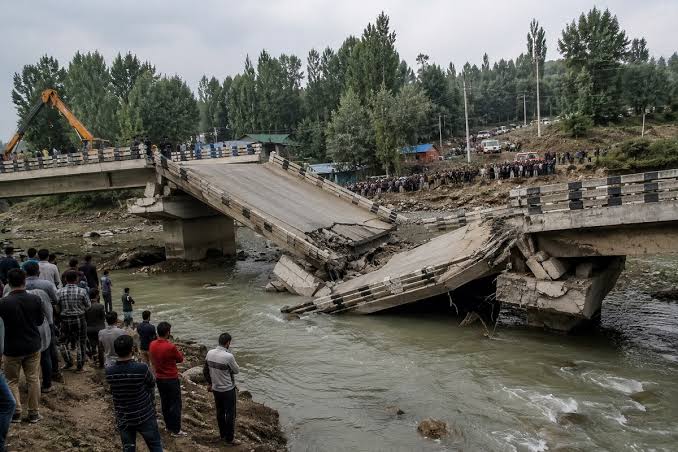
A newly constructed bridge on the Baramulla–Uri highway collapsed on June 25, 2026, raising serious concerns over infrastructure safety, construction standards and monitoring mechanisms in Jammu and Kashmir.
The structure, part of a major road widening and four-lane development project in North Kashmir, collapsed on the New Bypass stretch while construction activity was underway.
At least 10 workers were injured in the incident, with most suffering fractures and trauma injuries. One worker sustained a serious spinal injury and was shifted to Srinagar for advanced medical treatment.
The collapse has triggered an official investigation, with authorities examining possible structural weaknesses, construction failures and lapses in supervision.
What happened at the Baramulla–Uri highway site?
The incident occurred on the afternoon of June 25 on the New Bypass section of the Baramulla–Uri highway.
According to preliminary reports, the bridge collapsed shortly after a major phase of construction had been completed.
The structure was part of a larger infrastructure expansion project aimed at improving connectivity along the strategically important highway corridor.
The sudden failure of a newly built structure has raised questions because the bridge had not yet been opened for public use.
Project details and agencies involved
The collapsed bridge was part of a road widening and four-lane infrastructure project on the Baramulla–Uri route.
Reports have linked the construction work to:
- Rajendra Infra Pvt. Ltd.
- Border Roads Organisation (BRO) involvement in the project corridor
The exact technical cause of the collapse will be determined through investigation.
Authorities are expected to examine:
- Structural design
- Material quality
- Construction methods
- Load calculations
- Safety inspections
- Supervision procedures
Workers injured, rescue and medical response
The collapse trapped workers at the construction site, leading to an emergency response.
Ten workers were reported injured.
Medical details indicate:
Nine workers
They suffered injuries including:
- Fractures
- Cuts and lacerations
- Trauma-related injuries
Their condition was reported to be stable after treatment.
One worker
A worker suffered a serious spinal injury and was referred to Srinagar for specialised medical care.
The injured workers were treated at:
- Government Medical College (GMC) Baramulla
- District Hospital Baramulla
Authorities coordinated medical assistance following the incident.
Structural failure raises major questions
The most serious concern emerging from the collapse is how a newly constructed bridge failed before inauguration.
Infrastructure experts say bridge failures can result from multiple factors, including:
- Poor-quality construction material
- Design flaws
- Weak foundation work
- Incorrect reinforcement
- Inadequate quality checks
- Construction-stage safety failures
A technical investigation will be required before drawing conclusions.
However, the incident has renewed public debate over whether large infrastructure projects receive adequate independent monitoring.
Public concern over construction standards
Residents have demanded a detailed and transparent inquiry into the collapse.
Many have questioned whether:
- Construction materials met required standards
- Safety inspections were properly conducted
- Contractors followed approved designs
- Supervising agencies maintained oversight
For people living in border and mountain regions, infrastructure projects are not only about connectivity but also about reliability and safety.
A failure in such projects can directly affect public confidence.
Why Himalayan infrastructure faces additional challenges
Building roads and bridges in Jammu and Kashmir comes with unique engineering challenges.
The Himalayan region faces:
- Fragile geology
- Seismic activity
- Extreme weather conditions
- Landslide risks
- Difficult terrain
Infrastructure experts say mountain construction requires stronger planning, specialised engineering approaches and continuous monitoring.
Projects in such regions must consider environmental conditions throughout their lifecycle — from design to maintenance.
A wider pattern of infrastructure safety concerns
The Baramulla incident comes amid growing discussions about infrastructure safety across Himalayan states.
Recent bridge and road-related failures in mountain regions have raised concerns about:
- Construction quality
- Contractor accountability
- Regulatory monitoring
Experts warn that rapid infrastructure expansion must not compromise safety standards.
Connectivity projects are essential for remote and border areas, but durability and engineering quality remain equally important.
Accountability challenge: Who will be responsible?
The investigation will likely focus on fixing responsibility among different stakeholders.
Possible areas of review include:
- Contractor performance
- Project supervision
- Engineering approvals
- Quality control systems
- Safety compliance
If negligence or violations are established, authorities may take action against responsible individuals or agencies.
Impact on public trust and future projects
Large infrastructure projects in Jammu and Kashmir are designed to improve connectivity, support economic activity and strengthen access to remote areas.
However, repeated failures can damage public confidence.
Residents expect:
- Safer roads and bridges
- Transparent project execution
- Stronger monitoring
- Accountability after failures
For a region where infrastructure development is considered strategically important, maintaining public trust is critical.
The road ahead
The Baramulla–Uri bridge collapse highlights a larger question facing infrastructure development in fragile mountain regions:
Can rapid construction growth be matched with equally strong safety systems?
The answer depends on stronger engineering standards, transparent inspections and accountability at every stage of project execution.
The investigation into the collapse will determine the immediate cause, but the larger lesson is clear — infrastructure in the Himalayas must be built not only faster, but safer.