Mehbooba Mufti Rejects NC’s Delhi Protest, Says Statehood Alone Cannot Replace Article 370 Demand
By: Javid Amin | 18 July 2026
PDP chief refuses to join NC’s Jantar Mantar demonstration, insisting that any united opposition movement must also demand the restoration of Article 370 and other political measures
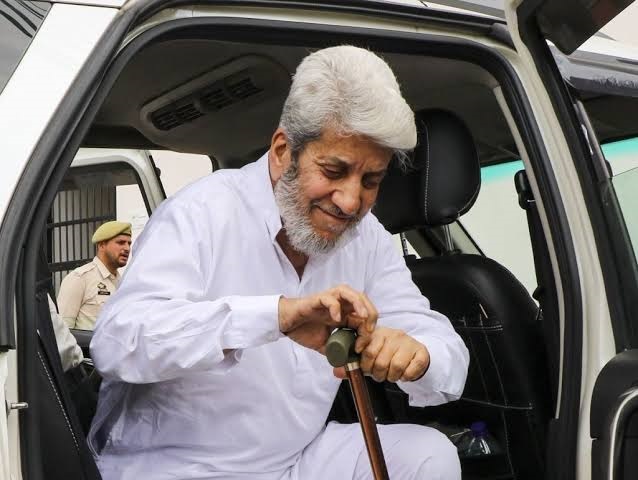
A fresh political divide has emerged within Jammu and Kashmir’s opposition ahead of the National Conference’s (NC) proposed protest at Jantar Mantar in New Delhi, after People’s Democratic Party (PDP) president Mehbooba Mufti declined the party’s invitation to participate.
In a letter addressed to National Conference president Farooq Abdullah, Mehbooba Mufti said the PDP could not join a movement that focuses exclusively on the restoration of statehood, arguing that such an approach sidelines the larger constitutional questions arising from the August 5, 2019 reorganisation of Jammu and Kashmir.
Instead, she maintained that any united political campaign should also include demands for the restoration of Article 370, Article 35A, the release of political prisoners, and the lifting of the ban on Jamaat-e-Islami.
Her decision has highlighted widening differences among Jammu and Kashmir’s regional political parties over the strategy and priorities of the opposition’s constitutional campaign.
Why Mehbooba Mufti Declined the Invitation
According to Mehbooba Mufti, reducing the movement to a demand for statehood risks overlooking the constitutional changes that took place in 2019.
She argued that statehood, while important, cannot substitute for the broader political and constitutional rights that were altered following the abrogation of Article 370.
In her view, limiting the campaign to statehood alone could be interpreted as accepting the post-2019 constitutional framework while merely seeking administrative changes within it.
The PDP leader asserted that the struggle should remain rooted in addressing what she considers the fundamental constitutional issues affecting Jammu and Kashmir.
Article 370 Remains the Centrepiece of PDP’s Political Position
Mehbooba Mufti reiterated that the restoration of Article 370 and Article 35A continues to be the PDP’s principal political objective.
She argued that these constitutional provisions formed the foundation of Jammu and Kashmir’s relationship with the Union of India before August 2019 and therefore cannot be separated from discussions about the region’s political future.
In addition to constitutional restoration, she also called for:
- The release of political detainees and prisoners, in accordance with legal processes.
- The lifting of the ban on Jamaat-e-Islami, an organisation that has remained prohibited under the Unlawful Activities (Prevention) Act (UAPA) since 2019, with the ban subsequently extended by the Union Government.
- A broader political dialogue addressing issues of democratic representation and civil liberties.
These demands reflect the PDP’s effort to position itself as advocating a wider political agenda than the restoration of statehood alone.
Criticism of the National Conference
Without rejecting the importance of statehood, Mehbooba Mufti questioned the National Conference’s decision to make it the primary focus of its Delhi protest.
She suggested that such an approach risks weakening the broader constitutional movement that many regional parties had pursued following the abrogation of Article 370.
According to her, political efforts should continue to emphasise the constitutional changes of 2019 rather than limiting the conversation to administrative restructuring.
The remarks also reflect continuing political competition between the PDP and the National Conference over who represents the strongest voice on constitutional issues in Jammu and Kashmir.
National Conference’s Position: Statehood First
The National Conference has defended its strategy by arguing that the immediate restoration of statehood is a constitutional commitment that should be implemented without further delay.
Party leaders, including Omar Abdullah and Farooq Abdullah, have repeatedly stated that restoring statehood would strengthen democratic institutions and return fuller legislative and administrative powers to the elected government.
The NC has also continued to advocate constitutional rights through political and legal means. However, its immediate campaign has centred on securing statehood, including through its planned demonstration at Jantar Mantar.
The party argues that restoring statehood represents a practical and achievable constitutional objective while broader issues continue to be debated politically.
A Divided Opposition Ahead of the Delhi Protest
Mehbooba Mufti’s decision has further exposed divisions among opposition parties in Jammu and Kashmir.
| Party | Primary Political Demand | Position on Delhi Protest |
|---|---|---|
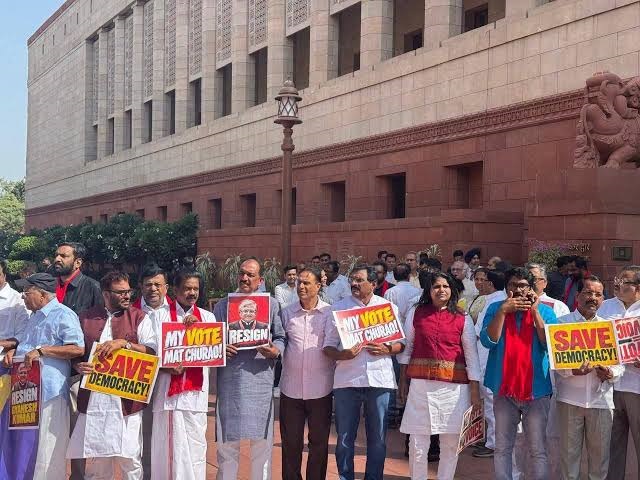
| National Conference (NC) | Restoration of statehood | Organising the July 20 protest at Jantar Mantar |
| People’s Democratic Party (PDP) | Restoration of Article 370, Article 35A, statehood and broader political measures | Declined to participate unless the agenda is expanded |
| Congress | Supports restoration of statehood and democratic processes | Expected to extend support to the NC protest |
| CPI(M) | Supports statehood restoration | Expected to participate alongside the NC |
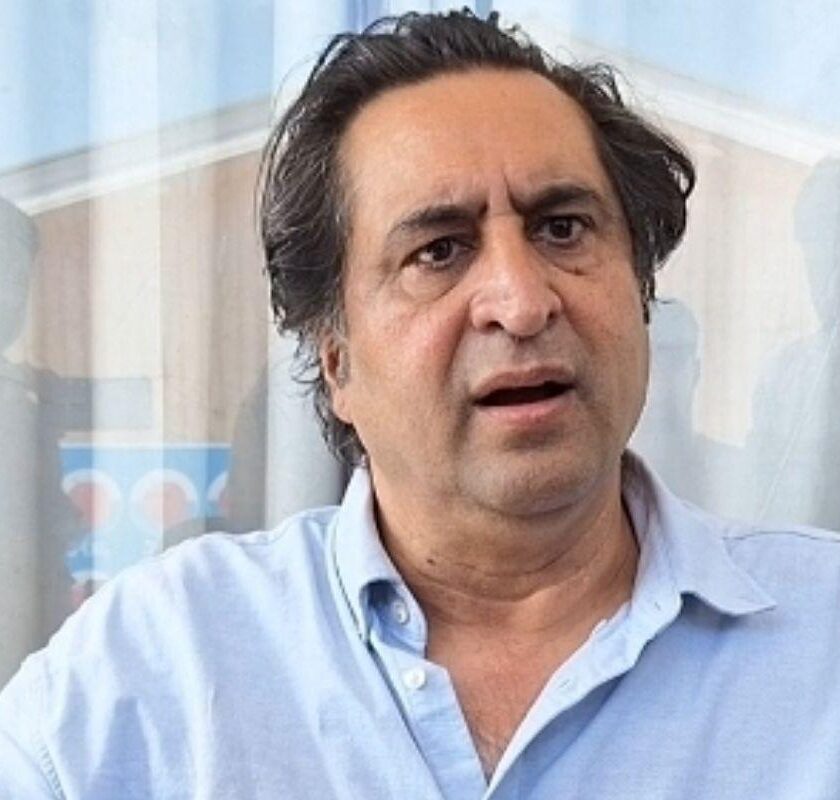
| Jammu & Kashmir People’s Conference (JKPC) | Places Article 370 and constitutional issues ahead of symbolic protests | Has criticised the NC’s protest strategy |
The differing approaches underline the absence of a unified opposition platform on Jammu and Kashmir’s constitutional future.
Political Implications
Opposition Unity Under Strain
The refusal by the PDP and criticism from other regional parties could weaken the National Conference’s effort to present a united political front in New Delhi.
Competing Political Narratives
The National Conference seeks to build momentum around restoring statehood, while the PDP insists that Article 370 remains the central constitutional issue.
These competing narratives may influence public opinion and shape future electoral politics in the region.
Opportunity for the BJP
Political analysts suggest that visible disagreements among opposition parties may allow the Bharatiya Janata Party (BJP) to argue that its political opponents lack a coherent strategy on Jammu and Kashmir.
Public Sentiment: Statehood or Constitutional Restoration?
Public opinion in Jammu and Kashmir continues to reflect diverse priorities.
Many residents support the early restoration of statehood, viewing it as essential for strengthening democratic governance and expanding the powers of the elected government.
Others believe that constitutional issues relating to Article 370 and Article 35A remain equally significant and should not be separated from discussions about the region’s future.
The differing political positions adopted by the NC and PDP mirror these broader public debates.
Why the Delhi Protest Matters
The National Conference’s protest is expected to draw national political attention because it seeks to place Jammu and Kashmir’s statehood demand before Parliament, national opposition parties and the wider public.
Support from the Congress and CPI(M) could broaden the issue beyond regional politics.
However, the absence of the PDP and the Jammu and Kashmir People’s Conference is likely to raise questions about the opposition’s ability to build a common constitutional platform.
The Road Ahead
Mehbooba Mufti’s decision to stay away from the National Conference’s Delhi protest reflects more than a disagreement over political tactics—it highlights a fundamental divergence over the priorities of Jammu and Kashmir’s constitutional movement.
For the National Conference, restoring statehood represents the most immediate constitutional objective capable of strengthening democratic governance. For the PDP, any movement that does not simultaneously pursue the restoration of Article 370 and Article 35A, alongside broader political demands, risks falling short of addressing the constitutional changes introduced in 2019.
As regional parties continue to pursue different political strategies, the challenge of forging a unified opposition agenda remains significant. The success of the Delhi protest may therefore be judged not only by the attention it attracts but also by whether it can revive broader political consensus on Jammu and Kashmir’s constitutional future.
Editor’s Note: The restoration of Article 370 and Article 35A remains a political demand advanced by several regional parties. The Supreme Court of India, in its December 2023 judgment, upheld the constitutional validity of the 2019 changes and did not direct the restoration of these provisions. The Union Government has repeatedly stated that statehood for Jammu and Kashmir will be restored at an appropriate time, but no formal timeline has been announced.