Mehbooba Mufti’s Unity Call Meets Omar Abdullah’s Caution: Can Jammu & Kashmir Overcome Political Rivalries?
By: Javid Amin | 02 June 2026
Ladakh’s United Voice Has Become a Mirror Reflecting Jammu & Kashmir’s Political Fragmentation
In politics, symbolism often matters as much as substance.
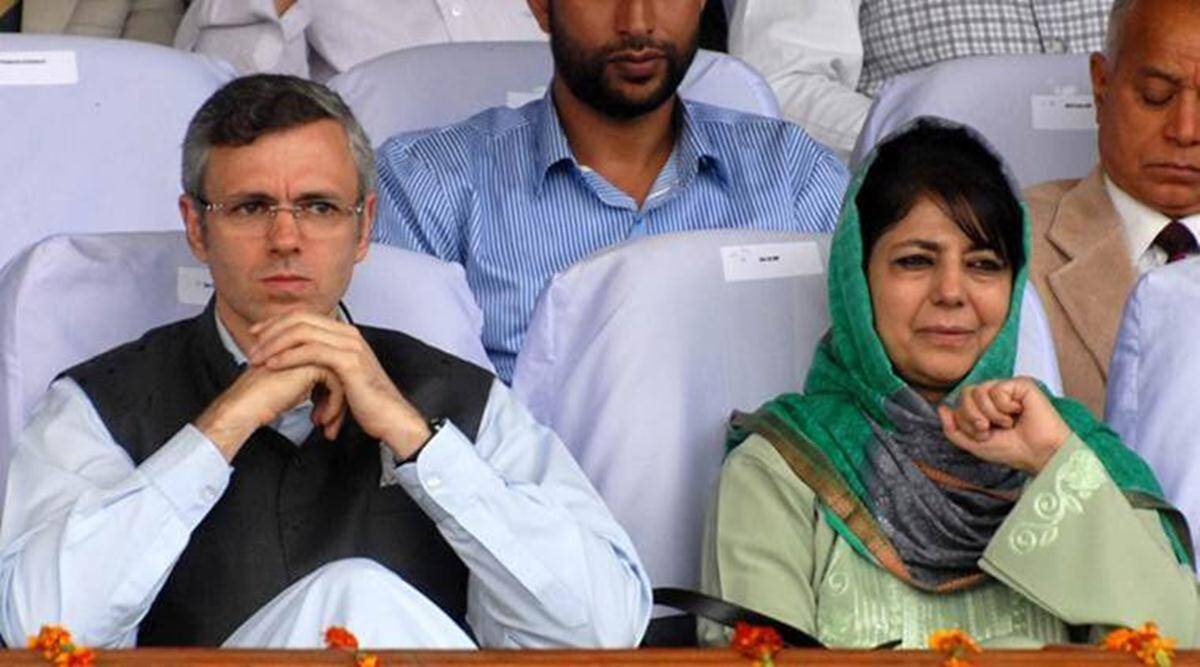
That is why the recent exchange between former Chief Minister Mehbooba Mufti and Chief Minister Omar Abdullah has generated attention far beyond a routine political disagreement.
At the heart of the debate lies a simple but powerful question:
Can Jammu & Kashmir’s political leadership set aside decades of rivalry to pursue common regional interests?
Mehbooba Mufti believes it should.
Omar Abdullah appears less convinced.
Their latest exchange has exposed the enduring mistrust between the region’s two principal mainstream political parties — the People’s Democratic Party (PDP) and the National Conference (NC) — at a time when many citizens are increasingly demanding a united political approach on issues affecting Jammu and Kashmir’s future.
Mehbooba Mufti’s Appeal: Learn From Ladakh
The controversy began when Mehbooba Mufti called on mainstream political parties in Jammu and Kashmir to draw lessons from Ladakh.
Her argument was straightforward.
In Ladakh, organizations representing diverse political, social, religious and regional interests managed to build a common platform to engage with New Delhi on issues such as constitutional safeguards, governance reforms, local empowerment and statehood-related concerns.
Despite ideological differences, Ladakh’s civil society groups and political stakeholders largely projected a united voice before the Centre.
Mehbooba suggested that Jammu and Kashmir’s leaders should consider a similar approach.
According to her, fragmented political messaging weakens the region’s bargaining position and reduces its ability to effectively advocate for issues such as:
- Restoration of statehood.
- Constitutional safeguards.
- Democratic rights.
- Protection of land and employment interests.
- Greater political representation.
Her outreach was widely interpreted as an attempt to initiate broader political cooperation among mainstream parties.
Omar Abdullah’s Response: Cooperation Has Limits
Omar Abdullah’s response was notably cautious.
While he did not outright reject the idea of collective engagement on public issues, his reaction reflected deep reservations about the political context in which the proposal was made.
The Chief Minister’s guarded position suggested that cooperation cannot simply be declared through public appeals while longstanding political disagreements remain unresolved.
For many observers, Omar’s response highlighted a reality that has shaped Jammu and Kashmir politics for decades:
The rivalry between the National Conference and the PDP is not merely electoral; it is deeply rooted in competing political narratives, leadership styles, and historical grievances.
As a result, even proposals framed around common interests often become entangled in questions of trust and political intent.
The Larger Message Behind the Exchange
Beyond the personalities involved, the episode reveals a broader challenge facing Jammu and Kashmir’s political landscape.
On many major issues, there is actually considerable overlap in public positions.
Most mainstream parties support:
- Restoration of full statehood.
- Strengthening democratic institutions.
- Protection of regional interests.
- Greater political participation.
- Economic development and employment opportunities.
Yet agreement on objectives has rarely translated into sustained political cooperation.
The latest exchange demonstrates how difficult it remains for rival parties to move from acknowledging shared concerns to building a shared political strategy.
Why Ladakh’s Example Resonates
The comparison with Ladakh has gained traction because many residents of Jammu and Kashmir have closely followed developments there.
The coordinated efforts of organizations such as the Leh Apex Body (LAB) and the Kargil Democratic Alliance (KDA) have often been cited as examples of how diverse stakeholders can work together despite differences.
While Ladakh’s political context is distinct from Jammu and Kashmir’s, the perception among many citizens is that unity has allowed Ladakh’s representatives to maintain consistent engagement with the Union Government.
Whether or not one agrees with that assessment, the comparison has created a powerful public narrative:
A united voice attracts attention. A divided voice struggles to sustain momentum.
This perception has increasingly influenced public discussions across the region.
Public Sentiment: Frustration With Political Fragmentation
Among ordinary citizens, reactions to the exchange have reflected a growing sense of frustration.
Many people are less interested in party rivalries than in outcomes.
Their concerns revolve around:
- Employment opportunities.
- Economic growth.
- Administrative accountability.
- Political rights.
- Restoration of democratic institutions.
- Long-term governance stability.
From this perspective, continued political confrontation among mainstream parties appears increasingly disconnected from public expectations.
For a significant section of the population, the question is no longer who receives credit for an initiative but whether meaningful progress is being achieved.
The Centre’s Advantage in a Divided Political Landscape
Political analysts often argue that divisions among regional stakeholders strengthen the negotiating position of the Centre.
When multiple parties pursue separate strategies, New Delhi can engage with each actor individually rather than responding to a consolidated regional position.
This does not automatically determine policy outcomes, but it can affect political leverage.
A fragmented opposition or divided regional leadership generally finds it harder to generate sustained pressure on issues requiring broad consensus.
That reality partly explains why advocates of political unity continue to emphasize coordinated engagement despite persistent differences.
The Credibility Challenge for Mainstream Parties
Another risk emerging from the current situation concerns public confidence.
Both the PDP and the National Conference frequently emphasize the importance of protecting the rights and aspirations of the people of Jammu and Kashmir.
However, critics argue that repeated calls for unity lose credibility when they are followed by familiar political confrontations.
For younger voters in particular, there is growing impatience with politics that appears dominated by historical rivalries rather than future-oriented solutions.
The challenge for mainstream parties is therefore not merely electoral.
It is also about demonstrating that political competition does not prevent cooperation on issues of wider public interest.
Expert Analysis: Shared Goals, Separate Paths
The exchange between Mehbooba Mufti and Omar Abdullah illustrates a recurring paradox in Jammu and Kashmir politics.
There is broad agreement on many aspirations.
There is far less agreement on how those aspirations should be pursued and who should lead the process.
Mehbooba’s outreach sought to frame unity as a political necessity.
Omar’s response reflected concerns that unity cannot be built without trust.
Both positions carry political logic.
Yet the larger question remains unresolved:
Can Jammu and Kashmir’s mainstream parties develop issue-based cooperation while continuing to compete politically?
The answer may determine the effectiveness of future efforts related to statehood, constitutional safeguards, governance reforms and regional representation.
Conclusion: Unity Desired, Rivalries Endure
The latest exchange has revealed a fundamental tension in Jammu and Kashmir’s politics.
Public aspirations increasingly point toward collective action.
Political realities continue to pull leaders in different directions.
Mehbooba Mufti’s appeal and Omar Abdullah’s cautious reply have highlighted that while the language of unity is widely accepted, the practice of unity remains elusive.
Until the region’s major political actors find a way to separate common interests from partisan competition, Jammu and Kashmir may continue to witness a familiar pattern: shared goals pursued through divided strategies.
And in politics, divided strategies rarely produce unified outcomes.