J&K Cloudbursts Trigger Flash Floods in Doda, Kishtwar and Poonch: Roads Blocked, Villages Cut Off as Extreme Weather Strikes Again
By: Javid Amin | 02 June 2026
Three cloudbursts in a single day expose the growing vulnerability of Jammu & Kashmir’s mountainous districts to extreme weather events
Heavy rainfall and a series of cloudbursts triggered flash floods across Jammu & Kashmir’s Doda, Kishtwar and Poonch districts, disrupting transportation networks, damaging infrastructure and raising fresh concerns over the region’s increasing exposure to climate-driven disasters.
The incidents occurred amid intense rainfall that lashed several parts of the Union Territory, sending torrents of water, mud and debris rushing through mountain streams and low-lying settlements. While authorities confirmed that no major casualties were reported in the cloudburst-hit locations, the destruction caused by flash floods and road blockades once again highlighted the fragile nature of the Himalayan region.
Emergency teams, including disaster response personnel and district authorities, were rushed to affected areas as restoration work began on damaged roads and disrupted public infrastructure.
What Happened: Three Cloudbursts, Multiple Flash Floods
According to official reports, two cloudbursts struck Kishtwar district on Tuesday, one in the Gahan area of Sarthal and another in Machhipal. A third cloudburst was reported in the Thathri area of Doda district, triggering sudden flash floods and debris flow across several localities.
In addition, heavy rainfall led to flash flooding in parts of Poonch district, particularly in the Sabzian-Ghorayank belt of Mandi, where large amounts of debris were deposited near residential and public areas.
The cloudbursts transformed normally manageable mountain streams into destructive torrents within minutes, carrying rocks, mud and uprooted vegetation downhill and overwhelming local drainage systems.
For residents living near seasonal nallahs and stream channels, the event served as a reminder of how quickly weather conditions can turn dangerous in the Himalayan terrain.
Kishtwar Bears the Brunt of the Disaster
Among the affected districts, Kishtwar witnessed the most widespread disruption.
Officials reported that flash floods accompanied by heavy debris flow impacted several stretches, including:
- Vrikshshala–Trofik Road
- Vrikshshala Zero Point
- Machhipal
- Saroor area
- Sarthal village road
- Drabshalla-connected routes
Large volumes of mud and boulders were deposited on roads, effectively cutting off movement and isolating some habitations. Several vehicles were unable to move through blocked stretches, while residents reported water entering nearby settlements.
District authorities immediately deployed earth-moving machinery and restoration teams. Officials from road agencies and local administration worked through the day to clear debris and restore connectivity.
Authorities also issued public advisories urging residents to avoid rivers, streams and vulnerable mountain slopes as rainfall continued in the region.
Doda Faces Flooding and Highway Disruptions
In Doda district, the cloudburst struck the Thathri area, sending flash floods through parts of the town and adjoining settlements.
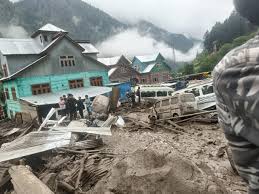
Floodwaters entered residential properties, forcing authorities to relocate some families to safer locations. Several parked vehicles became trapped under debris and sludge as water surged through streets and market areas.
Mudslides and debris accumulation also affected road infrastructure, including stretches passing through the busy Thathri market zone. The disruption created significant challenges for commuters and local traders.
The incident revived memories of previous extreme weather events in Doda, a district that has repeatedly witnessed flash floods, landslides and cloudburst-related disasters in recent years.
Poonch Experiences Flooding in Low-Lying Areas
Although the damage in Poonch appeared less severe compared to Doda and Kishtwar, heavy rainfall still caused flooding in vulnerable low-lying pockets.
The Sabzian-Ghorayank area in Mandi subdivision witnessed sudden water flow and debris accumulation, leading to temporary disruption of movement and local activities. Officials confirmed that no major loss of life or extensive property damage had been reported from the area.
Police personnel and local administration teams remained on alert, helping residents navigate affected routes and monitoring water levels in nearby streams.
Massive Rescue and Restoration Efforts Underway
Following the incidents, emergency response mechanisms were activated across affected districts.
Authorities deployed:
- District administration teams
- Police personnel
- Disaster response units
- Road restoration crews
- Heavy machinery operators
JCB excavators and road-clearing equipment were mobilised to remove debris and reopen blocked roads. Officials also began preliminary assessments to determine infrastructure losses and identify areas requiring urgent intervention.
Senior officials monitored the situation closely as weather forecasts continued to indicate the possibility of additional rainfall.
Why Cloudbursts Are Becoming a Serious Threat in Jammu & Kashmir
A cloudburst is an extremely intense rainfall event occurring over a small geographical area within a short duration. According to meteorological standards, rainfall exceeding 100 millimetres in about an hour is generally classified as a cloudburst.
Mountainous regions such as Doda, Kishtwar and Poonch are particularly vulnerable because steep slopes accelerate water flow, increasing the likelihood of flash floods and landslides.
Experts studying Himalayan weather patterns have repeatedly warned that rising temperatures are increasing atmospheric moisture-holding capacity. As a result, rainfall is becoming more concentrated, leading to short-duration but extremely intense precipitation events.
The Himalayas are increasingly witnessing weather extremes where prolonged dry spells are followed by sudden heavy downpours, creating ideal conditions for cloudbursts and flash floods.
Climate Change and the Himalayan Risk Factor
Environmental researchers view the latest incidents as part of a broader pattern unfolding across the Himalayan belt.
Over the past decade, Jammu & Kashmir, Himachal Pradesh and Uttarakhand have experienced a growing number of:
- Cloudbursts
- Flash floods
- Landslides
- Glacier-fed flood events
- Extreme rainfall episodes
The Chenab Valley region, which includes Doda and Kishtwar, is particularly susceptible because of its steep topography, fragile geology and expanding human settlements along mountain slopes and river corridors.
Climate scientists warn that unless infrastructure planning, watershed management and disaster preparedness improve significantly, such events could become more damaging in the years ahead.
Impact on Tourism, Transport and Local Economy
The timing of the disaster is significant.
Summer marks one of the busiest travel seasons in Jammu & Kashmir, with thousands of tourists moving across mountain districts and pilgrimage routes.
Road blockades in the Chenab Valley not only disrupt local transportation but can also affect:
- Tourism movement
- Agricultural supply chains
- Essential commodity transport
- Emergency healthcare access
- Rural livelihoods
For residents of remote villages, even a temporary road closure can mean delayed medical services, interrupted supplies and economic losses.
Lessons From Recent Disasters
The latest cloudbursts come less than a year after devastating weather-related disasters in parts of Jammu & Kashmir that caused significant casualties and infrastructure damage. Previous incidents in Kishtwar and Doda demonstrated how rapidly flash floods can overwhelm mountain communities.
Disaster management experts argue that future resilience will depend on:
- Better weather forecasting
- Community-level early warning systems
- Hazard mapping of vulnerable zones
- Strengthened drainage networks
- Climate-resilient infrastructure
- Public awareness campaigns
Such measures can help reduce risks even when extreme weather events cannot be prevented.
The Road Ahead
For now, authorities are focused on restoring connectivity, assessing damages and ensuring the safety of affected residents.
The absence of major casualties in the latest incidents is being viewed as a positive outcome, but the events have once again underscored the growing threat posed by extreme weather across Jammu & Kashmir.
As climate uncertainties deepen and weather patterns become increasingly unpredictable, districts such as Doda, Kishtwar and Poonch are likely to remain on the frontline of the Himalayan climate challenge.
The latest cloudbursts may have passed, but they serve as another warning that disaster preparedness, climate adaptation and resilient infrastructure can no longer remain optional—they have become essential for safeguarding lives and livelihoods in the mountains of Jammu & Kashmir.