Shabir Shah Arrested in 30-Year-Old Case: NIA’s Move Signals Continued Crackdown in Kashmir
By: Javid Amin | 18 April 2026
A Veteran Separatist Leader Back in Custody
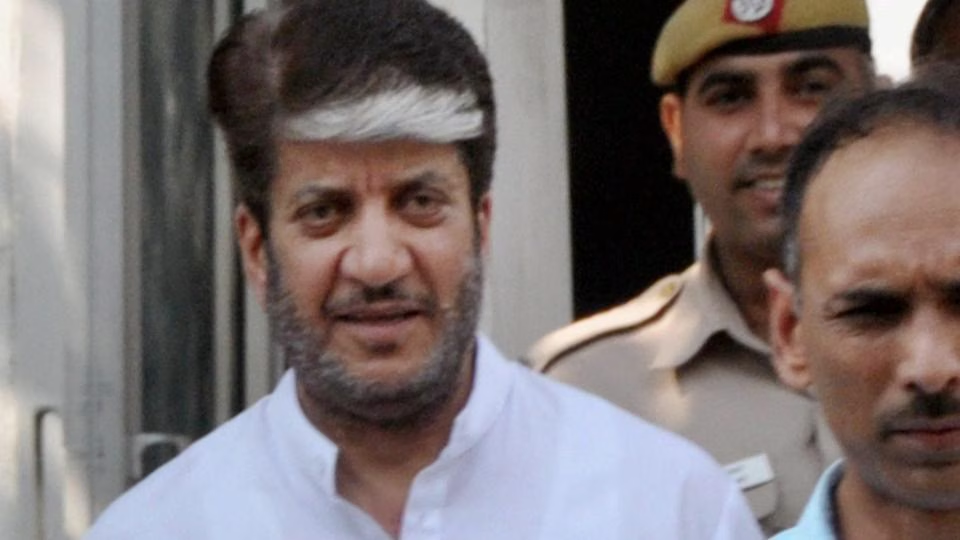
Senior separatist leader Shabir Shah has once again been taken into custody, this time by the National Investigation Agency, in connection with a terror-related case dating back to 1996.
A special court granted the agency 10 days of custodial remand, allowing investigators to interrogate Shah over allegations tied to militancy-era violence and terror financing.
The arrest comes shortly after Shah had secured bail in a separate case, marking a swift and significant legal turn.
The Case: A 1996 FIR Revisited
At the center of the latest development is a case originally registered at Shergarhi Police Station in Srinagar on July 17, 1996.
Key Allegations:
- Involvement in attacks on police personnel during peak militancy
- Links to activities supporting insurgency networks
- Possible financial and logistical backing to banned outfits
The case was recently re-registered by the NIA, reflecting a broader push to revisit and prosecute legacy militancy cases under contemporary legal frameworks, including the Unlawful Activities (Prevention) Act.
Who Is Shabir Shah? A Contested Political Figure
Shabir Shah has been one of the most prominent—and polarizing—figures in Kashmir’s political landscape for decades.
Political Identity:
- Senior नेता within the All Parties Hurriyat Conference
- Long-time advocate of Kashmir’s separation from India
- Known for mobilizing political dissent and boycott campaigns
Supporters often refer to him as “Kashmir’s Nelson Mandela,” citing his prolonged periods in jail. Critics, however, view his role through the lens of alleged links to militancy and separatist networks.
Timeline: Shabir Shah’s Arrests and Political Trajectory
1980s – Emergence of a Separatist Voice
- Enters political activism during a period of rising unrest in Kashmir
- Faces early detentions under preventive laws
1990s – Militancy Peak and Legal Cases
- 1996: FIR registered linking him to militancy-related violence
- Repeated detentions under the Public Safety Act during peak insurgency
2000s – Consolidation of Influence
- Continues political activities despite intermittent arrests
- Emerges as a key figure within the Hurriyat Conference
2010s – Heightened Scrutiny and Arrests
- 2014: Calls for boycott of Assembly elections
- 2017: Arrested by the Enforcement Directorate in a terror funding case
- Lodged for extended periods in Tihar Jail
2020s – Intensified Crackdown
- Faces multiple detentions under UAPA and PSA amid a wider clampdown
- March 2026: Granted bail in one case by the Supreme Court
- April 2026: Re-arrested by NIA in reopened 1996 case; remanded to custody
Legal Framework: Why Custody Matters
Cases under UAPA are legally stringent, often allowing extended detention periods for investigation.
The 10-day custody granted to the NIA is significant because it:
- Enables detailed interrogation
- Allows reconstruction of decades-old events
- May lead to additional charges or expanded investigations
Legal experts note that reopening such cases reflects a shift toward retrospective accountability.
Part of a Larger Security Strategy
Shah’s arrest is not an isolated development. It aligns with a broader policy approach in Jammu & Kashmir that includes:
- Crackdowns on separatist networks
- Bans on organizations like Jamaat-e-Islami
- Action against institutions allegedly linked to radicalization
Authorities maintain that these steps are aimed at dismantling ecosystems that have historically supported unrest.
Political and Public Reactions
Government Perspective
Officials frame the arrest as a lawful continuation of pending investigations, emphasizing accountability for past violence.
Supporters’ View
Shah’s supporters are likely to see the move as:
- Politically motivated
- Targeting of dissenting voices
- A continuation of long-standing pressure on separatist leaders
Public Sentiment
In Kashmir, reactions are expected to remain mixed—reflecting the region’s deeply layered political realities.
What Makes This Arrest Significant
This development stands out for several reasons:
- Historical Depth: The case dates back nearly 30 years
- Timing: Comes soon after Shah secured bail in another case
- Symbolism: Targets one of the last prominent separatist figures
- Policy Signal: Reinforces the Centre’s long-term crackdown strategy
What Happens Next?
The immediate focus will be on:
- NIA’s findings during the 10-day custody
- Possible expansion of charges
- Court proceedings following interrogation
Given the complexity and age of the case, legal proceedings could be prolonged.
Conclusion: Law, Legacy, and Kashmir’s Political Future
Shabir Shah’s arrest underscores a critical shift in how the state is approaching Kashmir’s past.
By reopening decades-old cases, authorities are signaling that historical militancy-era actions remain subject to legal scrutiny.
At the same time, the move raises broader questions about:
- Political space for dissent
- The future of separatist leadership
- The balance between security and civil liberties
For now, Shah’s detention is more than just another arrest—it is a continuation of a long, complex chapter in Kashmir’s political history.