Rajasthan School Entry and Photography Rules: Child Safety or a New Barrier to Public Scrutiny?
By: News Desk | 16 Aug 2026
Rajasthan’s reported restrictions on unauthorised entry, photography, videography and live streaming inside government schools have triggered a larger debate: where should child privacy end and public accountability begin?
JAIPUR: A new controversy is emerging around government schools in Rajasthan after restrictions were reported on unauthorised entry, photography, videography, interviews and live streaming inside school premises.
The stated reason is straightforward: protect children, preserve privacy and maintain a secure educational environment.
But the political timing has added another layer to the debate.
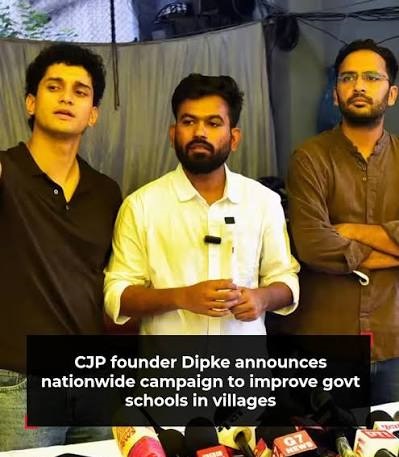
The restrictions have surfaced alongside the “School Thik Karo” campaign associated with the Cockroach Janta Party (CJP), which has been visiting or planning to visit government schools to document infrastructure deficiencies and raise questions about the condition of public education.
That has created an uncomfortable collision between two legitimate public interests.
On one side is the government’s responsibility to protect children from unauthorised access, recording and publication.
On the other is the public’s interest in knowing whether government-funded schools have functioning classrooms, toilets, drinking water, laboratories, boundary walls and safe buildings.
The question, therefore, is not simply whether schools should have security rules.
They should.
The harder question is:
Can child-protection rules be implemented in a way that protects students without unintentionally preventing legitimate scrutiny of public infrastructure?
What the Reported Rajasthan Guidelines Seek to Restrict
According to the reported instructions, outsiders would not be permitted to enter government school premises without prior permission from the principal or authorised school authority.
Authorised government officials would be exempt from the ordinary visitor restriction, while visitors would reportedly be required to record their details in the school visitor register.
The reported framework also places controls on movement inside the campus.
Visitors entering sensitive areas—including classrooms, laboratories, libraries, hostels, playgrounds and toilets—would have to be accompanied by the principal, a teacher or another authorised official.
The reported restrictions extend beyond physical access.
Photography, videography, interviews, audio recording and live streaming involving students or teachers would require prior written permission.
The stated objective is to prevent unauthorised collection and dissemination of personal information and protect children from potential misuse of images or recordings.
Why Schools Need Such Controls
A government school is not the same as a public road or government office.
Children are present.
Many are minors.
They cannot be treated as ordinary subjects for unrestricted photography or social-media content.
A stranger entering classrooms and recording children without oversight can create genuine safety and privacy risks.
The concern becomes even more serious when images are uploaded to social-media platforms, where photographs and videos can be copied, manipulated, redistributed or taken out of context.
The National Commission for Protection of Child Rights (NCPCR) has official school-safety guidance addressing the protection and safety of children in educational institutions. Its guidance also recognises risks associated with children’s personal information and online exposure.
So the underlying principle behind controlling access to classrooms and restricting the recording of children is neither unusual nor inherently political.
The controversy begins with how far those controls are extended.
Child Privacy Is Not the Same as Government Secrecy
This is where the debate needs a careful distinction.
There are at least three different things that can be photographed or recorded at a government school:
1. Children
The strongest privacy protections should apply here.
Photographing identifiable children without proper authorisation can create obvious privacy and safeguarding concerns.
2. Teachers and staff
Teachers also have legitimate privacy and safety interests, although their status as public employees may raise different questions when they are performing official duties.
3. Public infrastructure
A broken classroom wall, unusable toilet, damaged roof, missing furniture or unsafe boundary wall is fundamentally different from filming a child.
It is public infrastructure funded through public money.
That distinction should be at the centre of any implementation policy.
A rule designed to protect students should not automatically be interpreted as a prohibition on documenting every visible defect in a public building.
The “School Thik Karo” Campaign Changes the Political Context
The timing matters because CJP’s “School Thik Karo” campaign is explicitly built around inspecting government schools.
Current reporting says CJP founder Abhijeet Dipke has launched the campaign to highlight problems in state-run schools, with party members also carrying out school-related inspections in Rajasthan.
The campaign’s broader argument is that government schools should be inspected, deficiencies documented and authorities pressured to improve facilities.
CJP’s political activity therefore creates an obvious point of friction with a system requiring prior permission for outsiders to enter school premises and prior approval for photography or video.
The party may see the restrictions as an obstacle to independent documentation.
The government can argue that a political organisation cannot simply walk into classrooms containing children and begin filming without safeguards.
Both concerns can exist simultaneously.
The Bigger Question: Who Gets to Inspect a Government School?
This is the heart of the controversy.
Government schools are public institutions.
They are financed by taxpayers and government budgets.
Citizens therefore have a legitimate interest in their condition.
But public ownership does not mean unlimited public access.
For example, a citizen cannot reasonably claim an unrestricted right to enter a school classroom during teaching hours merely because the building is publicly funded.
A school has:
- children;
- teachers;
- examinations;
- confidential records;
- laboratories;
- staff areas;
- toilets and other sensitive spaces;
- security considerations.
A reasonable access-control system is therefore entirely defensible.
The real issue is whether there is a transparent mechanism through which journalists, elected representatives, civil-society groups, parents and legitimate researchers can obtain access.
If permission is granted fairly, the rule protects children without destroying accountability.
If permission is routinely denied whenever someone intends to document deficiencies, the same rule could become a barrier to scrutiny.
Could the Rules Be Used to Hide Poor Infrastructure?
This is the political allegation being raised around the controversy.
Opposition voices, including Rajasthan Congress chief Govind Singh Dotasra, have criticised the BJP-led government over education-related issues and accused the administration of attempting to avoid scrutiny rather than address shortcomings.
However, the allegation that the reported restrictions were specifically introduced to prevent CJP from exposing poor school infrastructure would require evidence of governmental intent.
Timing alone is not proof of motive.
That distinction is important for responsible journalism.
A government circular may have a legitimate child-safety purpose even if it has political consequences.
Conversely, a legitimate child-safety rule could still be implemented selectively or excessively.
The appropriate journalistic test is therefore not:
“Did the government issue the rule because of CJP?”
It is:
“Does the rule contain reasonable safeguards that allow legitimate public-interest inspection while protecting children?”
What Does NCPCR Guidance Actually Tell Us?
The NCPCR maintains official school-safety guidance covering the protection and security of children in schools. Its published material includes a Manual on Safety and Security of Children in Schools and separate school-safety guidelines.
The broader child-safety framework supports several principles relevant to this controversy:
- Schools should control access to protect children.
- Children’s personal information requires protection.
- Schools must consider risks arising from online exposure.
- Adults working around children must operate within appropriate safeguards.
- Child safety cannot be compromised in the name of convenience.
These principles provide a reasonable foundation for requiring visitors to register and restricting unsupervised access to sensitive areas.
But an important editorial caveat remains:
NCPCR guidance is not automatically the same thing as a Rajasthan-specific statutory prohibition.
A state government circular, departmental order or administrative instruction needs to be examined on its own legal authority and wording.
“In Loco Parentis”: What Does It Mean?
The principle of in loco parentis means, broadly, that an institution or authority assumes certain responsibilities normally exercised by parents while a child is under its care.
In a school environment, this principle supports the duty to protect students from foreseeable harm.
That includes protection against:
- physical danger;
- abuse;
- harassment;
- inappropriate access;
- exploitation;
- unauthorised recording;
- misuse of personal information.
But in loco parentis does not mean that a school acquires unlimited power to restrict every form of public inquiry.
The authority remains subject to law, constitutional principles and administrative fairness.
That distinction is particularly important when the school itself is a government institution.
Can a Principal Legally Refuse Entry?
In principle, yes, subject to the applicable rules and authority.
A school principal has a legitimate responsibility to maintain discipline and protect students.
An unidentified stranger who wants to enter classrooms and interact with children cannot reasonably demand unrestricted access.
A principal should be able to refuse entry where there is a genuine security, privacy or child-safety concern.
But the power should not become arbitrary.
A fair system should distinguish between:
“I want to enter a classroom and film children.”
and
“I am a journalist/citizen representative seeking to inspect the condition of the school building.”
Those activities present different risks.
A sensible policy should therefore create different procedures for different categories of visitors.
What About Journalists?
This is where the policy could become contentious.
Journalists have a public-interest role in reporting on government institutions.
But journalism does not create an automatic right to enter a school and record children.
A responsible reporter should normally:
- identify themselves;
- explain the purpose of the visit;
- obtain appropriate permission;
- avoid identifying children unnecessarily;
- avoid filming sensitive areas;
- protect children’s identities where required;
- avoid disrupting classes;
- comply with reasonable security instructions.
At the same time, the administration should not use child privacy as a blanket excuse to prevent journalists from examining public infrastructure and official service delivery.
A balanced system could allow controlled access under supervision.
What About Political Parties and Activists?
Political parties face an even more complicated situation.
A political organisation entering a government school to document conditions is potentially engaging in political advocacy.
That does not automatically make the activity illegitimate.
But it does mean that schools should not become campaign venues.
A party cannot reasonably demand unrestricted access to classrooms containing children simply because it wants to expose government failures.
At the same time, authorities should not selectively prevent one political group from inspecting public infrastructure while allowing ruling-party representatives unrestricted access for publicity.
The principle should be:
One rule for everyone.
That means the same access procedure should apply to:
- ruling parties;
- opposition parties;
- journalists;
- NGOs;
- activists;
- researchers;
- citizen groups;
- elected representatives.
The Infrastructure Question Cannot Be Silenced
There is another side to this debate that deserves equal attention.
If a government school genuinely has:
- leaking roofs;
- broken toilets;
- unsafe classrooms;
- damaged boundary walls;
- inadequate drinking water;
- poor electrical systems;
- insufficient desks;
- unusable laboratories;
then the answer should be to fix the problem, not merely control who photographs it.
Public accountability and child protection are not inherently contradictory.
In fact, they can reinforce each other.
A photograph of a collapsed wall can help trigger repairs.
A video showing an unusable toilet can draw administrative attention.
A report documenting unsafe infrastructure can potentially prevent an accident.
The problem arises only when documentation includes identifiable children without appropriate safeguards.
The Best Solution: Photograph the Building, Protect the Child
There is a straightforward middle path.
Allow controlled infrastructure documentation
A visitor with permission could photograph:
- classrooms;
- roofs;
- walls;
- toilets;
- laboratories;
- furniture;
- playgrounds;
- drinking-water facilities;
- electricity infrastructure.
Restrict identifiable children
Children should not be unnecessarily photographed or filmed.
Prohibit interviews without consent and permission
Children should not be approached for political or media interviews without appropriate safeguards.
Supervise visitors
An authorised teacher or official can accompany visitors.
Maintain a visitor register
This creates accountability on both sides.
Provide an appeal mechanism
If permission is denied, there should be a clear higher authority to which the applicant can appeal.
This would make the policy much more defensible.
Why Blanket Restrictions Can Become Counterproductive
A blanket ban on photography or video can create an unintended problem.
Imagine a school has a dangerous building defect.
A citizen sees it.
The citizen cannot enter without permission.
The principal refuses permission.
The citizen cannot document the problem.
The issue remains invisible.
That would be an unfortunate outcome if the purpose of the policy is genuinely to improve school safety.
A better policy would distinguish between privacy-sensitive documentation and public-interest infrastructure documentation.
Transparency Is Also a Safety Tool
This point is often overlooked.
Transparency is not necessarily the enemy of child protection.
It can actually improve it.
Unsafe buildings, broken toilets, contaminated drinking water or exposed electrical wiring are themselves threats to children.
Therefore, documenting infrastructure problems can serve a child-safety purpose.
The challenge is to ensure that the process does not expose children while documenting the problem.
What Should the Rajasthan Government Clarify?
If the reported circular is indeed in force, the government should publish the full order and clarify several points.
1. What is the exact legal authority?
Which department issued it?
Under which law, rule or administrative power?
2. Does it apply to journalists?
If yes, what is the permission procedure?
3. Does it apply to elected representatives?
Are MLAs, MPs and local representatives subject to the same procedure?
4. What about parents?
Can parents enter schools freely during non-teaching hours?
5. What about NGOs and researchers?
Is there a formal approval process?
6. Can public infrastructure be photographed?
This is perhaps the most important clarification.
7. What happens if permission is refused?
Is there an appeal mechanism?
8. Does the rule prohibit filming buildings or only identifiable persons?
The distinction should be explicit.
9. What are the penalties?
A circular should clearly state what constitutes a violation and what legal or administrative consequences follow.
10. Is the restriction temporary or permanent?
If it is connected to a specific security concern, the duration should be stated.
A Test for the Government—and for CJP
The government has a legitimate responsibility to protect children.
CJP and other political groups have a legitimate political interest in highlighting government-school conditions.
But neither side should be allowed to turn children into political content.
The government should not use children as a shield against scrutiny.
Political organisations should not use children as props for political campaigning.
That should be the red line.
What CJP Can Do Without Compromising Child Privacy
If the campaign’s objective is genuinely to audit infrastructure, there are several ways to do it responsibly.
The organisation could request:
- official school inspection reports;
- building-safety assessments;
- repair expenditure records;
- tender documents;
- photographs from official records;
- school infrastructure data;
- attendance and facility statistics;
- district-wise maintenance budgets;
- information under the RTI Act;
- supervised inspection access.
It can also document infrastructure without recording identifiable children where permission is granted.
That would make its findings harder to dismiss as political theatre.
The RTI Route Remains Important
If access to a school is denied, public-interest groups have another option.
The Right to Information framework can be used to seek documentary information about government schools, subject to the exemptions under the law.
For example, campaigners could seek:
- school-wise repair expenditure;
- sanctioned works;
- completed works;
- pending works;
- building-safety reports;
- toilet availability;
- drinking-water facilities;
- classroom numbers;
- teacher vacancies;
- maintenance allocations.
This approach may actually produce stronger evidence than a social-media video.
A video can show a broken wall.
An official document can establish who was responsible for repairing it, how much money was sanctioned and when the work was supposed to be completed.
The Political Optics Are Unavoidable
Even if the restrictions were issued entirely for child-safety reasons, the timing inevitably creates political questions.
CJP’s “School Thik Karo” campaign is designed around precisely the kind of ground-level inspection that the reported restrictions could make more difficult.
Current reporting confirms that CJP’s campaign has been used to scrutinise government schools and raise questions about school administration and infrastructure.
That does not prove the Rajasthan government introduced restrictions to stop CJP.
But it explains why the controversy has acquired political significance.
In politics, timing creates suspicion—but suspicion is not proof.
That distinction should remain central to responsible reporting.
The Larger Socio-Economic Issue
Government-school infrastructure is not merely an education issue.
It is an economic issue.
Poor school infrastructure disproportionately affects children from families who cannot easily move them to private schools.
A broken toilet may appear to be a small municipal problem.
It is not.
Poor sanitation can affect attendance.
Unsafe classrooms can affect learning.
Lack of digital facilities can widen the technology gap.
Teacher shortages can reduce educational outcomes.
Inadequate laboratories can limit science education.
Poor infrastructure can therefore reproduce socio-economic inequality.
That is why public scrutiny of government schools matters.
But so does protecting the children who use them.
What a Good Policy Would Look Like
The ideal Rajasthan framework should follow a simple principle:
Protect the child, not the problem.
That means:
Protect children from unauthorised photography.
Protect personal information.
Control access to classrooms.
Prevent political activity inside teaching spaces.
But simultaneously:
Allow lawful, supervised inspection of public infrastructure.
Provide a transparent permission mechanism.
Do not selectively deny access based on political affiliation.
Publish infrastructure data proactively.
Use official inspection reports to demonstrate that complaints are being addressed.
That would turn a potentially political controversy into a model of responsible governance.
Final Verdict: Child Protection or Cover-Up?
At this stage, it would be premature to declare that the reported Rajasthan restrictions are either a child-safety measure or a government cover-up.
The child-protection rationale is legitimate.
NCPCR’s school-safety framework provides a clear policy basis for taking school security, children’s privacy and online exposure seriously.
At the same time, the public has a legitimate interest in knowing whether government schools are safe and adequately maintained.
The decisive issue is therefore implementation.
If the rules merely prevent outsiders from entering classrooms, interviewing children or filming students without permission, they are easy to justify.
If they are interpreted to prevent journalists, citizens, elected representatives or activists from documenting the condition of public infrastructure—even through controlled and child-safe procedures—the policy deserves much greater scrutiny.
And if permission is denied selectively to prevent embarrassing facts about government schools from becoming public, that would raise a very different accountability question.
The Bottom Line
Children deserve privacy. Government schools deserve scrutiny. Both principles can coexist.
Rajasthan does not have to choose between child safety and transparency.
The government can protect students while allowing supervised documentation of public infrastructure.
CJP can expose genuine failures without putting children on camera.
Journalists can report on government schools without turning students into political content.
And the administration can demonstrate that its goal is genuinely better schooling by making school-condition data, repair records and infrastructure audits more transparent.
Ultimately, the strongest response to allegations of poor government schools is not to prevent the camera from entering.
It is to make sure there is nothing to hide when the camera does.