Omar Abdullah Challenges BJP on UCC: ‘If You Have the Numbers, Bring It to Parliament’
By: News Desk | 15 September 2026
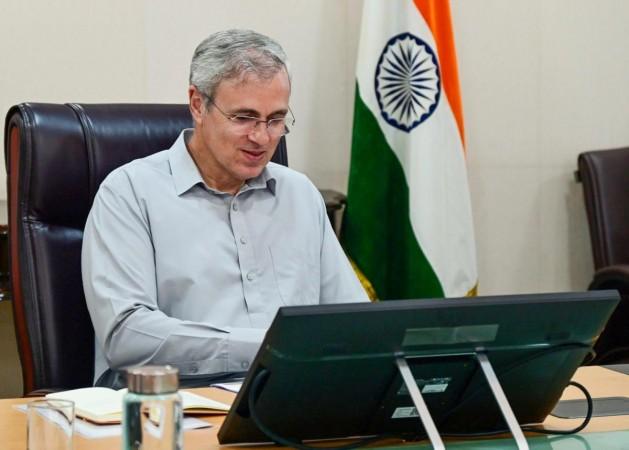
Srinagar: Jammu and Kashmir Chief Minister Omar Abdullah has challenged the BJP-led government to introduce a Uniform Civil Code (UCC) Bill in Parliament if it has sufficient numbers to pass it, questioning the decision to pursue the issue through individual states.
Abdullah’s comments came a day after Union Home Minister Amit Shah said he was confident that the UCC would be implemented in all 21 BJP-led or NDA-governed states before the 2029 Lok Sabha elections.
“If you have the numbers, bring it to Parliament. Why are you doing it separately in different states?” Abdullah said, arguing that a law described as uniform should not operate only in states governed by the BJP or its allies.
His intervention has reopened a much older constitutional and political debate: Should India move towards one common framework for personal laws through a national law, or can states independently adopt their own versions of a UCC?
The answer involves both constitutional law and political strategy.
Omar’s central argument: why call it ‘uniform’ if it is not nationwide?
Abdullah’s criticism focuses on the meaning of the word “uniform”.
If different states enact different versions of a civil code, he argues, the result cannot logically be described as one uniform national system.
He also pointed to differences within the NDA itself. Abdullah specifically cited the Janata Dal (United)’s position regarding implementation in Bihar as evidence that the ruling coalition does not have a single position on the issue.
His challenge is therefore both legislative and political.
If the BJP believes the country needs a common civil code, he argues, the appropriate test is a Bill in Parliament where MPs from across India can debate and vote on it.
He also criticised what he described as an attempt to bring UCC “through the back door”, rather than through an openly debated national legislative process.
But can states legally legislate on UCC-related matters?
This is an important point often lost in the political debate.
The Constitution does not expressly say that only Parliament can legislate on all matters that would form part of a UCC.
Personal-law subjects such as marriage, divorce, infants and minors, adoption, wills, intestacy and succession are largely located in the Concurrent List, meaning both Parliament and state legislatures have legislative competence, subject to constitutional limitations.
That provides the legal foundation for state-level experiments.
The political argument is therefore different from the question of legislative competence.
Omar is essentially arguing that an issue of national uniformity should be settled nationally. That is a political and policy position, rather than a statement that states lack all constitutional authority to legislate in this area.
The state-level UCC experiment is already underway
Uttarakhand became the first state to enact a comprehensive UCC law in 2024 and has since implemented it.
Gujarat subsequently enacted its legislation, while Assam passed its UCC Bill in 2026. Madhya Pradesh also approved its UCC framework in August 2026. Current reporting indicates that Uttarakhand remains the only state where a UCC has been fully implemented, while legislation or approval has advanced in several other states.
Uttarakhand’s official UCC portal shows that the state has continued issuing amendments, rules and administrative orders during 2025 and 2026.
This is why the current dispute is no longer theoretical.
India now has an emerging experiment in which states are developing their own frameworks covering areas such as marriage, divorce, inheritance and registration of certain relationships.
The question is whether this develops into a collection of state-specific models or eventually becomes the basis for a nationwide framework.
Amit Shah’s 2029 target changes the political equation
Shah’s September 2026 announcement has given the debate a new deadline.
He said he was confident that the UCC would be implemented in all 21 NDA-governed states before the 2029 Lok Sabha election.
That does not amount to a national UCC Bill.
Instead, it signals a strategy of expanding the policy through states where the BJP or its coalition partners are in power.
That approach has a practical constitutional advantage: states can legislate within areas falling under their legislative competence.
But it also creates precisely the political question raised by Abdullah.
If different states adopt different provisions or exemptions, how uniform will the resulting legal landscape actually be?
The NDA itself is not completely uniform on the issue
Abdullah’s reference to JD(U) is not without context.
Reports following Shah’s announcement indicate that JD(U) leaders have sought discussions with the Union government, while Bihar Chief Minister Nitish Kumar’s party has expressed reservations about implementing UCC in Bihar. Other NDA partners have also sought consultations or indicated that their positions depend on the details of the proposed framework.
This exposes one of the practical complications of Shah’s 21-state objective.
The BJP may lead the NDA, but the coalition contains regional parties with different electoral constituencies and different positions on personal law, tribal customs and federal autonomy.
Whether those differences can be reconciled will become increasingly important if the Centre seeks rapid expansion of state-level UCC laws.
What exactly would a UCC change?
A Uniform Civil Code generally refers to a common legal framework governing personal civil matters irrespective of religious identity.
The areas commonly associated with UCC include:
- marriage;
- divorce;
- inheritance and succession;
- adoption;
- maintenance;
- guardianship;
- and, depending on the particular legislation, registration requirements for certain relationships.
India currently has a combination of secular statutes and religion-specific personal laws.
The Hindu Marriage Act, Hindu Succession Act, Muslim personal law framework, Indian Christian Marriage Act, Parsi marriage law and other legislation form parts of this complex system.
A UCC would seek to replace or harmonise at least some of those separate rules.
Exactly what gets included, what exemptions are retained and how tribal and customary laws are treated are therefore central questions.
Gender equality is one side of the argument
Supporters of UCC generally present it as a way of creating equal civil rights irrespective of religion.
The BJP has particularly linked UCC with women’s rights and legal equality.
The argument is that a person’s rights in marriage, divorce or inheritance should not vary simply because of their religious identity.
This position has historical roots.
The Supreme Court has repeatedly discussed Article 44 and the possibility of a common civil framework, including in Sarla Mudgal and later judgments. In a 2019 judgment concerning Goa’s civil code, the Supreme Court again noted that Article 44 had remained unimplemented and referred to earlier judgments calling for movement towards a common civil code.
But judicial observations do not themselves enact a UCC.
The power to create such a comprehensive legal framework remains with the legislature.
The other side of the debate is cultural and minority protection
Opponents and critics raise a different concern.
They argue that replacing community-specific personal laws with a single framework could affect religious practices, customary law and minority rights.
Tribal organisations in particular have expressed concerns about the potential impact on customary systems in northeastern and other tribal areas. Parliamentary discussions around UCC have also examined whether tribal communities and certain northeastern states should receive exemptions.
This explains why the debate cannot be reduced simply to “equality versus opposition to reform”.
There are several questions underneath it:
What rights should be made uniform?
Which customs are protected?
Can equality be achieved by reforming existing personal laws rather than replacing them?
What exemptions are constitutionally justified?
How should tribal customary systems be treated?
And perhaps the biggest question:
Who should decide the balance between uniformity and diversity?
The Law Commission’s position has also evolved
The UCC debate has not followed a straight line.
In 2018, the 21st Law Commission issued a consultation paper on Reform of Family Law which said a UCC was “neither necessary nor desirable at this stage”. Instead, it advocated reforming discriminatory provisions within existing personal laws while preserving India’s diversity.
The government later clarified that this was a consultation paper, not a final Law Commission report.
In 2023, the 22nd Law Commission reopened public consultation on UCC, citing the importance and sensitivity of the subject and the passage of time since the earlier consultation.
This history matters because it shows that even within India’s institutional framework, the question has never had a single uncontested answer.
Nehru’s era was not simply a failed UCC project
The supplied comparison between Jawaharlal Nehru and Narendra Modi also needs some historical qualification.
The Nehru government did oversee major reforms of Hindu personal law in the 1950s, including legislation concerning marriage, succession, adoption and guardianship.
But these were Hindu-law reforms, not a partial UCC enacted for all Indians.
The government chose to reform Hindu personal law while leaving Muslim personal law largely outside that legislative project.
The political reasons were complex, involving constitutional principles, religious freedom, social reform, political opposition and the realities of India’s post-Partition environment.
It would therefore be too simplistic to say that Nehru “failed to implement the UCC”. His government pursued a different legislative strategy: reform within particular personal-law systems.
Shah Bano changed the political debate
The 1985 Mohd. Ahmed Khan v. Shah Bano Begum judgment brought UCC back into national political debate.
The Supreme Court awarded maintenance to Shah Bano under Section 125 of the Criminal Procedure Code and referred to the constitutional aspiration for a Uniform Civil Code.
The Rajiv Gandhi government subsequently enacted the Muslim Women (Protection of Rights on Divorce) Act, 1986, which changed the legal framework for divorced Muslim women’s maintenance.
The episode became a major political flashpoint and strengthened the BJP’s argument that the Congress government had retreated from judicially expressed concerns about uniform civil law.
It is more accurate to describe the episode as a conflict between judicial reasoning, Parliament’s legislative response and competing interpretations of minority rights than simply as the government “backtracking under pressure”.
Vajpayee kept UCC in the BJP’s national agenda
The BJP continued to list UCC alongside the Ram temple and Article 370 as major ideological commitments during the Vajpayee era.
But the National Democratic Alliance was a broad coalition containing parties that did not share all of the BJP’s ideological priorities.
Consequently, UCC did not become central legislation during the 1998-2004 NDA government.
The episode illustrates a feature that remains relevant today: coalition politics can shape how quickly the BJP can pursue contentious ideological issues.
Modi’s strategy is different
Since 2014, the BJP has revived UCC as a prominent national issue.
The party’s approach has increasingly combined national political advocacy with state-level implementation.
Uttarakhand became the first major test.
Gujarat, Assam and Madhya Pradesh have since moved in the same direction, although their legislative and implementation stages differ.
The 2026 announcement by Shah takes that strategy further by setting a target for all 21 NDA-ruled states before 2029.
This creates a political model in which a national ideological objective is pursued through multiple state legislatures rather than through a single central UCC Act.
Why Omar’s intervention matters in J&K
For Omar Abdullah, the issue has an additional political dimension.
Jammu and Kashmir’s own constitutional history has made questions of personal law, federalism and legislative authority particularly sensitive.
The Union Territory government does not have the same constitutional position that the former state possessed before 2019.
Abdullah’s argument therefore fits into his broader political emphasis on elected institutions, Parliament, statehood and the division of powers.
His UCC challenge is consequently not simply about personal law.
It is also an argument about where major national questions should be settled and how much policy variation should be tolerated between states.
The federalism question
This is perhaps the most important constitutional dimension of the present debate.
Supporters of state-level UCC legislation can point out that states have legislative competence over significant aspects of family law.
Critics can respond that a policy explicitly called “uniform” becomes difficult to reconcile with multiple state-level versions.
Both points can be true simultaneously.
A state can have constitutional authority to legislate on a subject while political questions remain about whether fragmented legislation is the most appropriate way to achieve national uniformity.
That is the real issue exposed by Abdullah’s intervention.
The UCC debate is no longer only about religion
After decades of discussion, the UCC question now encompasses at least four competing objectives:
Equality: Should citizens have identical civil rights regardless of religion?
Pluralism: How much space should India’s religious and customary diversity retain?
Federalism: Should states be able to experiment with civil-law reform?
National uniformity: Should the final legal framework be identical throughout India?
The difficult part is that pursuing one objective can complicate another.
Greater uniformity may reduce legal differences but raise concerns about cultural autonomy.
State-level experimentation may accommodate diversity but produce different rules in different parts of the country.
Reforming existing personal laws may address discriminatory provisions without abolishing community-specific frameworks, but it would not produce a single civil code.
What happens next?
The immediate question is whether the BJP-led government will attempt to introduce a national UCC Bill or continue encouraging state-level legislation.
For the NDA, coalition management will be important.
For opposition parties, the issue offers another avenue to challenge the government’s approach to federalism and minority rights.
For states, the debate raises questions about the limits and possibilities of legislative experimentation.
And for citizens, the practical consequences will ultimately matter more than the political slogans.
A UCC would affect deeply personal aspects of life, including marriage, divorce, inheritance and family relationships.
That means the details of any proposed law will matter far more than the label attached to it.
The unfinished debate from 1950 to 2026
The UCC question has survived almost eight decades because India has never reached a broad consensus on the balance between uniformity and diversity.
The Constituent Assembly placed UCC in Article 44 as a Directive Principle rather than an immediately enforceable fundamental right.
The 1950s brought major personal-law reform, but not a common code.
The Shah Bano controversy reopened the issue in the 1980s.
The BJP made UCC a central ideological commitment during the coalition era.
The Modi government has moved the debate from manifesto politics towards actual state-level legislation.
And now Amit Shah’s 2026 announcement has given the issue a concrete political horizon: implementation across NDA-ruled states before 2029.
Omar Abdullah’s response has shifted the argument again.
His challenge is essentially this: if the objective is genuinely a Uniform Civil Code for India, why not test the proposal through India’s national legislature?
The BJP’s emerging strategy offers a different answer: states have legislative space to act, and a common national objective can be built through state-level implementation.
Whether those two approaches eventually converge will depend on the legislation itself, the courts, state governments and the political negotiations inside the NDA.
For now, the UCC remains less a settled legal destination than an evolving constitutional and political contest over equality, federalism, religious freedom and the meaning of uniformity in a deeply diverse country.
Corrected UCC timeline
| Period | Development | Significance |
|---|---|---|
| 1947-50 | Constituent Assembly debates lead to Article 44 | UCC becomes a Directive Principle, not an immediately enforceable right |
| 1955-56 | Hindu personal-law reforms enacted | Major reform, but not a common civil code for all religions |
| 1985 | Shah Bano judgment | UCC becomes a major national political issue |
| 1986 | Muslim Women (Protection of Rights on Divorce) Act | Parliament changes the legal framework after the Shah Bano controversy |
| 1995 | Sarla Mudgal judgment | Supreme Court again discusses Article 44 and UCC |
| 1998-2004 | Vajpayee-led NDA governments | BJP retains UCC as an ideological commitment, but coalition politics limits legislative action |
| 2018 | 21st Law Commission consultation paper | Says UCC was neither necessary nor desirable “at this stage”; favours reform of discriminatory family laws |
| 2019 | Supreme Court again discusses Article 44 in the Goa succession case | Court notes the absence of a nationwide UCC while recognising Goa’s distinct civil-law framework |
| 2023 | 22nd Law Commission reopens consultation | UCC debate receives renewed institutional attention |
| 2024 | Uttarakhand’s UCC comes into force | First major state-level UCC implementation |
| 2025-26 | Gujarat, Assam and Madhya Pradesh move toward UCC legislation | State-level approach expands |
| Sept 2026 | Amit Shah targets UCC implementation in 21 NDA states before 2029 | Gives state-level strategy a national political deadline |
| Sept 15, 2026 | Omar Abdullah challenges BJP to bring UCC to Parliament | Opens fresh debate over national legislation versus state-level implementation |