Those Who Facilitated Article 370 Abrogation Must Answer to People
By: Javid Amin | 04 October 2026
NC chief revives debate over who enabled the 2019 constitutional changes as Article 370, statehood and J&K’s political future remain central issues
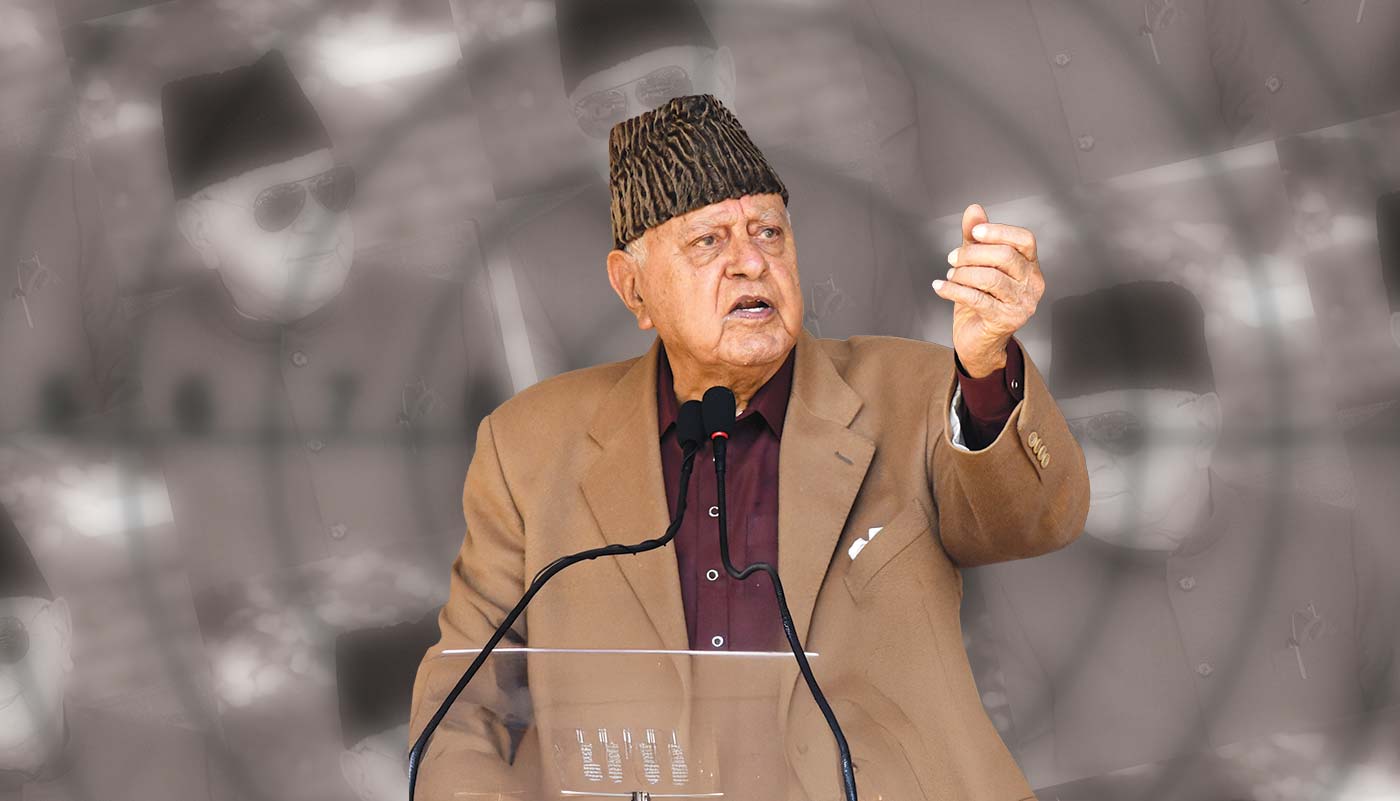
Srinagar: National Conference president Farooq Abdullah has renewed his criticism of the 2019 abrogation of Article 370, saying the move was part of the Bharatiya Janata Party’s political agenda and arguing that those who allegedly helped or facilitated it from within Jammu and Kashmir must also answer to the people.
Abdullah’s remarks bring back a question that has periodically surfaced in J&K politics since August 2019: while the BJP openly advocated the removal of Article 370, did political actors within the erstwhile state also contribute to creating the political circumstances in which the move became possible?
The first part of that question is not particularly disputed.
The BJP had made the abrogation of Article 370 a longstanding political position and included it in its election manifestos before 2019. The party’s government ultimately implemented the constitutional changes in August 2019.
The second part, however, concerns allegations about specific political actors and remains politically contested.
That distinction is important as Abdullah’s latest remarks enter a political environment in which the future of Jammu and Kashmir, restoration of statehood and the legacy of August 2019 continue to dominate debate.
Article 370 was a longstanding BJP position
The BJP’s opposition to Article 370 did not begin in 2019.
The party and its predecessor, the Bharatiya Jana Sangh, had opposed the special constitutional arrangement for Jammu and Kashmir for decades.
The demand to remove Article 370 subsequently became one of the BJP’s prominent ideological and electoral positions.
In 2014, Farooq Abdullah himself warned during the Lok Sabha campaign that Narendra Modi’s political agenda included abrogating Article 370 and argued that such a move would not be acceptable to the people of Jammu and Kashmir.
By the 2019 election, the BJP had again made the issue part of its political programme.
The significance of this history is that Abdullah’s assertion that the abrogation was part of the BJP’s agenda is essentially a reference to a publicly documented political position, rather than a claim that the BJP’s intentions were hidden.
The more contentious question is who, if anyone, outside the BJP helped the process.
What happened in August 2019?
The constitutional changes were announced on August 5, 2019.
The President issued Constitutional Order 272, followed by Constitutional Order 273, which made the provisions of Article 370 inoperative. Parliament simultaneously passed the Jammu and Kashmir Reorganisation legislation, which reorganised the former state into the Union territories of Jammu and Kashmir and Ladakh.
The reorganisation subsequently took effect on October 31, 2019.
The process was undertaken while Jammu and Kashmir was under President’s Rule.
The Supreme Court’s December 2023 judgment records the constitutional sequence and ultimately upheld the President’s power to issue the order making Article 370 inoperative.
That judicial finding is important when discussing the issue today.
The political disagreement over Article 370 continues, but the Supreme Court’s constitutional judgment is part of the legal record.
Farooq Abdullah’s argument goes beyond the BJP
Abdullah’s latest remarks are directed not only at the BJP.
His argument is that political figures within Jammu and Kashmir who allegedly cooperated with or facilitated the BJP’s efforts should also be held accountable.
This is consistent with a warning he issued publicly in March 2024, when he cautioned voters against what he described as “opportunist politicians” who had allegedly helped the BJP in the abrogation of the region’s special status. He accused such figures of weakening the political voice of the people of J&K.
The language was explicitly political.
Abdullah did not simply criticise the constitutional change itself. He also targeted what he portrayed as local political cooperation with the BJP.
That is an important part of the current political narrative because Jammu and Kashmir’s post-2019 political landscape has produced new parties, alliances and electoral calculations.
The PDP-BJP coalition complicates the political history
Any examination of the pre-2019 political environment also has to account for the BJP-PDP coalition government.
The Peoples Democratic Party and BJP formed a coalition government in 2015 under Chief Minister Mehbooba Mufti.
That alliance was politically significant because the two parties had very different positions on Kashmir’s constitutional status.
The Supreme Court’s Article 370 judgment records that the PDP-BJP government was in office before the 2018 political crisis and the subsequent period of Governor’s Rule and President’s Rule.
However, the existence of that coalition should not itself be treated as proof that PDP leaders facilitated the later abrogation.
The coalition ended in June 2018 when the BJP withdrew support, after which Governor’s Rule was imposed and later President’s Rule followed.
Whether individual political actors privately supported or assisted the 2019 move is a separate question requiring evidence.
The disputed question of ‘facilitators’
This is where the political debate becomes considerably more complicated.
In 2025, former RAW chief A.S. Dulat’s book generated controversy after reports attributed to him suggested that Farooq Abdullah had privately indicated that the National Conference could have helped or wanted to be consulted regarding the Article 370 process.
The allegations triggered sharp reactions from opposition leaders in J&K.
Abdullah rejected the portrayal, while Dulat subsequently said he had been misquoted and that his book was full of praise for Abdullah.
That episode demonstrates why claims about secret political cooperation should be handled cautiously.
There are political allegations.
There are reported recollections.
There are denials.
But these are not equivalent to an established finding that a particular politician facilitated the constitutional changes.
Abdullah’s present argument should therefore be understood as a political charge against unnamed or unspecified actors unless he identifies particular individuals and provides evidence for the allegation.
What the Supreme Court actually decided
The constitutional position also needs to be separated from the political debate.
In December 2023, the Supreme Court’s Constitution Bench upheld the Union government’s decision to make Article 370 inoperative.
The judgment examined the constitutional orders issued by the President as well as Parliament’s Jammu and Kashmir Reorganisation Act, 2019.
The court’s judgment therefore provides the present judicial position on the legality of the 2019 process.
This does not mean political parties are prohibited from opposing the decision.
A political party can continue to argue for restoration or reversal of a policy even when the courts have upheld its constitutionality.
The National Conference has continued to maintain its political opposition to the 2019 changes.
Article 370 and statehood are now separate political demands
Another important development since 2019 is the way the political debate has evolved.
Article 370 restoration and restoration of statehood are now often discussed together, but they are not the same demand.
Article 370 concerns the constitutional position of Jammu and Kashmir.
Statehood concerns the administrative and federal status of the Union Territory.
The Supreme Court in its 2023 judgment directed that elections to the Jammu and Kashmir Legislative Assembly should be held and that statehood should be restored at the earliest.
Elections were subsequently held in 2024 and an elected government returned to office.
The statehood question, however, remains a major political demand.
Farooq Abdullah has repeatedly made restoration of statehood a central issue and in 2026 called for political parties to join a democratic campaign for its restoration.
That means the post-2019 political debate has gradually acquired two tracks.
One concerns what happened to Article 370.
The other concerns what happened to the former state’s political and administrative status.
Why Abdullah is raising the issue again
The timing matters.
Jammu and Kashmir once again has an elected Legislative Assembly.
The National Conference leads the government.
The BJP is the principal opposition party in the Assembly.
Congress supports the government from outside the Cabinet while continuing to demand restoration of statehood.
Against this backdrop, questions about August 2019 have moved back into everyday political debate.
For the National Conference, Article 370 remains part of its historical political identity.
For the BJP, the 2019 decision remains a major political achievement and is presented as a step towards fuller constitutional integration.
These are fundamentally different interpretations of the same event.
BJP’s position is fundamentally different
The BJP has consistently defended the 2019 changes.
Its political argument has been that Article 370 created a special constitutional arrangement that contributed to separation and impeded fuller integration with the Union.
The party has also argued that the post-2019 changes have enabled greater investment, administrative integration and the extension of central laws and rights to Jammu and Kashmir.
The National Conference disputes that political interpretation and argues that the removal of Article 370 weakened J&K’s autonomy and altered the constitutional relationship that existed before 2019.
Neither interpretation should be presented as an uncontested factual conclusion.
They are competing political narratives about the consequences of a constitutional change that the Supreme Court has upheld.
The phrase ‘facilitated’ carries a heavy political meaning
Abdullah’s use of the idea of “facilitators” is particularly significant.
It shifts the argument from who made the decision to who helped make the decision possible.
The distinction is politically powerful.
If the BJP openly advocated abrogation, then the question of local facilitators is about whether other political actors supported, accommodated or failed to oppose the process strongly enough.
But those are different categories.
A political party entering an alliance with the BJP before 2019 does not automatically prove that it supported the later abrogation.
Likewise, an individual politician’s disagreement with Article 370 does not establish that they participated in the 2019 constitutional process.
Evidence is required to connect political positions to specific actions.
That is why Abdullah’s broader allegation will remain politically significant but factually incomplete unless accompanied by specific names, documented actions and evidence.
The debate also reflects the changing nature of J&K politics
The political landscape of Jammu and Kashmir today is not the same as it was before August 2019.
The former state has been reorganised.
A new delimitation exercise has changed the Assembly’s electoral map.
New political parties and formations have emerged.
The National Conference has returned to government.
The BJP has expanded its political footprint in Jammu.
And statehood has become a major common demand among several parties that otherwise disagree sharply over Article 370.
That last point is particularly important.
It means that the political conversation has not remained frozen in August 2019.
The debate has moved from simply asking whether Article 370 should be restored to also asking what kind of political and constitutional future Jammu and Kashmir should have.
The unresolved political question
Farooq Abdullah’s latest remarks therefore reopen an old argument, but they also raise a new question.
If the political leadership of J&K wants accountability for those who allegedly facilitated the 2019 changes, what precisely does that accountability mean?
Does it mean political accountability before voters?
Does it mean disclosure of past decisions and positions?
Does it mean identifying individuals who allegedly cooperated with the BJP?
Or is the charge primarily an electoral argument aimed at preventing political fragmentation?
Those questions cannot be answered merely from the latest statement.
They require evidence and, where specific allegations are made, responses from the individuals concerned.
Six years later, Article 370 remains politically alive
The constitutional dispute may have been substantially settled by the Supreme Court’s 2023 judgment, but the political dispute has not disappeared.
For the BJP, August 2019 represents the fulfilment of a longstanding political commitment.
For the National Conference and other opponents, it represents a loss of constitutional autonomy and a turning point in J&K’s political history.
Between these positions lies the lived political reality of today’s Jammu and Kashmir: an elected Assembly, a Union Territory government, a continuing demand for statehood and a political class still debating the meaning and consequences of 2019.
Farooq Abdullah’s latest remarks add another layer to that debate.
His message is not simply that the BJP should be held responsible for Article 370’s abrogation.
It is that those within Jammu and Kashmir who, in his view, helped or enabled the process should also answer to the electorate.
Whether that allegation develops into a more specific political campaign, and whether the leaders it implicitly targets respond with their own account, will determine how far the controversy travels.
For now, the established record is clear on one point: the BJP had long publicly advocated the abrogation of Article 370, the Union government implemented the constitutional changes in August 2019, Parliament enacted the reorganisation of the former state, and the Supreme Court upheld the core constitutional changes in December 2023.
The question of who else “facilitated” that process remains a political allegation, not an established judicial finding.