More than 500 people questioned across South Kashmir after three CRPF personnel were injured; most have reportedly been released, while around 20 remain detained for further questioning, according to separate media reports
By: News Desk | 14 November 2026
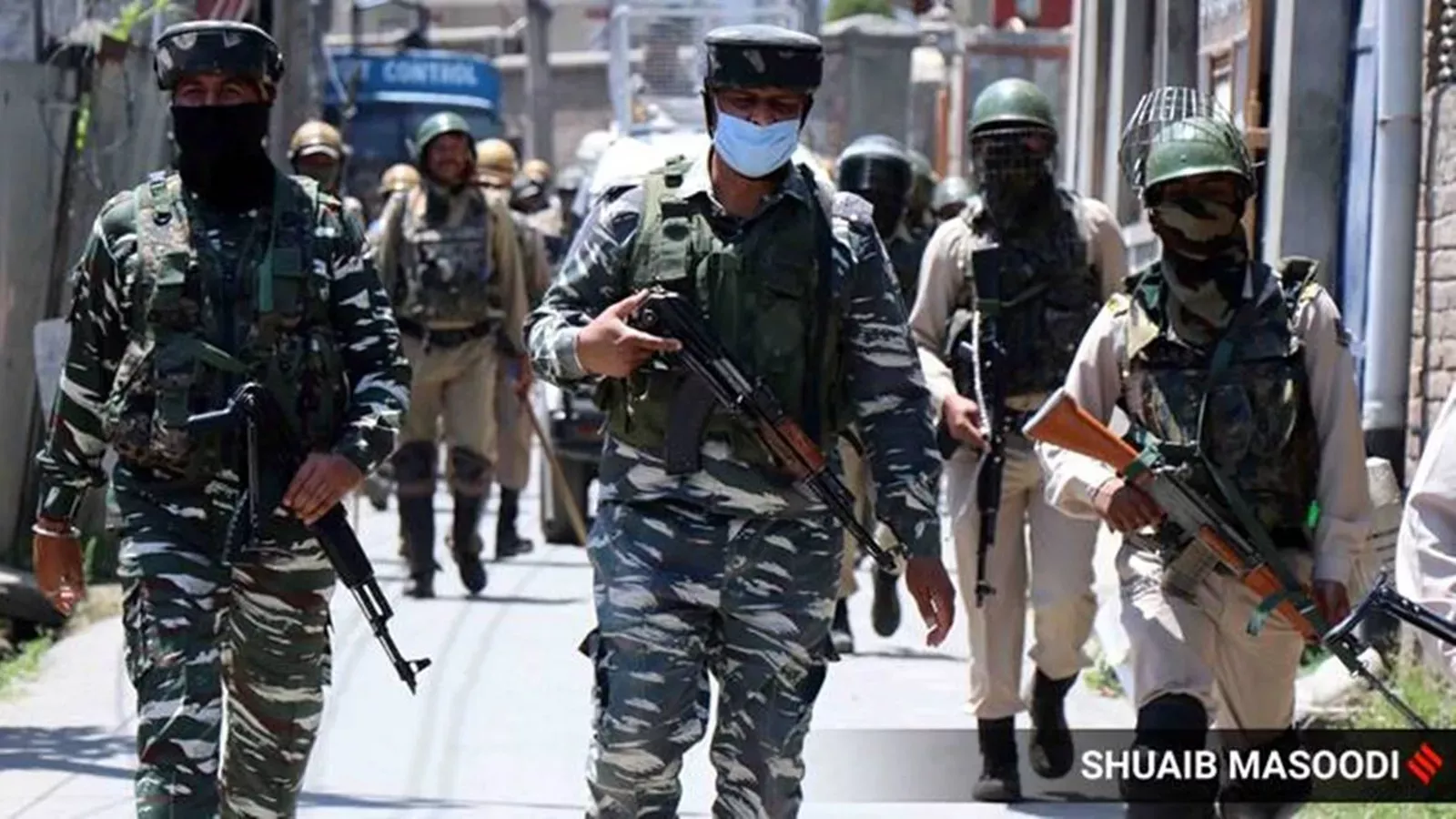
Srinagar: Security forces have intensified counter-terrorism operations across South Kashmir following the November 11 attack on a Central Reserve Police Force (CRPF) checkpoint in Kulgam, with police questioning more than 500 people over three days as investigators attempt to identify the attackers and trace their possible local support network.
Police have questioned more than 500 people following the November 11 Kulgam attack that injured three CRPF personnel. Most have reportedly been released, while around 20 remain detained for further interrogation, as investigators examine suspected Lashkar-e-Taiba links and the possible role of local militant Lateef Ahmad Bhat.
The scale of the questioning reflects the seriousness with which security agencies are treating the attack, in which three CRPF personnel were injured after gunmen opened fire on a checkpoint near Akhran, close to Mir Bazar.
The investigation has increasingly focused on suspected Lashkar-e-Taiba (LeT) links and the possible involvement of local militant Mohammad Lateef Ahmad Bhat, who has been identified by senior police officials as the only active local terrorist remaining on their current radar in the Valley.
But the investigation is not limited to identifying the gunmen. Agencies are also trying to establish whether the attackers received shelter, logistical assistance, reconnaissance support or help escaping after the firing.
The latest reports indicate that most of the more than 500 people questioned have been released. A separate report puts the number detained for further interrogation at approximately 20, including three people suspected of acting as LeT overground workers. These figures describe different stages of questioning and detention; they do not mean that 500 people have been arrested.
The manhunt is continuing, while investigators work to establish the identities of those involved and determine how the attack was planned.
More than 500 questioned: What the figure actually means
The figure of more than 500 people questioned emerged in reporting by The Indian Express on November 14.
According to the report, police picked up more than 500 young people from different parts of South Kashmir, particularly Kulgam, during the three days following the attack. Most were questioned and subsequently released, while some remained in custody.
A police officer quoted in the report said many of those questioned had previously come under the security agencies’ radar over alleged support to militants. Their questioning was intended to establish whether they possessed information about the November 11 attack or had any connection with the suspected network.
A separate NDTV report on November 14 put the number detained for further interrogation at around 20. It also reported that three of those detained were suspected of having acted as overground workers for LeT.
The distinction is important:
- More than 500: People reportedly questioned during the wider investigation.
- Around 20: People reportedly detained for further interrogation, according to NDTV.
- Three suspected OGWs: Individuals whose alleged support role was being examined.
These are reported investigative figures, not a final police charge sheet or a confirmed count of arrests.
The distinction also matters for residents and families affected by the security operation. Being called for questioning or temporarily detained does not establish criminal involvement. Any allegation must be supported by evidence and dealt with through the legal process.
Investigators focus on Lateef Ahmad Bhat
One of the principal leads being examined is the possible involvement of Mohammad Lateef Ahmad Bhat, a resident of Khrewan Chadder in Kulgam.
On November 5, Inspector General of Police, Kashmir Zone, Sujit Kumar, said that only one local terrorist remained active in the Valley, identifying him as Lateef Bhat of Kulgam.
The IGP also said the individual was supported by a few foreign terrorists whose movements were being tracked by security agencies.
That statement provides important context for the present investigation. Police are examining whether Bhat has joined a group of foreign LeT operatives active in the Pir Panjal mountain region or whether he has developed a fresh local support structure.
The two possibilities have different implications.
If foreign militants are providing operational support, investigators will need to trace their movement between the higher reaches and populated areas, identify their local contacts and establish how they obtain shelter and supplies.
If a fresh local support network has emerged, the investigation will have to examine whether individuals are providing accommodation, transport, information about security deployments or other logistical assistance.
At this stage, neither possibility should be treated as conclusively established.
Police suspicion regarding Bhat’s involvement is an important investigative lead, but his responsibility for the November 11 attack has not been established through a judicial finding.
Why Lateef Bhat was already under the security radar
Bhat had been under investigation before the latest attack.
Police have linked him to earlier incidents in South Kashmir, including the killing of a police head constable in Anantnag and the targeted shooting of migrant workers in Kulgam during July 2026.
According to reports, Bhat was suspected of involvement in these incidents and had been the subject of a police reward announcement. The Jammu and Kashmir Police had announced a reward of ₹15 lakh for information leading to his arrest.
His name also surfaced in reporting about an earlier encounter in which his associate Zakir Ganai was killed. Security agencies reportedly suspected that Bhat had escaped during the operation.
These earlier allegations explain why investigators are examining his possible role in the CRPF attack. They do not, however, independently prove his involvement in the latest firing.
The investigation must establish the connection through witness accounts, forensic evidence, CCTV footage, communication records and other material.
Reconstructing the Kulgam attack
The attack took place at approximately 2:15 pm on Wednesday, November 11, near Akhran in the Mir Bazar area of Kulgam.
Three CRPF personnel deployed at a security checkpoint were injured when gunmen opened fire on the naka party of the force’s 46th Battalion.
The injured were identified in subsequent reports as Head Constable Somveer Singh and Constables Rakesh Dass and Santosh Chandru.
The injuries varied in severity. Two personnel were reported to have sustained injuries to their arms and legs, while Chandru suffered serious injuries to his abdomen and spine and was shifted to Srinagar for advanced treatment.
Investigators have examined CCTV footage and other evidence to reconstruct how the attackers approached the checkpoint and escaped.
An earlier account described the assailants as motorcycle-borne. Subsequent reporting, however, said investigators were examining footage suggesting that the gunmen fired from a marshy, tree-covered stretch and used vegetation to escape.
The Indian Express also reported that preliminary police assessment suggested at least three attackers were involved, with two believed to be foreign nationals.
These details remain part of the developing investigation. The precise number and identities of the attackers, their movements and the extent of any local assistance will need to be established through the evidence collected.
Was the attack supported by a local network?
This is emerging as one of the central questions in the investigation.
Security agencies are examining whether the attackers received help before or after the shooting. The suspected support could have involved identifying the checkpoint, monitoring security movement, arranging a temporary hideout or providing an escape route.
The questioning of people suspected of having links with militant networks is part of that wider investigation.
The NDTV report said investigators were examining a suspected LeT module involving local operative Abdul Lateef and two Pakistani terrorists. It also reported that investigators believed local overground workers may have helped arrange shelter and facilitate the attackers’ escape.
The Indian Express separately reported that police were trying to establish whether Bhat had joined foreign LeT cadres or recruited local supporters.
These accounts point towards a common investigative focus: whether the attack was carried out by a small militant group operating with assistance from local contacts.
However, the existence and precise composition of such a network remain matters under investigation. The alleged involvement of individuals should not be presented as established guilt before the police complete their inquiry and the evidence is tested through the legal process.
Why the pre-winter period matters
Security agencies are also examining the possibility that the attack is connected to militant movement from higher mountain areas towards lower elevations.
The Pir Panjal region links parts of South Kashmir with the Jammu division and contains difficult mountainous and forested terrain. During the approach of winter, snowfall and falling temperatures can make movement and survival in higher reaches increasingly difficult.
Security officials have previously described the period before heavy snowfall as a sensitive phase because militants operating in remote areas may attempt to move towards lower elevations or winter hideouts.
The Indian Express reported that officials were examining whether foreign LeT cadres operating in the higher reaches had moved towards populated areas and linked up with local contacts.
This seasonal assessment provides context for the intensified searches, but it does not independently establish the attackers’ route or prove that the November 11 incident was part of a wider coordinated campaign.
Security grid tightened across South Kashmir
Following the attack, police, the Army and other security agencies intensified cordon-and-search operations in Kulgam and adjoining areas.
Additional checking has been reported along roads and at sensitive locations, while security teams are examining possible routes used by the attackers.
The CRPF leadership has also reviewed the security situation. Director General of the CRPF Gyanendra Pratap Singh visited Kulgam and interacted with officials following the incident.
A team of the National Investigation Agency also visited the attack site, according to subsequent reporting by Greater Kashmir. Senior Army, CRPF and police officers have been involved in reviewing the operation.
Investigators are examining CCTV footage, physical evidence and intelligence inputs. Greater Kashmir reported that a mobile phone and SIM card were recovered from the site, while forensic examination of recovered cartridges is also part of the probe.
The purpose of these efforts is to establish the sequence of events, identify the attackers and determine whether the shooting is connected to earlier incidents.
A low recruitment figure does not mean the threat has disappeared
The November 5 statement by IGP Sujit Kumar that only one local terrorist remained active in the Valley was presented as an indication of the decline in local militant recruitment.
But the Kulgam attack illustrates an important distinction between the number of locally recruited militants and the operational threat posed by small groups supported by foreign cadres or local networks.
Even when local recruitment is limited, a small number of armed operatives can retain the ability to carry out targeted attacks if they have access to intelligence, shelter, transport and escape routes.
The IGP himself referred to the support of a few foreign terrorists and said their movements were being tracked.
The current investigation is therefore examining not only the suspected gunmen but also the network that may have enabled them to operate.
The challenge for security agencies is to identify genuine support structures without treating every person questioned or every local contact as a confirmed militant associate.
Questioning, detention and the importance of due process
The scale of the questioning has also raised an important public-interest issue.
More than 500 people being questioned in a security investigation is a significant figure, particularly in a region where residents have experienced repeated security operations.
The police have a responsibility to investigate attacks on security personnel, identify those responsible and prevent further violence. At the same time, questioning and detention must follow established legal procedures.
A person being questioned is not necessarily an accused person, and temporary detention does not establish guilt.
The reported release of most of those questioned is therefore an important part of the story. It shows why the headline figure should not be presented as the number of people arrested.
The next stage will be to determine whether investigators have gathered specific evidence against those who remain in custody and whether formal arrests or charges follow.
Public confidence in the investigation will depend not only on whether the attackers are traced but also on whether the process distinguishes between evidence-based suspicion and unsupported allegations.
What happens next?
The investigation is likely to remain focused on four areas:
- Identifying the attackers: CCTV footage, witness accounts and forensic evidence may help establish the identities and movements of those who fired on the CRPF checkpoint.
- Tracing Lateef Bhat: Police are examining his possible involvement and whether he has links with foreign LeT operatives.
- Establishing the support network: Investigators are trying to determine whether local contacts provided shelter, reconnaissance, transport or logistical assistance.
- Verifying the role of those questioned: The authorities will need to establish whether evidence exists against individuals still under scrutiny and whether any formal arrests follow.
The outcome of these inquiries will determine whether the attack was carried out by a small group acting independently or by an organised network with local support.
The wider security question after Kulgam
The November 11 attack has renewed attention on the security situation in South Kashmir, particularly the ability of small militant groups to target security deployments despite sustained counter-terrorism operations.
The questioning of more than 500 people, the continued search for Lateef Bhat and the examination of suspected foreign militant links show the scale of the investigation.
But the figures should be understood carefully. More than 500 people were reportedly questioned, most were released, and a separate report put the number detained for further interrogation at around 20. The investigation has not yet established the guilt of those under scrutiny.
For security agencies, the immediate objective is to identify and apprehend those responsible for injuring the three CRPF personnel and dismantle any network that supported the attack.
For the public, the essential questions are whether the investigation produces verifiable evidence, whether those responsible are brought before the law and whether innocent residents are protected from being treated as suspects without sufficient grounds.
The Kulgam attack is now being investigated as more than a shooting at a checkpoint. It has become a probe into the possible links between local operatives, foreign militants and support networks operating across South Kashmir. Whether those links can be established remains the central question.