Speaking at SKUAST-Jammu’s All India Vice-Chancellors’ T20 Tournament, Chief Minister says electoral competition and public criticism should never become personal hostility
By: Javid Amin | 13 November 2026
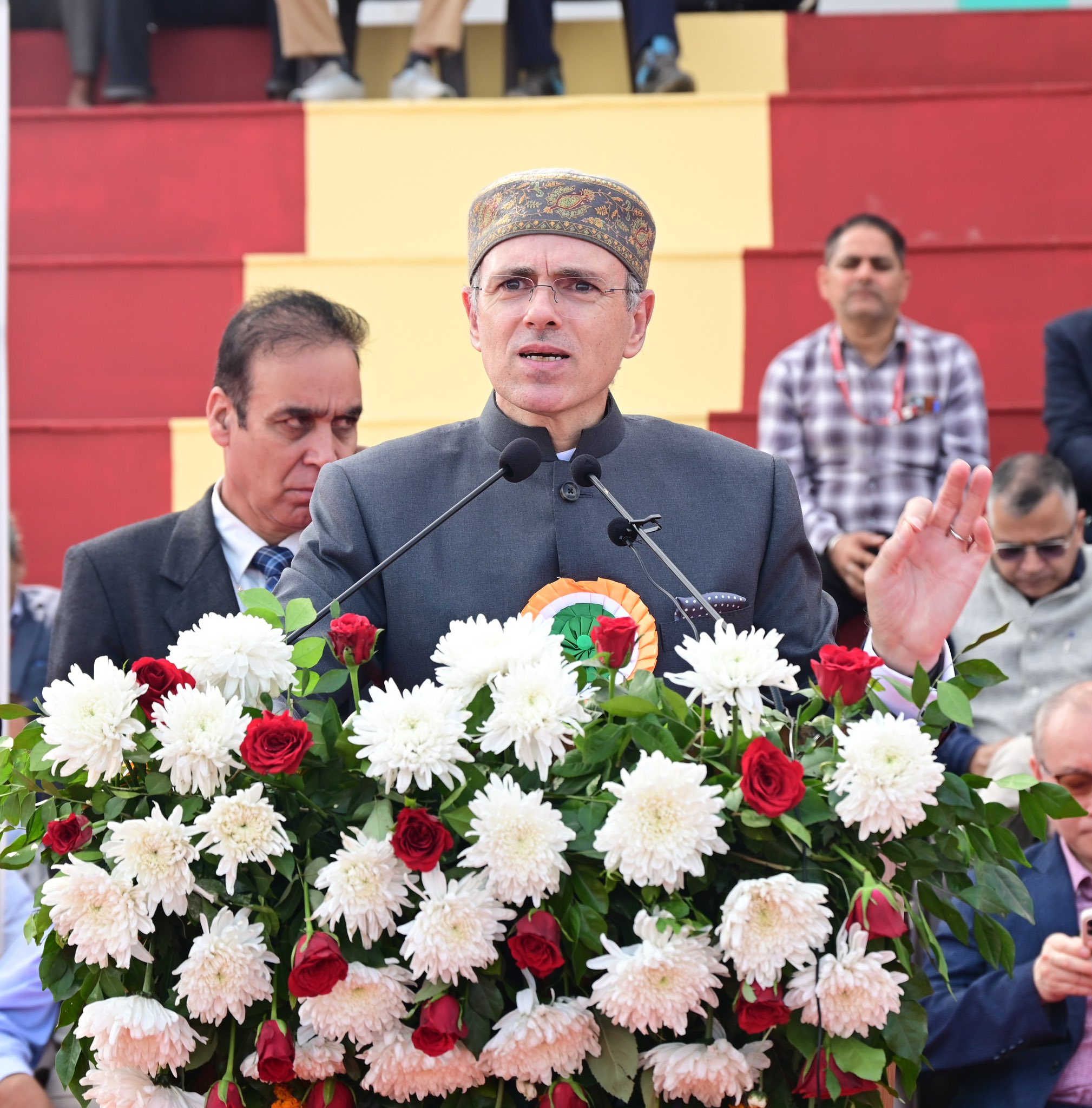
Jammu: Jammu and Kashmir Chief Minister Omar Abdullah has called for greater civility in political discourse, saying that those who contest elections against him, criticise his decisions or disagree with him publicly should be regarded as political opponents rather than personal enemies.
His message, delivered while addressing the inauguration of the 22nd All India Vice-Chancellors’ T20 Cricket Tournament at Sher-e-Kashmir University of Agricultural Sciences and Technology (SKUAST-Jammu) on Friday, November 13, centred on a simple distinction: disagreement is an essential part of competition, but hostility should not become its defining feature.
Referring to people who challenge him electorally, criticise him on social media or express disagreement through media interviews, Omar said:
“They may be my political opponents, but they are certainly not my enemies.”
The Chief Minister drew a parallel between politics and sport, urging participants to compete seriously on the field while maintaining mutual respect after the match. His broader message was that neither victory nor defeat should damage relationships built through healthy competition.
The remarks came during a national-level university sporting event, but their political significance lies in the emphasis on separating public disagreement from personal animosity.
Omar Abdullah draws a line between rivalry and hostility
Political competition often involves sharp criticism, opposing positions and attempts to challenge the credibility of elected representatives. Omar Abdullah’s remarks focused on the need to prevent such differences from turning into personal bitterness.
He acknowledged that people contest elections against him, criticise him publicly and use social media to question his political positions. Rather than treating these individuals as enemies, he said they should be recognised as opponents with whom disagreement is natural in a democratic system.
The distinction is important. An opposition leader’s role is to question the government, challenge its decisions and offer an alternative political position. Similarly, elected representatives must remain open to criticism from citizens, journalists and political rivals.
Political disagreement does not require personal hostility. Nor does maintaining respectful relationships mean abandoning ideological differences or avoiding accountability.
Omar’s message, therefore, can be understood as an appeal for a political culture in which competing views remain part of democratic engagement rather than becoming reasons for personal attacks.
Cricket becomes the backdrop for a political message
The Chief Minister used the spirit of cricket to explain why competition should not damage relationships.
In sport, teams compete to win, but the contest ends when the match is over. Players from opposing sides can acknowledge each other’s performance, share experiences and maintain friendships despite the result.
Omar urged the participating teams to carry that approach into the tournament. He said the friendships and bonds formed during the event would be more valuable than the trophy or the memory of a particular victory.
His message also focused on accepting success and failure with equal composure. A team that loses one match may win the next, while a team enjoying victory today may face defeat in another contest.
The same principle, he suggested, applies to political life. Elections produce winners and losers, governments change, and political positions evolve. None of these outcomes should make mutual respect impossible.
A national university tournament brings 24 teams to Jammu
The remarks were delivered at the inauguration of the 22nd All India Vice-Chancellors’ T20 Cricket Tournament, hosted by SKUAST-Jammu at its Chatha campus.
According to the university, the tournament is being held from November 13 to November 23, 2026, bringing together 24 teams representing universities from across the country. Six teams are from Jammu and Kashmir, while 18 are from other states.
The competition is designed for university employees, giving staff members an opportunity to demonstrate their sporting abilities beyond their regular academic, research and administrative responsibilities.
The event also provides a platform for interaction between universities and their employees, encouraging institutional cooperation and relationships across geographical boundaries.
SKUAST-Jammu Vice-Chancellor Professor B. N. Tripathi presided over the inaugural function. Agriculture Production Minister Javid Ahmad Dar and Minister for Planning, Development and Monitoring, Culture, Youth Services and Sports, Mir Saifullah, were among the dignitaries present.
The university described hosting the 22nd edition as an important opportunity to promote sporting participation and showcase Jammu and Kashmir’s institutional facilities and hospitality.
Universities are built by more than students, says Omar
Beyond the political message, the Chief Minister also highlighted the contribution of university employees who often remain outside the public spotlight.
He observed that universities are not built by students alone. Their functioning depends equally on the people working behind the scenes, including administrative, technical and support staff.
Such employees contribute to the everyday functioning of educational institutions but may not always receive the recognition given to students, faculty members or university leadership.
Omar said the tournament offered these employees an opportunity to come forward, display their sporting talent and interact with colleagues from other institutions.
The event, therefore, was not merely a cricket competition. It also recognised the contribution of university employees and encouraged a broader sporting culture within higher education institutions.
Political civility and the role of opposition
The Chief Minister’s comments also touch on a wider democratic principle: political opponents are not necessarily adversaries in every sphere of public life.
In a parliamentary democracy, disagreement between the government and opposition is expected. Opposition parties question government decisions, scrutinise public spending, highlight administrative shortcomings and seek to persuade voters through alternative policies.
That process can become confrontational, particularly during elections or periods of political disagreement. But the ability to disagree without treating opponents as enemies is important for maintaining democratic institutions.
At the same time, calls for civility should not be interpreted as calls to weaken political scrutiny. Respectful political engagement must leave room for strong criticism, public questioning and accountability.
The distinction is between challenging a political position and attacking a person’s dignity. A healthy democratic culture requires space for both disagreement and mutual respect.
Omar’s remarks reflect that distinction, although their practical significance will ultimately depend on how political actors across the spectrum conduct public debate.
A message that extends beyond the cricket ground
The Chief Minister’s appeal was delivered to university employees and sports participants, but its relevance extends to political parties, elected representatives and public discourse more broadly.
Social media has made political communication faster and more direct. It has also made public disagreements more visible, allowing criticism to spread rapidly and sometimes become personalised.
In such an environment, the line between political criticism and personal hostility can become blurred. Omar’s remarks underline the importance of maintaining that distinction.
The message also applies beyond politics. Universities, workplaces and public institutions depend on people with different opinions working together. Competition can encourage improvement, while mutual respect allows relationships and institutions to survive disagreement.
The Chief Minister’s central point was that a contest should remain a contest, not turn into a conflict.
The larger message: disagreement without enmity
Omar Abdullah’s remarks at SKUAST-Jammu were framed around cricket, but they carried a broader message about political conduct and democratic relationships.
He did not suggest that political opponents should stop criticising the government or abandon their differences. Instead, he argued that electoral rivalry and public disagreement should not automatically lead to personal hostility.
In a democracy, the ability to challenge those in power is as important as the responsibility to respect those with whom one disagrees. Political competition becomes meaningful when it allows different ideas to be debated without turning every disagreement into a personal battle.
As the 24 university teams compete in Jammu, the Chief Minister’s message is that the value of sport lies not only in winning matches but also in the relationships built along the way.
The same principle, he said, should guide public and political life: compete firmly, disagree openly, but preserve mutual respect.