Mecca Under Drone Threat: Houthi Escalation Puts Saudi Arabia, Islamic Holy Sites and Global Oil Routes on Edge
By: Javid Amin | 15 September 2026
Jeddah/Sana’a: The Yemen war has entered a profoundly sensitive new phase.
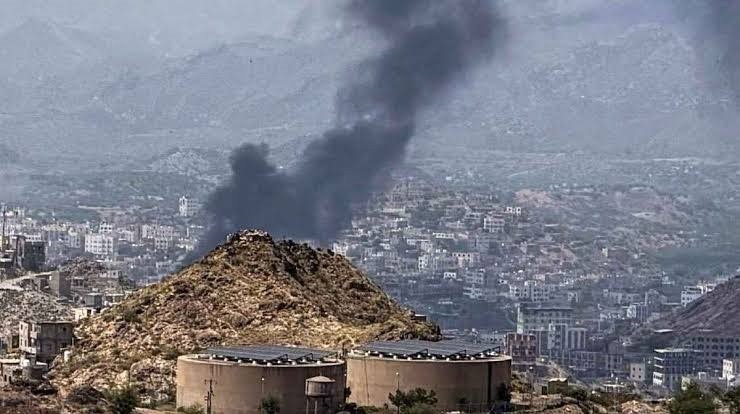
For years, the Houthi-Saudi confrontation has been fought largely around military installations, border provinces, airports, oil facilities and shipping routes. But on Tuesday, the conflict moved dangerously close to the symbolic heart of the Muslim world when Saudi Arabia said its air defences intercepted a Houthi drone south of Mecca before it could enter the holy city’s restricted airspace.
The Saudi-led coalition said the drone was destroyed before reaching the prohibited zone. Coalition spokesman Turki al-Malki described the security of Mecca and the safety of pilgrims as a “red line” and warned that Saudi Arabia would take deterrent measures.
The Houthis, however, rejected the allegation that they had targeted Mecca. Houthi official Hazem al-Assad called the Saudi accusation false and said the movement was not targeting religious sites.
That disagreement matters.
There is a difference between a drone being intercepted near Mecca and an independently established attempt to strike the Grand Mosque or another holy site. At present, the available reporting establishes the Saudi interception claim and the Houthi denial, but not an independently verified intention to hit the holy city.
Nevertheless, the location of the incident has transformed its political and religious significance.
The Organisation of Islamic Cooperation (OIC), representing 57 member states, condemned what it described as Houthi attacks targeting the Makkah and Madinah region. The organisation said attacks affecting holy sites, mosques and civilian infrastructure violate their sanctity and Islamic values.
For Saudi Arabia, this is no longer simply another episode in the Yemen conflict.
It is a test of air defence, deterrence, diplomacy, religious security and the kingdom’s ability to protect the routes through which its oil reaches global markets.
A drone south of Mecca changes the political temperature
The Saudi announcement came after a week of increasingly intense Houthi operations against the kingdom.
Saudi Arabia has issued security alerts across several areas, including Mecca and Jeddah, amid repeated missile and drone attacks. Reuters reported that the Houthis have simultaneously expanded their position along Yemen’s Red Sea coast, bringing them closer to the strategically important Bab el-Mandeb Strait.
The significance of Bab el-Mandeb is difficult to overstate.
The narrow waterway connects the Red Sea with the Gulf of Aden and sits astride one of the world’s most important maritime corridors. Any sustained disruption threatens not only Saudi Arabia but also Egypt, European importers, Asian economies and international shipping.
The United Nations said on September 15 that fighting had intensified along Yemen’s west coast as Houthi forces advanced toward Bab el-Mandeb and reportedly captured several islands in the southern Red Sea. The UN also warned that, although commercial shipping flows remained largely unaffected at that moment, the Houthi advance was increasing market concerns.
That creates a dangerous chain:
Yemen battlefield → Red Sea shipping → Saudi oil exports → global energy prices.
And now there is a fifth element:
Mecca and the security of Islam’s holiest sites.
OIC response turns a Saudi security incident into a wider Islamic issue
The OIC’s response is significant because the organisation has historically treated Saudi Arabia’s security as closely connected to wider Islamic-world stability.
The latest condemnation follows earlier OIC statements against Houthi attacks on Saudi territory.
On July 13, the OIC condemned attacks on Saudi Arabia’s southern regions and expressed support for measures taken by Riyadh to protect its territory. In August, it condemned a Houthi attack on Najran that Saudi authorities said injured 11 civilians.
But the September incident is different in symbolism.
Mecca is the holiest city in Islam and the destination of millions of Muslims during Hajj and Umrah. Medina is home to the Prophet’s Mosque. Any military incident near either city therefore carries a religious and emotional impact far beyond the immediate battlefield.
That explains why the OIC response has been stronger than a routine statement concerning another cross-border strike.
The organisation’s condemnation also reflects a wider concern: if the conflict continues expanding geographically, the distinction between military targets and religious or civilian spaces becomes increasingly difficult to protect.
Saudi Arabia turns to Egypt as the Red Sea crisis deepens
The Mecca incident came as Saudi Crown Prince Mohammed bin Salman travelled to Cairo seeking support from Egyptian President Abdel Fattah el-Sisi.
The meeting was not simply about Yemen.
Saudi Arabia and Egypt have a shared interest in keeping the Red Sea open. Egypt depends heavily on maritime traffic through the Red Sea and the Suez Canal, while Saudi Arabia increasingly relies on Red Sea routes as an alternative pathway for oil exports when the Strait of Hormuz is disrupted.
Following their meeting, the two leaders backed secure and unhindered navigation in the Red Sea. Egypt also expressed support for Saudi Arabia’s right to defend itself against Houthi attacks.
The diplomatic outreach shows the dilemma facing Riyadh.
A purely military response could widen the war. But failing to respond forcefully to repeated attacks could expose vulnerabilities in Saudi territory, energy infrastructure and now the airspace surrounding Mecca.
The kingdom therefore needs both military protection and regional political backing.
The energy war is becoming as important as the Yemen war
The latest escalation cannot be understood only through the lens of Saudi-Houthi hostilities.
Saudi oil infrastructure has increasingly become part of the regional confrontation.
The International Energy Agency said Saudi crude supply fell to around 6 million barrels per day in August 2026, its lowest level in more than three decades, with attacks affecting oil infrastructure and shipping among the factors behind the decline. Reuters reported that the IEA also cut its 2026 forecast for Saudi crude supply.
Separately, an attack on Saudi Arabia’s East-West pipeline disrupted an important alternative route for transporting oil from the kingdom’s eastern fields toward the Red Sea.
The pipeline normally provides Saudi Arabia with a way to bypass the Strait of Hormuz.
That makes the current geography particularly dangerous.
If Hormuz is disrupted from one direction while the Red Sea and Bab el-Mandeb are threatened from another, Saudi Arabia’s ability to move crude to international markets becomes increasingly constrained.
Global markets have already reacted.
Brent crude moved above $100 a barrel amid the wider regional escalation, while concerns over tanker attacks, disrupted routes and declining Saudi exports intensified fears about supply security.
The consequences extend well beyond the Gulf.
Higher oil prices feed into transportation costs, inflation, industrial production and household fuel bills across importing countries.
From border attacks to economic warfare
The Houthi-Saudi conflict has undergone several distinct phases since Saudi Arabia intervened militarily in Yemen in 2015.
In the early years, Houthi attacks concentrated heavily on Saudi Arabia’s southern border provinces, including Jizan, Najran and Asir. Missile and drone attacks increasingly demonstrated that the Yemeni conflict could reach deep inside Saudi territory.
The September 2019 attack on the Abqaiq oil-processing facility and Khurais oil field represented a major transformation.
The strikes temporarily disrupted a significant share of Saudi oil production and caused a major shock to international oil markets.
The Houthis claimed responsibility, while Saudi Arabia and the United States attributed the attack to Iran. Tehran denied involvement.
That distinction remains important because it illustrates a recurring feature of the conflict: responsibility for major attacks is often contested even when the physical damage is clear.
The conflict subsequently entered a quieter phase. A UN-brokered truce in 2022 sharply reduced cross-border violence, although it did not produce a final political settlement.
The present escalation therefore represents more than another isolated flare-up.
It shows how quickly the dormant Saudi-Houthi front can become active when regional tensions change.
2026: The battlefield moves toward the Red Sea
The current escalation has a different strategic character from the fighting of 2015-2019.
The Houthis have expanded their military pressure toward maritime infrastructure and the Red Sea.
Their advances along Yemen’s western coast have brought them closer to Bab el-Mandeb, while attacks on Saudi energy infrastructure have created a direct link between the Yemen war and international energy security.
The UN has warned that the situation around Bab el-Mandeb has become increasingly volatile. At the same time, the organisation has stressed the humanitarian consequences of renewed fighting inside Yemen.
Reuters reported that more than 100,000 people have been internally displaced amid the renewed fighting, highlighting how the military escalation is producing consequences inside Yemen as well as across the Gulf.
This is an important part of the story that can easily disappear behind headlines about missiles, drones and oil prices.
The Yemen conflict remains a humanitarian crisis.
Why the Mecca incident is different
The Saudi-Houthi conflict has previously involved attacks on airports, military bases, oil installations and border areas.
Mecca changes the equation because of its religious status.
Even an interception outside the city’s prohibited airspace can generate enormous political pressure.
Saudi authorities cannot treat an aerial threat near Mecca like an ordinary attack on an industrial facility. The presence of pilgrims, residents and religious landmarks creates an entirely different security calculation.
There is also a wider psychological dimension.
For Muslims around the world, Mecca is not simply a Saudi city. It is the direction of prayer and the destination of Hajj and Umrah.
Consequently, the perception that a missile or drone has approached the holy city can generate anger and fear even if the weapon is intercepted before entering the city.
That explains the speed and intensity of the OIC response.
But the Houthi denial cannot simply be ignored
The Saudi account is the basis for the claim that a Houthi drone approached Mecca.
The Houthis deny targeting the holy city.
That means the precise intention behind the drone remains contested.
The distinction is particularly important in an increasingly information-driven conflict, where every military incident can become part of a larger political narrative.
The available evidence supports saying that Saudi Arabia intercepted a drone south of Mecca and attributed it to the Houthis.
It does not support presenting as independently established fact that the Houthis deliberately attempted to strike the Grand Mosque or other holy sites.
That distinction should remain at the centre of responsible reporting.
The OIC’s problem: condemnation versus enforcement
The latest episode also exposes the limits of the OIC.
The organisation can provide diplomatic condemnation and build political consensus among Muslim-majority countries. It can frame attacks on holy sites as an issue affecting the wider Islamic world.
But the OIC does not possess a NATO-style integrated military command capable of immediately defending Saudi airspace.
Its influence is therefore primarily diplomatic and political.
The real security burden remains with Saudi Arabia and its military partners.
This becomes especially important as the kingdom faces attacks from several directions and seeks greater regional support.
Egypt’s role is becoming more important
Egypt’s position deserves particular attention.
Cairo controls the northern end of the Red Sea through the Suez Canal and has a direct economic interest in maintaining maritime security.
Red Sea disruption has already hurt Egypt’s canal revenues, making prolonged instability economically damaging for Cairo as well.
That gives Egypt an incentive to support efforts to keep shipping lanes open, even if it does not mean Egypt will directly enter the Yemen battlefield.
The Saudi-Egyptian meeting therefore represents an attempt to build a broader regional security framework around the Red Sea rather than simply expand the Yemen war.
The bigger danger: two chokepoints under pressure
The most consequential development may ultimately have little to do with the drone near Mecca.
It is the simultaneous pressure on two maritime chokepoints.
The Strait of Hormuz is critical for Gulf oil exports.
The Bab el-Mandeb Strait is critical for Red Sea shipping.
If both routes face sustained disruption, the consequences could spread rapidly through global energy and freight markets.
The UN has said commercial shipping through the Red Sea had not yet been significantly disrupted by the latest Houthi advance as of September 15. But the organisation also acknowledged that the advance toward Bab el-Mandeb was increasing market concerns.
That distinction is crucial.
A threat to shipping is not the same as a complete shipping blockade.
But markets often react before a blockade becomes reality.
What comes next?
Three questions will determine whether the latest escalation remains contained or becomes a much wider regional crisis.
Will Saudi Arabia retaliate directly?
Riyadh has already warned that the protection of Mecca and Medina is a red line.
A major retaliatory campaign could intensify the Yemen war and potentially produce further attacks on Saudi infrastructure.
Can the Red Sea remain open?
The Houthi advance toward Bab el-Mandeb places one of the world’s major maritime corridors under growing strategic pressure.
If shipping companies begin avoiding the route on a large scale, the economic impact could become much larger even without a formal blockade.
Can diplomacy slow the escalation?
Saudi Arabia’s outreach to Egypt shows that Riyadh is looking beyond a purely military solution.
The UN has repeatedly called for restraint and protection of civilians, while the OIC has urged an end to attacks threatening Saudi security.
Whether those diplomatic messages can translate into restraint on the battlefield remains uncertain.
A conflict that is no longer confined to Yemen
The latest Houthi-Saudi escalation has transformed the Yemen war into a much wider strategic problem.
It now involves holy-site security, Saudi national defence, oil infrastructure, Red Sea shipping, the Bab el-Mandeb chokepoint and global energy markets.
The intercepted drone near Mecca has added the most sensitive dimension yet.
Saudi Arabia says it stopped a Houthi drone before it entered Mecca’s restricted airspace. The Houthis deny deliberately targeting the holy city. The OIC has nevertheless condemned the incident because of the threat it represents to the sanctity of Islam’s holiest sites.
The larger lesson is that the geography of the Yemen war is changing.
What began as a Saudi-Yemeni conflict has increasingly become part of a broader regional confrontation in which a battlefield in Yemen can affect pilgrims in Mecca, oil exports from Saudi Arabia, ships crossing the Red Sea and fuel prices thousands of kilometres away.
That is what makes the latest escalation particularly dangerous.