J&K Assembly Rejects Mandatory Government Schooling Bill: The Bigger Question Is Whether Parents Trust Government Schools?
By: News Desk | 24 September 2026
Sheikh Khursheed’s Bill sought compulsory government-school enrolment for children of public representatives and government employees. The government opposed compulsion, saying public schools must earn parents’ confidence through quality. But ground-level learning data shows why the debate is unlikely to end with the Assembly vote.
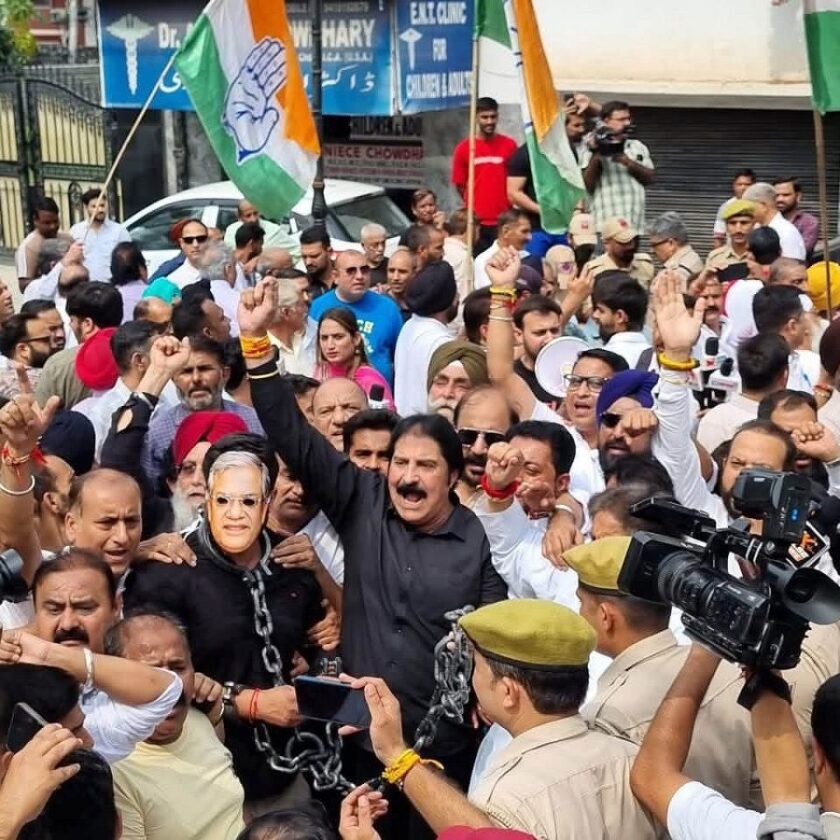
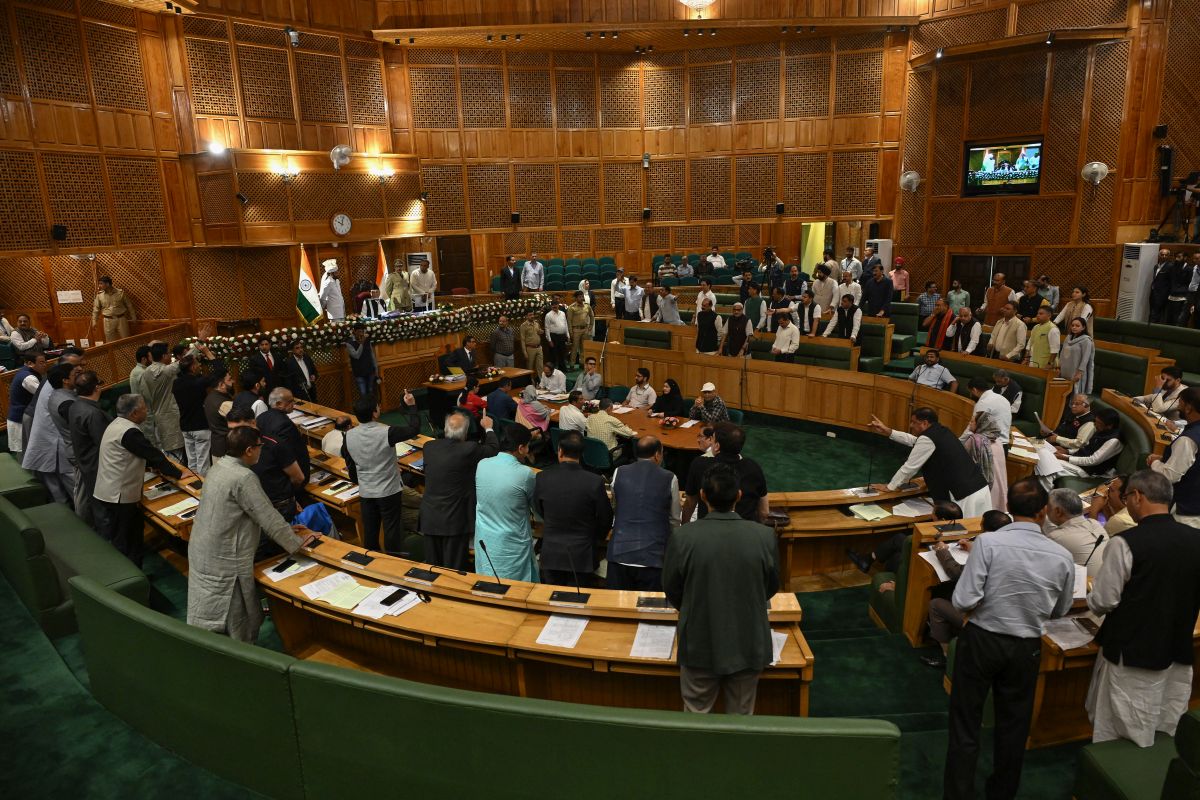
Srinagar: The Jammu and Kashmir Legislative Assembly has rejected a Private Member’s Bill that sought to make government schooling compulsory for the children of ministers, legislators, public representatives and government employees.
The Bill, moved by Langate MLA Sheikh Khursheed Ahmad, was built around a straightforward political and social argument: if those who run the government education system are required to send their own children to government schools, their personal stake in improving those institutions would become stronger.
The government took the opposite view.
Education Minister Sakeena Itoo argued that the government cannot compel parents to choose a particular school for their children and that the more sustainable way to strengthen government education is to improve its quality, infrastructure and outcomes. The Bill was eventually defeated by voice vote after the Speaker put it to the House.
On the surface, it was a debate over school choice.
Underneath it was a much bigger question:
If government schools are good enough, will parents choose them without being forced to?
That is where the real education debate begins.
What exactly did the Bill seek?
Sheikh Khursheed Ahmad’s proposal attempted to create a direct link between the people responsible for administering the public education system and the schools run by that system.
His argument, as reported during the Assembly proceedings, was that compulsory enrolment of children of government employees and public representatives could increase confidence in government schools and create greater pressure for improvement.
The MLA also maintained that simply constructing buildings or adding facilities would not be enough. Government schools also need students.
The government, however, asked the House to withdraw the Bill.
Sakeena Itoo’s position was that the State should improve government schools rather than compel parents or children to attend them. She also pointed to improvements reported in infrastructure, smart classrooms, examination results and enrolment, and cited government-school students succeeding in competitive examinations including NEET.
The Bill therefore exposed two different approaches to the same problem.
One approach says: make decision-makers personally dependent on the public system.
The other says: make the public system strong enough that people voluntarily choose it.
Both arguments are ultimately about public confidence.
The important question: Why do parents choose private schools?
The answer is not always that private schools are automatically better.
Parents make school choices for a mixture of reasons.
These can include:
- English-medium instruction or perceived English proficiency
- teacher attendance and availability
- classroom discipline
- examination preparation
- individual attention
- proximity to home
- transport facilities
- parental perception of school reputation
- peer group
- extracurricular opportunities
- expectations about competitive examinations
- confidence in teachers and school management
In Kashmir and Jammu, as elsewhere in India, the perception of a school can sometimes be as important as its physical infrastructure.
A newly painted classroom may improve the appearance of a school.
It does not automatically improve reading.
A smart classroom may improve access to digital material.
It does not automatically improve mathematics.
A new building may solve an infrastructure problem.
It does not automatically solve a teacher shortage, multigrade classroom problem or learning gap.
That distinction is central to understanding the present controversy.
What does the data say about government-school learning?
One of the most useful independent sources here is the Annual Status of Education Report (ASER) 2024, which assesses children’s basic reading and arithmetic abilities through household-based testing rather than simply relying on examination results.
For rural Jammu and Kashmir, ASER’s 2024 data shows a significant difference between government and private-school children in the early grades.
Among children enrolled in Standard II, 46.2% of government-school students could read at least words, compared with 79.8% of private-school students.
In arithmetic, 63.1% of government-school students could at least recognise numbers up to 99, compared with 88.3% among private-school students.
These numbers should not be interpreted as a verdict on every government or private school in J&K.
ASER is a rural household survey and its tests measure basic competencies. It does not measure the complete quality of a school, nor does it assess every district or every child.
But the figures do highlight a real learning gap.
And that gap cannot be solved merely by ordering more children into government schools.
Government schools are not standing still
This is equally important.
It would be inaccurate to portray J&K’s government-school system as unchanged or uniformly poor.
ASER’s wider 2024 evidence shows improvements in several aspects of government schooling nationally, including textbook availability, teacher attendance and student attendance.
The Ministry of Education’s UDISE+ 2024-25 data also shows the scale of the public education system in Jammu and Kashmir.
J&K had 24,192 schools, 26.54 lakh students and 1.67 lakh teachers across the school education system in the 2024-25 dataset.
That is a huge public institution.
The challenge, therefore, is not simply to defend government schools or criticise them.
The challenge is to make such a large system consistently effective across thousands of schools.
A hidden problem: small schools and multigrade classrooms
There is another issue that rarely receives as much public attention as smart classrooms and school buildings.
ASER’s 2024 national school observations found that Jammu and Kashmir is among the states with a particularly high proportion of small government primary schools.
Small schools can create difficult staffing conditions.
If only a handful of children are enrolled across several grades, one or two teachers may have to manage multiple classes or subjects.
ASER reported that more than 80% of primary schools in Jammu and Kashmir, Himachal Pradesh, Uttarakhand, Nagaland and Karnataka were small schools in its 2024 observations. It also found that nationally about two-thirds of Standard I and II classrooms in primary schools were multigrade.
This matters because school quality is not simply a building problem.
It is also a classroom-management problem.
A school can have:
- a smart board,
- a new building,
- digital content,
- a playground,
and still struggle if teachers are stretched across several grades and children are not receiving enough individual attention.
So would forcing officials’ children into government schools solve this?
There is no evidence from the material reviewed that compulsory enrolment itself would solve the learning problems identified by independent assessments.
It could, in theory, create stronger political pressure for better facilities and accountability.
But it could also address only the symptom rather than the underlying problem.
Suppose a government employee is required to send a child to a government school.
What happens if that school still has:
- inadequate subject teachers?
- weak foundational learning?
- limited English exposure?
- poor examination preparation?
- insufficient laboratory facilities?
- long travel distance?
- multigrade teaching?
- inconsistent academic support?
The child’s enrolment would increase.
But would learning improve?
That is the unanswered question.
The Minister’s argument: Let the school win the parent
The government’s position can be reduced to a simple principle:
Don’t force parents to choose government schools. Make government schools the schools parents want to choose.
That approach places the burden on the education system itself.
If a government school offers strong teachers, reliable attendance, good learning outcomes, safe infrastructure, English and local-language support where appropriate, competitive-exam preparation and effective school leadership, the reason for choosing a private school becomes weaker for many families.
This is particularly important for middle-class families.
For poorer families, affordability can already make government schools essential.
For families with greater financial capacity, however, school choice is often driven by perceived quality.
Therefore, increasing government-school enrolment among government employees’ children requires more than a legal order.
It requires a change in perception backed by measurable performance.
The law and the question of parental choice
There is also an important legal and policy dimension to the debate.
The Right to Education framework places a duty on the State to ensure free and compulsory elementary education for children aged 6-14.
Government policy material explaining the RTE framework also makes clear that the concept of neighbourhood schooling does not mean a child is necessarily restricted to one particular neighbourhood school. The framework focuses on the State’s responsibility to provide education rather than simply imposing a particular government school on every family.
The Ministry’s explanatory material has also stated that the intention of the RTE framework was not to compel parents or guardians who do not wish to avail themselves of government education to necessarily admit their children into a neighbourhood school.
That gives some context to the Education Minister’s objection to a law specifically forcing a class of parents to choose government schools.
The precise legal validity of any future J&K-specific compulsory-schooling legislation would, of course, depend on its actual wording and its relationship with applicable constitutional and statutory provisions.
But there is a bigger issue: equality of public services
The strongest argument behind Sheikh Khursheed’s proposal is not really about school enrolment.
It is about accountability.
The underlying question is:
Should the people who design public services also personally depend on those services?
The same question can be asked about government hospitals, public transport, municipal services and public universities.
Supporters of the idea may argue that when decision-makers personally experience a public institution, problems become harder to ignore.
Opponents can respond that public officials already have a duty to provide good public services to citizens, regardless of where their own families study.
Neither proposition automatically establishes that compulsory schooling would improve educational outcomes.
That requires evidence.
What would actually convince parents?
If the government wants public schools to compete with private schools on confidence rather than compulsion, the measurement system becomes extremely important.
Parents should be able to see, school by school:
1. Teacher availability
How many sanctioned posts exist?
How many are filled?
How often are teachers absent?
How many subject teachers are available at the secondary level?
2. Learning outcomes
Instead of only publishing pass percentages, authorities should track whether children can actually:
- read at grade level,
- write effectively,
- perform basic arithmetic,
- understand concepts,
- communicate in English where required,
- use digital tools.
3. Student attendance
A school with high enrolment but weak attendance cannot be called a success simply because its admission register is full.
4. Teacher attendance
Teacher presence is one of the most basic requirements for a functioning school.
5. Infrastructure utilisation
A smart classroom should not merely exist on paper.
Parents should know whether it is actually being used.
6. Competitive examination performance
NEET, JEE, CUET and other outcomes can provide one measure of academic performance, but they should not become the only definition of school quality.
7. Parent satisfaction
Parents should have a meaningful mechanism to report problems and evaluate whether complaints are actually addressed.
The NEET argument is important, but not enough
The Education Minister’s reference to government-school students succeeding in NEET is significant because it demonstrates that public schools can produce high-performing students.
But exceptional performers cannot alone establish the condition of an entire school system.
The better question is:
What happens to the average child?
If a few students crack NEET or other competitive examinations, that deserves recognition.
But a strong education system should also ensure that an ordinary child in a government primary school can read a simple passage, understand basic mathematics and progress confidently to the next grade.
This is where independent learning assessments become important.
ASER’s J&K findings show why policymakers should look beyond examination toppers and examine foundational learning across the wider student population.
Government schools do not need compulsory customers
This may be the most important lesson from the Assembly debate.
A public school should not need a government order to obtain the trust of the families who can afford alternatives.
It should earn that trust.
That does not mean private schools are automatically superior.
Nor does it mean every government school is struggling.
The evidence points to a mixed picture: J&K has a massive public-school network, investment and reported improvements, but independent learning data also identifies substantial gaps that cannot be ignored.
The debate should therefore move beyond the question:
“Should officials be forced to send their children to government schools?”
The more useful question is:
“What would make an official, a teacher, a businessman, a labourer and an ordinary parent all feel that the nearest government school is good enough for their child?”
That answer will not come from one Bill.
It will come from classrooms.
The real test begins after the Assembly vote
The defeat of Sheikh Khursheed Ahmad’s Bill closes one legislative route.
It does not close the underlying debate.
The government has now put forward a clear proposition: improve public schools instead of compelling parents to use them.
That proposition can be tested.
If infrastructure improves, learning outcomes rise, teacher availability strengthens, attendance improves and parents increasingly choose government schools voluntarily, the policy direction will have measurable evidence behind it.
If infrastructure improves but parents continue moving towards private schools, policymakers will have to ask why.
And if enrolment rises without corresponding improvement in learning, the government will have to confront another uncomfortable question:
Are we measuring the success of government schools by how many children enter the classroom, or by how much those children actually learn?
For J&K’s education system, that distinction may matter far more than the Assembly vote itself.
What this means for an ordinary parent
In simple terms, the Assembly has said no to compulsory government schooling for the children of public servants and public representatives.
But it has not answered the bigger concern behind the Bill.
Parents still want to know:
Will my child get good teaching?
Will teachers be available?
Will my child learn to read, write and calculate properly?
Will the school prepare my child for higher education and competitive examinations?
Will the facilities promised on paper actually work?
Those are the questions that ultimately decide where families send their children.
A government school does not become trusted because someone is ordered to use it.
It becomes trusted when parents see, year after year, that their children are learning, progressing and getting a fair chance in life.
That is the standard by which the next phase of J&K’s government-school reform will ultimately be judged.