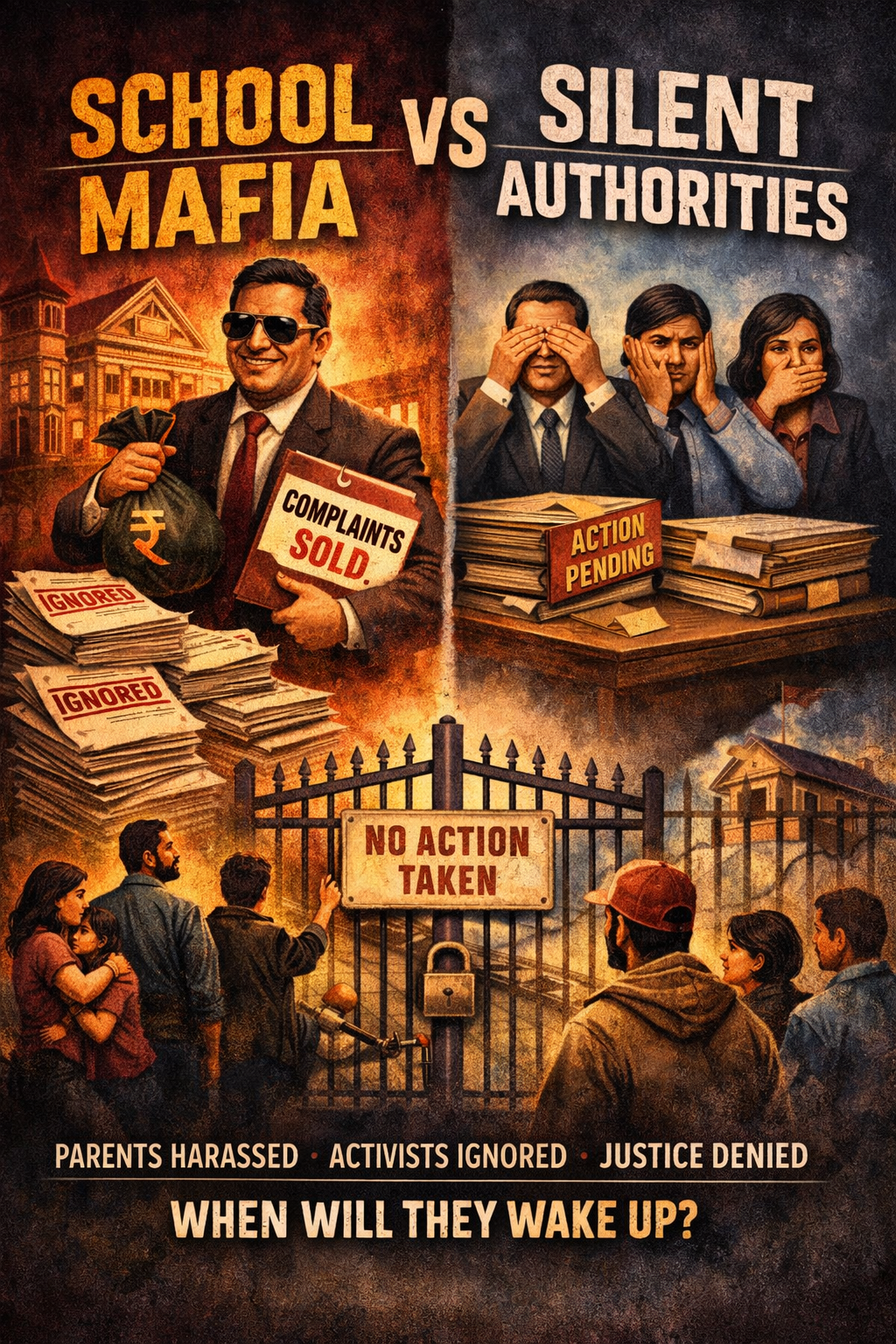
Orders Without Outcomes: Are Education Authorities Losing the Battle Against Private School Violations?
By: Zulfikar | 10 June 2026
Notices Issued, Action Missing as Parents Question Accountability in Jammu & Kashmir’s Private Education Sector
For thousands of parents across Jammu & Kashmir, frustration is steadily turning into anger.
Over the past several months, education authorities have issued notices to hundreds of private schools over alleged violations ranging from fee-related complaints and admission practices to non-compliance with regulatory guidelines. Yet many parents and civil society activists claim that little has changed on the ground.
The growing perception among stakeholders is that regulatory action begins with official orders but often ends there, without meaningful enforcement or visible consequences.
As complaints continue to pile up, parents are asking a simple question: If schools are found violating rules, why are enforcement actions rarely visible?
A Familiar Cycle: Complaints, Notices, Silence
According to parents’ groups and education activists, the pattern has become predictable.
First, complaints are submitted regarding alleged arbitrary fee hikes, compulsory purchases of books and uniforms from specific vendors, lack of transparency in school policies, or pressure tactics used against parents.
Authorities acknowledge the complaints and issue notices seeking explanations from schools.
The matter then appears to fade from public view.
Parents claim they rarely receive updates regarding investigations, penalties, compliance reports, or corrective measures.
This perceived gap between regulation and enforcement has created a growing trust deficit between citizens and the education administration.
“Notices alone cannot protect parents. Enforcement is what matters,” say several activists who have been pursuing education-related grievances for years.
Allegations of a Growing ‘School Mafia’ Culture
Many parents have begun describing certain influential private institutions as operating with near-complete impunity.
While the term “school mafia” is often used by aggrieved parents and activists, their core concern revolves around what they view as unchecked power enjoyed by some institutions.
Among the most common complaints are:
- Sudden or unexplained fee increases
- Pressure on parents to comply with school demands
- Limited grievance redressal mechanisms
- Lack of transparency in financial matters
- Fear among parents of speaking publicly
Parents argue that when enforcement remains weak, it encourages repeat violations and creates an environment where schools feel immune from accountability.
The Most Serious Concern: Alleged Retaliation Against Complainants
One of the most disturbing allegations raised by some parents involves the handling of complaint records.
Several complainants claim that after approaching authorities, schools somehow became aware of their identities, leading to fears of retaliation, discrimination, or pressure.
These allegations remain unverified and require independent investigation.
However, the concerns have become widespread enough to create a chilling effect among parents, many of whom now hesitate to file formal complaints.
Activists argue that if complainants cannot trust the confidentiality of grievance mechanisms, the entire system risks losing credibility.
They are demanding:
- Anonymous complaint systems
- Whistleblower protection mechanisms
- Independent complaint monitoring
- Greater transparency in investigations
Without such safeguards, many parents fear that raising concerns may expose their children and families to unnecessary pressure.
Parents and Activists Say Fatigue Is Setting In
Civil society groups, parent associations and education activists have repeatedly engaged with officials, submitted representations and sought action against alleged violations.
Yet many say they are witnessing a widening gap between assurances and outcomes.
The result is growing public fatigue.
Parents who once believed regulatory intervention would bring relief now increasingly question whether complaints are producing any meaningful change.
Several activists argue that public confidence is being eroded not only by alleged violations but by the perceived absence of consequences.
When Enforcement Becomes the Real Test
Education experts note that regulations are only as effective as their enforcement.
Issuing notices serves an important purpose—it signals that authorities are aware of potential violations.
However, experts argue that lasting reform requires:
- Time-bound investigations
- Public disclosure of findings
- Financial audits where necessary
- Penalties for non-compliance
- Follow-up inspections
- Transparent grievance redressal
Without these measures, regulatory action risks being viewed as a paperwork exercise rather than meaningful governance.
The Governance Question
Key Concerns Raised by Parents
| Issue | Reported Impact |
|---|---|
| Notices Without Enforcement | Weakens public trust |
| Repeated Complaints | Creates frustration among parents |
| Alleged Retaliation Fears | Discourages grievance reporting |
| Lack of Transparency | Fuels speculation and distrust |
| Regulatory Delays | Encourages repeat violations |
| Limited Accountability | Strengthens perception of impunity |
What Parents Want
Most parents are not demanding confrontation.
They are demanding accountability.
Their expectations are straightforward:
- Transparent fee regulation
- Effective monitoring of private schools
- Protection for complainants
- Timely disposal of complaints
- Public disclosure of action taken
- Equal treatment of all institutions regardless of influence
Many believe that restoring trust requires visible enforcement rather than repeated announcements.
Beyond Paper Orders
The debate surrounding private school regulation has now moved beyond individual complaints.
It has become a larger question about governance, accountability and public confidence.
Every notice issued creates an expectation of action.
Every unresolved complaint deepens public skepticism.
Every delay strengthens the perception that influential institutions remain beyond scrutiny.
Whether that perception is accurate or not, authorities face a growing challenge: convincing parents that regulation is more than a paper exercise.
The Road Ahead
The education sector occupies a unique place in society because it directly affects children, families and the future of communities.
If concerns raised by parents continue to go unanswered, frustration is likely to grow.
Authorities still have an opportunity to restore confidence through transparent investigations, timely enforcement and regular public communication.
For many parents, the question is no longer whether rules exist.
The question is whether those rules will ever be enforced.
Until that answer becomes visible on the ground, the debate over “orders without outcomes” is unlikely to fade away.