Farooq Abdullah Says NC Won’t Invite Anyone to Join Delhi Statehood Protest
By: Javid Amin | 11 June 2026
NC Chief Says Participation Must Be Voluntary as Party Prepares High-Stakes Delhi Demonstration on Jammu & Kashmir Statehood
A Remark That Reveals More Than It Appears
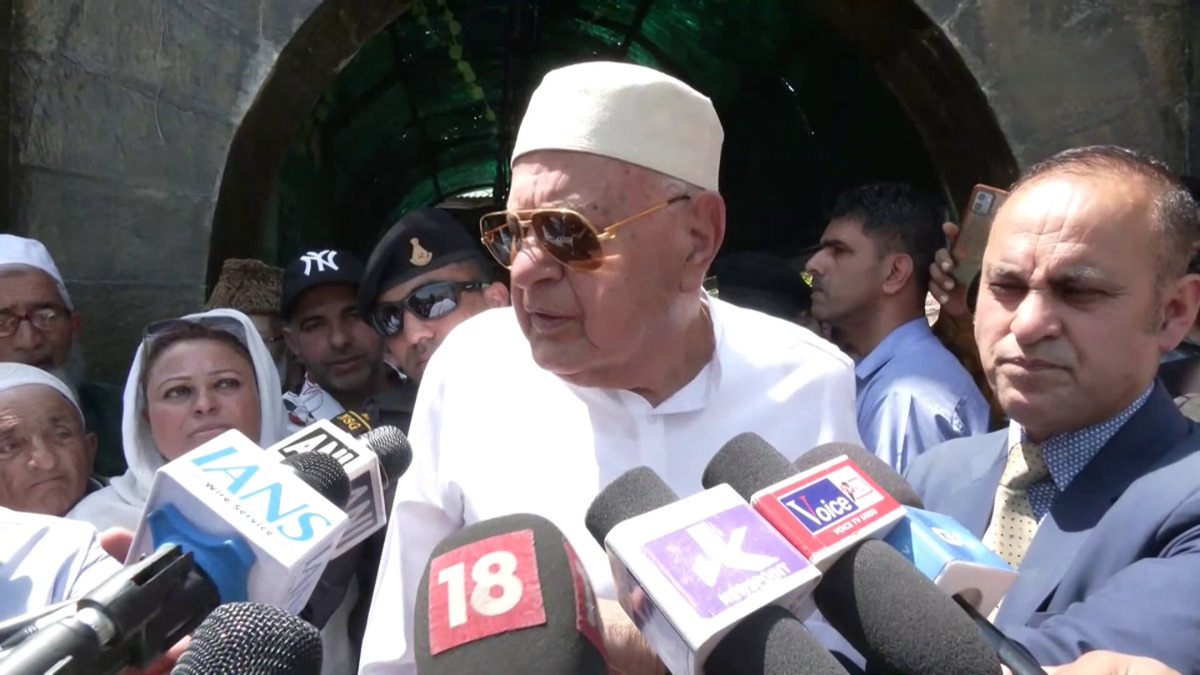
National Conference president Dr. Farooq Abdullah has made an unusual political declaration ahead of the party’s proposed statehood protest in New Delhi.
“I will not invite anyone.”
At first glance, the statement appears simple. But politically, it carries deeper significance.
As the National Conference prepares to intensify its campaign for restoration of Jammu and Kashmir’s statehood, Farooq Abdullah’s refusal to personally mobilize supporters signals a deliberate strategic choice.
The veteran leader appears to be arguing that if statehood genuinely resonates with the people, participation should emerge naturally rather than through organized invitations or political pressure.
In doing so, he has transformed the upcoming Delhi protest from a routine party demonstration into something larger: a test of public sentiment.
Why This Protest Matters
The proposed protest comes at a critical moment in Jammu and Kashmir politics.
Over recent weeks, the National Conference has steadily escalated its messaging.
First came the Dachigam retreat, where party legislators reviewed governance, political strategy, and future priorities.
Then followed a series of increasingly assertive statements:
- Dr. Farooq Abdullah declared Article 370 inseparable from Kashmir’s identity.
- Chief Minister Omar Abdullah described the abrogation of Article 370 as the government’s “biggest policy mistake.”
- Tanvir Sadiq argued that the time had come to remind New Delhi of its promise on statehood.
Now the focus is shifting from rhetoric to mobilization.
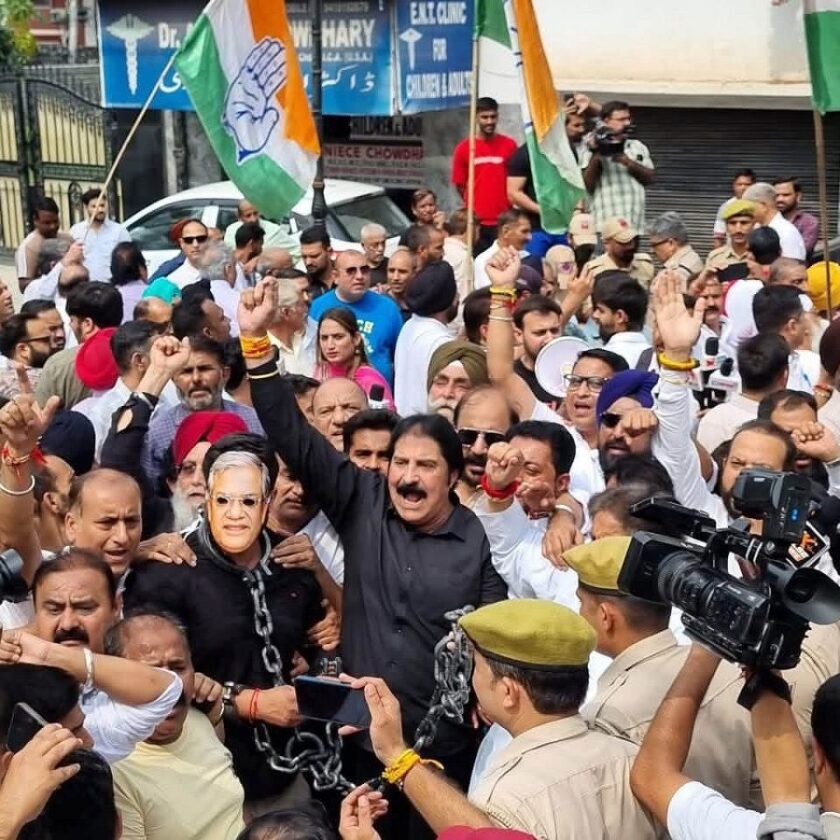
The Delhi protest represents the first major attempt to physically demonstrate public support for statehood restoration beyond speeches and resolutions.
Why Farooq Is Avoiding Direct Mobilization
In traditional South Asian politics, mass participation is often achieved through extensive organizational mobilization.
Political parties typically:
- Arrange transportation.
- Contact workers directly.
- Issue appeals.
- Encourage attendance through local structures.
Farooq Abdullah’s remarks suggest a different approach.
His message appears to be:
“If people believe in the cause, they should come because they want to—not because they were asked.”
This framing serves multiple purposes.
Protecting the Moral Argument
The National Conference has consistently argued that statehood is a constitutional entitlement rather than a political concession.
By refusing to personally solicit participation, Farooq reinforces the idea that the movement is based on principle rather than party management.
Countering Opposition Criticism
Rivals have repeatedly accused the NC of relying on optics and symbolism.
A voluntary turnout allows the party to argue that support is authentic rather than orchestrated.
Testing Ground Reality
Perhaps most importantly, the protest could provide the party with a realistic measure of current public engagement.
The Real Political Risk
Farooq Abdullah’s strategy also carries significant political risk.
A protest built around voluntary participation creates a simple metric by which success or failure can be judged.
If turnout is substantial:
- NC can claim strong public backing.
- The statehood issue gains national visibility.
- Delhi faces increased political pressure.
If turnout is underwhelming:
- Opposition parties will quickly question NC’s relevance.
- Critics may argue that public enthusiasm for the party’s strategy is overstated.
- Internal concerns about mobilization capacity could intensify.
In that sense, Farooq’s confidence is also a gamble.
Opposition Is Already Watching
The planned protest arrives amid increasing political competition.
PDP’s Position
The PDP has recently argued that Jammu and Kashmir’s political leadership should emulate Ladakh’s unified approach rather than pursue party-specific initiatives.
For PDP leaders, the key question will be whether NC can genuinely convert public sentiment into collective action.
Peoples Conference’s Position
Peoples Conference chief Sajad Lone has repeatedly accused the NC government of focusing on symbolism over governance outcomes.
A weak turnout would strengthen that argument.
BJP’s Position
The BJP is likely to view the protest through a different lens.
Party leaders continue to maintain that statehood restoration remains under consideration while emphasizing development and governance achievements.
Beyond Statehood: A Credibility Test for NC
The significance of the protest extends beyond the statehood demand itself.
For the National Conference, it represents an opportunity to answer several growing questions:
Does the Party Still Command Emotional Resonance?
Statehood remains popular, but political support does not automatically translate into mobilization.
Can Constitutional Issues Still Drive Public Participation?
Recent years have seen growing public focus on unemployment, inflation, healthcare, education, and infrastructure.
The protest will reveal whether constitutional demands continue to motivate people at the same level.
Is NC Still the Primary Vehicle for Political Aspirations?
Competing narratives from PDP, Peoples Conference, BJP, and independent voices have challenged the NC’s traditional dominance.
The Delhi protest may provide clues about where public opinion is heading.
Why Timing Matters
The timing of the planned demonstration is unlikely to be accidental.
The Monsoon Session of Parliament traditionally brings heightened political attention to national issues.
By staging a protest during this period, the National Conference hopes to:
- Keep statehood in the national spotlight.
- Generate media attention.
- Influence parliamentary discourse.
- Demonstrate public backing for its demands.
In essence, the party is attempting to move the debate from Srinagar to New Delhi.
A Different Kind of Political Messaging
Farooq Abdullah’s statement also reflects a broader theme increasingly visible in NC’s recent rhetoric.
Instead of demanding favors, party leaders are framing statehood as:
- A constitutional commitment.
- A democratic necessity.
- A political obligation.
- A matter of institutional credibility.
This explains why Farooq’s language is noteworthy.
By saying he will not invite anyone, he is implicitly suggesting that the cause should not require persuasion.
If the demand is just, people should arrive on their own.
The Bigger Question: Will People Show Up?
Ultimately, the success of the protest will not be measured by speeches.
Nor will it be measured by social media engagement.
It will be measured by participation.
For months, Jammu and Kashmir’s political discourse has been dominated by promises, declarations, and competing narratives.
The Delhi protest offers something different.
It offers a measurable test.
A test of public sentiment.
A test of organizational strength.
A test of political credibility.
And perhaps most importantly, a test of whether statehood remains the defining political cause that the National Conference believes it to be.
Conclusion
Farooq Abdullah’s refusal to personally invite people to the National Conference’s Delhi protest may appear restrained, but politically it is a bold move.
Rather than manufacturing participation, he is betting on conviction.
Rather than relying on mobilization machinery alone, he is appealing to public belief in the statehood cause.
The result is that the planned Delhi demonstration has become more than a protest.
It has become a referendum of sorts—on public patience, political trust, and the National Conference’s ability to transform constitutional demands into a genuine people’s movement.
When the protest takes place, observers will be counting more than attendees.
They will be measuring the strength of an idea.