Yasin Malik’s Delhi High Court Appeal: NIA Asserts Political Links Can’t Override Terror Charges
By: Javid Amin | 23 April 2026
A Defining Legal Battle in Kashmir’s Separatist Landscape
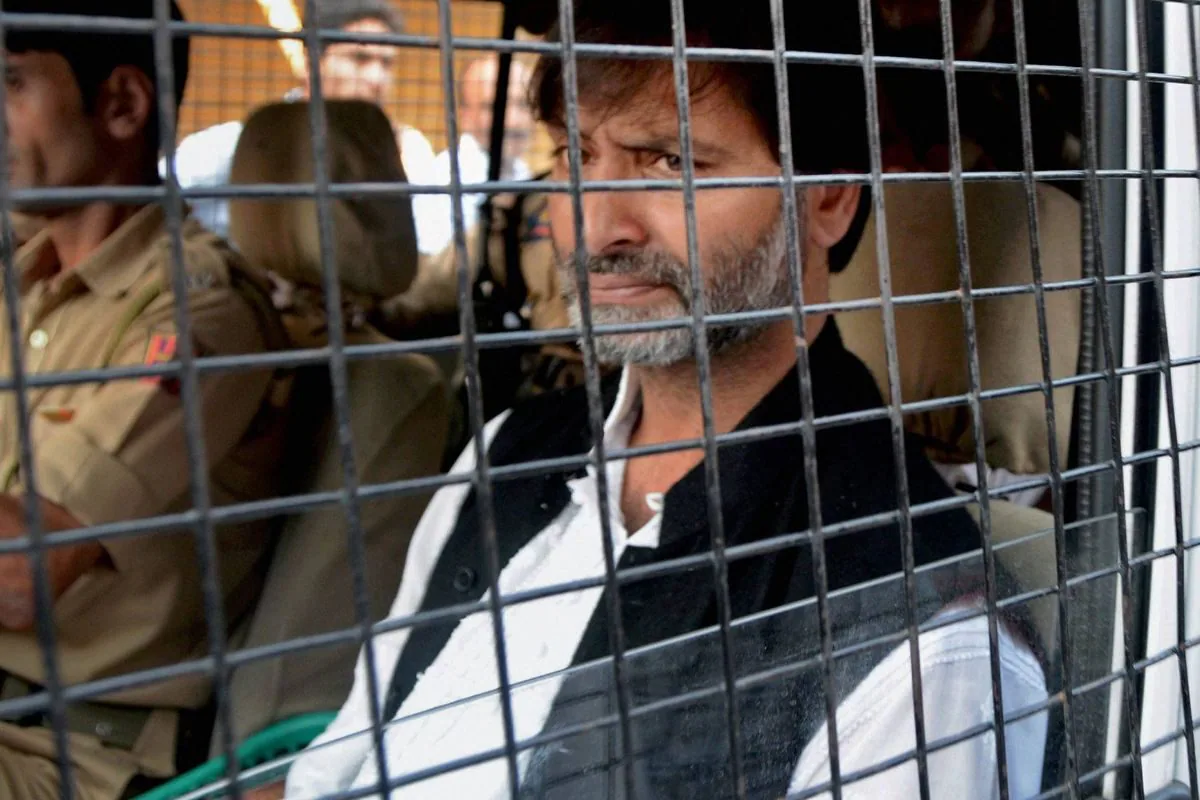
The appeal of Yasin Malik before the Delhi High Court has emerged as one of the most consequential legal battles tied to Kashmir’s separatist movement. In a firm submission, the National Investigation Agency (NIA) has argued that invoking past interactions with senior politicians and bureaucrats does not absolve Malik of serious charges related to terror funding and militant activities.
At its core, the case is not merely about one individual—it represents a decisive moment in India’s approach to separatism, legality, and accountability.
NIA’s Stand: Political Engagement Is No Legal Shield
The NIA has made its position unambiguous: Malik’s attempts to portray himself as a political figure—by referencing meetings with top Indian leaders—hold no legal weight against substantive evidence.
According to the agency:
- Engagement with political leaders does not negate involvement in unlawful activities.
- The charges are backed by financial trails, witness testimonies, and Malik’s own admissions.
- Terror financing, regardless of political context, remains prosecutable under Indian law.
This argument directly challenges a long-standing narrative where separatist leaders operated in a grey zone—engaging politically while allegedly supporting or benefiting from militant ecosystems.
Background: From Political Face to Convicted Accused
In 2022, a trial court delivered a landmark verdict after Malik pleaded guilty under the stringent provisions of the Unlawful Activities (Prevention) Act (UAPA). The charges included:
- Raising funds for militant activities
- Membership in unlawful organizations
- Conspiracy to fuel unrest in Kashmir
The court sentenced him to life imprisonment, marking one of the most significant convictions of a high-profile separatist leader in recent decades.
Malik’s defense has since leaned heavily on his past political engagements, attempting to reposition his role from militant to negotiator. The NIA, however, insists that such positioning cannot override legal culpability.
Inside the Delhi High Court Proceedings
The High Court is currently examining appeals challenging both the conviction and sentencing. The proceedings are focused on:
- Whether Malik’s guilty plea should influence sentencing leniency
- The weight of his past political interactions as mitigating factors
- The robustness of the prosecution’s evidence
Legal experts suggest that while guilty pleas can sometimes reduce sentences, the gravity of terror-related charges under UAPA significantly limits judicial flexibility.
Possible Outcomes: What Lies Ahead?
1. Life Sentence Upheld (Most Likely)
The court may affirm the 2022 verdict, reinforcing India’s zero-tolerance policy on terror financing.
2. Sentence Reduction
A reduced sentence could be considered if mitigating factors—such as his political engagement or admission of guilt—are deemed relevant.
3. Case Remanded
The High Court could send the case back for re-evaluation, extending the legal process.
4. Sentence Suspension (Highly Unlikely)
Given the seriousness of the charges and Malik’s own plea, suspension remains improbable.
The Larger Crackdown: Dismantling Funding Networks
Malik’s conviction is part of a broader, systematic crackdown initiated in 2017 targeting separatist financing networks across Kashmir.
Key Features of the Crackdown:
- Hawala Channels Exposed: Authorities uncovered covert financial routes funneling money into the Valley.
- Cross-Border Funding: Links traced to Pakistan-based groups like Lashkar-e-Taiba and Hizbul Mujahideen.
- Property Attachments: Assets of several separatist leaders seized.
- NGO Scrutiny: Organizations allegedly acting as financial conduits investigated and banned.
This multi-agency effort has significantly disrupted the financial lifelines that once sustained separatist mobilization.
Other Key Figures Under Scrutiny
Malik is not alone. Several prominent separatist leaders have faced legal action, including:
- Shabir Shah
- Asiya Andrabi
- Masarat Alam
Many leaders associated with the All Parties Hurriyat Conference have been questioned, arrested, or seen their influence decline amid sustained investigations.
Impact on Kashmir’s Political Landscape
The crackdown has reshaped the region’s socio-political dynamics:
- Decline of Hurriyat Influence: Leadership vacuum due to arrests and legal pressures
- Disrupted Funding Flows: Reduced capacity for organizing protests and mobilization
- Shift in Narrative: Focus has moved from ideological struggle to financial accountability
Authorities increasingly frame militancy as not just ideological but economically sustained—making financial disruption a key counter-strategy.
Timeline: From Raids to Conviction
2017
NIA registers a major terror funding case; raids conducted across multiple cities.
2018–2019
Arrests of key figures and exposure of cross-border funding channels.
2020–2021
NGOs and trusts investigated; several banned under UAPA.
2022
Yasin Malik pleads guilty; sentenced to life imprisonment.
2023–2025
Expanded raids, property attachments, and widening of investigations.
2026 (Ongoing)
Delhi High Court hears appeals; NIA reiterates that political links are irrelevant to criminal liability.
Why This Case Matters Beyond One Individual
The implications of Malik’s case extend far beyond the courtroom:
- Legal Precedent: Defines how courts treat dual political-militant identities
- Policy Signal: Reinforces India’s hardline stance on terror financing
- International Optics: Closely watched as a test of judicial independence and counter-terror policy
In essence, this is not just a legal proceeding—it is a structural shift in how the Indian state addresses separatism.
Final Analysis: A Turning Point in Accountability
The NIA’s argument before the Delhi High Court draws a clear line: political engagement cannot act as a shield against allegations of terror financing. The court’s eventual ruling will determine whether that line becomes a firm judicial doctrine.
Given the weight of evidence and Malik’s own guilty plea, the likelihood leans toward the life sentence being upheld. However, even a nuanced ruling could carry far-reaching consequences for Kashmir’s political and legal future.