Kashmir Liquor Debate 2026: Morality vs Revenue vs Political Control
By: Javid Amin | 22 April 2026
A Valley Divided: More Than Just a Debate Over Alcohol
In Kashmir, the question of liquor is not merely administrative—it is deeply emotional, cultural, and political. What appears on paper as an excise policy issue unfolds on the ground as a sensitive conflict between identity, governance, and economic priorities.
As of 2026, the debate remains unresolved. The administration frames liquor availability as essential for tourism and revenue generation, while large sections of Kashmiri society perceive it as an erosion of cultural and religious values. Beneath this surface lies a deeper concern: who gets to decide the Valley’s future—the local population or policymakers in New Delhi.
Morality and Social Opposition: A Deep-Rooted Resistance
For the majority Muslim population in Kashmir, alcohol is not just discouraged—it is seen as fundamentally incompatible with religious beliefs and social ethics.
Faith and Cultural Identity
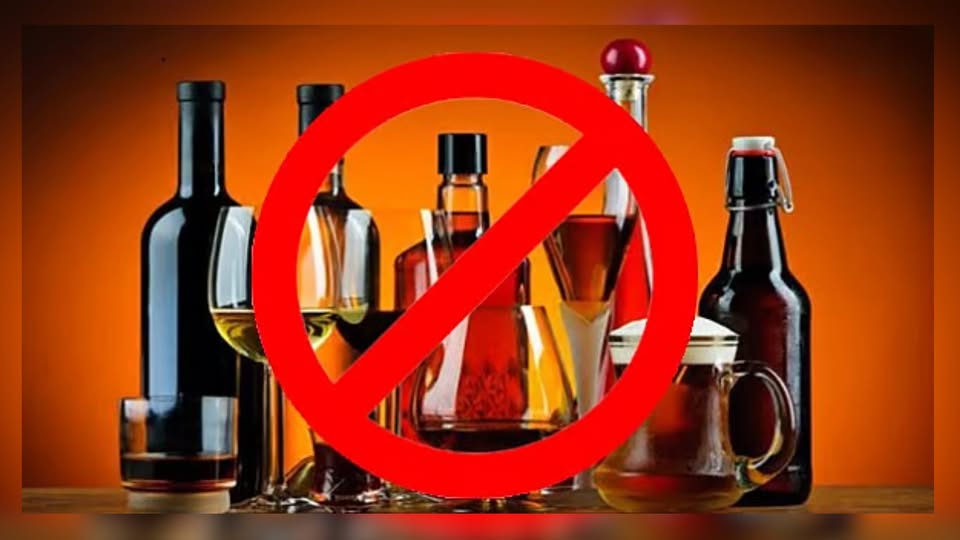
Islamic teachings strictly prohibit alcohol consumption, and this principle strongly shapes public sentiment in Kashmir. Religious leaders and community groups have consistently demanded a complete ban, arguing that even limited availability normalizes behavior that contradicts societal values.
The Power of Social Sanction
Unlike many other regions, Kashmir’s resistance to liquor has historically been enforced not through strict legislation but through collective societal pressure. During the 1990s militancy period, liquor shops were effectively shut down—not by law, but by fear, stigma, and community enforcement.
Even today, consumption largely remains discreet, often confined to private spaces or specific tourist zones. Public drinking is socially unacceptable and can invite backlash.
Moral Policing and Civil Society
Clerics and civil society organizations continue to raise concerns about what they describe as “cultural dilution.” Their argument is straightforward: introducing or expanding liquor access risks altering the Valley’s social fabric, particularly among younger generations.
Revenue and Tourism: The Government’s Economic Argument
While opposition remains strong, the administration—especially under the broader policy framework of the Government of India led by Narendra Modi—has taken a pragmatic stance.
Excise Revenue: Limited but Strategic
Liquor contributes to excise revenue, but its share in Jammu & Kashmir’s overall economy is relatively modest. Key sectors such as horticulture (notably apples) and tourism generate significantly higher income.
However, officials argue that every revenue stream matters, especially in a region heavily dependent on government spending and subsidies.
Tourism Optics: Catering to a Wider Audience
Authorities increasingly position Kashmir as a premium tourist destination. The logic is simple: high-spending tourists—particularly from metropolitan India and abroad—expect certain amenities, including access to alcohol.
Hotels, especially in tourist hubs like Gulmarg and Srinagar, often cater to this demand quietly, balancing visitor expectations with local sensitivities.
A “Modern” Image Strategy
Liquor availability is also framed as part of a broader effort to project Kashmir as open, modern, and investment-friendly. This aligns with post-2019 narratives following the Abrogation of Article 370, where integration and economic normalization have been emphasized.
Political Control and Historical Context: A Long-Standing Fault Line
The liquor debate is not new—it has evolved alongside Kashmir’s political history.
From Sheikh Abdullah to Legislative Tensions
During the era of Sheikh Abdullah, liquor was allowed under state control. In 1977, Syed Ali Shah Geelani introduced a private member’s bill seeking a ban.
Interestingly, Abdullah opposed the bill, emphasizing state control and revenue considerations—a stance that mirrors current policy arguments.
Militancy Era: De Facto Prohibition
The 1990s marked a turning point. With militancy rising, liquor sales vanished almost overnight. Shops shut down, and consumption went underground. Though never legally banned, alcohol became socially and practically inaccessible.
Contemporary Politics: Control vs Consent
Today, leaders like Naeem Akhtar argue that the issue is less about morality and more about governance. According to this perspective, liquor policy reflects centralized decision-making rather than local consensus.
Critics increasingly view the policy as part of a broader pattern where decisions are perceived as being imposed from Delhi, deepening feelings of political alienation in the Valley.
Ground Reality: A Fragile, Unspoken Compromise
On the ground, Kashmir operates in a grey zone.
Liquor is neither fully accepted nor completely banned. It exists in a controlled, semi-hidden ecosystem—available in select outlets, often linked to tourism infrastructure, but socially discouraged.
This creates a paradox:
- Legally permitted, socially restricted
- Economically justified, culturally contested
The result is a constant push-and-pull between administration and society.
Timeline: Liquor Policy in Kashmir
Pre-1947 (Dogra Rule)
Liquor shops operated openly, catering mainly to elites and colonial officials. Consumption was limited but tolerated.
1950s–1970s
Under Sheikh Abdullah, liquor remained available through regulated channels. The 1977 ban proposal by Syed Ali Shah Geelani failed.
1990s
Militancy led to a complete shutdown of liquor sales through informal enforcement.
2000s
Tourism revival brought back limited availability, especially in hotels. Debate resurfaced.
2010s
Excise revenue gained importance; governments framed liquor as economically necessary.
2020s (Post-Article 370)
Policy expansion under the Government of India emphasized tourism and modernization, triggering renewed opposition.
2026 (Present)
The debate peaks again:
- Society demands a ban
- Government defends regulated availability
- Political narratives intensify
Future Outlook: Identity, Governance, and an Unresolved Question
Kashmir’s liquor debate is unlikely to be resolved through policy alone. It sits at the intersection of identity, economics, and political authority.
Key Tensions Ahead
- Morality vs Modernity: Can Kashmir embrace tourism-driven change without compromising cultural identity?
- Revenue vs Resistance: Is the economic benefit worth the social cost?
- Control vs Representation: Who ultimately decides—local communities or central policymakers?
The Likely Trajectory
Without structured community consultation or a nuanced, region-specific policy, the issue will continue to resurface. Each attempt to expand liquor access risks triggering backlash, reinforcing mistrust between the administration and the public.
Conclusion: A Symbol of a Larger Conflict
At its core, Kashmir’s liquor debate is not about alcohol—it is about power, identity, and autonomy.
For the government, liquor represents revenue, tourism, and modernization.
For many Kashmiris, it symbolizes cultural erosion and political disregard.
Until these two narratives find common ground, the debate will persist—not just in policy circles, but in the everyday conversations that shape the Valley’s future.