“I Respect Farooq Sahab, But His Remarks Were Wrong”: Azad’s Response Deepens Row Over Kashmir Comments
By: Javid Amin| 25 October 2026
Former Chief Minister says Pakistan is an enemy of India and J&K; BJP demands action, while Congress distances itself from NC chief’s remarks
Srinagar, October 26: A political controversy over National Conference president Farooq Abdullah’s remarks on Pakistan and Kashmir has widened, with former Jammu and Kashmir Chief Minister Ghulam Nabi Azad publicly rejecting Abdullah’s assessment and the Bharatiya Janata Party (BJP) demanding an apology and action against the veteran leader.
Azad, who heads the Democratic Progressive Azad Party (DPAP), criticised Abdullah while maintaining that he respected him personally. His response has become one of the most prominent interventions in the controversy, shifting the debate beyond the expected confrontation between the BJP and the National Conference (NC).
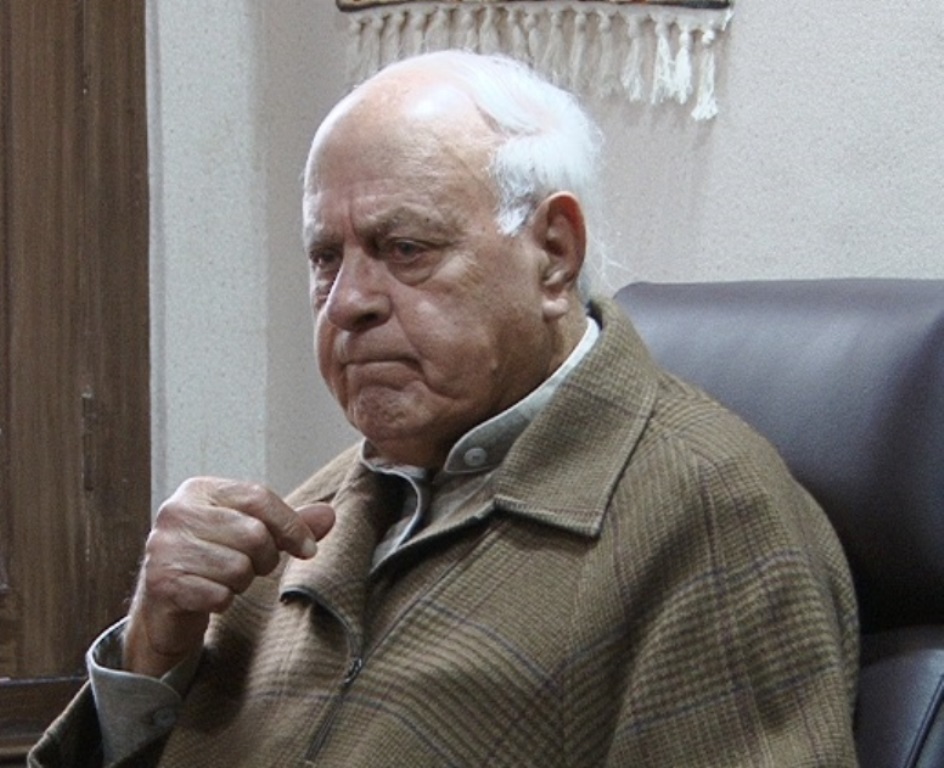
The row began after Abdullah addressed a party workers’ convention in north Kashmir’s Baramulla district on October 24. He argued that Pakistan’s repeated efforts to raise the Kashmir issue at international forums were helping protect the region’s interests and identity, while questioning whether people in Jammu and Kashmir could expect justice from the Centre.
The remarks drew sharp criticism from BJP leaders, who accused him of giving political legitimacy to Pakistan’s position on Kashmir. The controversy also prompted criticism from Shia leader and former minister Imran Reza Ansari, while the Jammu and Kashmir Congress subsequently distanced itself from Abdullah’s position.
What Farooq Abdullah Said About Pakistan and Kashmir
Speaking to NC workers in Baramulla, Abdullah referred to Pakistan’s continued efforts to raise Kashmir at international forums and suggested that international attention was constraining the Centre’s actions towards Jammu and Kashmir.
He said Pakistan’s leadership repeatedly maintained that the Kashmir issue remained unresolved and argued that this international advocacy was helping protect the region. He also questioned whether people in Jammu and Kashmir could expect justice from New Delhi and urged them to stand firm in defending their rights and identity.
His comments quickly became controversial because critics interpreted them as portraying Pakistan as a protector of Kashmiris despite its role in the region’s history of conflict and the allegations of cross-border terrorism levelled against it by India.
However, the political debate also involves a distinction between two separate questions: whether Pakistan’s diplomatic campaign keeps Kashmir on the international agenda, and whether that campaign should be regarded as beneficial or protective for the people of Jammu and Kashmir.
Abdullah’s critics have rejected the second proposition. The NC president’s comments, meanwhile, were made in the context of his concerns about the region’s political future, rights and identity. His remarks should therefore be assessed in their full context rather than reduced to a single phrase.
Ghulam Nabi Azad: “His Statement Is Completely Incorrect”
Azad issued a direct response on October 25, rejecting Abdullah’s suggestion that Pakistan was protecting the people of Jammu and Kashmir.
“I respect Farooq sahab, but his statement is completely incorrect. If anyone is an enemy of India and the people of J&K, it is Pakistan,” Azad said in a post on X.
He pointed to the situation in Pakistan-occupied Kashmir, where residents have staged protests over their demands and grievances. Azad also argued that successive governments in India had contributed to Jammu and Kashmir’s development since Independence, regardless of their political affiliations.
“Since 1947, successive Central governments, from Nehru to Modi, have contributed to J&K’s development, irrespective of political affiliations,” he added.
Azad’s response placed development and Pakistan’s record in the region at the centre of his criticism. Roads, tunnels, railway infrastructure and other public projects in Jammu and Kashmir, he argued, reflected investment and policy decisions by Indian governments rather than any protective role played by Pakistan.
The political significance of Azad’s intervention lies partly in his own background. A former Congress leader and former chief minister, he has long been a prominent figure in Jammu and Kashmir politics. His criticism of Abdullah gives the controversy a dimension beyond the BJP’s familiar opposition to the NC’s position on Kashmir.
Yet Azad’s statements remain a political assessment. His argument about development and Pakistan’s role reflects his position in the debate, while questions about the region’s political future, governance and public investment require consideration of the broader historical and policy record.
BJP Leaders Demand Apology and Action
The BJP responded sharply to Abdullah’s remarks, accusing him of echoing Pakistan’s narrative on Kashmir and demanding that he withdraw or apologise for his comments.
Jammu and Kashmir BJP spokesperson Altaf Thakur described the remarks as anti-national and demanded police action. Other BJP leaders also called for an apology, arguing that Pakistan’s continued involvement in the Kashmir dispute could not be separated from the violence and insecurity that the region has experienced over decades.
BJP leaders have repeatedly pointed to Pakistan’s alleged support for cross-border terrorism and attacks on civilians and security personnel. From their perspective, presenting Pakistan’s international advocacy as a protective force ignores the suffering associated with violence in Jammu and Kashmir.
The party has also argued that the abrogation of Article 370 and closer integration with the rest of India have contributed to the region’s progress. BJP national spokesperson RP Singh, for example, credited the constitutional change and integration with India for Kashmir’s development and tourism growth.
These are the BJP’s political claims and interpretations. Demands for police action or accusations of sedition do not, by themselves, establish that an offence has occurred. Any legal question would have to be assessed by the competent authorities under applicable law.
The controversy has nevertheless provided the BJP with an opportunity to challenge the NC leadership over its political messaging on Pakistan, national identity and the future of Jammu and Kashmir.
Imran Reza Ansari’s Criticism Adds Another Dimension
Shia leader and former minister Imran Reza Ansari also criticised Abdullah, urging people not to follow the National Conference president’s example.
In a post on X, Ansari said: “Just a humble and brotherly request to my fellow Kashmiris. Please do not emulate Farooq sahab.”
Ansari also questioned the difference between the freedom available to prominent political figures and the consequences ordinary people might face for making similar statements. His comments were critical not only of Abdullah’s remarks but also of what he portrayed as unequal treatment within Kashmir’s political environment.
The intervention broadened the debate beyond the BJP’s objections, bringing questions of political accountability, public responsibility and the influence of established leaders into the discussion.
However, Ansari’s criticism represents his own political position. It does not establish that all political groups or communities in Jammu and Kashmir share his assessment.
Congress Distances Itself From the Remarks
The response has not remained confined to the BJP and regional political rivals.
The Jammu and Kashmir Congress has also distanced itself from Abdullah’s remarks, according to reporting published on October 26. The party’s response is significant because Congress has been an ally supporting the NC-led government in Jammu and Kashmir.
Congress leaders maintained that Pakistan has no right to interfere in India’s internal affairs. The party’s position underscores a distinction between political disagreements with the Centre over Jammu and Kashmir and accepting Pakistan’s role in the region’s future.
This development also complicates the suggestion that the controversy has produced only criticism from outside the NC’s political circle. While the NC leadership’s own formal position and any subsequent clarification from Abdullah remain important, the Congress response shows that his remarks have generated discomfort beyond the BJP.
No clear public endorsement of Abdullah’s specific claim by a major mainstream political party was identified in the reporting reviewed for this article. That does not establish that no individual agrees with him; it means that a prominent, explicit endorsement could not be independently verified from the sources consulted.
Why the Remarks Have Become So Controversial
The reaction reflects more than a familiar exchange of accusations between political parties. Three wider issues help explain why the comments have attracted such attention.
1. Pakistan’s role remains deeply contested
India has consistently accused Pakistan of supporting cross-border terrorism and attempting to destabilise Jammu and Kashmir. Pakistan, in turn, has continued to raise Kashmir at international forums.
Against this background, Abdullah’s argument that Pakistan’s international advocacy helps protect Kashmiris has been received very differently by different political actors. His critics see it as overlooking the consequences of Pakistan’s involvement in the region. His remarks also touch on a wider question: whether international attention can influence how the Kashmir issue is discussed and handled politically.
The two questions are related but not identical. The fact that a country raises an issue internationally does not, by itself, prove that its actions protect the people concerned. Equally, a political argument about international pressure should be examined in its full context before conclusions are drawn about the speaker’s intentions.
2. Kashmir’s political future remains a sensitive issue
Debates over Article 370, the restoration of statehood and the constitutional and political rights of Jammu and Kashmir’s residents continue to shape the region’s public discourse.
The abrogation of Article 370 in August 2019 changed Jammu and Kashmir’s constitutional position, while the demand for restoration of statehood remains a major political issue. These developments form part of the context in which regional leaders speak about rights, identity and the relationship between Jammu and Kashmir and the Union government.
Abdullah’s questioning of the Centre’s intentions therefore touches on concerns that extend beyond relations with Pakistan. His critics, however, argue that such concerns should be expressed without giving Pakistan the appearance of acting as a protector of Kashmiris.
3. The speaker’s political standing amplifies the impact
Abdullah is a veteran leader, a former chief minister and the president of the National Conference. His statements carry more political weight than comments made by an obscure or marginal figure.
That standing ensures that his words are likely to be scrutinised nationally, especially when they concern Pakistan, Kashmir’s constitutional position and the Centre’s approach to the region.
The reaction also demonstrates how statements by senior leaders can quickly become tests of political identity. Supporters and opponents often interpret the same remarks through different understandings of national security, democratic rights and Kashmir’s future.
What About Support Within the National Conference?
The available reports reviewed for this article do not establish a formal NC decision to repudiate Abdullah’s remarks. Nor do they establish that every NC leader endorses his specific assessment of Pakistan’s role.
It is important to distinguish the position of a party president from a formally adopted party statement. Unless the party issues an official clarification or another senior leader publicly explains the organisation’s position, claims that the NC has either fully endorsed or rejected the remarks would go beyond the available evidence.
Similarly, the absence of a public statement from an individual leader cannot automatically be treated as support or opposition.
The next important development will be whether Abdullah or the NC leadership offers a clarification, defends the statement in greater detail or addresses the criticism directly.
Current Scenario: Political Pressure Widens Beyond the BJP
As of October 26, the controversy has expanded beyond the initial BJP backlash. Azad has publicly rejected Abdullah’s assessment, Imran Reza Ansari has urged Kashmiris not to emulate him, and the Jammu and Kashmir Congress has distanced itself from the remarks.
The BJP continues to demand an apology and has called for action. These demands remain political calls, not a finding of legal guilt.
For Abdullah and the National Conference, the immediate challenge is to address the criticism while maintaining their position on Jammu and Kashmir’s rights, identity and political future. For the opposition, the controversy offers an opportunity to question the NC leadership’s judgement on a sensitive national issue.
The debate also highlights a broader divide in Kashmir politics: how to discuss the region’s unresolved political concerns while accounting for Pakistan’s role in the conflict and India’s position that Jammu and Kashmir is an integral part of the country.
Azad’s intervention is particularly notable because it combines personal respect for Abdullah with an unambiguous rejection of his argument. But whether the episode produces a lasting political realignment or remains a short-lived controversy will depend on subsequent statements, the NC’s response and whether other political leaders choose to engage with the substance of the debate.
For now, the dispute has placed Pakistan’s role, Kashmir’s political future and the responsibility of senior leaders to choose their words carefully back at the centre of Jammu and Kashmir’s political conversation.
Follow Us on WhatsApp
Get Breaking News, Exclusive Updates & In-Depth Analysis from Kashmir and beyond, delivered straight to your phone.
Join our WhatsApp Channel: Follow Now