The Court seeks responses on alleged voter-roll irregularities while separately issuing notices over the October 12 march towards the Supreme Court, placing electoral transparency and the limits of political mobilisation under judicial scrutiny.
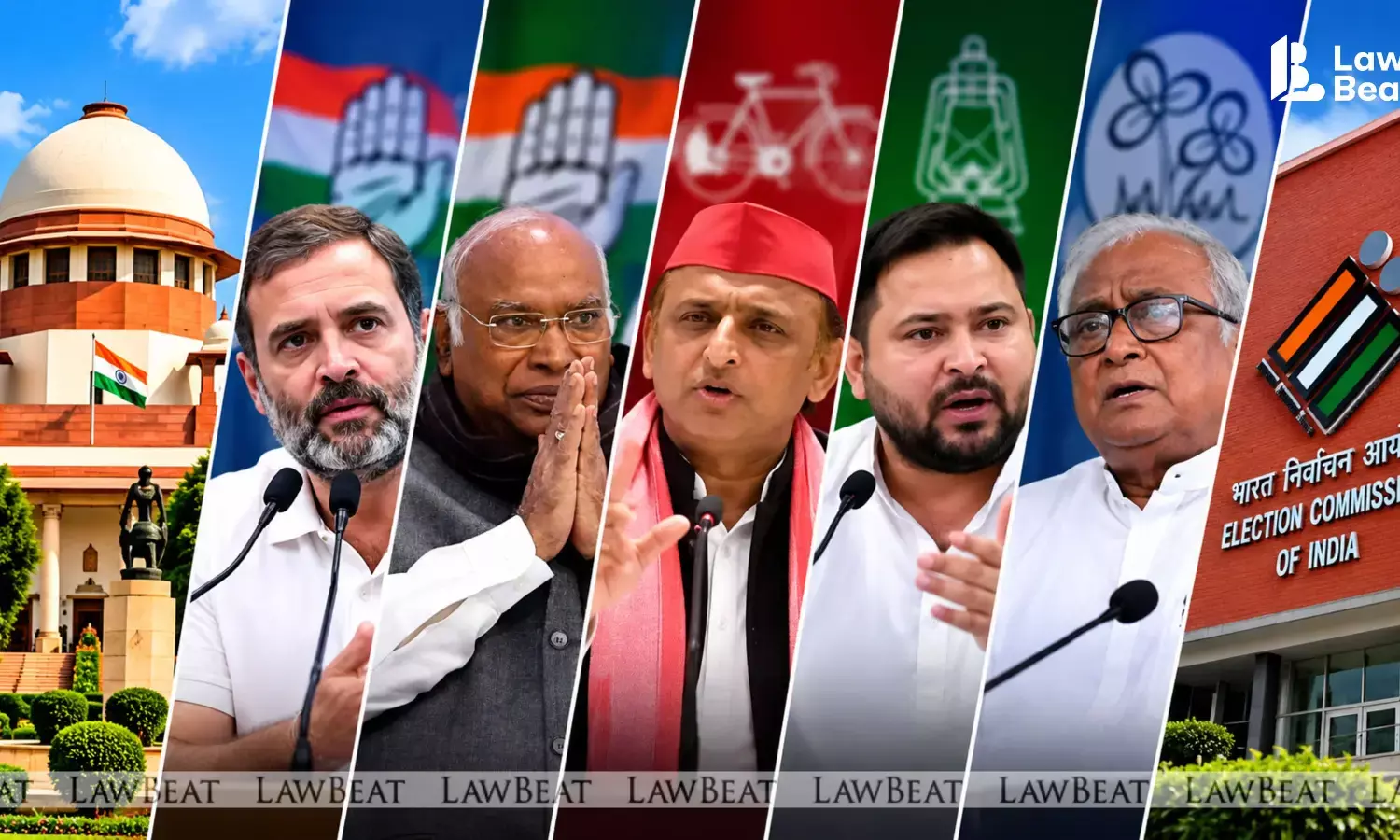
New Delhi: The Supreme Court on Thursday opened a significant new phase in the political and legal confrontation over India’s electoral-roll revision, issuing notice to the Election Commission of India (ECI) and its senior officials on a petition led by Leader of Opposition Rahul Gandhi alleging irregularities in the Special Intensive Revision (SIR) exercise.
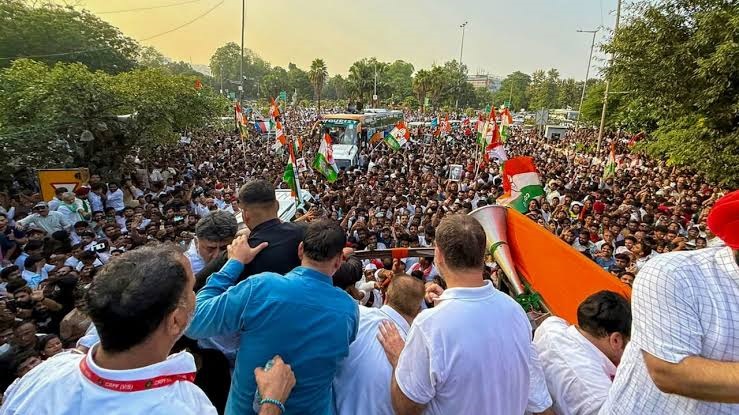
At the same time, the Court questioned the conduct surrounding the INDIA bloc’s October 12 march towards the Supreme Court and issued notices in a separate petition challenging the demonstration near the judicial complex.
The two developments place the opposition’s campaign for electoral transparency under judicial scrutiny while raising a separate question about how political leaders should express their demands when a matter is already before the courts.
The Bench, comprising Chief Justice of India Surya Kant and Justice Joymalya Bagchi, sought responses from the Election Commission on allegations concerning voter deletions, additions and modifications during the SIR exercise. The petitioners have sought an independent audit of the process, greater disclosure of relevant records and safeguards against the removal of eligible voters without due process.
The notices are an important procedural development, but they do not establish that the allegations of electoral irregularities are true. The Election Commission will have an opportunity to respond, and the substantive questions remain for the Court to consider.
Supreme Court seeks the Election Commission’s response
The petition filed by Rahul Gandhi and several INDIA bloc leaders challenges aspects of the Election Commission’s handling of the SIR exercise, arguing that the process raises concerns about transparency, decision-making and the protection of eligible voters.
The respondents named in the petition include the Election Commission of India, Chief Election Commissioner Gyanesh Kumar and Election Commissioners Sukhbir Singh Sandhu and Vivek Joshi.
The opposition has questioned whether decisions affecting electoral rolls were taken with adequate transparency and whether the procedures provide sufficient protection to citizens whose names may be removed or altered.
The petition also seeks judicial scrutiny of the Commission’s decision-making process and access to records that could help establish how changes to voter lists were authorised and implemented.
For the petitioners, the central concern is that errors or arbitrary decisions in electoral-roll revision could prevent eligible citizens from exercising their right to vote. They have argued that a transparent, independently audited process is necessary to protect confidence in the electoral system.
The Election Commission’s response will be important in determining how these allegations are addressed. The Court will need to consider the relevant legal framework, the procedures followed by the Commission and the evidence presented by the parties.
The distinction between an allegation and an established irregularity is critical. Electoral rolls are subject to revision, and changes can occur for legitimate reasons, including deaths, migration, duplication and corrections. The question in the present dispute is whether the process has complied with applicable law and adequately protected eligible voters.
What the INDIA bloc wants the Court to examine
The opposition’s petition seeks a judicial examination of the SIR process and several measures intended to improve transparency and accountability.
Among the principal demands outlined in the petition are:
- An independent investigation or audit of alleged irregularities in voter deletions and modifications.
- Disclosure of records and information relating to the SIR exercise and the decisions taken during its implementation.
- Publication of deletion data, including the reasons for removing names from electoral rolls.
- Safeguards ensuring that eligible voters are not removed without proper notice and a reasonable opportunity to be heard.
- Interim suspension of the ongoing SIR exercise while the Court considers the issues raised.
The petitioners have also raised concerns about the manner in which decisions are made within the Election Commission and the records available to verify those decisions.
These requests go beyond a dispute over individual names on voter lists. They concern the procedures through which electoral rolls are maintained and the mechanisms available to challenge mistakes.
The Court will have to determine which, if any, of the requested measures are warranted under the law. Issuing notice to the respondents is the beginning of that examination, not a final endorsement of the petitioners’ claims.
‘Nobody can browbeat the judiciary’: Court questions the October 12 march
The hearing also brought the opposition’s protest strategy into focus.
On October 12, Rahul Gandhi and other INDIA bloc leaders participated in a march towards the Supreme Court amid their campaign against alleged voter deletions and their demand for greater accountability from the Election Commission.
The demonstration followed an unsuccessful request by opposition leaders to meet the Chief Justice of India and submit a memorandum concerning the SIR exercise and the Chief Election Commissioner. The Chief Justice’s office had indicated that the issues were already pending before the Court and should be pursued through appropriate legal proceedings.
During Thursday’s proceedings, the Bench expressed concern about attempts to bring political mobilisation close to judicial proceedings and stressed that the judiciary could not be pressured by demonstrations or public statements.
The Court observed: “Nobody can browbeat the judiciary. We are not sitting in ivory towers.”
The remarks underscored the Court’s position that judges must be able to consider legal disputes independently, without pressure from political parties, public campaigns or demonstrations.
The Bench also issued notices to Rahul Gandhi, Akhilesh Yadav and other political leaders in a separate petition challenging the October 12 march and seeking a regulatory framework for protests near judicial complexes. The plea has raised questions about the conduct of political leaders and sought further legal action.
Those notices should not be interpreted as a finding that the leaders have committed contempt or any other offence. The allegations and requests made in the separate petition will have to be considered through the appropriate legal process.
Two separate proceedings, two different questions
Although both matters emerged from the same political confrontation, they concern different legal issues.
The SIR petition asks whether the Election Commission’s procedures and decisions comply with the law and adequately protect eligible voters. The separate petition concerning the march raises questions about demonstrations near judicial institutions, the conduct of political leaders and whether additional safeguards or restrictions are necessary.
The distinction matters because the Court can examine the merits of an electoral-roll challenge without necessarily endorsing the manner in which the opposition has protested against the Commission.
Likewise, questioning a protest does not settle the underlying dispute over electoral administration.
For the opposition, the immediate objective is to obtain judicial scrutiny of the SIR exercise and secure greater transparency. For the petitioners challenging the march, the issue is whether political mobilisation near the Court risks creating pressure on judicial proceedings or disrupting the functioning of judicial institutions.
The Court’s handling of both matters will be watched closely because it touches on two important democratic principles: the right to seek remedies against alleged administrative wrongdoing and the need to preserve judicial independence.
Why electoral-roll transparency matters
Electoral rolls are the foundation of the voting process. Their accuracy affects whether eligible citizens can participate in elections and whether election authorities can maintain reliable records.
Revision exercises can serve legitimate administrative purposes. They can remove duplicate entries, account for deaths, update addresses and correct errors. However, the process must also include effective safeguards to prevent eligible voters from being wrongly excluded.
A voter whose name has been removed may face practical difficulties in exercising the right to vote, particularly if the error is discovered close to polling day. The availability of clear information, accessible correction procedures and timely remedies is therefore essential.
The opposition’s petition has brought these concerns before the Supreme Court. Its allegations of large-scale deletions and inadequate transparency remain contested claims requiring examination against records and the Election Commission’s response.
The legal question is not simply whether voter lists have changed. It is whether the changes were made in accordance with the law, whether eligible citizens received the protections due to them and whether the system provides effective ways to identify and correct mistakes.
A transparent process can help resolve disputes by allowing allegations to be tested against verifiable information. Without that scrutiny, disagreements over voter-roll revision can become a continuing source of political mistrust.
The political stakes for Rahul Gandhi and the INDIA bloc
The Supreme Court’s notices represent a new stage in the opposition’s campaign, which has moved from political statements and public demonstrations to a formal legal challenge.
Rahul Gandhi and his allies have sought to make electoral transparency a broader national issue. Their argument is that voter-roll revision must be conducted in a manner that protects eligible citizens and preserves confidence in the electoral process.
The case offers the opposition a formal route to seek disclosure and judicial scrutiny. But it also places greater responsibility on its leaders to substantiate their claims and comply with the legal process.
The Court’s observations about the march create a separate political challenge. Opposition leaders will need to distinguish their demand for accountability from any suggestion that the judiciary should be influenced by public pressure.
For Congress and the INDIA bloc, the effectiveness of the campaign may depend on whether they can present specific, verifiable evidence and translate broad concerns about electoral integrity into clear legal and administrative demands.
Political mobilisation can draw attention to an issue, but it cannot determine the outcome of a judicial proceeding. That decision must rest on the law and the material placed before the Court.
What the notices mean for the Election Commission
The notices put the Election Commission’s handling of the SIR exercise under a fresh spotlight.
The Commission will have an opportunity to explain the legal basis for its actions, the procedures used to revise electoral rolls and the safeguards available to citizens affected by changes to their records.
The case may also bring attention to the importance of maintaining clear records of decisions and ensuring that voters can understand why their entries have been altered or removed.
However, the issuance of notice should not be described as a judicial finding against the Commission or its officials. The Court has sought responses to the petition; it has not, merely by doing so, established that the alleged irregularities occurred.
The eventual significance of the case will depend on the material placed before the Bench, the responses filed by the respondents and any directions the Court may issue after considering the issues.
For the Election Commission, the proceedings provide an opportunity to address the allegations through the legal process. For voters, the wider concern is whether electoral-roll revision remains accurate, transparent and accessible to those who need to correct their records.
The right to protest and the independence of the judiciary
The separate proceedings over the October 12 march highlight a difficult balance in democratic life.
Peaceful protest is an important means through which citizens and political parties express grievances, seek accountability and bring public attention to issues they consider urgent. At the same time, courts must be able to adjudicate disputes without intimidation or improper pressure.
These principles are not necessarily in conflict. The right to protest does not automatically entitle demonstrators to assemble in every location or disregard lawful restrictions. Equally, the need to protect judicial functioning does not remove the importance of peaceful political expression.
The practical challenge is to establish clear rules that protect both interests. Restrictions on demonstrations near judicial complexes must be assessed through the applicable law, while political leaders remain responsible for ensuring that their actions do not obstruct judicial proceedings or undermine the administration of justice.
The Supreme Court’s remarks suggest that it intends to examine the conduct surrounding the march separately from the underlying electoral-roll dispute.
The outcome of that process remains open. It would be premature to assume that the notices will lead to contempt proceedings, penalties or restrictions of a particular kind.
What happens next?
The next phase will depend on responses from the Election Commission and the other respondents, as well as further proceedings in the separate case concerning the march.
For the SIR petition, the central questions will include the legality of the procedures challenged by the opposition, the evidence supporting the allegations of irregularities and the safeguards available to eligible voters.
The Court will also have to consider the scope of the relief requested, including whether an independent audit or interim directions are legally justified.
In the protest-related case, the Court will consider the allegations and requests made in the separate plea. The issuance of notice gives the respondents an opportunity to answer; it does not predetermine the outcome.
For the public, the most consequential developments will be those that clarify how electoral rolls are revised, how voters can challenge errors and how lawful protests can be conducted without compromising the independence of judicial institutions.
Conclusion: scrutiny has begun, but the questions remain open
The Supreme Court’s action on October 15 marks an important procedural development in the dispute over electoral-roll revision and the political response to it.
By seeking the Election Commission’s response, the Court has opened the way for the opposition’s allegations to be examined through formal legal proceedings. By issuing separate notices concerning the October 12 march, it has also made clear that the conduct surrounding political mobilisation near the judiciary raises distinct questions.
Neither development settles the underlying disputes.
The opposition must substantiate its claims about voter deletions and procedural irregularities. The Election Commission will have an opportunity to respond. The allegations concerning the march must also be considered according to law, without presuming guilt from the issuance of notice.
Ultimately, the significance of these proceedings will be measured by what they establish: whether electoral procedures complied with the law, whether eligible voters have adequate safeguards and whether political dissent can coexist with the independence of judicial institutions.
For now, the Court has opened two separate lines of scrutiny. The answers will depend on evidence, legal arguments and the decisions that follow.