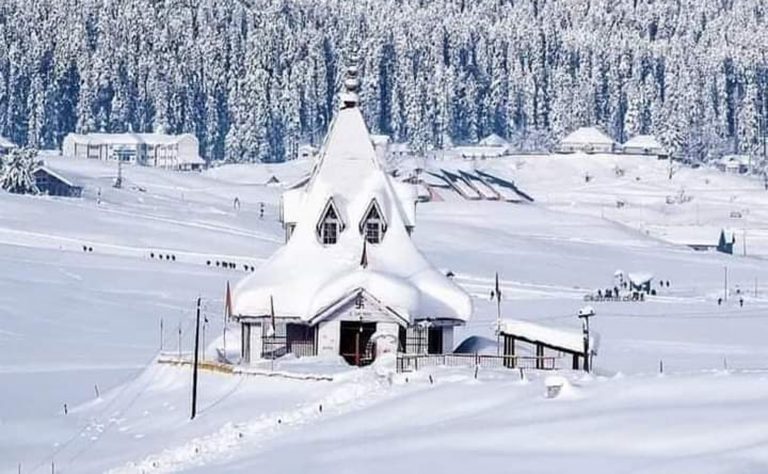
Kashmir Snowfall Update: Zojila, Razdan Pass and Gulmarg Receive Fresh Snow
By: News Desk | 14 October 2026
Srinagar: Kashmir has experienced an unmistakable shift towards winter, as a fresh spell of rain across the plains and snowfall over the higher reaches brought a noticeable chill to the region on Wednesday. An active Western Disturbance has transformed parts of the mountainous landscape, with fresh snow reported around Zojila Pass, Sonamarg, Gulmarg, Pahalgam, Razdan Pass and the Gurez Valley.
While the higher elevations have begun wearing their first significant white cover of the season, Srinagar and other low-lying areas have experienced intermittent to moderate rainfall, overcast skies and falling daytime temperatures. The contrasting conditions reflect Kashmir’s dramatic mountain climate, where rain in the Valley can coincide with snowfall at higher altitudes.
The latest spell is more than a seasonal spectacle. It has implications for mountain-road safety, tourism, local livelihoods and the preparations residents make as autumn gradually gives way to winter.
Weather officials expect unsettled conditions to continue through October 15, with rain in the plains and light snowfall possible over higher elevations. Conditions are forecast to improve from October 16, when largely dry weather is expected to return. Travellers should continue checking updated forecasts and road advisories, particularly before journeys through high-altitude passes.
For visitors hoping to experience Kashmir’s changing seasons, the fresh snowfall also opens an attractive window for autumn photography, mountain sightseeing and early-season snow experiences. However, the extent and persistence of snow will depend on actual local conditions rather than the forecast alone.
Western Disturbance Brings Rain to the Plains and Snow to the Mountains
Western Disturbances are weather systems that travel eastward from the Mediterranean region and adjoining areas, bringing moisture and precipitation to northern India, including the Western Himalaya.
Their effects vary significantly with elevation. When temperatures are sufficiently low, precipitation falls as snow over mountain peaks and high-altitude passes. At lower elevations, the same system can bring rain, thunderstorms and gusty winds.
The latest spell has followed this familiar pattern. Reports published on October 13 and 14 recorded snowfall across parts of north and central Kashmir, including the Zojila axis, Razdan Pass, Gurez Valley and the Afarwat heights above Gulmarg. Rain and gusty winds affected the plains, including Srinagar.
A Western Disturbance can therefore produce two very different experiences across the same region: wet autumn weather in Srinagar and fresh snow at higher elevations.
Temperatures Fall Across Kashmir and Jammu
The rainfall has brought a noticeable chill, with daytime temperatures below normal at several weather stations.
According to the India Meteorological Department’s Srinagar weather report dated October 14, the recorded maximum temperatures for October 13 included 20°C in Srinagar, 14.2°C in Pahalgam, 11.8°C in Gulmarg, 19.9°C in Kupwara and 19.5°C in Banihal. Pahalgam’s maximum was 5.4°C below normal, while Srinagar was 2.8°C below normal.
For visitors, this means packing for Kashmir in October requires more than a single layer of clothing. Travellers may encounter mild conditions in lower areas and near-winter temperatures at mountain destinations within the same itinerary.
Gulmarg, Sonamarg and Gurez: An Early Taste of Winter Tourism
Fresh snowfall has added a new attraction to Kashmir’s autumn landscape. Gulmarg’s Afarwat heights, the mountain belt around Sonamarg, and the high-altitude areas of Gurez have received snow, creating opportunities for scenic photography and mountain sightseeing when local conditions permit.
Those planning a trip can explore itineraries and travel arrangements through JKL Travels, particularly if they want to combine Srinagar sightseeing with excursions to Gulmarg or Sonamarg.
However, fresh snowfall does not automatically mean that all winter tourism activities are operational. Snow accumulation varies by location, and cable-car operations, trekking routes and mountain-road access depend on weather, safety conditions and the relevant authorities’ decisions.
A well-planned itinerary should therefore prioritise accessible destinations and retain enough flexibility to accommodate changing conditions.
Mountain Roads Under Watch as Snow Accumulates
The snowfall has particular implications for the Zojila and Razdan sectors.
Razdan Pass is a critical road link between the Kashmir Valley and Gurez. Snow accumulation there can affect traffic movement and may require snow-clearance operations. The Zojila axis is similarly sensitive to weather because it connects the Kashmir region with Ladakh through high-altitude terrain.
Travellers and transporters have been advised to exercise caution and check the latest road conditions before setting out.
Visitors travelling towards mountain destinations should check traffic advisories before departure and avoid relying on old road-condition reports. If authorities restrict movement or advise against travel, sightseeing plans should be changed accordingly.
For those arranging a Kashmir holiday, Kashmir Travels can be explored for trip-planning options, with routes and sightseeing schedules adjusted to the weather conditions prevailing during the visit.
Farmers Asked to Protect Harvested Apples and Paddy
The weather change also comes at an important time for Kashmir’s agricultural economy.
Apple harvesting and paddy-related operations are under way in parts of the region. Rain and gusty winds can complicate orchard work, disrupt transportation and expose harvested produce to avoidable losses if it is left uncovered.
The Meteorological Department has advised farmers to ensure the safe storage of harvested apples, paddy and other crops during the wet spell.
The impact of a weather event is not measured solely by rainfall totals or snowfall depth. The timing of precipitation can be just as important, particularly when agricultural work is close to completion and produce is awaiting transport or storage.
Weather Forecast: Conditions Likely to Improve From October 16
The Meteorological Centre Srinagar has forecast unsettled weather through October 15, with light to moderate rain at many places and light snowfall over higher elevations. Thunderstorms, gusty winds and isolated hailstorms are also possible.
Conditions are expected to improve from October 16, although brief rain at isolated locations cannot be ruled out. A longer spell of generally dry weather is forecast from October 17 to 24 in the latest reports.
Travellers should check updated forecasts and official traffic advisories close to their departure time rather than treating the expected improvement as confirmation that every destination will be accessible.
Planning a Kashmir Trip During the First Snowfall Spell
October can be an appealing time to visit Kashmir because it offers two distinct experiences: autumn colours across the Valley and the first signs of winter in the mountains. This year’s changing weather, however, makes flexibility particularly important.
For visitors considering a trip, a few practical steps can make the experience more comfortable:
-
Choose layered clothing: Carry warm jackets, waterproof outerwear and comfortable shoes suitable for wet conditions.
-
Keep the itinerary flexible: Allow alternatives if snowfall or rain affects access to a mountain destination.
-
Check local conditions: Confirm road access and the operational status of sightseeing activities before travelling.
-
Protect travel time: Avoid scheduling tight connections immediately after excursions to high-altitude areas.
-
Book with realistic expectations: Treat early snowfall as a seasonal opportunity, not a guarantee of snow at every destination.
Travellers looking to organise a customised Kashmir holiday can visit JKL Travels for travel planning and sightseeing arrangements. For destination ideas and holiday options across the region, Kashmir Travels is another resource worth exploring.
Both operators should ensure that itineraries reflect current weather advisories, realistic travel times and the availability of local services. Responsible planning is especially important when mountain weather can change rapidly.
Kashmir’s Seasonal Transition: More Than a Snowfall Story
The latest spell captures a defining feature of life in the Himalaya: the transition between seasons is rarely uniform.
While the higher reaches are beginning to acquire their winter cover, the plains remain in the autumn season, with rain, cloud cover and falling temperatures shaping everyday life. That contrast influences tourism, transport, farming and the preparation of communities for the colder months.
The fresh snowfall is an attractive development for visitors hoping to see Kashmir’s mountains turn white. Yet the same weather calls for caution on high-altitude roads and careful protection of harvested crops.
For now, the immediate outlook points towards improving conditions from October 16, following the wet spell through October 15. The next few days will determine how quickly mountain routes recover and how much of the fresh snow remains.
Kashmir’s early snowfall has offered the first striking glimpse of winter, but the best way to experience the season is to balance its beauty with careful, weather-aware travel planning.