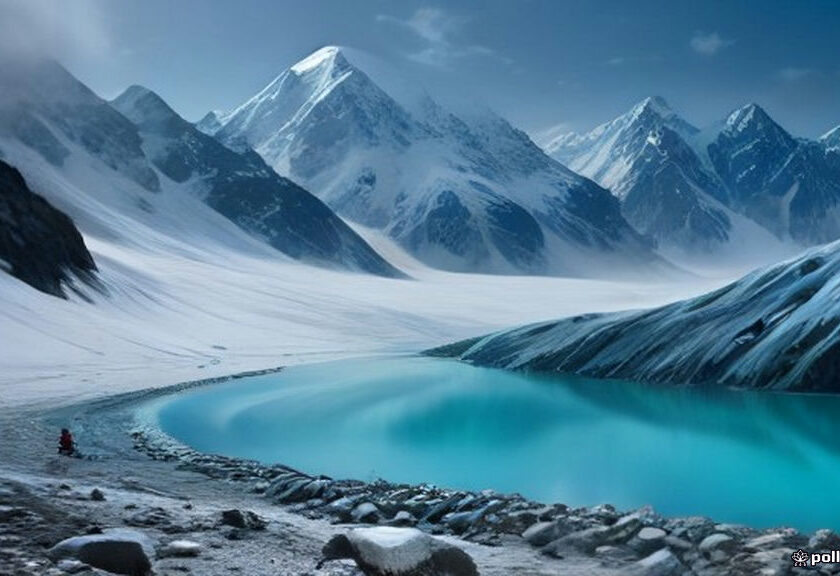
High in the jagged peaks of the Lidder Valley, the turquoise waters of Sheshnag Lake—situated at a staggering 3,576 metres—are currently the centre of a fierce environmental and political standoff. The Sheshnag Lake excavation, reportedly linked to infrastructure development for the annual Amarnath Yatra, has triggered a massive wave of public resentment, culminating in a petition signed by over 1,600 concerned citizens and environmentalists. The outcry highlights a growing friction between administrative development goals and the preservation of one of the most fragile ecosystems in the Himalayas.
- Mass Mobilisation: 1,600 individuals have formally petitioned the Jammu & Kashmir administration to stop heavy machinery work near the lake.
- Legal Threats: The Climate Action Group (CAG) is preparing a case for the National Green Tribunal (NGT) citing violations of alpine conservation norms.
- Political Pressure: Former CM Mehbooba Mufti and Mirwaiz Umar Farooq have criticised the government’s approach to high-altitude construction.
- Ecological Risk: Experts warn that disturbing the permafrost and glacial runoff at Sheshnag could jeopardise the water supply for the entire Lidder Valley.
Ground Realities & Latest Developments
The controversy erupted when reports surfaced of heavy earth-moving machinery being deployed in the immediate vicinity of Sheshnag Lake. For centuries, this alpine water body has remained untouched, protected by its remote location and religious significance. However, the recent Sheshnag Lake excavation activities suggest a shift towards permanent concrete infrastructure. Local residents and environmental activists argue that the use of JCBs and heavy drills in such a sensitive zone is a recipe for disaster.
The petition, which has gained rapid momentum online and in local circles, calls for an immediate cessation of all non-essential construction. Signatories argue that the alpine meadows (margs) surrounding the lake are vital carbon sinks and home to rare flora and fauna that cannot survive the noise and chemical pollution associated with modern construction. The administrative silence on the exact nature and scale of the project has only added fuel to the fire.
Historical Context & Policy Background
Historically, the Amarnath Yatra has been a seasonal pilgrimage with minimal permanent footprint. However, in recent years, there has been a concerted push to improve track conditions and facilities. While this aids pilgrim safety, it raises the question: at what cost? The Sheshnag Lake excavation is seen by many as a departure from the traditional ‘leave no trace’ philosophy that once governed high-altitude treks in Kashmir.
“Amarnath is a pilgrimage site, not a tourist destination. Converting these sacred and ecologically sensitive zones into concrete hubs will destroy the very essence of the valley’s spiritual and natural heritage.” — Mehbooba Mufti, Former Chief Minister.
Voices from the Valley: Community & Expert Perspectives
The political response has been unusually unified across ideological lines. Mirwaiz Umar Farooq, a prominent religious and political figure, has questioned Chief Minister Omar Abdullah’s silence on the matter. He emphasised that ecological protection transcends politics, as the melting of glaciers and the pollution of water sources will affect every citizen of Jammu and Kashmir. The Mirwaiz called for a collective action plan to ensure that the Sheshnag Lake excavation does not set a precedent for further destruction in other high-altitude zones like Gangabal or Konsarnag.
Environmental experts from the Climate Action Group (CAG) have been more clinical in their assessment. They point out that Sheshnag is the primary source of the Lidder River, which feeds into the Jhelum. Any contamination or alteration of the lake’s natural drainage could have cascading effects on agriculture and drinking water downstream.
| Altitude | 11,730 Feet (3,576m) |
| Petition Signatories | 1,600+ and counting |
| Primary Water Source | Lidder River / Jhelum Basin |
| Legal Status | Pending NGT Intervention |
Strategic Ramifications & The Road Ahead
The threat of NGT intervention is a significant development. If the Climate Action Group successfully files a petition, the tribunal could potentially stay all construction activities, leading to a legal showdown between the central agencies managing the Yatra and environmental defenders. The Sheshnag Lake excavation has become a litmus test for the new regional government’s commitment to environmental sustainability versus its alignment with central infrastructure mandates.
Moving forward, the demand is clear: a comprehensive Environmental Impact Assessment (EIA) conducted by independent experts before a single stone is moved. The local population is not against the pilgrimage but is vehemently against the ‘urbanisation’ of the wilderness. The outcome of this standoff will likely determine the future of high-altitude conservation policy across the entire Union Territory.
Frequently Asked Questions (FAQ)
Why is the excavation near Sheshnag Lake controversial?
The excavation involves heavy machinery in a high-altitude alpine zone. Experts fear it will damage the permafrost, pollute the Lidder River’s source, and destroy the fragile biodiversity of the region.
What are the demands of the 1,600 petitioners?
The petitioners are demanding an immediate halt to all construction, the removal of heavy machinery from the site, and a transparent environmental audit of any proposed infrastructure projects.
Will the National Green Tribunal (NGT) get involved?
The Climate Action Group has formally warned that they will approach the NGT if the Jammu & Kashmir administration does not suspend the work voluntarily, citing potential violations of environmental protection laws.
This investigative feature was compiled by our Srinagar Bureau with ground reports from the Lidder Valley. Factual verification conducted against administrative orders and public petitions as of late 2024.