From electoral protests in the capital to housing costs in Mumbai, job anxiety in Bengaluru and economic uncertainty in Kashmir, India’s deeper challenge is turning growth into everyday security
By: Javid Amin | 10 October 2026
New Delhi: India’s public mood cannot be understood through political rallies and television debates alone. Beneath the daily headlines, a wider set of questions is shaping conversations among families, students, salaried employees, small business owners and young jobseekers: Are incomes keeping pace with expenses? Are good jobs becoming easier to find? Can ordinary households afford decent housing, education and healthcare? And do public institutions respond adequately when citizens raise concerns?
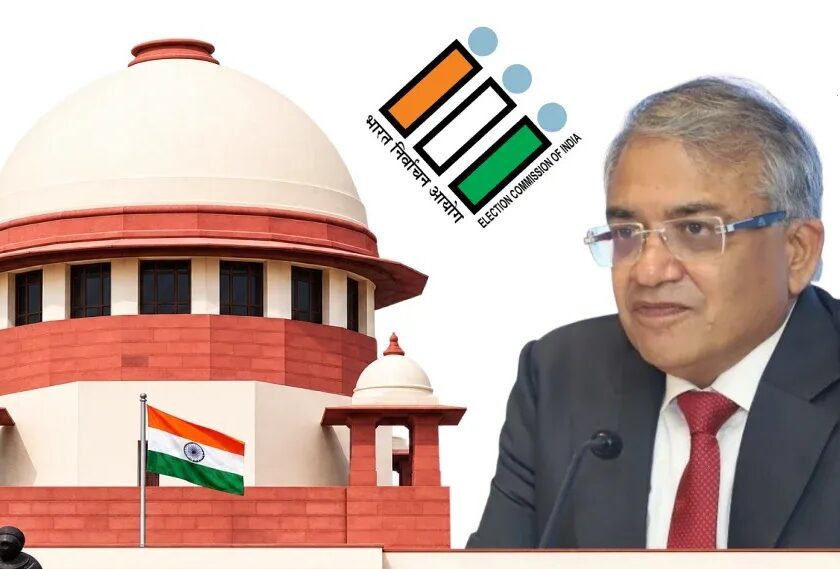
The protests over electoral-roll revision and demands for the resignation of Chief Election Commissioner Gyanesh Kumar have brought institutional accountability into the political spotlight. Opposition parties have accused the Election Commission of allowing wrongful voter deletions, while the Commission’s position is that electoral-roll revision is intended to maintain accurate voter lists. The allegations of deliberate electoral manipulation remain contested.
But the significance of the present moment extends beyond one controversy.
Across India’s major metropolitan centres and smaller cities, economic opportunity, affordability, public services and expectations of government are central to the relationship between citizens and the state. These concerns do not necessarily produce protests, nor do they point to a single national mood. Yet together, they help explain why questions about governance increasingly reach beyond political slogans.
The larger challenge is not simply whether India is growing, but how consistently that growth translates into secure livelihoods, affordable services and a better quality of life.
1. Delhi: When Political Anger Reaches the Streets
Delhi is where national political disagreements frequently become visible.
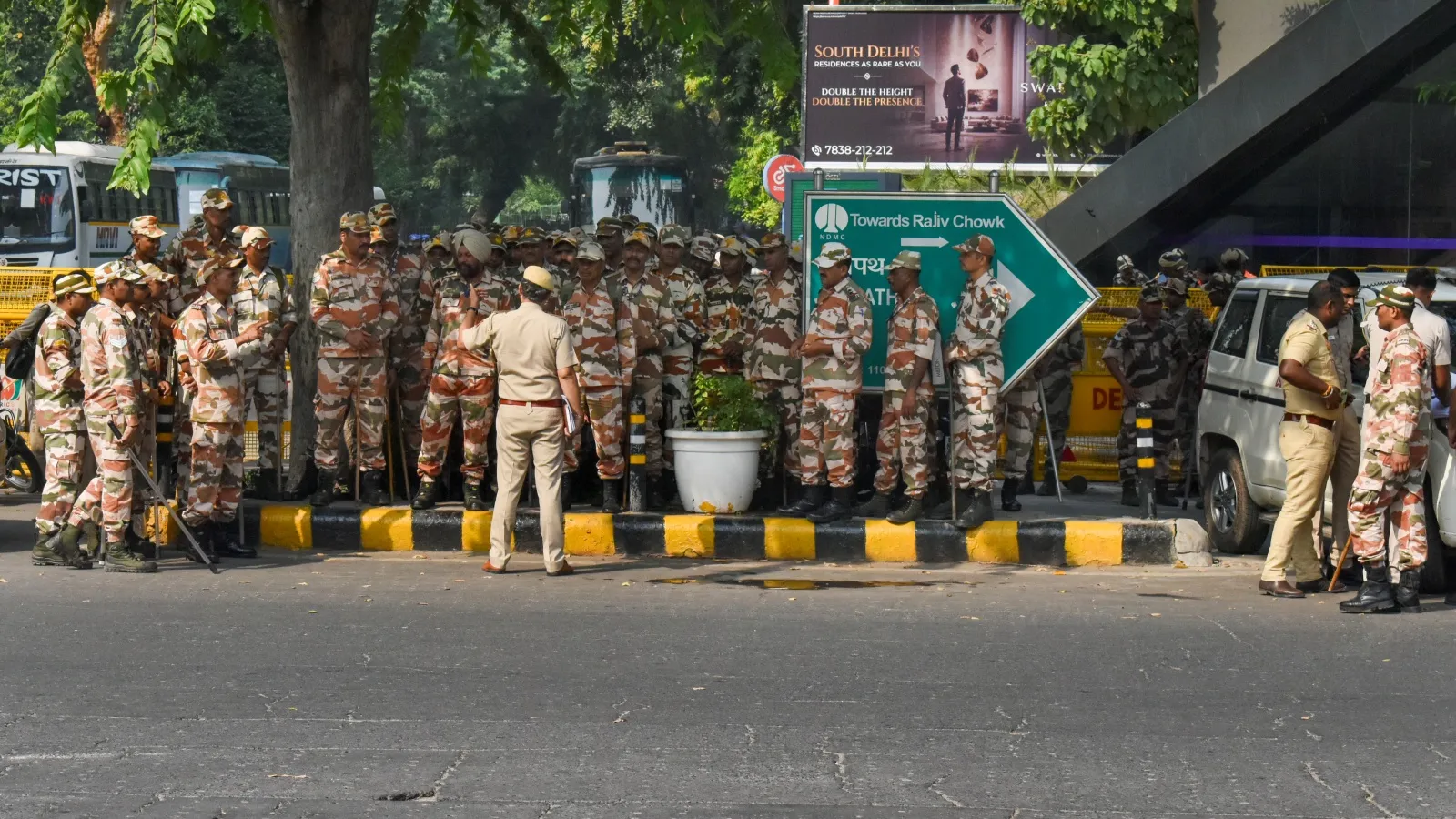
The recent demonstrations over the Special Intensive Revision of electoral rolls have brought opposition parties, activists and other participants into the streets. Protesters have demanded greater transparency, safeguards against wrongful voter deletions and the resignation of the Chief Election Commissioner.
The immediate issue is electoral integrity. It would be inaccurate to suggest that every participant has taken to the streets because of unemployment or inflation. Political mobilisation has its own causes, leadership, organisation and objectives.
Nevertheless, the protests sit within a wider environment in which citizens increasingly scrutinise institutions and demand explanations for consequential decisions.
For some people, the concern is whether their names will remain on electoral rolls. For others, it is whether government agencies are sufficiently transparent, whether complaints receive timely responses and whether citizens have meaningful ways to challenge administrative decisions.
Economic anxieties can add another dimension to this relationship. A young person struggling to secure stable employment or a household dealing with rising essential expenses may also judge government performance through the accessibility and reliability of public services.
These experiences do not automatically lead to political protest. But they help explain why public trust, accountability and administrative responsiveness matter beyond election season.
Delhi’s importance, therefore, lies not in the claim that the entire country is moving towards permanent agitation, but in its role as a national stage where disagreements over institutions and governance become highly visible.
2. Mumbai: Economic Growth Meets the Cost of Living
Mumbai presents a different challenge.
India’s financial capital is associated with banking, entertainment, commerce, corporate employment and high-value real estate. Its economic activity creates opportunities for professionals, entrepreneurs, workers and service providers.
Yet access to those opportunities comes at a cost.
Housing is one of the city’s most persistent pressures. Rent, commuting expenses, school fees, healthcare and other routine costs can consume a substantial share of a household’s income. For workers living far from their workplaces, the financial burden is accompanied by long travel times and less time for family life.
The contrast between visible wealth and everyday affordability is particularly striking in a city where expensive residential developments and luxury consumption coexist with informal settlements and households living on tight budgets.
For salaried families, the relevant question is not simply how much they earn. It is how much remains after meeting unavoidable expenses.
A salary increase may provide limited relief if rent, transport, education and medical costs rise at the same time. Similarly, an employee may have a stable job but little capacity to save for emergencies, a home or retirement.
This is the difference between employment and financial security.
Mumbai’s experience also demonstrates why headline economic growth cannot, by itself, describe the welfare of every household. Growth can create jobs and wealth while the distribution of those gains remains uneven.
The policy challenge is to expand productive employment while improving access to affordable housing, reliable public transport, quality education and healthcare.
3. Bengaluru: Getting a Job Is Only Part of the Challenge
Bengaluru has become one of India’s most prominent centres for information technology, start-ups, research and professional services.
The city attracts graduates and skilled workers from across the country. Its technology ecosystem creates opportunities that would have been difficult to imagine for many young Indians a generation ago.
But a growing employment market does not automatically guarantee an affordable or comfortable life.
Housing costs, traffic congestion, lengthy commutes, water stress and pressure on urban infrastructure influence the experience of working in Bengaluru. These problems affect different neighbourhoods and income groups differently, but they demonstrate that economic opportunity depends partly on the city in which that opportunity exists.
A professional may secure a well-paying job and still face high rent, expensive transport and limited time outside work. Someone entering the labour market at a lower salary may find it harder to establish financial independence.
There is also an important distinction between the number of jobs available and the quality of employment. Workers assess opportunities through wages, stability, working conditions, career progression and the likelihood of remaining employable as technology changes.
For graduates, the question is no longer limited to whether a job exists. It is whether the job provides a sustainable livelihood.
This does not mean Bengaluru’s growth model has failed. Rather, it shows that economic expansion must be accompanied by infrastructure planning, housing supply, reliable utilities and public services capable of supporting a growing population.
A technology hub cannot rely on its technology sector alone to solve the everyday problems created by urban expansion.
4. Patna, Lucknow, Ranchi and Other Cities: Aspirations Outpace Local Opportunities
In many smaller cities, the challenge is different.
Young people have access to the same online courses, professional networks, entertainment platforms and career information as their counterparts in major metropolitan centres. Their ambitions may include technology, medicine, research, entrepreneurship, government service and international careers.
But local employment opportunities do not always match those expectations.
Where high-quality jobs are concentrated in a limited number of urban centres, migration becomes a practical response. Graduates move to Delhi, Bengaluru, Pune, Hyderabad or Mumbai in search of better salaries and career prospects.
Migration can be beneficial. It allows workers to acquire skills, increase their earnings and send money home. It also connects smaller cities to wider markets and professional networks.
However, migration can become economically and socially costly when people feel they have little realistic choice but to leave.
Families may finance years of education without knowing whether suitable employment will be available nearby. Young workers may spend a substantial share of their earnings on rent and transport in destination cities. Parents may remain dependent on children who live far away, while local businesses lose some of the skilled workers they need to expand.
This creates what can be described as an aspiration surplus and opportunity deficit: expectations are rising faster than the availability of suitable local opportunities.
The phrase is an analytical description, not a measured national economic indicator.
Addressing the gap requires more than telling young people to acquire additional qualifications. It requires investment in labour-intensive industries, modern agriculture and food processing, tourism, logistics, healthcare, education, small enterprises and other sectors capable of creating productive employment.
Skill development matters, but skills programmes work best when they are linked to real labour demand.
The central question for smaller cities is whether young people can build a viable future locally, rather than whether they can eventually find a way to leave.
5. Kashmir: The National Economic Debate Has a Local Reflection
In Jammu and Kashmir, public concerns about employment, business conditions, education expenses, healthcare and household budgets increasingly sit alongside longstanding political and security questions.
The region’s economy has distinctive characteristics. Tourism is important, agriculture and horticulture support many livelihoods, and small businesses play a significant role in local economic activity. These sectors also face different risks, from seasonal fluctuations to transport disruptions, weather-related losses and changing consumer demand.
For a tourism-dependent business, a successful season may provide income for several months. A weaker season can affect not only hotels and tour operators but also taxi drivers, guides, handicraft sellers, restaurants and other workers whose earnings depend on visitor spending.
For an apple grower, the final return depends on more than the selling price. Production costs, packaging, transport, storage, market access and the share retained by intermediaries all matter.
For an unemployed graduate, the availability of a degree is not the same as the availability of a suitable job.
Households also face familiar pressures involving private-school fees, medical expenses, housing and the cost of everyday goods. These concerns connect Kashmir to wider national debates about affordability and economic security, even though the scale and causes of individual problems vary across regions.
The challenge is to avoid reducing Kashmir’s economic experience to a single explanation. Employment opportunities, infrastructure, private investment, public recruitment, market access and the reliability of public services all influence household prospects.
Tourism growth, for example, is valuable, but visitor numbers alone cannot establish whether workers receive stable incomes or local businesses retain an adequate share of tourism spending.
Similarly, an increase in government spending does not automatically establish how much employment it generates or whether the benefits reach households facing the greatest economic pressure.
For Kashmir, as for other regions, the most useful questions concern the quality and distribution of growth: how many sustainable jobs are created, how local enterprises perform, what households pay for essential services and how effectively public investment translates into economic opportunity.
6. Inflation: Why Households May Feel Worse Off Even When the Rate Slows
Inflation remains one of the most immediate ways people experience economic conditions.
Official inflation measures track changes in prices across defined baskets of goods and services. Household experiences can differ because families have different spending patterns.
A low-income household may spend a relatively large share of its budget on food, transport and rent. A family with school-age children may be more sensitive to education expenses. An older household may be especially exposed to healthcare costs.
This means that the national inflation rate does not necessarily capture every family’s experience.
There is also an important distinction between the rate at which prices are rising and the price level itself.
If inflation falls, prices may still be increasing, only more slowly. A household that has already experienced several years of higher prices does not automatically recover its lost purchasing power when the inflation rate declines.
Income growth matters just as much.
If wages remain unchanged while essential expenses rise, a household’s purchasing power falls. If wages rise but housing and healthcare costs absorb most of the increase, the improvement in living standards may be limited.
This is why public perceptions of inflation can differ from official statistics without either automatically being dishonest or meaningless.
A credible assessment should examine both aggregate inflation and the pressures faced by different income groups.
For policymakers, the task is to maintain price stability while supporting productivity, competition, employment and the supply of essential goods and services.
For households, the outcome is ultimately measured in purchasing power: what their income can actually buy.
7. Youth Employment: The Gap Between Education and Economic Security
India’s young population offers a major economic opportunity. A large working-age population can support growth if workers acquire relevant skills and find productive employment.
But population size alone does not guarantee a demographic dividend.
Young people need access to jobs that make effective use of their education and capabilities. Employers need workers with appropriate skills, while educational institutions need to respond to changing labour-market requirements.
The difficulty is particularly acute when graduates compete for a limited number of secure positions, including government jobs that attract large numbers of applicants.
Government employment can offer stability and social status, but it cannot absorb every qualified jobseeker. A sustainable employment strategy must also support private-sector hiring, entrepreneurship, manufacturing, services and local enterprise.
The quality of employment matters as much as the headline number of jobs.
A complete assessment should consider wages, working hours, social protection, job security, career progression and the difference between regular employment and irregular or involuntary underemployment.
It should also distinguish unemployment from labour-force participation. A person who has stopped actively searching for work may not be counted as unemployed under standard statistical definitions, even if that person remains without a job.
That is why broad claims about youth employment should be tested against official labour-force data, age-specific unemployment rates and measures of job quality.
The policy objective should be straightforward: ensure that education leads to realistic opportunities for productive work, and that employment offers a credible route to independence and a decent standard of living.
8. Institutional Trust: Why Process Matters as Much as Policy
The protests over SIR have placed institutional trust at the centre of the political debate.
The opposition alleges that electoral-roll revision risks excluding legitimate voters and has demanded greater accountability from the Election Commission. The Commission and the BJP dispute the opposition’s interpretation of the process.
These competing positions should be assessed through evidence, not simply through the intensity of the demonstrations.
At the same time, the controversy illustrates a broader principle of public administration: institutions need procedures that are transparent, accessible and capable of correcting errors.
For an electoral authority, this includes clear notices, reliable voter records, accessible objection mechanisms, reasoned decisions and timely appeals.
The same principle applies to other public services. Recruitment systems require transparent eligibility rules and grievance procedures. Welfare programmes need accessible application and appeal mechanisms. Local authorities need clear standards for permits, public works and service delivery.
Trust is strengthened when people can understand how a decision was reached and what they can do if they believe it is wrong.
It is weakened when procedures appear inconsistent, explanations are inaccessible or complaints remain unresolved.
However, distrust should not be treated as proof of institutional wrongdoing. Nor should official assurances be accepted as a substitute for independent scrutiny.
The appropriate response is to make claims testable through records, transparent procedures and effective oversight.
9. Social Media: Frustration Travels Faster Than Evidence
Social media has changed the speed at which public concerns spread.
A video from a local protest, a complaint about school fees or a report of an administrative error can reach audiences far beyond the original location within hours.
This has advantages. People can share information, organise collectively and draw attention to problems that might otherwise receive little coverage.
But speed also creates risks.
A partial video may omit important context. An allegation can circulate widely before it is independently verified. A local incident may be presented as evidence of a national pattern without adequate supporting data.
Algorithms and online communities can also reinforce existing political beliefs, making it easier for people to encounter repeated versions of the same claim than to assess competing evidence.
The result is a public conversation that can become more immediate without necessarily becoming more accurate.
This matters particularly during electoral controversies, when claims about voter deletions, institutional bias or political manipulation can have serious consequences.
Journalists, political organisations and public authorities all have responsibilities here. Claims should be checked against documents, responses should be timely and corrections should be visible.
Citizens also benefit from distinguishing between an eyewitness account, a political allegation, an official statement and an independently verified finding.
Digital connectivity has expanded the ability to participate in public life. Whether it improves public understanding depends on how information is produced, shared and examined.
10. The Real Test: Can Growth Improve Everyday Life?
The economic and political pressures discussed here do not have one common cause. Housing affordability, unemployment, electoral-roll disputes, traffic congestion and healthcare expenses require different evidence and different solutions.
Yet they converge around a broader question of government performance.
Can public institutions deliver services reliably? Can the economy create enough productive employment? Can households afford essential needs? Can citizens challenge decisions without facing unnecessary barriers?
These are practical questions rather than ideological slogans.
For urban India, progress requires better transport, affordable housing, reliable water and electricity, and planning that keeps pace with population growth.
For smaller cities, it requires stronger local economies, more productive enterprises and investment in infrastructure that supports private-sector activity.
For young people, it requires education connected to employment opportunities and a labour market that rewards skills and productivity.
For households, it requires income growth that translates into real purchasing power.
For democratic institutions, it requires transparent procedures, accountability and credible ways to correct mistakes.
No single government programme can solve all these problems. Nor can any one political party claim exclusive ownership of the concerns they raise.
The useful measure is whether policies produce observable improvements, who benefits from those improvements and whether the results can be independently assessed.
What Could Happen Next?
Over the coming months, the SIR dispute may continue to generate protests, legal challenges and political exchanges. The scale and duration of that mobilisation will depend on decisions by the Election Commission, developments in the courts, the response of political parties and the handling of disputed voter entries.
Economic pressures will follow a different timetable.
Households will continue to assess their circumstances through employment, wages, food prices, rent, education expenses and access to healthcare. Businesses will judge conditions through demand, credit costs, investment and the availability of workers.
Regional parties may seek to make these concerns central to their political campaigns, but their ability to address them will depend on policy choices, administrative capacity and economic conditions.
Over the longer term, India’s challenge is to make growth more inclusive and resilient. That means creating productive jobs, improving urban governance, strengthening public services and ensuring that economic opportunity is not concentrated too narrowly in a few sectors or metropolitan centres.
It also means recognising that political participation and economic security are connected without assuming that one automatically causes the other.
A person may protest over electoral rights while remaining primarily concerned about employment. Another may never attend a political demonstration but judge government performance through the cost of education or the reliability of public transport.
Both experiences matter, and neither should be used to speak for the entire country without evidence.
Conclusion: Beyond the Headlines, the Question Is Everyday Security
Delhi’s protests are an important political development, but they are not a complete explanation of India’s public mood.
Mumbai illustrates the tension between economic opportunity and urban affordability. Bengaluru highlights the need to match employment growth with infrastructure and quality of life. Smaller cities face the challenge of creating local opportunities for an increasingly ambitious young population. Kashmir combines familiar household pressures with its own economic and political circumstances.
These experiences are different, but they raise a common question: how effectively does economic growth improve ordinary lives?
The answer cannot be found in protest slogans alone, just as it cannot be found in GDP growth or official assurances alone.
It requires evidence about employment, household purchasing power, public services, regional development and institutional performance. It requires listening to citizens while distinguishing individual experiences from national trends.
India’s deeper challenge is to turn economic opportunity into economic security, and democratic participation into institutions that people can scrutinise and trust.
That is the undercurrent worth examining beneath the daily headlines.