J&K Police Gets a Major Leadership Reset: Sujit Kumar Takes Kashmir, Tejinder Singh Gets Jammu
By: News Desk | 27 Aug 2026
A significant reshuffle in the Jammu & Kashmir Police has changed the leadership of both the Kashmir and Jammu zones, while also moving key officers responsible for intelligence, security, railway policing and anti-corruption.
The Jammu & Kashmir Home Department on August 27 ordered the transfer and posting of 14 police officers — 11 IPS and three JKPS officers — with immediate effect. The move is therefore broader than a routine change of the two zonal police chiefs.
Sujit Kumar to Head Kashmir Zone, Tejinder Singh Jammu Zone
The most consequential changes are at the zonal level.
Sujit Kumar, a 2007-batch AGMUT-cadre IPS officer, has been transferred from his previous assignment as IGP Security, J&K, and posted as IGP Kashmir Zone. He succeeds Vidhi Kumar Birdi, who has moved on central deputation. Kumar has previously served in different parts of the Kashmir policing structure, including the Central Kashmir range.
Tejinder Singh, a 2008-batch IPS officer who was serving as IG CID J&K, has been appointed IG Jammu Zone, replacing Bhim Sen Tuti. Tuti has been transferred to Police Headquarters as IG Headquarters, J&K.
The distinction matters because these are not ordinary administrative postings. The Kashmir and Jammu zones encompass some of the Union Territory’s most sensitive policing responsibilities, ranging from counter-terrorism and intelligence coordination to law and order, public protests, communal sensitivities and major security deployments.
The Bigger Story: This Is More Than a Two-IG Reshuffle
The headline appointments initially make the reshuffle look like a change of two zonal commanders. The government order, however, reveals a much broader reorganisation of the police hierarchy.
One of the most important changes is the appointment of M.K. Sinha, a 1996-batch IPS officer, as ADGP CID J&K, replacing Nitish Kumar.
Nitish Kumar has been moved to ADGP Armed Police J&K.
The CID appointment is particularly significant because the agency plays a central role in intelligence and investigative work. The Indian Express reported that M.K. Sinha has previous experience with the CBI and Intelligence Bureau and had served as Joint Director of the CBI, including work connected with the Madhya Pradesh Vyapam investigation.
That background gives the CID change an importance beyond a conventional transfer.
Security portfolio also changes hands
The reshuffle has effectively created a chain of linked changes.
- Sujit Kumar → IGP Kashmir Zone
- Vivek Gupta → IGP Security J&K
- Tejinder Singh → IGP Jammu Zone
- Bhim Sen Tuti → IG Headquarters J&K
- M.K. Sinha → ADGP CID J&K
- Nitish Kumar → ADGP Armed Police J&K
- Uttam Chand → IGP Railways J&K, while retaining additional charge of IGP Police Operations & Services
- Shakti Kumar Pathak → Director, Anti-Corruption Bureau
Several district-level changes accompany the senior appointments, including postings involving Pulwama, Kishtwar, Rajouri and Handwara.
Why the Kashmir Posting Matters
The Kashmir Valley remains the most operationally sensitive policing environment in J&K.
The IGP Kashmir is responsible for coordinating policing across a region where conventional law-and-order duties overlap with counter-insurgency operations, intelligence gathering, protection of critical installations and management of public events.
Sujit Kumar’s previous experience within the J&K security and policing apparatus could therefore be important.
His immediate challenge will not simply be maintaining existing security arrangements. It will be improving coordination between the police, intelligence agencies and other security formations while ensuring that ordinary policing does not get overshadowed by the security narrative.
That balance is increasingly important as Kashmir attempts to sustain tourism, business activity and normal civic life alongside continuing security challenges.
Jammu Gets a New Police Chief Too
The appointment of Tejinder Singh as IGP Jammu comes at an equally sensitive moment.
The Jammu region has its own security profile. Border districts, militant infiltration concerns, communal sensitivities, major religious gatherings and growing urban populations all create a policing environment quite different from the Valley.
The new IGP will therefore have to deal with two competing expectations: maintaining a strong security grid while ensuring that policing remains accessible and responsive to ordinary citizens.
His previous role in CID could also prove useful in an environment where intelligence-led policing is increasingly important.
A Significant Intelligence Recalibration
Perhaps the most consequential part of the reshuffle is the change at the CID level.
M.K. Sinha’s move from ADGP Headquarters to ADGP CID, coupled with Nitish Kumar’s transfer to Armed Police, represents a change in the leadership of one of J&K’s most important intelligence and investigative institutions.
This comes at a time when the security establishment is increasingly focusing not only on conventional militant operations but also on:
- terror financing;
- over-ground networks;
- narcotics-linked financing;
- digital communications;
- recruitment networks;
- weapons logistics;
- cross-border facilitation;
- and financial intelligence.
The modern counter-terrorism challenge is increasingly about identifying networks before they become operational rather than simply responding after an attack.
That makes intelligence coordination critical.
Anti-Corruption Bureau Also Gets New Leadership
Another notable element is the designation of Shakti Kumar Pathak as Director of the Anti-Corruption Bureau.
Although this appointment has received less attention than the Kashmir and Jammu IGP changes, it could have implications for the administration’s approach to corruption investigations.
For citizens, the real test will not be the designation itself but whether investigations become faster, more transparent and capable of reaching beyond lower-level officials.
A functioning anti-corruption mechanism ultimately affects public confidence in government more directly than many high-level administrative announcements.
What Does the Reshuffle Signal?
It would be premature to claim that the reshuffle represents a particular policy shift without an official explanation from the administration.
The government order describes the transfers as being made “in the interest of administration” and with immediate effect.
There is therefore no official basis, at least from the order itself, to portray the changes as punishment postings, a response to a particular incident, or evidence of dissatisfaction with individual officers.
But the timing and combination of appointments inevitably invite closer attention.
Three features stand out.
1. Intelligence is being repositioned
The change at CID puts an experienced officer with central investigative and intelligence exposure into a critical position.
2. Security and zonal policing are being redistributed
Sujit Kumar’s move from Security to Kashmir and Vivek Gupta’s movement in the opposite direction create a direct exchange of responsibilities.
3. Operational leadership is being refreshed
The appointment of new officers in both Jammu and Kashmir zones provides the administration with an opportunity to reassess operational priorities.
The Real Test Begins After the Transfer Orders
Police reshuffles often generate headlines for a day or two. Their real significance becomes visible months later.
For Kashmir, the questions will be practical:
Does intelligence improve?
Can police prevent militant networks from rebuilding?
Can law-and-order policing remain professional and proportionate?
Will investigations become faster?
Can security agencies coordinate more effectively?
For Jammu, the questions will be somewhat different:
Can the security grid remain effective without creating unnecessary public anxiety?
How effectively can border districts be monitored?
Can communal tensions be prevented from escalating?
Will urban policing keep pace with rapidly expanding towns and cities?
And for the wider administration, there is another question: whether frequent transfers produce institutional renewal or simply disrupt continuity.
A Reshuffle Is Not a Security Strategy
This is perhaps the most important distinction.
Changing officers can provide fresh leadership, new priorities and different operational approaches. But personnel changes alone cannot solve structural problems.
Effective policing depends on intelligence infrastructure, technology, forensic capabilities, recruitment, training, inter-agency coordination and public cooperation.
The strongest security architecture is ultimately one in which citizens trust the police enough to share information before a threat becomes a crisis.
That is particularly relevant in J&K, where policing operates at the intersection of national security and everyday civilian life.
What Happens Next?
With Sujit Kumar now at the helm in Kashmir and Tejinder Singh taking charge in Jammu, the immediate focus will be on operational continuity.
The administration will also watch how the new CID leadership performs, particularly in intelligence gathering and investigation.
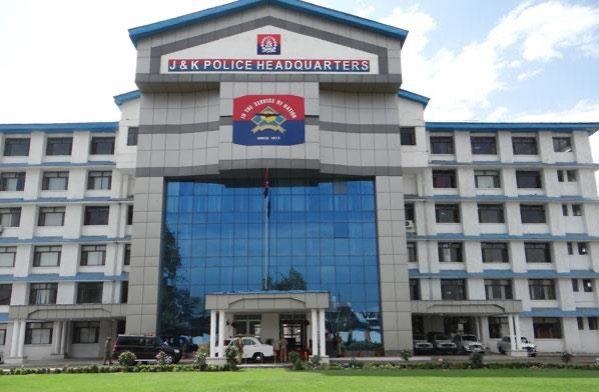
The transfer of several district-level officers means that the reshuffle will be felt well beyond Police Headquarters and the two zonal offices.
For now, however, it is best understood as a major organisational recalibration rather than evidence of a specific policy change.
The government’s stated justification is administrative. Its significance, however, will ultimately be judged by outcomes — fewer security breaches, stronger intelligence, better investigations and, equally importantly, greater confidence among ordinary people.
Bottom Line
The August 27 reshuffle is one of the more substantial recent reorganisations of the J&K Police hierarchy. Sujit Kumar takes Kashmir, Tejinder Singh takes Jammu, M.K. Sinha moves into CID, and several other senior officers change critical portfolios.
The appointments place experienced officers in some of J&K’s most sensitive positions. But the real measure of success will not be the names on the government order.
It will be what changes on the ground.