Aga Ruhullah on Political Character: Why His Message Deepens the NC Rift in J&K
By: News Desk | 22 Aug 2026
‘Political Character’ Is Ruhullah’s Newest Weapon in an Old Fight
In Jammu and Kashmir politics, words often carry a second meaning.
A statement about “principles” can be an attack on compromise. A reference to “dignity” can be a criticism of political surrender. And when a leader talks about “political character,” the question naturally follows:
Whose character is being questioned?
That is what makes Aga Syed Ruhullah Mehdi’s latest messaging significant.
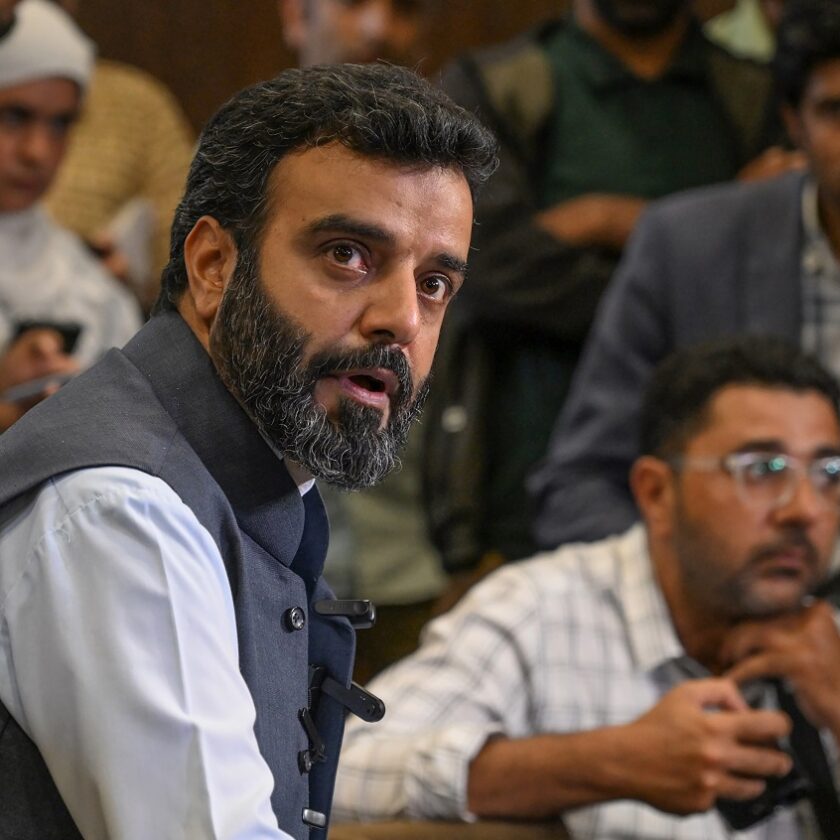
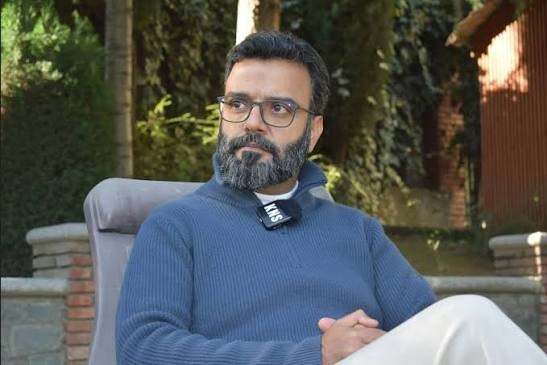
The Srinagar Lok Sabha MP has increasingly presented himself as a politician unwilling to separate electoral politics from the constitutional questions that followed August 5, 2019. His latest appeal for integrity and principled politics comes at a moment when his relationship with the National Conference leadership is under its greatest strain since the party returned to power.
The immediate dispute is no longer merely about Article 370.
It is about what the National Conference promised, what it is doing in government, who gets to define the party’s political line—and whether compromise amounts to pragmatism or surrender.
Recent reporting shows that Ruhullah has accused the NC of diluting its fight for constitutional rights, particularly by placing greater emphasis on statehood. He has also said he has made up his mind to resign from Parliament within months unless the party leadership intervenes and addresses his concerns.
Against that backdrop, his language about “political character” deserves closer scrutiny.
What Does Ruhullah Mean by “Political Character”?
The phrase is broader than a conventional political slogan.
Ruhullah’s recent interventions suggest that he is talking about consistency between what a politician tells voters and what that politician does after receiving power.
His argument can be reduced to a simple principle:
Political credibility is not just about winning elections. It is about remaining faithful to the commitments made before the election.
That is especially relevant to the National Conference.
The party returned to power in the 2024 Assembly election after campaigning on issues including statehood, political rights and the restoration of constitutional guarantees.
Ruhullah’s contention is that statehood cannot become a substitute for the larger constitutional question.
In an August 19 interview, he urged voters to judge political parties by their manifestos, ideology and stated policies rather than by individual statements.
That is a revealing formulation.
He is effectively saying: Do not judge me by what I say. Judge the party by what it promised.
And that standard can be applied to him as well.
The Real Target Is the NC Leadership
Although Ruhullah’s message is framed as a broader appeal to political morality, the timing makes its immediate target difficult to miss.
His disagreements with the NC leadership have become increasingly public.
In June, NC adviser Nasir Aslam Wani responded to the controversy by stressing that the party operates according to its collective ideology, discipline and institutional position, rather than individual opinions.
Wani’s message was unmistakable:
No individual is bigger than the party.
That was effectively the organisational answer to Ruhullah’s growing dissent.
Ruhullah’s answer has been equally clear:
A political mandate belongs to the people, not to a party hierarchy.
This is where the dispute becomes structurally important.
It is no longer simply Ruhullah versus Omar Abdullah.
It is increasingly a debate over party discipline versus individual political conviction.
Nasir Aslam Wani Becomes a Symbol of That Conflict
The sharp remark attributed to Ruhullah about Nasir Aslam Wani—“You are here because of someone’s blessings”—should be handled carefully because the broader political meaning is clearer than the precise circumstances in which the words were spoken.
But the symbolism is unmistakable.
Wani is a senior National Conference figure and adviser to Chief Minister Omar Abdullah. His public defence of the party’s collective discipline places him firmly on the institutional side of the dispute.
Ruhullah, meanwhile, has positioned himself as the politician willing to challenge the leadership when he believes the party is drifting from its ideological commitments.
That makes Wani a natural target in this internal political contest.
The remark can therefore be read as a criticism of political patronage and proximity to power, rather than simply a personal attack.
But it would be inaccurate to turn that interpretation into an established fact that Wani’s position was obtained through patronage.
There is no evidence establishing that his political role was secured through improper favour.
The more defensible reading is that Ruhullah was challenging the legitimacy of a leadership culture in which loyalty to the central leadership is perceived to carry significant political weight.
From “Blessings” to Patronage Politics
The language of “blessings” has particular resonance in J&K’s political culture because the National Conference itself has long been associated with the Abdullah political family.
That history is unavoidable.
Sheikh Abdullah.
Farooq Abdullah.
Omar Abdullah.
For supporters, this represents political continuity and a historic connection with Kashmir’s mainstream political movement.
For critics, it represents dynastic politics.
Ruhullah’s criticism taps into the second interpretation without necessarily directly calling for the destruction of the Abdullah-led NC.
That distinction matters.
He has repeatedly expressed respect for Farooq Abdullah, whom he has described as a fatherly figure, even while openly challenging Omar Abdullah’s political strategy.
So the internal dispute is more nuanced than “Ruhullah versus the Abdullah family.”
It is closer to:
Farooq Abdullah’s historic authority versus Omar Abdullah’s present governing strategy—and Ruhullah’s insistence that the party return to what he sees as its original political commitment.
The Article 370 Question Is the Centre of Everything
To understand Ruhullah’s increasingly uncompromising language, one issue must be kept at the centre:
Article 370.
Ruhullah has repeatedly argued that the NC’s political mandate cannot be reduced to restoring statehood.
He has criticised the party’s decision to focus heavily on statehood, arguing that the broader constitutional issue must remain central.
In July, he declined to participate in the NC’s proposed Jantar Mantar protest, saying the party should focus on restoration of Article 370 rather than limiting its campaign to statehood.
This is the fundamental ideological disagreement.
The NC government’s approach
Restore statehood, strengthen democratic institutions and govern effectively within the existing constitutional framework.
Ruhullah’s approach
Fight simultaneously for statehood and restoration of constitutional protections that existed before August 2019.
He believes narrowing the demand to statehood risks normalising the post-2019 constitutional arrangement.
That is why he has accused the NC of “diluting” the fight.
Why “Political Character” Resonates After 2019
The phrase also taps into a wider sense of political disappointment in the Valley.
The August 2019 changes transformed Jammu and Kashmir’s constitutional and administrative structure.
The Supreme Court subsequently upheld the Union government’s decision in December 2023 and directed that elections be held, while observing that statehood should be restored at the earliest. The Court did not order restoration of Article 370.
That left regional parties with a difficult political problem.
They could continue demanding restoration of the pre-2019 constitutional arrangement, but they were operating within a legal framework in which the Supreme Court had already upheld the Centre’s decision.
Ruhullah has chosen to continue the political fight.
His supporters can therefore portray his position as consistency.
His critics can portray it as political rigidity.
Both readings exist.
The “Character” Argument Is Also About Political Compromise
This is where Ruhullah’s message becomes more interesting.
He is not merely arguing that politicians should be honest.
He is arguing that there are some political compromises that should not be made.
For him, Article 370 and constitutional dignity fall into that category.
That puts him at odds with a governing party that must negotiate with New Delhi, administer a Union Territory and deliver day-to-day governance.
The contradiction is obvious.
A party in opposition can maximise political demands.
A party in government must negotiate realities.
Ruhullah’s challenge to the NC is essentially:
Do not allow the realities of government to erase the principles that brought you to power.
That is a powerful political argument.
It is also extremely difficult for any governing party to satisfy completely.
Ruhullah’s Own Political Record Makes His Argument More Complicated
There is another reason his criticism attracts attention.
Ruhullah is not an outsider attacking the NC.
He is a senior NC leader and an elected Lok Sabha MP.
He previously served as an MLA and minister under an earlier Omar Abdullah government.
He has therefore been part of the establishment he now criticises.
That makes his argument more credible to supporters—but also exposes him to an obvious counter-question:
If the political system is so compromised, when did you decide to draw the line?
Ruhullah’s answer appears to be that the decisive break came with what he sees as the party’s post-2019 political accommodation.
His record shows that he has been publicly critical of the party’s approach before.
The current conflict is therefore not an overnight rebellion.
It is an escalation of a political disagreement that has existed for years.
His Resignation Threat Has Changed the Stakes
The dispute became substantially more serious in August.
Ruhullah has said he has made up his mind to resign from Parliament in the coming months after taking his campaign over J&K’s constitutional status to what he calls a certain level.
He has also proposed an extraordinary political rearrangement:
Omar Abdullah could resign as Chief Minister, contest a Lok Sabha election and lead the constitutional fight from Parliament.
Ruhullah argues that Omar would have greater political reach in Parliament and could potentially pursue the restoration of constitutional guarantees more effectively from there.
Whether that proposal is politically realistic is another question.
But it reveals the depth of Ruhullah’s dissatisfaction.
He is no longer asking Omar merely to change a speech.
He is asking him to change political strategy at the highest level.
Yet Ruhullah Is Not Trying to Topple the NC Government
This is one of the most important facts often lost in the noise.
Despite his differences with Omar Abdullah, Ruhullah has opposed political horse-trading and efforts to break the elected government.
In July, he said the NC government should complete its full term and rejected attempts to engineer defections.
That tells us something important.
His disagreement is not fundamentally about whether the NC should govern.
It is about how the NC should govern and what political cause it should pursue while doing so.
That is why describing Ruhullah simply as an “anti-NC” politician would be misleading.
He remains deeply connected to the party’s political tradition even as he challenges its present leadership.
Omar Abdullah’s Problem Is Bigger Than Ruhullah
The Chief Minister faces a difficult balancing act.
Omar has to govern.
He has to negotiate with New Delhi.
He has to deal with security concerns.
He has to manage the economy, jobs, electricity, infrastructure and public services.
At the same time, his party’s traditional constituency expects him to remain committed to Kashmir’s political demands.
Ruhullah represents the faction of opinion that fears governance pragmatism could gradually replace political resistance.
Omar’s supporters, meanwhile, can argue that politics without governance is ultimately ineffective.
That is the philosophical argument beneath the personalities.
The “Political Character” Debate Could Spread Beyond the NC
Ruhullah has framed his message as something larger than a party dispute.
That gives it potential relevance across J&K politics.
The PDP, smaller regional formations and independent political voices can all use the language of political integrity to challenge established parties.
But there is a danger here too.
Every political party claims to represent principles.
The real test is what happens when those principles collide with practical governance.
A politician can demand Article 370 restoration while sitting in opposition.
A Chief Minister must simultaneously run schools, hospitals, roads, electricity systems and public administration.
The electorate ultimately judges both.
The “Blessings” Remark Reveals a Deeper Question About Leadership
The controversy around Nasir Aslam Wani is therefore worth watching not because of the phrase alone, but because of what it represents.
Ruhullah appears to be questioning a political culture where access to senior leadership can become more important than ideological independence.
Wani’s response, by contrast, stresses collective party discipline.
Neither position is inherently unusual.
Political parties everywhere require organisational discipline.
But democratic parties also require internal debate.
The difficult question is:
Where does discipline end and conformity begin?
And on the other side:
Where does principled dissent end and political indiscipline begin?
The NC is now confronting exactly that problem.
The Party’s Historical Structure Makes This More Sensitive
The National Conference is not an ordinary political organisation.
It is one of the oldest major political forces in Jammu and Kashmir, with a history deeply intertwined with the region’s modern political development.
That history gives the Abdullah family enormous symbolic weight.
But it also means accusations of dynastic politics carry unusual force.
When Ruhullah speaks about “blessings,” political observers inevitably connect the language to this broader question of how leadership is produced and sustained inside the party.
Again, that does not establish that individual appointments were improperly made.
It does, however, expose a long-running debate about personality-driven versus institution-driven politics.
The Political Battle Is Becoming a Battle Over Credibility
This may ultimately be the most important consequence of Ruhullah’s campaign.
The dispute is no longer just:
Article 370 versus statehood.
It is increasingly:
Who is more credible?
Ruhullah wants voters to believe that he is willing to sacrifice office for principle.
The NC leadership wants voters to believe that effective politics requires pragmatism and organisational discipline.
Both are trying to claim the moral high ground.
And that is why the language of “political character” matters.
It turns a policy disagreement into a question of political identity.
What Happens If Ruhullah Leaves?
The consequences would extend beyond one MP.
Ruhullah won the Srinagar Lok Sabha seat by a substantial margin in the 2024 election. His departure from the NC would therefore not simply remove a party functionary.
It could create a new political centre of gravity in Srinagar.
For now, however, he has not announced the formation of a new party. He previously rejected reports that he was preparing to launch a new political outfit.
That distinction is important.
His immediate objective appears to be to pressure the NC from within—or at least to complete what he describes as the political campaign he wants to undertake before deciding his next step.
The Bigger Battle: Can Principles Survive Government?
This is ultimately the question facing the National Conference.
Ruhullah’s challenge is uncomfortable because it touches a universal problem in politics.
Opposition parties campaign on ideals.
Governments confront constraints.
Promises encounter budgets.
Ideology encounters administration.
Political slogans encounter constitutional reality.
The real measure of political character, therefore, may not be whether a politician refuses every compromise.
It may be whether the politician can explain which compromises are necessary, which are temporary, and which would permanently abandon the principles for which voters elected them.
That is the debate Ruhullah is forcing into the open.
What Ruhullah’s Message Means for Jammu & Kashmir Politics
For the National Conference
The party faces a serious internal messaging problem. If Ruhullah continues challenging the leadership publicly, voters may hear competing interpretations of the NC’s political mandate.
For Omar Abdullah
The Chief Minister must demonstrate that pragmatism does not mean abandoning constitutional commitments.
For Ruhullah
His strongest political asset is credibility among voters who want an uncompromising Article 370 position. But sustained dissent also carries the risk of political isolation.
For Nasir Aslam Wani
The controversy places him at the centre of a larger debate over party discipline, leadership authority and internal dissent.
For the BJP
The internal NC dispute provides an opportunity to portray the ruling party as divided and inconsistent.
For the PDP and other regional forces
Ruhullah’s position creates political space for anyone seeking to occupy the harder constitutional-rights constituency.
The Final Test Will Not Be the Loudness of the Words
Aga Ruhullah’s “political character” message is powerful precisely because it arrives when his own political future inside the NC is uncertain.
He is effectively asking a difficult question:
What is a political promise worth if it disappears once power is secured?
But there is an equally difficult question for Ruhullah:
Can political principles be defended effectively without translating them into a workable strategy for governance and negotiation?
Those two questions may define the next phase of National Conference politics.
The dispute with Nasir Aslam Wani, the criticism of Omar Abdullah, the disagreement over statehood, the insistence on Article 370 and the possibility of resignation are not separate stories.
They are pieces of one larger confrontation.
It is a confrontation over what the NC stands for after 2019, what its 2024 mandate actually meant, and who has the authority to define that mandate.
For now, Ruhullah is presenting himself as the politician who would rather risk office than dilute his political position.
The NC leadership is presenting a different model: collective discipline, governance and institutional politics.
The coming months will reveal whether these two approaches can coexist.
If they cannot, the biggest political casualty may not be one leader or one post.
It could be the National Conference’s carefully maintained claim to speak with one political voice for Kashmir.