Kashmir Golf Club Elections After 14 Years Put Public Spending and Access Under Scrutiny
By: Javid Amin | 20 October 2026
The return of elections to Srinagar’s historic Kashmir Golf Club after a 14-year gap was supposed to mark a fresh chapter in the management of one of the Valley’s oldest sporting institutions. Instead, it has opened a wider political debate about government priorities, the use of public money and who gets to enjoy facilities that carry a public interest.
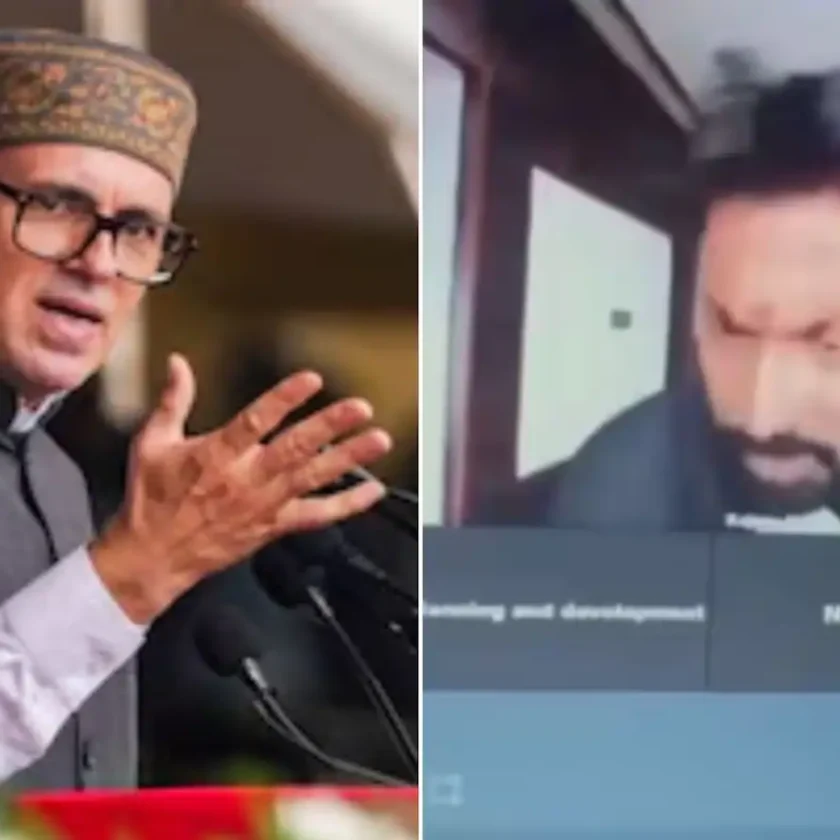
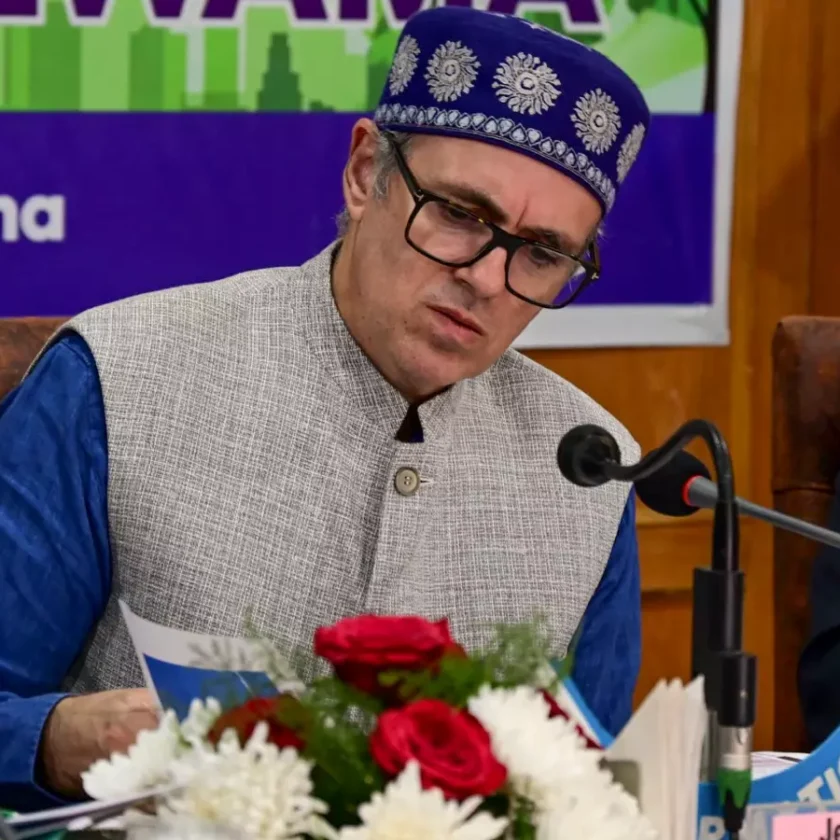
The immediate trigger is a ₹2 crore plan announced by Chief Minister Omar Abdullah’s adviser, Nasir Aslam Wani, for reconstructing the club’s clubhouse. The government has also proposed establishing a golf academy to train young players. Both announcements have been presented as part of an effort to revive the institution and strengthen Kashmir’s sporting infrastructure.
The controversy reaches beyond golf. In a region where households worry about electricity supplies, young people seek employment and public services compete for limited resources, the renovation of a prestigious recreational institution raises a legitimate question: what public benefit should taxpayers expect in return for supporting a facility historically associated with a relatively narrow sporting community?
The answer may depend less on political statements than on what the government does next.
Kashmir Golf Club elections: What happened after 14 years?
The Kashmir Golf Club held its 26th annual general meeting and management elections on October 19, 2026, at the Sher-i-Kashmir International Convention Centre in Srinagar. The exercise followed a gap dating back to 2012, according to reporting by Greater Kashmir and The Times of India.
The voting figures, however, reveal a more complicated picture of participation.
According to The Times of India, the club had 525 members, of whom 282 were eligible to vote after clearing outstanding subscription dues. Of those eligible, 229 cast their ballots. The remaining 53 eligible members did not vote, while 243 members were ineligible because their dues had not been cleared. A senior official cited by the newspaper said proxy voting was not permitted.
These figures need to be understood carefully. The 229 votes represent the participation of eligible voters, not the entire membership. The election therefore restored a formal mechanism for member participation, but it did not amount to a vote by every person associated with the club.
The management structure is also important. Reports state that the 10-member executive committee includes four elected members, five government-nominated members and the chief secretary as its chair, while the chief minister serves as the club’s president.
That distinction matters because the club’s future will involve both member interests and public policy decisions, particularly if government funding is used for reconstruction and upgrading facilities.
Why the Kashmir Golf Club has become a political issue
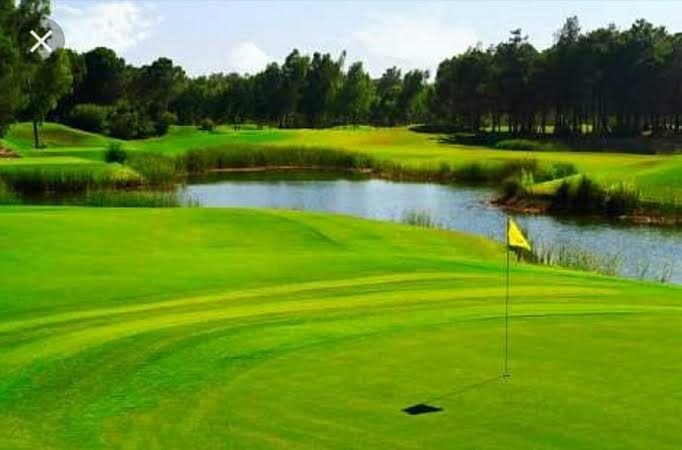
Established in 1887 during British rule, the Kashmir Golf Club is widely described in contemporary reporting as one of India’s oldest golf institutions. Located on Maulana Azad Road in Srinagar, the course occupies a prominent position in the city’s sporting landscape. Reports describe an 18-hole course spread across more than 500 kanals, surrounded by mature chinar and poplar trees.
Yet heritage can cut both ways.
For supporters, the club is a historic sporting institution that deserves preservation. Its age, landscape and place in Srinagar’s history give it value beyond the game itself.
For critics, that same history raises questions about who has traditionally been able to use it. A prestigious institution can survive for generations while remaining inaccessible, financially or socially, to large sections of the population.
The debate is therefore not simply about whether golf deserves government support. It is about whether a historic club can retain its identity while becoming more accessible to local residents, young athletes and visitors who do not belong to its established membership.
The ₹2 crore clubhouse plan: Allocation is not the same as expenditure
The proposed ₹2 crore reconstruction of the clubhouse has brought the debate into sharper focus.
On October 19, Wani announced that funds had been earmarked for rebuilding the clubhouse. He also called for improvements to the course’s fairways, greens, restaurant and other infrastructure, and proposed establishing a golf academy for children and young players.
That is a legitimate sporting and administrative objective. However, an important distinction must be maintained: an announcement that money has been earmarked does not, by itself, establish that the entire amount has been spent, that construction has begun or that the project has been completed.
The publicly available reports cited here do not provide a detailed project cost breakdown, a tender award, a construction schedule or a final account of expenditure. Those details will be necessary to assess the proposal properly.
Several questions deserve answers:
-
Is ₹2 crore intended exclusively for the clubhouse, or will any part support other work?
-
Which department or agency will implement the project?
-
Has a detailed project report, engineering estimate or tender been approved?
-
What will the recurring costs of maintenance and operation be?
-
Will the government publish progress reports and expenditure details?
These are not arguments against restoring the clubhouse. They are basic questions of public accountability.
A project can be justified on heritage, tourism or sporting grounds while still requiring transparent procurement, measurable objectives and public reporting.
The distinction is especially important when political criticism centres on the opportunity cost of government spending. The relevant issue is not only how much money is announced, but what the money will deliver and who will benefit.
BJP’s public-access promise and the PDP’s criticism
The political row has produced different arguments about the same institution.
According to The Times of India, BJP leaders criticised the government’s decision to facilitate the club elections and promised to open the facility to the general public if their party formed the government. The PDP, meanwhile, questioned the government’s focus on the golf club amid concerns about unemployment, inflation and rising household expenses.
The BJP’s position puts access at the centre of the debate. If a facility receives public support, the argument goes, its benefits should not be confined to an established circle of members.
The PDP’s criticism focuses more broadly on priorities. At a time when families face economic pressures and public infrastructure requires attention, it asks why a golf club should receive particular attention.
Both arguments raise questions worth examining, but neither settles the underlying policy issue.
A promise of public access needs a practical plan. Will visitors be permitted to play, or will access mean entry to selected areas? Will the facility offer subsidised sessions, affordable membership, equipment and coaching? How will visitor access be balanced with the needs of existing members and the maintenance of the course?
Likewise, criticism of spending priorities becomes more persuasive when it is supported by comparisons with actual budget allocations, project costs and unmet public needs. The existence of competing demands does not automatically establish that every investment in sport or tourism is wasteful.
The Peoples Conference offered a different response. As reported by The Times of India, its leader Sajad Gani Lone accused political parties of enjoying such facilities when in power and denouncing them when out of power. He also defended the place of golf in a tourism destination such as Kashmir.
The more useful test is whether any party can demonstrate how the club should be managed, funded and opened to a wider public.
A previous attempt to open the club to the public
One important part of the story predates the latest controversy.
In July 2019, the then Jammu and Kashmir administration discussed making the Kashmir Golf Club more accessible to golfers, tourists and local youth. A report published by Kashmir Life said the administration directed the club to invite fresh membership applications between August 1 and October 31, 2019, at a nominal fee of ₹100 per month, without an entrance fee, subject to proof of residence. The plan also included proposals for a training academy and improvements to the existing building.
However, the 2019 announcement should not be confused with proof that broad public access was successfully implemented or sustained. The available reporting does not establish how many people subsequently joined under the scheme, how long the arrangement operated or how accessible the club became in practice.
The political and administrative changes that followed also altered the wider context in which institutions in Jammu and Kashmir operated.
In August 2019, the Centre revoked Jammu and Kashmir’s special constitutional status and reorganised the former state into two Union Territories. The public-access initiative had emerged just days before that constitutional change, which became a defining turning point in the region’s governance.
Seven years later, the question remains remarkably similar: will the club be run primarily around its established membership, or will it become a more inclusive sporting facility?
The latest elections offer an opportunity to revisit that question with clearer rules, published targets and a practical plan for participation.
Can golf tourism justify the investment?
The strongest argument for supporting the Kashmir Golf Club is that its value need not be limited to the people who play there.
Golf can form part of a broader tourism offering, attracting visitors who spend money on accommodation, transport, restaurants, local services and other activities. A well-maintained course can also provide employment in groundskeeping, hospitality, administration, coaching and event management.
For a destination seeking to diversify its visitor economy, such facilities may have a role.
The club’s historic character and central Srinagar location also distinguish it from a purpose-built sporting venue with no comparable heritage. Supporters argue that allowing the infrastructure to deteriorate would mean losing part of Kashmir’s sporting history and weakening an existing tourism asset.
But the economic argument requires evidence, not just potential.
The reports announcing the clubhouse plan do not establish how much additional tourist spending the renovation is expected to generate, how many jobs it could support or what proportion of visitors would be local, domestic or international.
Nor do they demonstrate that a ₹2 crore investment will necessarily produce a measurable financial return.
A credible assessment would compare the project’s capital and operating costs with expected benefits. Relevant indicators could include visitor numbers, rounds of golf played, tournament bookings, local employment, revenue from services and the number of young people trained.
It would also be useful to establish whether existing infrastructure is being fully used before additional public funds are committed.
Without such information, tourism remains a plausible justification rather than a proven outcome.
A golf academy could change the debate
The proposal to establish a golf academy may prove more consequential than the clubhouse renovation itself.
A clubhouse primarily improves the supporting facilities of an existing institution. An academy, if properly designed and implemented, could expand participation by introducing children to the sport, providing coaching and creating a pathway towards competitive golf.
Wani has said the government wants to encourage young players and provide structured training opportunities. Local golfing representatives have also highlighted junior development as a priority.
These include the cost of equipment, coaching fees, transport, access to practice facilities and the time required for regular training. A programme that offers coaching but leaves these costs entirely to families may still be inaccessible to many children.
A public-interest model could include:
-
School partnerships: Regular introductory sessions for government and private school students.
-
Affordable coaching: Free or subsidised places for children from low-income households.
-
Equipment access: Shared clubs, balls and other essential training equipment.
-
Transparent selection: Published eligibility criteria and open applications for training places.
-
Girls’ participation: Dedicated efforts to encourage girls to enter and continue in the sport.
-
Measurable outcomes: Annual reporting on enrolment, attendance, coaching hours and competitive progress.
Such measures would help turn the academy from an announcement into a meaningful sporting programme.
They would also provide a practical answer to the criticism that government-backed golf infrastructure benefits only a small and privileged group.
Public money, electricity shortages and employment: What is the real trade-off?
The controversy has gained political traction partly because it arrives amid wider concerns about the cost of living, employment and public services in Jammu and Kashmir.
The supplied reports point to a winter power deficit, economic pressures on households and the Union Territory’s dependence on central financial support. Those issues deserve attention, but they should not be treated as interchangeable budget figures.
A power-sector deficit, a household’s rising expenses and a clubhouse reconstruction project involve different funding arrangements, administrative responsibilities and policy objectives. The fact that all three matter to residents does not establish that money earmarked for one can automatically be transferred to another.
To determine whether the golf investment is justified, the government would need to provide more than a headline figure.
The public should be able to see the source of the ₹2 crore allocation, the department responsible for the project, the approved estimate, the procurement process and the expected annual maintenance cost. Those details would make it possible to assess the investment alongside other priorities.
There is also a broader question of fairness.
If public support helps maintain a recreational facility, what obligations should accompany that support? Should the institution provide coaching to local children, offer affordable access to residents, host public sporting events or publish information about the use of government funds?
These conditions would not require the government to abandon golf in favour of essential services. They would establish that public support carries public responsibilities.
That is a more constructive way to approach the debate than treating recreation and basic services as mutually exclusive choices.
Who controls the club, and who benefits?
The composition of the executive committee deserves attention because it shapes how decisions will be made.
The reported arrangement combines elected representatives of the membership with government nominees, under a structure in which the chief secretary chairs the committee and the chief minister serves as club president.
The elected members can represent the interests of golfers and address operational problems. Government participation can help coordinate infrastructure improvements and policy decisions. But the arrangement also makes it important to clarify which responsibilities belong to the club and which belong to the administration.
Several issues remain relevant:
-
Who approves major spending and monitors the use of public funds?
-
What proportion of the facility’s running costs comes from membership subscriptions, visitors and government support?
-
Are membership rules, fees and eligibility criteria publicly available?
-
What arrangements govern access for non-members?
-
Who will evaluate whether the proposed academy and renovation deliver their promised benefits?
The available reports establish the election, the broad management structure and the ₹2 crore announcement. They do not provide enough financial detail to answer all these questions.
That gap is important. Public debate cannot be resolved simply by electing a committee or announcing an allocation. It requires clear rules and transparent reporting.
The road ahead: What the government needs to demonstrate
The immediate challenge is to turn the revival plan into a project with clear objectives and visible public benefits.
First, the government should publish the clubhouse project’s approved cost, funding source, tender status and implementation timeline. If the allocation changes during construction, the reasons should be explained.
Second, the proposed golf academy needs a concrete operating plan. The administration should clarify who will run it, how many children it aims to train, what fees will apply and whether scholarships or free places will be available.
Third, public access needs a defined policy rather than a political slogan. The club could explore affordable introductory sessions, scheduled public-use periods, school programmes and visitor arrangements that protect the course while allowing more people to participate.
Fourth, the government and the club should publish basic performance indicators. Annual information on expenditure, membership, public participation, junior coaching and tourism-related activity would help residents judge whether the institution is becoming more inclusive and economically useful.
Finally, the newly elected executive committee should explain how it intends to balance the maintenance needs of the course with the expectations of members, local residents and the wider public.
These steps would give the government a stronger answer to its critics than assurances about heritage or tourism alone.
The larger question: A historic club for a changing Kashmir
The Kashmir Golf Club’s elections after 14 years have brought an old institution into a new political argument.
For some, the club represents sporting heritage, tourism potential and an opportunity to develop young talent. For others, it symbolises the distance between prestigious recreational facilities and the everyday concerns of households dealing with economic uncertainty and gaps in public services.
Both perspectives can coexist. Preserving a historic institution is not inherently opposed to public welfare. Equally, heritage does not exempt a publicly supported institution from scrutiny over access, expenditure and accountability.
The ₹2 crore clubhouse plan may ultimately prove a worthwhile investment. But that judgement will depend on how the money is used, what the renovation achieves and whether the promised academy becomes a genuine opportunity for local children.
The political promise of greater public access will also need to be tested against practical arrangements rather than statements made during a controversy.
The central question is no longer simply who manages the Kashmir Golf Club. It is whether a historic institution can be preserved in a way that gives more Kashmiris a stake in its future.
If the government can demonstrate transparent spending, wider participation and measurable benefits, the club could become an example of how heritage and public interest can work together. If those commitments remain undefined, the controversy over privilege and priorities is likely to return.
For now, the elections have reopened the debate. The real test will begin with the decisions that follow.
Follow Us on WhatsApp
Get Breaking News, Exclusive Updates & In-Depth Analysis from Kashmir and beyond, delivered straight to your phone.
Join our WhatsApp Channel: Follow Now