Sat Sharma Targets Omar Abdullah Government Over ‘Betrayal of Mandate’ in J&K
By: News Desk | 20 Aug 2026
Sat Sharma Escalates BJP Attack on NC Government: “Betrayal of Mandate” Becomes Political Battle Cry
The political confrontation between the Bharatiya Janata Party and the National Conference-led government in Jammu and Kashmir is entering a more aggressive phase.
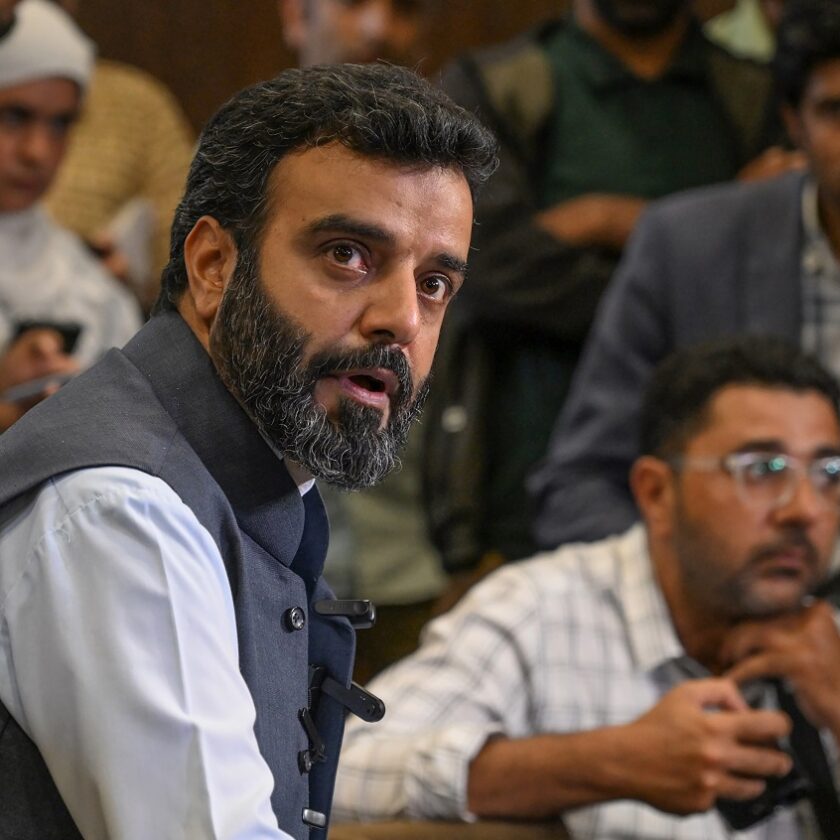
J&K BJP president and Rajya Sabha MP Sat Sharma has accused the Omar Abdullah government of betraying the public mandate, arguing that the National Conference has failed to deliver on promises made to voters during the 2024 Assembly election.
What began as criticism from the opposition is now turning into a structured political campaign.
The BJP has organised protests, strengthened grassroots outreach and taken complaints about employment, infrastructure, civic services and governance to the Union government. On August 17, hundreds of BJP workers took to the streets of Jammu and attempted to march towards the Civil Secretariat, accusing the NC government of failing to fulfil its election commitments. Police stopped the proposed gherao.
The message from the BJP is becoming increasingly clear:
The party does not want to wait for the next election to challenge the NC’s record. It wants to build the case against the government now.
From Political Criticism to Street Agitation
The latest confrontation did not emerge overnight.
The BJP has spent months building an argument that the National Conference government has failed to meet public expectations.
In June, Sat Sharma accused the NC government of failing to honour commitments made during the 2024 Assembly election. The BJP also highlighted concerns raised by unemployed youth, particularly over recruitment and employment opportunities.
By August, that criticism had evolved into a wider organisational campaign.
The BJP’s strategy meetings in Jammu focused on the political situation, alleged public resentment against the NC government and strengthening grassroots contact. The party also prepared a broader outreach programme across districts, constituencies and booth-level organisations.
Then came the street mobilisation.
The August 17 protest brought the dispute directly into Jammu’s public spaces, with BJP workers gathering at multiple locations before marching towards the Civil Secretariat.
The significance is difficult to miss.
The BJP is attempting to transform the phrase “betrayal of mandate” from a political accusation into an organising principle.
What Does the BJP Mean by “Betrayal of Mandate”?
The phrase is political rhetoric, not an independently established finding.
The BJP’s argument is that voters gave the National Conference a mandate in 2024 to provide effective governance and fulfil its election commitments.
The opposition now claims that the government has fallen short.
Among the issues repeatedly raised by BJP leaders are:
- employment and recruitment;
- infrastructure;
- civic amenities;
- administrative efficiency;
- public welfare;
- development;
- governance delivery.
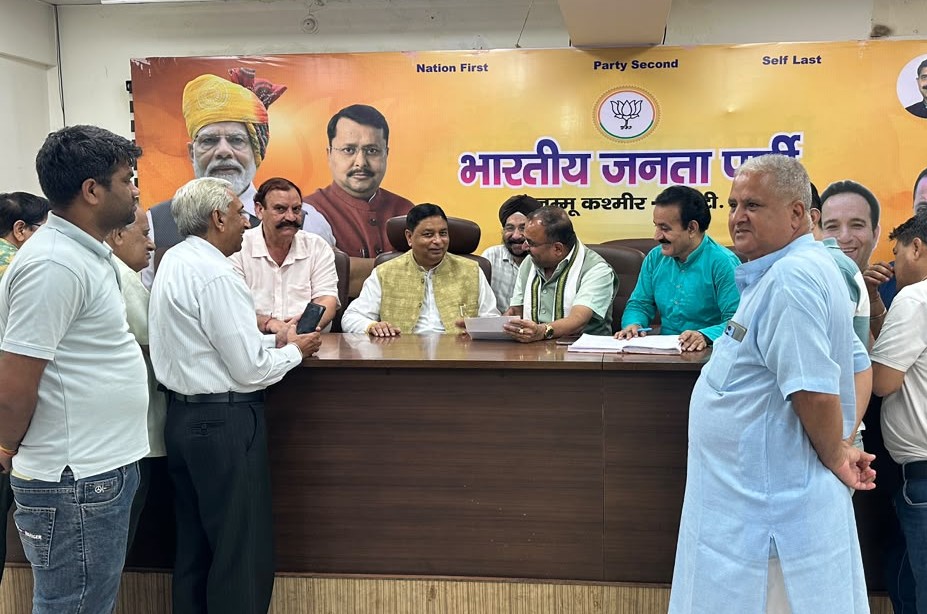
A BJP delegation led by Sat Sharma, Leader of Opposition Sunil Sharma and Lok Sabha MP Jugal Kishore Sharma subsequently raised several of these concerns with Union Home Minister Amit Shah and Union Health Minister J.P. Nadda. The party said it highlighted employment, infrastructure, public welfare and administrative efficiency, along with the broader political and security situation.
This is important because it shows the BJP is building its criticism around specific governance themes, rather than relying solely on constitutional disagreements.
Employment Is Emerging as the BJP’s Strongest Political Weapon
Among all the issues raised by the BJP, employment may be the most politically potent.
Jammu and Kashmir has a large population of educated young people competing for a limited number of government and private-sector opportunities.
The BJP has repeatedly targeted the NC government over recruitment and employment.
In May, Sat Sharma met representatives of unemployed youth who complained about delays in recruitment and alleged that the NC had failed to fulfil employment-related promises. Sharma described the situation as a “historic betrayal” of J&K’s youth.
The BJP’s youth-wing protests have reinforced the issue.
This is politically significant because unemployment is not an abstract constitutional question.
It affects families directly.
A recruitment delay can mean another year of preparation for a government examination.
A stalled vacancy can mean another year without income.
A lack of private investment can mean another generation looking outside J&K for work.
That gives the opposition an issue capable of travelling well beyond party politics.
But the Employment Debate Needs More Than Political Claims
There is an important caveat.
The BJP’s allegations about unfulfilled employment promises should be distinguished from independently verified employment data.
Governments often inherit vacant posts, recruitment backlogs and administrative procedures from previous administrations.
Recruitment also involves examinations, legal challenges, reservations, departmental approvals and other processes that can take time.
Therefore, the most meaningful test is not simply whether a party says “jobs were promised.”
It is whether the government can demonstrate:
How many vacancies existed?
How many have been advertised?
How many recruitment processes have been completed?
How many appointments have been made?
How long are pending recruitments taking?
Those figures would provide a much stronger basis for judging the competing political claims.
Jammu Is at the Centre of the BJP’s Strategy
The geographical dimension of the campaign is equally important.
The BJP has traditionally maintained its strongest electoral base in Jammu, while the National Conference has a deeper political base across much of the Kashmir Valley.
That makes Jammu the natural launchpad for a sustained BJP opposition campaign.
By organising large demonstrations in Jammu and repeatedly speaking about the region’s development needs, the BJP is reinforcing its identity as the political defender of Jammu’s interests.
The message is familiar:
Jammu must not be politically or economically sidelined.
But the argument also carries a risk.
If every policy dispute is framed as Jammu versus Kashmir, governance issues can become regional identity issues.
That can make compromise harder.
Is the NC Really “Kashmir-Centric”?
This is one of the BJP’s most politically effective accusations, but it remains a contested political claim.
The National Conference rejects the suggestion that it governs only for the Kashmir Valley.
The party has pointed to development initiatives and public-service programmes across Jammu as evidence that the government is addressing regional concerns.
For example, NC minister Javed Rana has highlighted efforts to tackle drinking-water problems in Jammu’s Kandi belt.
That means the question should ultimately be judged through outcomes rather than slogans.
Are infrastructure projects reaching Jammu?
Are government jobs distributed fairly?
Are roads and water systems improving?
Are public investments geographically balanced?
Are people in both regions receiving comparable administrative attention?
These are measurable questions.
The BJP’s Counter-Narrative: “Governance Before Statehood”
Another major element of the BJP’s strategy is its attempt to shift the political conversation away from the NC’s statehood campaign.
The National Conference has made restoration of Jammu and Kashmir’s statehood a central political demand.
The BJP, however, has repeatedly argued that the NC is using the statehood issue to distract from governance failures.
Leader of Opposition Sunil Sharma previously described the NC’s proposed Jantar Mantar protest as an “eyewash” and argued that issues such as governance, unemployment and corruption deserved greater attention.
This creates a powerful political contrast.
The NC says:
Restore statehood.
The BJP says:
First demonstrate governance.
Neither side accepts the other’s framing.
And that disagreement is becoming one of the central political fault lines in J&K.
The NC’s Defence: The Government Needs Time to Deliver
The National Conference’s counterargument is that it inherited a difficult administrative and political environment.
The government has to manage:
- a Union Territory administration;
- limited constitutional powers compared with a full state;
- security challenges;
- unemployment;
- infrastructure gaps;
- development demands;
- a complicated relationship with the Centre.
From this perspective, the NC can argue that it should be judged over its full term rather than through opposition claims made less than two years after taking office.
That is a legitimate political argument.
But it also creates a problem for the ruling party.
The longer the government remains in office, the less persuasive the argument that it simply needs more time can become.
Eventually, voters expect measurable results.
The BJP Is Building a “Watchdog” Image
Sat Sharma’s latest campaign is also about defining the BJP’s role as an opposition party.
The BJP wants to demonstrate that it is not merely criticising the government from the Assembly floor.
It wants to show that its leaders are:
- monitoring government performance;
- raising public grievances;
- meeting affected groups;
- organising protests;
- challenging the administration;
- taking J&K issues to Union ministers.
That strategy was visible when the BJP delegation met Amit Shah and J.P. Nadda in New Delhi.
It was also evident in the August 17 Jammu protest.
The political message is straightforward:
If the government will not respond inside the system, the opposition will take the issue to the streets.
But Street Politics Comes With Its Own Risks
Large protests generate visibility.
They can also generate political momentum.
But they carry risks for opposition parties too.
If protests focus excessively on slogans rather than specific policy demands, they can be dismissed as routine political mobilisation.
The BJP therefore has a strategic challenge.
It needs to convert public anger—where it exists—into evidence-based political arguments.
For example:
Instead of simply saying roads are poor, identify the roads and the maintenance backlog.
Instead of simply saying recruitment is stalled, publish the vacancy figures and recruitment timelines.
Instead of simply saying Jammu is being ignored, compare spending and project implementation across regions.
That would make the “watchdog” argument considerably stronger.
The NC Faces a Similar Test
The ruling National Conference has its own responsibility.
It cannot answer every criticism by accusing the BJP of political opportunism.
The government must publish measurable results.
That means showing:
- recruitment completed;
- infrastructure projects delivered;
- water and electricity improvements;
- healthcare expansion;
- tourism performance;
- investment realised;
- welfare schemes implemented;
- district-level development outcomes.
Transparency can be politically powerful.
If the NC can demonstrate progress, it can challenge the BJP’s “betrayal” narrative.
If it cannot, the opposition’s message will become easier to sustain.
The BJP’s Campaign Is Also About the Next Election
The immediate target is the Omar Abdullah government.
The longer-term target is voter perception.
Every opposition protest creates a political record.
Every government defence becomes part of the counter-record.
By the time the next election arrives, both parties will have a narrative ready.
The BJP will be able to say:
We warned voters that the NC had failed to deliver.
The NC will be able to say:
We governed under difficult circumstances and delivered despite constraints.
The political battle is therefore already being fought in advance.
A New Phase in Jammu and Kashmir Politics
The latest confrontation also reveals how J&K politics has changed since the 2024 Assembly election.
The National Conference is no longer simply an opposition movement demanding political rights.
It is now the incumbent government.
The BJP is no longer governing the Union Territory directly.
It is now the principal opposition force in the Assembly.
That reversal has changed the political vocabulary.
The NC must defend its record.
The BJP must build an alternative.
And Jammu has become one of the principal arenas where that contest will be fought.
What the “Betrayal of Mandate” Campaign Could Mean for J&K
For the National Conference
The pressure to demonstrate tangible governance results will increase.
For the BJP
The campaign provides an opportunity to consolidate its Jammu base and expand its opposition footprint.
For young voters
Employment and recruitment could become increasingly important political issues.
For Jammu
Regional development and representation are likely to remain central to political debate.
For J&K politics
The contest between governance and statehood will probably continue to dominate the political conversation.
The Bigger Question: Who Owns the Public Mandate?
There is an interesting contradiction at the heart of the current political battle.
The National Conference won the mandate to form the government.
The BJP is now challenging the NC’s claim to have fulfilled that mandate.
So the next stage of J&K politics will be a contest over the meaning of the 2024 verdict.
Winning an election gives a party the authority to govern.
But governing also creates an obligation to deliver.
The BJP is now trying to persuade voters that the NC has failed the second test.
The NC, in turn, must prove that its mandate is translating into real-world improvements.
That is ultimately where the political argument will be settled.
Conclusion: From “Betrayal” to a Test of Performance
Sat Sharma’s warning that the BJP will expose what it calls the NC government’s “betrayal of the public mandate” marks a significant escalation in the opposition campaign.
But the BJP has already moved beyond rhetoric.
It has organised grassroots outreach, mobilised protesters and taken governance concerns to senior leaders in New Delhi.
The August 17 protest in Jammu demonstrated that the party is prepared to take the confrontation directly to the streets, with activists attempting to march towards the Civil Secretariat before police intervened.
For the NC, this is a warning that its performance will face increasingly aggressive scrutiny.
For the BJP, it is an opportunity—but also a test.
If the party wants to turn the “betrayal” narrative into durable political support, it will need to show voters more than anger. It will need evidence, alternatives and a credible governing programme.
And for Jammu and Kashmir’s citizens, the political debate ultimately comes down to something far more practical than competing slogans.
Are jobs being created?
Are roads, water and public services improving?
Is development reaching both Jammu and Kashmir fairly?
Is the government delivering on what it promised?
Those are the questions that will determine whether the BJP’s “betrayal of mandate” campaign becomes a powerful anti-incumbency narrative—or remains another chapter in the increasingly fierce political contest between the BJP and National Conference.