Ruhullah Skips NC Dachigam Retreat as Opposition Targets Omar Abdullah Over ‘Floor Test Politics’
By: Javid Amin | 03 June 2026
NC’s Show of Unity Faces Questions as Aga Ruhullah Stays Away, Opposition Labels Retreat a ‘Floor Test’
One Absence That Spoke Louder Than the Meeting
The National Conference’s June 3 legislature party retreat at Dachigam National Park was intended to project unity, confidence and internal coordination. Instead, the gathering has triggered a fresh round of political speculation, opposition attacks and questions about the state of affairs within Jammu and Kashmir’s ruling party.
At the centre of the debate is not what happened inside the closed-door meeting, but who did not attend.
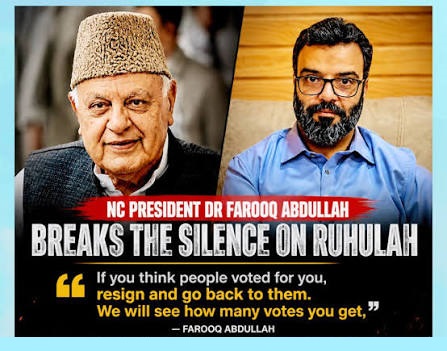
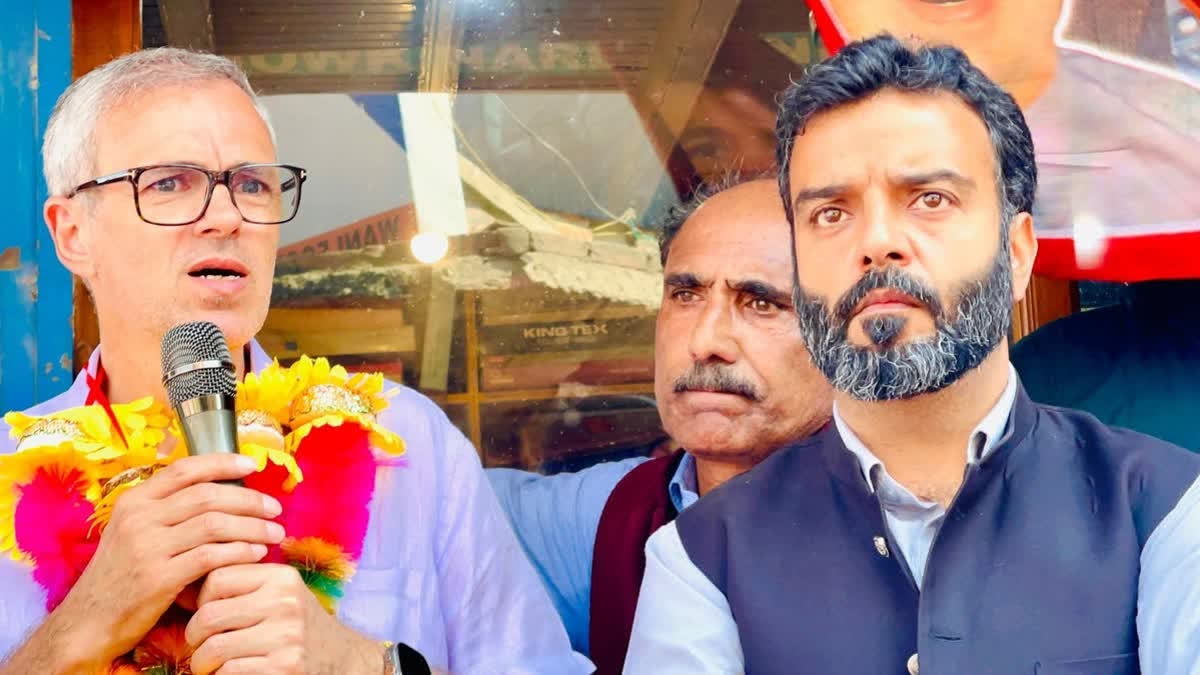
The absence of NC MP Aga Ruhullah Mehdi has emerged as one of the most discussed aspects of the retreat, with political observers interpreting it as a significant signal amid ongoing debates over the party’s direction, governance record and response to post-2019 political realities.
While the National Conference leadership sought to portray the Dachigam session as an opportunity to review governance and strengthen coordination, critics argue that the meeting exposed unresolved tensions within the ruling establishment rather than silencing them.
Why Ruhullah’s Absence Matters
In ordinary circumstances, the absence of a single leader from a party meeting might not attract much attention.
However, Aga Ruhullah occupies a unique position within the National Conference.
Over the past two years, he has increasingly emerged as one of the most outspoken voices within mainstream politics, frequently articulating concerns about political strategy, democratic representation and the broader response to developments after the abrogation of Article 370.
Unlike many party leaders who have preferred a cautious approach, Ruhullah has repeatedly advocated for stronger political engagement and greater accountability.
His public remarks comparing Ladakh’s coordinated outreach to the Centre with what he described as Jammu and Kashmir’s political stagnation had already generated debate before the Dachigam retreat.
Against that backdrop, his absence inevitably attracted attention.
Whether intended as a political message or not, it has been widely interpreted as a reflection of continuing discomfort with the party’s current trajectory.
A Silent Protest or Mere Coincidence?
No official explanation suggesting a boycott has emerged.
Nor has Ruhullah publicly declared his absence to be an act of protest.
However, in politics, symbolism often matters as much as formal statements.
The timing of the absence has led many observers to connect it with broader debates inside the National Conference regarding:
- Political engagement with New Delhi
- Governance priorities
- Statehood restoration strategy
- Party communication
- Response to public expectations
For critics of the NC leadership, Ruhullah’s absence reinforces the perception that not everyone within the party is comfortable with the current approach.
For party supporters, the interpretation may be overstated.
Yet the fact that the issue has become a major talking point underscores its political significance.
Opposition Seizes the Opportunity
If the National Conference hoped the Dachigam retreat would project organizational cohesion, opposition parties quickly moved to challenge that narrative.
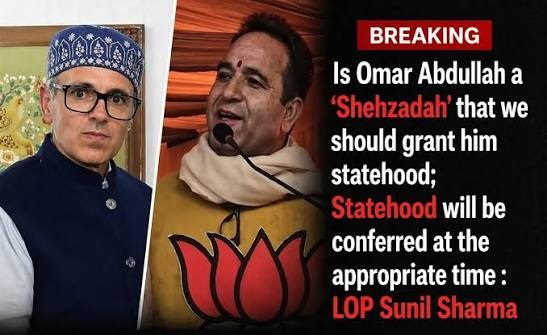
Leader of Opposition Sunil Sharma delivered one of the sharpest attacks, describing the gathering as a “floor test” rather than a governance review.
According to Sharma, the meeting was less about public welfare and more about assessing loyalty within the ruling camp.
He argued that critical issues facing Jammu and Kashmir—including unemployment, infrastructure challenges and flood preparedness—received less attention than internal political calculations.
The BJP’s objective is clear.
By portraying the retreat as a headcount exercise, the opposition seeks to undermine the NC’s claim that the meeting was focused on governance and public service delivery.
From Governance Retreat to Loyalty Parade?
The phrase “loyalty parade” has become a recurring theme in opposition criticism.
Sharma’s argument rests on a broader BJP narrative that the National Conference is increasingly preoccupied with political management rather than governance outcomes.
According to this line of attack:
Governance Challenges Remain
Questions persist regarding employment generation, public infrastructure, healthcare delivery and administrative responsiveness.
Cabinet Expansion Delays Continue
Three ministerial berths remain vacant nearly twenty months after government formation, creating frustration among sections of the ruling party.
Internal Concerns Are Growing
The demand for greater representation and participation suggests the leadership is still managing unresolved expectations.
By linking these issues to the Dachigam retreat, the opposition is attempting to frame the meeting as evidence of political insecurity rather than administrative confidence.
Sajad Lone’s Most Effective Political Metaphor Yet?
While Sunil Sharma questioned the purpose of the meeting, Sajad Gani Lone focused on its symbolism.
In a remark that quickly gained traction in political circles, Lone compared the venue itself to Omar Abdullah’s style of governance.
According to Lone, the retreat’s location inside a restricted and secluded national park reflected a government that is “secluded, isolated and restricted.”
The criticism is politically significant because it transforms a logistical decision into a broader narrative about leadership.
For the opposition, Dachigam is no longer merely a venue.
It has become a metaphor.
The message being advanced is that the government is detached from public sentiment and insulated from everyday concerns.
Whether fair or not, the imagery is powerful and likely to resonate in a political environment increasingly shaped by perception and symbolism.
Omar Abdullah’s Leadership Challenge Grows
The political fallout from the retreat highlights the increasingly complex environment confronting Chief Minister Omar Abdullah.
His challenges now extend beyond governance.
They include:
Managing Internal Voices
Figures such as Aga Ruhullah represent an influential section of opinion that expects a more assertive political approach.
Meeting Public Expectations
Citizens continue to judge the government primarily on service delivery, development and economic opportunities.
Countering Opposition Narratives
The BJP, PDP and Peoples Conference are all advancing separate but overlapping criticisms of the government.
Maintaining Party Cohesion
The longer cabinet expansion is delayed, the more difficult it becomes to manage expectations within the ruling camp.
The Dachigam retreat appears to have reinforced rather than resolved many of these questions.
What Should We Actually Read Into Ruhullah’s Absence?
A careful political reading requires separating fact from speculation.
What Is Confirmed?
- Ruhullah did not attend the retreat.
- He has previously expressed views that differ from sections of the party leadership.
- His absence became a major political talking point.
What Is Not Confirmed?
- There is no public evidence of a formal boycott.
- There is no verified report of disciplinary action or open confrontation.
- There is no confirmation that his absence was intended as a protest.
Therefore, while the absence is politically significant, claims of an outright rebellion would currently go beyond the available facts.
What can reasonably be said is that the episode has amplified existing perceptions of ideological and strategic differences within the broader National Conference ecosystem.
The Bigger Story: A Battle Over Narrative
Ultimately, the June 3 retreat has evolved into something larger than an internal party meeting.
It has become a battle over competing narratives.
The National Conference says it was a governance review and coordination exercise.
The BJP says it was a loyalty check disguised as governance.
Sajad Lone says it symbolized an isolated style of leadership.
Ruhullah’s absence has added another layer, allowing critics to question whether the image of unity presented by the party reflects the full reality.
Conclusion
The Dachigam retreat was intended to demonstrate cohesion within the National Conference. Instead, it has sparked a wider political conversation about governance, leadership and internal dynamics.
Aga Ruhullah Mehdi’s absence may not amount to open dissent, but it has undoubtedly become one of the most politically consequential moments of the meeting. Combined with opposition attacks from Sunil Sharma and Sajad Lone, it has transformed what was meant to be a routine governance review into a broader examination of Omar Abdullah’s leadership.
The coming weeks will determine whether the controversy fades away or develops into a deeper challenge for the ruling party. Much will depend on whether the government follows the retreat with tangible governance initiatives, cabinet expansion decisions and a clearer political roadmap.
For now, one thing is evident: the most important story from Dachigam may not be what was discussed behind closed doors, but the questions that emerged after the doors opened.